
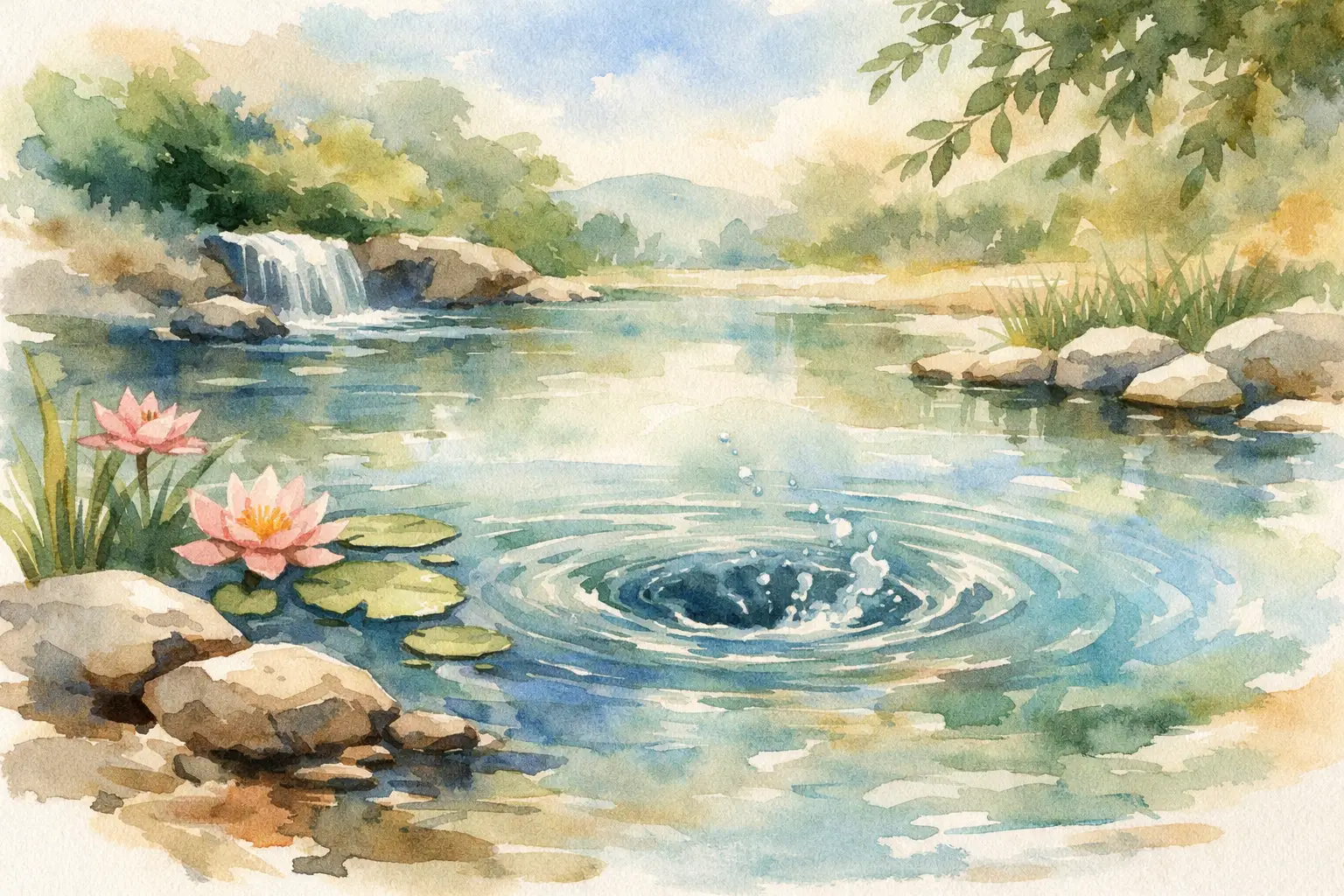
A pond that loses water can change the feeling of a backyard overnight. The waterfall sounds a little different, fish have less room to move, and a landscape feature built for quiet enjoyment starts demanding attention. So, are pond leaks repairable? In most cases, yes. The real question is where the water is escaping and whether the pond has been diagnosed carefully before anyone begins patching, digging, or adding sealant.
A lasting repair starts with patience. Ponds lose some water naturally through evaporation, splash-out, and normal maintenance, especially during warm, dry Bay Area weather. A true leak has a pattern, and finding that pattern is what protects the pond’s health, appearance, and long-term performance.
Are Pond Leaks Repairable Without Rebuilding the Pond?
Many leaks can be repaired without rebuilding an entire pond. A puncture in a flexible liner, a failed plumbing fitting, a low edge, or a waterfall stream that is sending water outside the liner can often be corrected with focused work. Even an older pond with several issues may be a good candidate for renovation rather than replacement.
The trade-off is that a quick repair is only worthwhile when it addresses the actual source. A patch placed on the wrong area, or a bottle of sealant poured into the water without a diagnosis, may delay the real repair while adding unnecessary expense. For ponds with fish, plants, boulders, and carefully balanced filtration, guesswork can create more disruption than the leak itself.
There are situations where a larger rebuild is the better investment. If the liner has become brittle throughout, the pond was built with undersized plumbing, the edges have settled extensively, or previous repairs have left the system unreliable, repairing one spot may not restore confidence. A professional assessment should distinguish between a repairable defect and a pond that needs a fresh foundation for the next decade of enjoyment.
First, Confirm That Water Loss Is Actually a Leak
Before assuming the liner has failed, rule out evaporation and splash. A pond near a waterfall or exposed to wind can lose more water than homeowners expect. Water can also be pushed outside the pond by a misdirected stream, an overfilled basin, children enjoying the edge, or a filter that is overflowing.
A simple bucket test can provide useful information. Fill a bucket with pond water and place it on a stable ledge where it will experience similar sun and wind. Mark the water level inside the bucket and the pond level outside it. After 24 hours, compare the drop. If the pond has fallen significantly more than the bucket, a leak is likely.
Then look for visible clues: persistently wet soil below a berm, mulch that stays dark in one area, a boggy spot beside a waterfall, or a pond that stops losing water at the same level every time. That stopping point is especially valuable. It often indicates that the leak is at or just above the level where the water stabilizes.
How Professionals Find a Pond Leak
Leak detection is a process of isolating parts of the system. The goal is not simply to find wet ground. It is to determine whether water is escaping from the pond shell, plumbing, filtration equipment, or the stream and waterfall.
Test the pond with the pump off
If the pond continues to lose water while the pump is off, the leak is likely in the pond basin, around a penetration, or at the pond edge. The water level can be monitored over several days until it stops dropping. At that level, the inspection focuses on liner folds, rocks, skimmer openings, light fixtures, and any area where the liner may be exposed or pinched.
If the water level holds with the pump off but drops when the system is running, the issue is more likely in the plumbing, filter, waterfall, or stream. This narrows the search dramatically and prevents an unnecessary pond drain.
Inspect the waterfall and stream from top to bottom
Waterfalls are beautiful because they create movement, sound, and natural energy. They can also hide small leaks. A stream edge may have settled, a liner fold may be channeling water behind the rockwork, or a splash zone may be carrying more water out of the system than intended.
A trained technician watches the water in operation, looking for movement behind boulders, unusually wet soil, and areas where the stream is riding too high on an edge. Sometimes the correction is a careful adjustment to a stone or liner. Other times, rockwork must be opened and rebuilt so water returns to the lined channel instead of the surrounding landscape.
Check plumbing, fittings, and equipment
A cracked pipe, loose fitting, split valve, or failed connection can lose a surprising amount of water. These failures are common around pumps, skimmers, external filters, and plumbing routes that have shifted over time. They may be visible, but many are concealed below ground or behind landscape materials.
Pressure testing and systematic isolation help identify plumbing failures without tearing apart the entire feature. Once located, a sound repair may involve replacing a damaged section, rebuilding a connection, or updating aging components that no longer serve the pond’s flow requirements.
Common Repairs and When They Work
Flexible EPDM liners are durable, but they can be punctured by sharp tools, animal activity, root pressure, or movement beneath the pond. A clean liner puncture can often be repaired with a compatible patch system. The key is surface preparation. The liner must be exposed, cleaned, dried, and patched with materials designed for that liner, not a generic adhesive that may fail underwater or during temperature changes.
Low edges are another common source of water loss. Every edge around a pond should be high enough to direct rain, irrigation, and pond water back toward the feature. When soil settles or stone shifts, water can find a low exit point and slowly wick into surrounding soil. Restoring the edge and securing the liner usually solves the problem.
Leaks around skimmers and bulkheads require particular care. These penetrations are intentional openings in the liner, but their gaskets and fittings must remain properly seated. Tightening hardware without understanding the assembly can distort a gasket or damage the liner. In many cases, the best repair is to disassemble, clean, inspect, and rebuild the connection correctly.
For concrete ponds, the process is different. Cracks can be cosmetic, structural, or caused by movement beneath the shell. Some can be sealed or injected; others require more substantial structural repair and waterproofing. Concrete repairs should never be treated as one-size-fits-all, particularly on a large pond where hydrostatic pressure and site conditions matter.
Why Temporary Fixes Often Fail
Products marketed as instant pond leak solutions can have a place in limited circumstances, but they rarely replace a proper diagnosis. Some are intended for tiny, inaccessible seepage points. They will not repair a split pipe, a low waterfall edge, or a large liner tear hidden beneath boulders.
Repeatedly topping off a leaking pond is not a harmless solution either. It can alter water chemistry, increase water costs, strain equipment as the level drops, and create wet conditions around the pond that affect nearby landscape areas. For koi ponds, sudden water changes also deserve careful handling to protect fish.
Draining the pond too early can be equally unhelpful. It creates stress for fish and plants, disturbs beneficial bacteria, and may make it harder to observe the level where the leak stops. A professional should recommend draining only when the repair truly requires it and should plan for safe fish handling, water management, and restart procedures.
Choosing a Repair That Restores Confidence
The best pond leak repair is not always the smallest repair. It is the repair that restores reliable water retention while respecting the design of the feature. That may mean a precise liner patch, a rebuilt stream edge, new plumbing, or a thoughtful renovation that corrects several aging details at once.
At Aquascape Creations, leak work begins with understanding how the pond was built, how it performs, and what the owner wants from it in the years ahead. A naturalistic water feature is more than a vessel for water. It is a living centerpiece for family time, reflection, and the everyday pleasure of being outdoors.
If your pond is losing water, resist the urge to cover the symptom with another hose refill. A careful inspection can turn an uncertain, frustrating problem into a clear repair plan and help your backyard sanctuary return to the dependable beauty it was meant to provide.

[…] be normal from evaporation or splash, but a persistent decline during cool weather may indicate a leak or plumbing issue. Winter rain can mask a leak until dry days return. Addressing it early protects the pond structure […]
[…] to simply accept. It may be normal seasonal loss, but it can also indicate a plumbing issue, a stream leak, or water escaping over an edge where the landscape has […]
[…] proper leak investigation compares the water loss with the pump running and with the pump turned off. If the loss changes, […]
[…] insufficient reservoir capacity, exposed liner, or no plan for stormwater. A leak is not always a torn liner. Water may be wicking over an edge, splashing beyond the basin, or finding a low point behind a […]