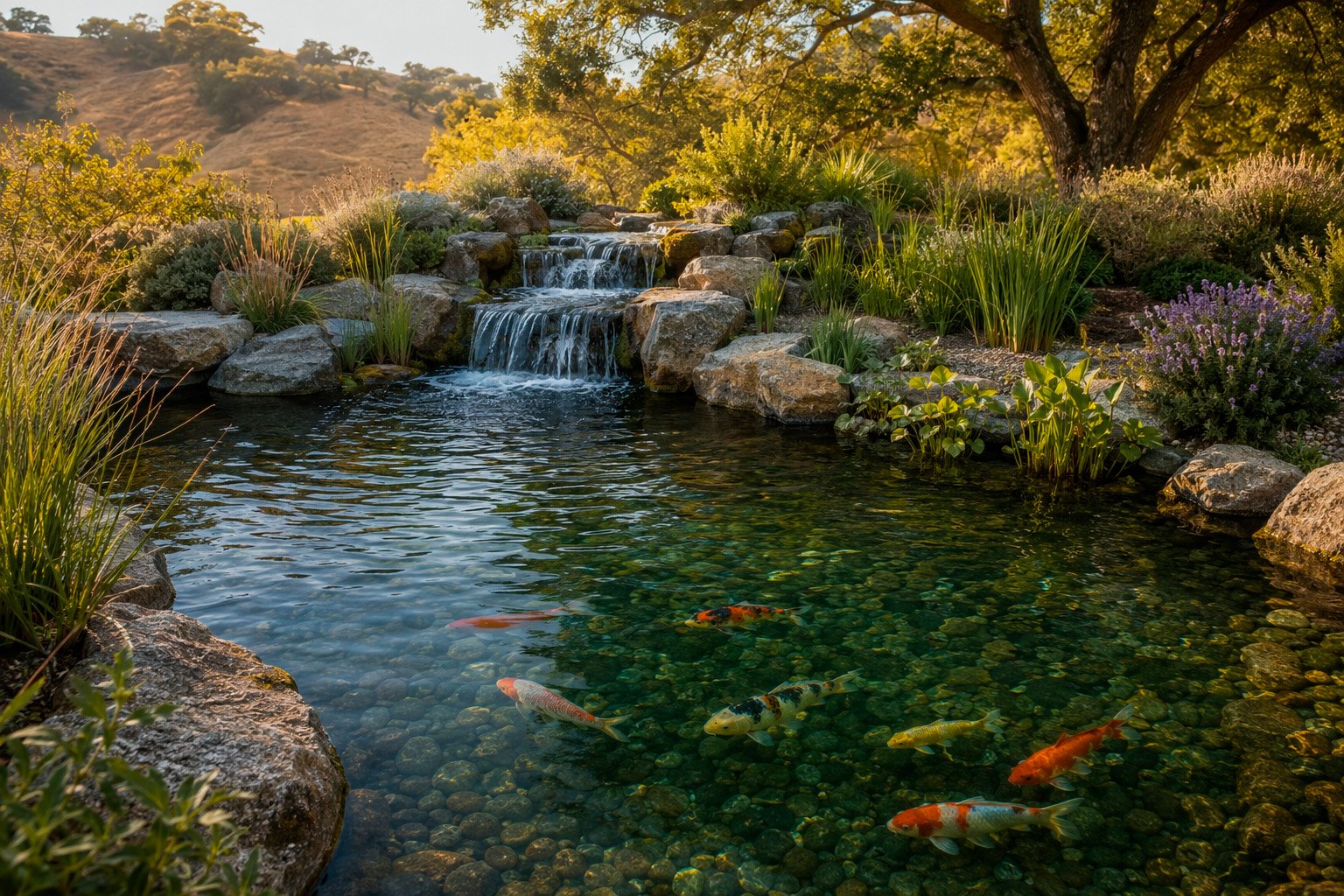
A koi pond should feel like the calmest part of your property, not another demanding weekend chore. So, how much maintenance does a koi pond require? For a well-designed pond with the right filtration, plant balance, and fish load, most owners spend roughly 15 to 30 minutes a week on routine observation and light care, plus a few more involved seasonal tasks. The real answer depends less on the presence of koi and more on how thoughtfully the pond was built from the start.
A naturalistic pond is a living system. Water, fish, beneficial bacteria, plants, sunlight, leaves, and equipment all influence one another. When those pieces are properly balanced, the maintenance is predictable and rewarding. When they are not, a pond can become cloudy, algae-prone, or harder on the fish than it needs to be.
How Much Koi Pond Maintenance Is Needed Each Week?
Weekly maintenance is mostly about paying attention before small changes become bigger problems. Walk the pond edge, enjoy the fish for a few minutes, and look for changes in water clarity, flow, or behavior. Koi are excellent communicators when something in their environment is off. Fish that are gasping near the surface, hiding unusually, flashing against rocks, or refusing food deserve a closer look.
Remove leaves, seed pods, and other debris from the skimmer basket and pond surface as needed. In a Bay Area landscape, this may take only a few minutes during much of the year, then become more frequent when nearby trees are shedding. Clearing debris protects the pump, keeps water moving freely, and prevents excess organic material from breaking down in the pond.
You will also feed the fish, although the amount changes with the water temperature. During warm weather, healthy koi may be fed once or twice daily with a quality food, only as much as they can consume in a few minutes. Uneaten food becomes waste, and excess waste creates more work for the filtration system. As water cools, feeding should be reduced. In colder periods, koi metabolism slows dramatically and feeding may stop altogether.
Most established ponds also benefit from regular water testing, particularly in the first year or after adding fish. Testing pH, ammonia, nitrite, and nitrate helps confirm that the biological filtration is doing its job. Clear water alone is not proof that water quality is healthy. A pond can look beautiful while its chemistry is drifting in the wrong direction.
The Design Decisions That Determine Your Workload
Two ponds with the same number of koi can require completely different amounts of care. A pond built as a shallow decorative basin with undersized filtration will ask more of its owner than a deeper, properly circulated system designed around the fish, site, and surrounding landscape.
Filtration is central. A skimmer captures floating debris before it sinks. A biological filter provides a home for beneficial bacteria that process fish waste. Pumps, plumbing, and waterfalls or streams keep oxygen-rich water circulating. Together, these components reduce the manual cleaning that homeowners often associate with pond ownership.
Depth and shape matter as well. Koi need adequate water volume and stable temperatures. Shelves, rock placement, and planting zones should create a natural look without trapping excessive debris in hard-to-reach areas. Good construction considers how a pond will be cleaned and serviced years from now, not simply how it will look on installation day.
The landscape around the pond has an equally practical role. A pond beneath heavy leaf drop will need more netting and skimmer attention than one placed with tree canopies in mind. Full, unshaded sun can encourage algae growth, while too much shade may limit aquatic plants. There is no single perfect setting, but an experienced pond builder can work with the property’s terrain, light, and plant material to create a manageable balance.
A larger pond is not always more difficult to maintain. In many cases, more water volume is more stable. What matters is matching the filtration and circulation system to the pond’s actual volume, fish population, and site conditions.
Seasonal Care Keeps the Pond Healthy
Koi pond care follows the seasons. The work is not constant, but it changes as temperatures, rainfall, and plant growth shift.
Spring: Restart and inspect
Spring is the ideal time to inspect pumps, plumbing connections, lights, filters, and waterfalls after winter. This is also when organic debris that accumulated over the cooler months can affect water quality. A professional pond cleaning may include draining or lowering water as appropriate, removing settled debris, rinsing filter components carefully, trimming plants, and restarting the system without disrupting the beneficial biology more than necessary.
Spring is also the season to watch water quality closely as fish become more active and biological filtration catches up with warming temperatures. Avoid adding too many new koi at once. Every fish adds to the biological load, and the filtration needs time to adjust.
Summer: Manage growth and heat
Summer brings the greatest visual payoff – active koi, lush plants, and the sound of moving water – but it can also bring algae pressure. Longer days, warm water, and excess nutrients can encourage algae, especially if the pond receives strong sun.
Algae is not automatically a sign of failure. A light coating on rocks is part of a natural pond ecosystem. The goal is not sterile water or bare stone. The goal is balanced water that allows koi, plants, and the feature itself to thrive. Consistent filtration, sensible feeding, aquatic plants, shade where appropriate, and routine debris removal do far more for long-term clarity than quick-fix chemical treatments.
Evaporation is another summer concern. Top off the pond as needed, but use a method that accounts for local water conditions and avoids sudden changes in temperature or chemistry. If the water level falls unusually fast, it may be time to investigate for a leak rather than assuming evaporation is the cause.
Fall: Stay ahead of leaves
Fall is often the busiest maintenance season for ponds near deciduous trees. A protective net can be a simple, effective way to prevent leaves from filling the pond and overloading the skimmer. Continue clearing baskets and remove accumulated debris before it decomposes.
As temperatures fall, reduce feeding according to the food manufacturer’s recommendations and your pond professional’s guidance. This is also a good time to evaluate plants, trim back spent growth, and make sure the system is ready for the rainy season.
Winter: Observe more, disturb less
In the Bay Area, winter care is usually less about ice management and more about monitoring rainfall, water level, runoff, and equipment performance. Heavy storms can carry soil, mulch, fertilizers, or debris toward the pond. Make sure drainage directs runoff away from the water feature whenever possible.
Koi become less active in cool water. Resist the urge to overfeed or overclean. Keep circulation and oxygenation appropriate for the conditions, check that the system is running properly, and let the pond settle into its quieter season.
What Professional Maintenance Can Prevent
A capable owner can handle routine pond care, especially with a well-built system. Professional service becomes especially valuable for annual cleanouts, water-quality concerns, pump or plumbing issues, persistent algae, declining fish health, suspected leaks, or aging equipment.
Leak diagnosis deserves particular care. Water loss can come from evaporation, splash-out, a stream or waterfall issue, plumbing, or a liner problem. Guessing can lead to unnecessary digging and expense. A systematic inspection isolates the source and helps preserve the pond’s structure and surrounding landscape.
Professional maintenance is also useful when a pond was built by another contractor and has never performed as promised. Sometimes the solution is straightforward, such as correcting circulation or replacing worn equipment. Other times, improving long-term function requires reshaping problem areas, increasing filtration capacity, or rebuilding portions of the system. The right recommendation begins with an honest assessment, not a one-size-fits-all repair.
A Realistic Time and Cost Expectation
For most homeowners, a healthy koi pond is a modest ongoing commitment with a more substantial seasonal appointment or two. Weekly attention may average less than half an hour. During leaf season, that number rises. A pond with mature trees, a high fish load, or complex streams and waterfalls may need more frequent care, while a compact, well-filtered pond in a protected setting may need less.
The best way to reduce maintenance is not to cut corners on filtration, circulation, or construction. It is to invest in a pond that works with nature and with your property. At Aquascape Creations, that means considering the entire living system – not just the first day the water begins to flow.
A koi pond asks for care, but it gives something rare in return: a living masterpiece that changes with the seasons, draws people outdoors, and makes an ordinary evening at home feel more peaceful. Build it well, observe it regularly, and the work becomes part of the enjoyment.