
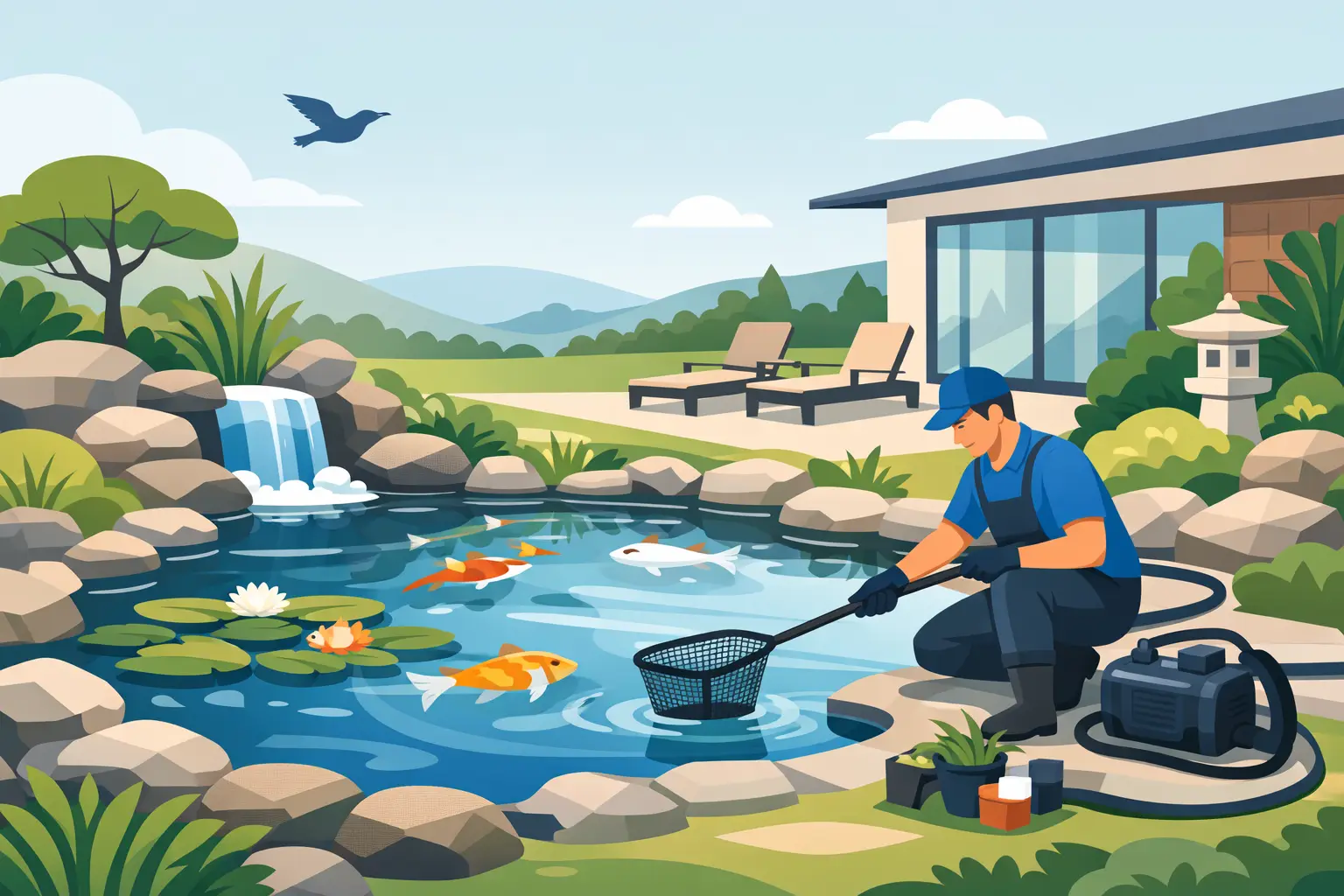
A pond can look peaceful from the patio while its ecosystem is quietly asking for help. A slowing waterfall, a patch of string algae, cloudy water, or a fish that no longer feeds with enthusiasm can all signal that the balance beneath the surface has shifted. The right pond maintenance service Bay Area homeowners choose is not simply a cleaning appointment. It is thoughtful stewardship of a living landscape feature – one built to bring calm, movement, and natural beauty to the property for years.
A well-designed pond does much of the work naturally. Plants shade the water, beneficial bacteria process waste, and circulation keeps the system oxygenated. Yet every pond changes with the seasons, the surrounding landscape, wildlife activity, and the way it is used. Regular professional care preserves the details that make a pond feel effortless to enjoy.
Why Pond Maintenance Is More Than Pond Cleaning
Cleaning is part of maintenance, but it is not the whole picture. A pond can appear clear while a pump is losing performance, a skimmer is pulling less debris than it should, or a plumbing connection is beginning to fail. Conversely, water that looks temporarily imperfect may simply be reacting to seasonal pollen or a new planting and not require a dramatic intervention.
Professional maintenance begins with understanding the pond as a complete system. The water, fish, filtration, rockwork, plants, circulation equipment, and surrounding grade all affect one another. The goal is not to make a natural pond look sterile. It is to support clean, healthy water while preserving the natural character that makes the feature feel like it belongs in the landscape.
This distinction matters especially for custom ponds. A compact water garden in a courtyard has different needs than a large koi pond with multiple pumps, extensive biological filtration, a stream, and mature plantings. Recreation ponds and large, complex water environments require even more attention to circulation zones, intake protection, water clarity, and equipment access. One-size-fits-all service can overlook the very details that protect long-term performance.
What a Skilled Pond Maintenance Service Should Address
A thorough service visit is tailored to the pond’s condition and season, but it commonly starts with a visual and mechanical assessment. The technician should observe water movement, listen for changes in pump sound, inspect the waterfall and stream, and look closely at skimmers, filters, check valves, plumbing, lighting, and electrical connections. Small observations made early can prevent a larger repair later.
Debris management is also foundational. Leaves, seed pods, excess fish food, and sediment add nutrients to the water as they break down. When that nutrient load climbs, algae has more fuel and water quality can decline. Netting debris from the surface, emptying skimmer baskets, and removing accumulated material from the appropriate areas helps the filtration system work as intended.
Filter care needs judgment. Cleaning too aggressively can remove beneficial bacteria that help process fish waste. Cleaning too lightly can reduce circulation and allow debris to bypass the system. An experienced pond professional understands the purpose of each filter component and uses pond water when appropriate to protect the biological balance.
For ponds with fish, maintenance should also include an eye on fish behavior, feeding response, visible injuries, and water conditions. Fish are often the first indication that oxygen, temperature, circulation, or water chemistry has changed. Healthy koi are active and alert, but a sudden behavior shift deserves attention before it becomes a serious issue.
Water Quality Is About Balance, Not Perfection
Clear water is desirable, but clarity alone is not a complete measure of pond health. The best water quality reflects a working relationship between filtration, oxygen, fish load, plant coverage, sunlight, and maintenance habits. In a naturalistic pond, a small amount of algae on rock surfaces is normal. It can even contribute to the established look of the feature.
Problems begin when algae overtakes the pond, water turns persistently green or brown, odors develop, or circulation weakens. The answer may involve removing excess organic material, adjusting the maintenance routine, improving plant balance, correcting a filtration issue, or reducing direct nutrient inputs. It depends on the source. Quick chemical fixes may mask a symptom without solving what caused it.
Seasonal Pond Care in the Bay Area
The Bay Area’s generally mild climate allows ponds to remain active through much of the year, but maintenance needs still shift with weather and local conditions. Spring often brings pollen, windblown debris, warmer water, and renewed plant growth. It is an ideal time to assess equipment after winter, refresh the pond where needed, and prepare filtration for the growing season.
Summer places the greatest demand on circulation and water quality. Longer daylight hours and higher temperatures can accelerate algae growth while warmer water holds less dissolved oxygen. A properly performing pump, waterfall, aeration, and filtration system are essential during this period, especially in ponds with koi or a higher fish population.
Fall is when nearby trees can create a heavy debris load. A maintenance plan should stay ahead of leaf accumulation instead of waiting for organic matter to settle to the bottom. In winter, the focus often shifts to monitoring, clearing collection areas, and ensuring the system remains dependable during rain. Properties in Livermore, San Jose, Moraga, Salinas, Walnut Creek, and surrounding communities can experience notably different sun exposure, wind patterns, and seasonal debris, so the best schedule is based on the actual site rather than a calendar alone.
Full Cleanouts Have a Place, But Not Every Month
A periodic pond cleanout can be valuable when sediment has accumulated, filtration needs deeper service, or the pond is recovering from a prolonged algae issue. During a proper cleanout, fish are handled with care in safe temporary holding conditions, the pond is cleaned methodically, equipment is inspected, and the system is restarted with its ecology in mind.
However, frequent full cleanouts are rarely the answer to every concern. They can be disruptive to fish and beneficial bacteria if performed without purpose. Ongoing maintenance between deeper cleanings is what keeps most ponds stable and reduces the need for major corrective work.
When Maintenance Becomes a Repair Conversation
Some issues are not routine maintenance problems. If water loss is consistent and exceeds normal evaporation, if a waterfall has changed shape, or if the pond level stops dropping below a certain point, a leak investigation may be needed. Water loss can come from plumbing, a stream section, a liner issue, an autofill malfunction, or splash-out caused by rock movement and water flow.
Likewise, a pump that repeatedly trips a breaker, makes unusual noise, or fails to deliver normal flow should be diagnosed rather than repeatedly reset. Fountain problems may involve nozzles, plumbing restrictions, pump wear, lighting, controls, or water-level issues. Accurate troubleshooting protects the system and prevents spending money on the wrong repair.
A service team with construction experience brings an advantage here. They can see beyond the immediate symptom and understand how the feature was built, how water moves through it, and where access may be gained without disturbing more of the landscape than necessary.
Choosing the Right Pond Maintenance Partner
Trust matters when someone is caring for a pond that supports valuable fish, established plants, and a significant landscape investment. Look for a provider willing to inspect before prescribing, explain what they see in plain language, and distinguish between immediate needs and improvements that can be planned over time.
Ask how they approach biological filtration, fish handling, leaks, and equipment troubleshooting. It is also reasonable to ask whether they can service the entire feature, not only the visible water. A dependable team should have the technical experience to manage pumps and plumbing as confidently as they manage rockwork, water quality, and natural aesthetics.
Aquascape Creations approaches maintenance with the same care given to building custom water features: respect for the landscape, pride in craftsmanship, and attention to the working systems behind the beauty. That perspective is especially valuable for homeowners who want their pond to remain a living masterpiece, not another demanding item on a property checklist.
A pond should invite you outside – to listen to water over stone, watch koi move through reflected light, and share a quieter part of the landscape with family and friends. With attentive, informed care, that experience stays close at hand instead of becoming a weekend repair project.
Best login experience I have had in a long time. No endless redirects or broken links. Just a straight path to the action.
[…] Routine maintenance creates a record of how a water feature normally behaves. That makes changes easier to spot and gives the owner a clearer picture of whether a service call is needed. It can also prevent costly damage. A clogged pump, for example, may run hotter and fail prematurely. A small leak can gradually undermine surrounding soil or cause water loss that becomes increasingly expensive and frustrating. […]
[…] new pond, during hot weather, and after significant changes in fish population or feeding habits. A professional maintenance visit can also identify early warning signs that are easy to miss, including declining pump performance, […]
[…] rhizomes fill the container. A well-planned pond is low-maintenance, not no-maintenance, and a regular service schedule protects both the plants and the water quality they […]
[…] may need more intentional access for seasonal cleaning and service. Durable construction and quality filtration make maintenance more manageable, but no living water feature is entirely […]