
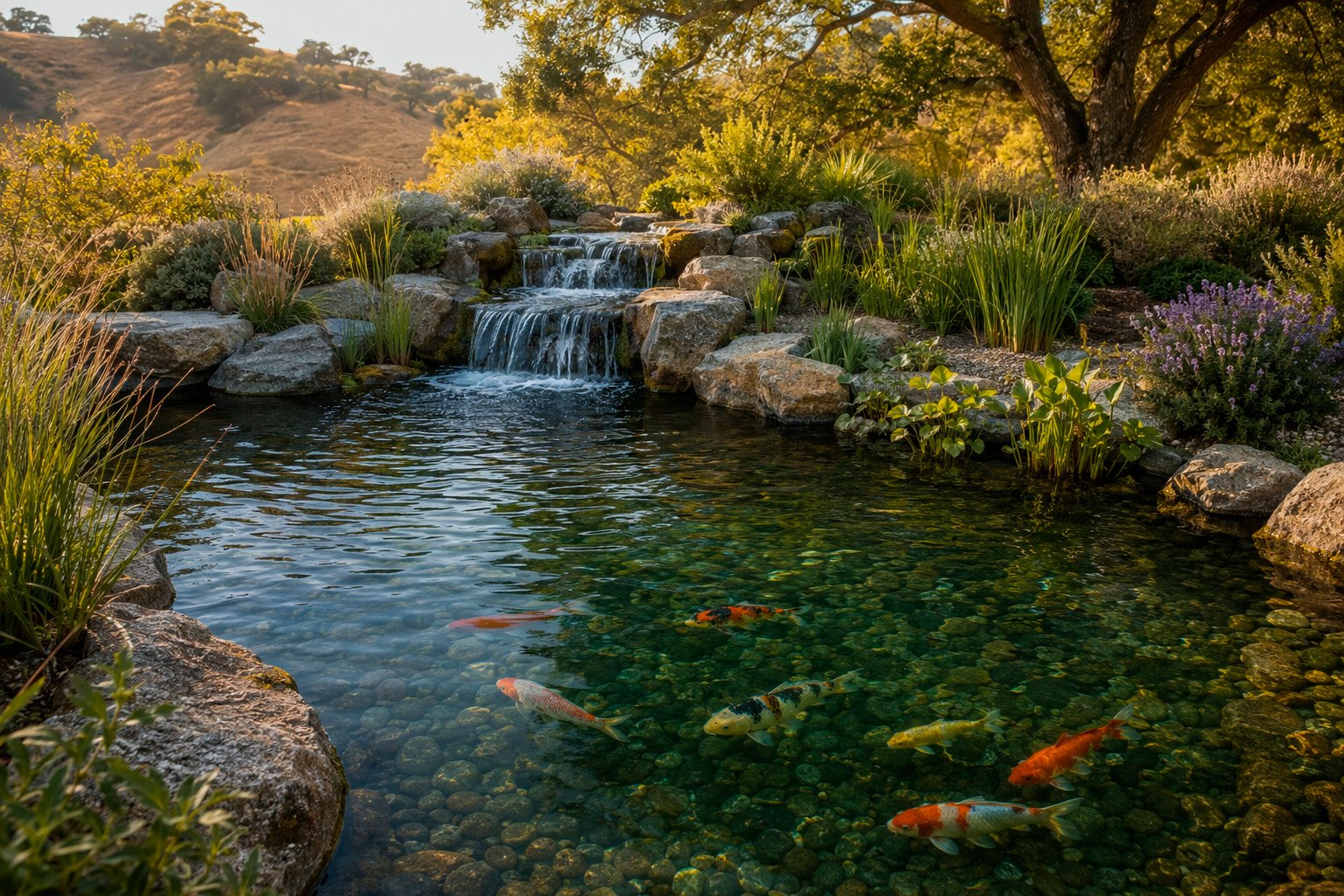
A koi pond can look perfectly still from the patio while an enormous amount of life is moving beneath the surface. Fish produce waste, leaves settle into pockets, pollen drifts in, and beneficial bacteria work around the clock. A properly designed koi pond filtration system is what turns all of that activity into clear water, healthy fish, and a pond that feels like a natural sanctuary rather than a weekly chore.
For a pond built to last, filtration should never be an afterthought. It needs to be planned alongside the pond’s size, fish load, sunlight, surrounding trees, waterfall design, and the way your family will enjoy the space. The right system protects the investment in your landscape while allowing the pond to remain a living masterpiece.
What a Koi Pond Filtration System Really Does
Filtration is often reduced to the idea of removing debris from the water. That is part of the job, but it is only one part. A complete pond filtration system handles visible debris, suspended particles, fish waste, excess nutrients, and the naturally occurring compounds that can become harmful when they build up.
Koi are beautiful, engaging fish, but they are not light pond residents. They eat regularly, grow large, and create a substantial biological load. Water that looks clear is not always safe, particularly if ammonia or nitrite levels rise. Good filtration creates the conditions for beneficial bacteria to convert those compounds into forms that are far less harmful to fish and plants.
The goal is not sterile water. A healthy pond is alive with plants, bacteria, insects, fish, and seasonal change. The goal is balanced water that stays inviting, supports the fish, and does not demand constant intervention from the homeowner.
The Three Jobs Every Pond Filter Must Handle
The strongest systems combine mechanical, biological, and natural filtration. Each has a distinct role, and leaving one out often creates a recurring problem somewhere else.
Mechanical filtration captures debris first
Mechanical filtration removes physical material before it can break down in the pond. This includes leaves, fish food, twigs, algae strands, and fine sediment. A skimmer placed at the pond’s edge is one of the most effective tools for this job because it draws floating debris from the surface before wind carries it into the rocks or to the bottom.
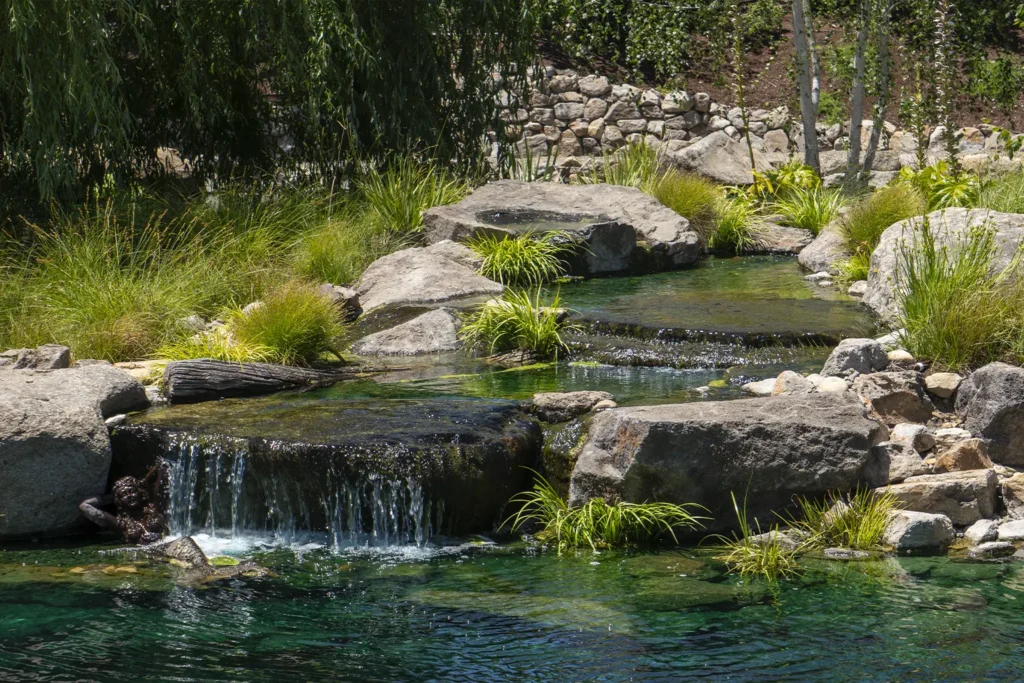
At the base of a waterfall, a biological filter often includes filter mats, nets, or other media that catch additional particles while distributing clean water back into the pond. This combination keeps the pond looking cleaner and reduces the amount of organic material available to fuel algae growth.
Mechanical components do require periodic cleaning. The right design makes that work manageable. If the only way to clean a filter is to dismantle rockwork, crawl into a cramped vault, or shut down the whole pond for an afternoon, maintenance will eventually be delayed. Accessibility is not a minor detail. It is part of long-term performance.
Biological filtration makes water safer for koi
Biological filtration is the invisible workhorse of a koi pond. Beneficial bacteria colonize filter media, gravel, and other oxygen-rich surfaces. These bacteria process ammonia from fish waste and decomposing organic matter, converting it first to nitrite and then to nitrate.
Nitrate is less harmful in reasonable amounts and can be used by aquatic plants. This is why mature ponds often become more stable over time, provided the system is sized correctly and maintained well. The bacteria need water flow, oxygen, surface area, and consistency. Aggressive cleaning with untreated tap water or allowing a pump to remain off for extended periods can disrupt that biological community.
A biological filter must be selected for the actual pond, not simply its water volume. A lightly stocked water garden and a heavily stocked koi pond of the same size have very different filtration needs. Koi owners who plan to feed generously or raise larger fish should build in extra capacity from the start.
Plants and wetlands add natural balance
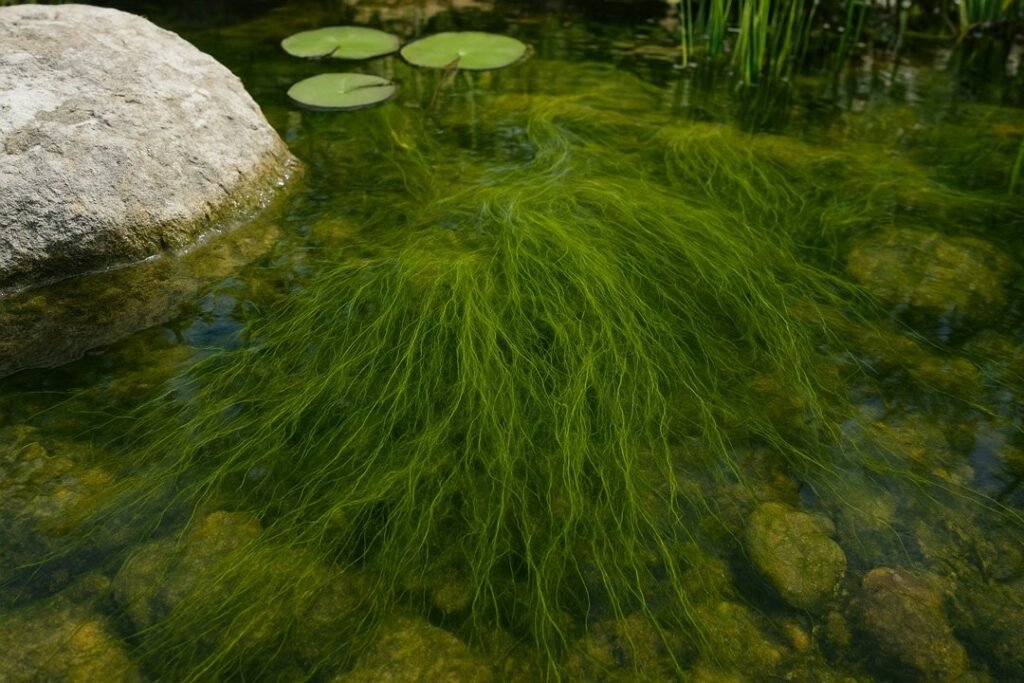
Natural filtration gives a pond its depth and its sense of place. Marginal plants, aquatic plantings, and wetland-style filtration areas help absorb nutrients while softening the visual edges of the feature. They also create habitat and contribute to the layered, landscape-inspired appearance many homeowners want.
A planted filtration zone is not a substitute for proper mechanical and biological filtration in a koi pond. It is a valuable partner. When designed with the correct flow path and planting space, it can improve water quality while making the pond feel more connected to the surrounding garden.
Pump Size and Water Movement Matter as Much as the Filter
A filter cannot perform well without proper circulation. The pump moves water through the skimmer, filter, plumbing, and waterfall, delivering oxygen and preventing debris from settling in stagnant areas. But bigger is not automatically better.
An oversized pump can create excessive turbulence, waste energy, and make the pond less peaceful. An undersized pump may leave debris floating in corners, reduce oxygen levels, and limit the filter’s effectiveness. The ideal flow rate depends on pond volume, plumbing distance, elevation changes, the width and style of the waterfall, and the number of water features connected to the system.
This is where custom construction matters. A long stream, an elevated waterfall, or a large recreation pond requires more than a simple pump-and-filter calculation. Friction loss in plumbing, pump performance at a given head height, and access for future servicing all affect the final design.
For many residential koi ponds, circulating the full pond volume approximately once every hour to two hours is a useful starting point. Still, it is only a starting point. A shaded pond with modest fish stocking may have different needs than a sunny pond with active koi, mature trees overhead, and a broad waterfall.
Why Clear Water Can Still Be a Warning Sign
Crystal-clear water is beautiful, but clarity alone does not prove that a pond is healthy. Problems with ammonia, nitrite, pH, low oxygen, or temperature stress can be present even when the water looks excellent. This is especially true after adding fish, increasing feeding, cleaning a filter too thoroughly, or restarting a system after a winter shutdown.
Regular water testing gives pond owners a clearer picture of what is happening below the surface. Testing is particularly useful during the first year of a new pond, during hot weather, and after significant changes in fish population or feeding habits. A professional maintenance visit can also identify early warning signs that are easy to miss, including declining pump performance, a hidden plumbing issue, or filter media that needs attention.
Healthy fish are another useful indicator. Koi should be active and alert, with normal appetite and behavior. Fish gasping near a waterfall or gathering around a return jet may be seeking oxygen. Cloudy water, persistent foam, strong odors, or unusual algae growth can also point to an imbalance worth addressing promptly.
Common Filtration Mistakes That Create Ongoing Work
The most expensive filtration problems are often created before the pond is finished. Choosing equipment based only on the lowest initial price, underestimating future koi growth, or installing components without convenient access can lead to years of frustration.
Another common issue is treating algae as the primary problem rather than asking why it is growing. Algae may be fueled by excess nutrients, inadequate circulation, too much sun, decaying debris, overfeeding, or insufficient plant coverage. Chemical treatments can sometimes have a role, but they should not replace correcting the condition that allowed the imbalance to develop.
Overcleaning is also a concern. Removing all of the beneficial bacteria from filter media can trigger a water-quality setback. The better approach is to remove accumulated debris while preserving as much of the established biological community as possible. Pond care should feel measured and intentional, not like repeatedly resetting the ecosystem.
Designing for the Bay Area Landscape
Bay Area properties bring their own opportunities and challenges. Dry summers, changing temperatures, strong sunlight, hillside grades, mature trees, and tight access can all influence filtration design. A pond on a sloped property may need thoughtful drainage and equipment placement. A yard beneath deciduous trees may benefit from a more substantial skimmer strategy and easy seasonal cleanout access.
The visual design should also work with the technical system. Natural boulders, streams, planting pockets, and waterfalls can conceal filtration components without making them difficult to service. When the construction is planned well, the homeowner sees a beautiful, natural water feature while the equipment remains accessible to the people who care for it.
At Aquascape Creations, that balance between nature-inspired artistry and practical performance is central to every custom pond. A filter system should support the experience of sitting beside moving water, watching koi gather at feeding time, and sharing the space with family, not compete with it.
When an Existing System Needs an Upgrade
Older ponds do not always need to be rebuilt from scratch. In many cases, filtration can be improved with a better skimmer, upgraded pump, additional biological media, corrected plumbing, or a redesigned waterfall filter. The right solution depends on what is failing and what the homeowner wants from the pond going forward.
If a pond stays green despite regular cleaning, loses water, has weak waterfall flow, or requires constant attention to keep fish healthy, it is worth having the system evaluated as a whole. A repair focused on one visible symptom may not solve an underlying circulation, leak, or capacity issue.
The best koi pond filtration system is the one that fits the pond, the fish, and the life happening around it. When water moves well, filters are sized with room to grow, and maintenance is planned into the design, the pond becomes easier to enjoy in every season. That is when a backyard water feature stops feeling like equipment to manage and starts feeling like the restorative place it was meant to be.

[…] bring movement and personality to a pond, but they also raise the bar for design and filtration. They need adequate depth, dependable circulation, protection from predators, and a biological […]
[…] ponds use plants as part of the overall system. They are not a replacement for proper filtration, circulation, or routine maintenance, but they can make those systems work more naturally. Their […]