
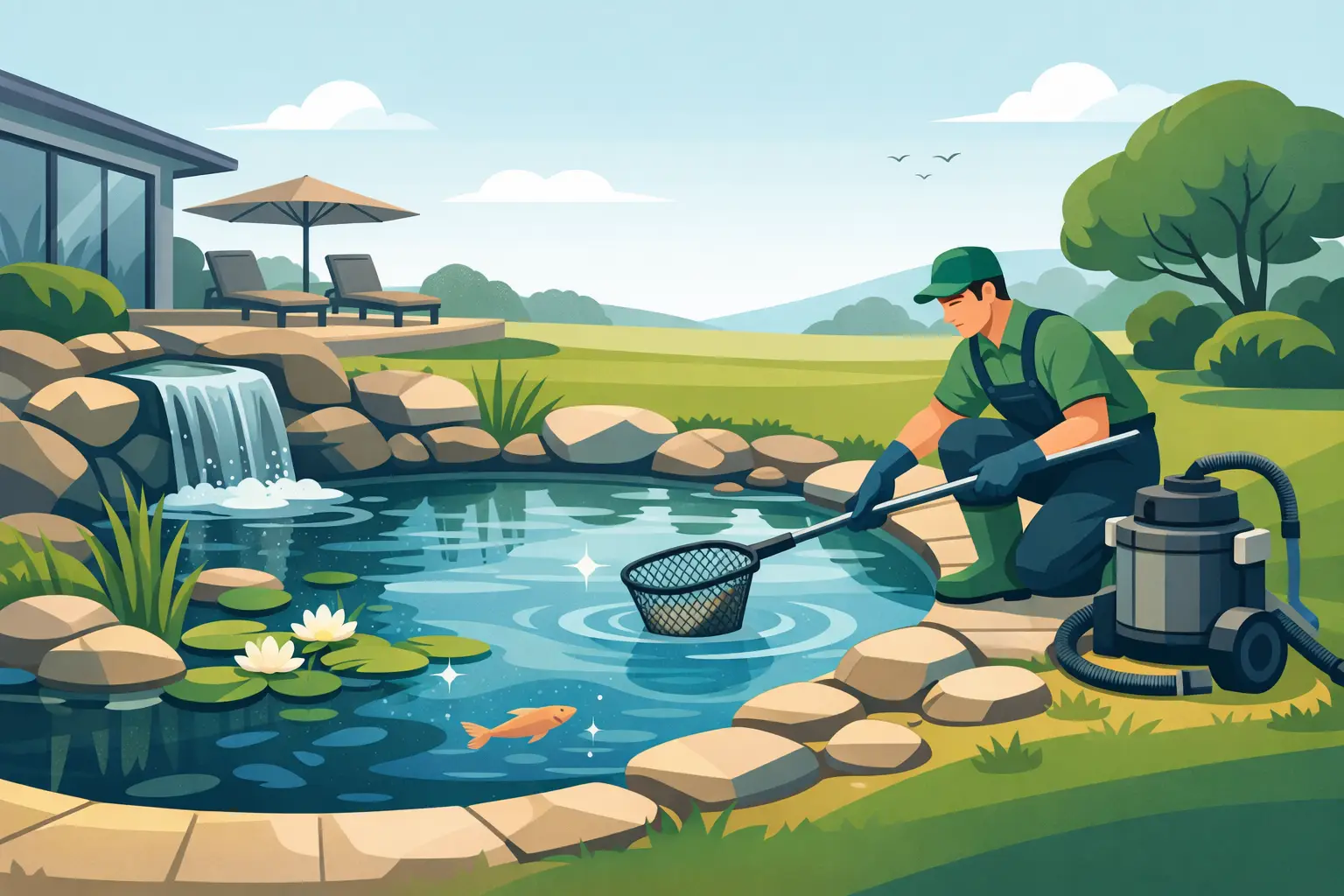
A pond can look fine from the patio while quietly collecting the debris that compromises its health below the surface. A professional pond cleaning service is not simply about making water look clearer for a weekend. Done well, it restores the biological balance, protects fish and plants, identifies developing equipment issues, and keeps a water feature feeling like the natural sanctuary it was meant to be.
For homeowners who have invested in a koi pond, water garden, or custom waterfall, cleaning is part of protecting a living landscape creation. The right care preserves the details that make the feature remarkable: the sound of moving water, the reflections, the lush planting, and the peace of seeing healthy fish move through clear water.
What Pond Cleaning Really Accomplishes
Leaves, pollen, fish waste, excess fish food, sediment, and dying plant material all become part of a pond over time. That is normal. A properly built pond is an ecosystem, not a sterile container of water. The concern begins when organic material accumulates faster than the filtration system and beneficial bacteria can process it.
Excess debris can create murky water, unpleasant odors, algae pressure, reduced oxygen, and thick sludge along the bottom. It can also hide more serious concerns, such as a failing pump, a clogged intake bay, damaged plumbing, or a slow leak. A quality cleaning appointment addresses both the visible mess and the conditions creating it.
This is especially valuable after fall leaf drop or before the active spring season. In many Bay Area landscapes, windblown debris, long dry periods, and sudden seasonal rain can each change how a pond performs. The timing and scope of service should reflect the pond’s design, surrounding trees, fish load, plant growth, and filtration capacity rather than follow a one-size-fits-all schedule.
What a Professional Pond Cleaning Service Should Include
A thorough cleaning begins with observation. Before water is removed or equipment is handled, an experienced pond technician evaluates water clarity, fish behavior, circulation, waterfall flow, the condition of the liner, and how the filtration system is functioning. That initial assessment matters because cleaning without diagnosing the cause of a problem can leave a pond looking better temporarily while the underlying issue continues.
Fish safety comes first. When a pond requires a more complete cleanout, fish are carefully transferred into aerated holding tanks using water from their own pond. This reduces stress while the work is performed. Plants may also be divided, trimmed, repositioned, or assessed for decay, depending on the season and the owner’s goals.
The process generally includes the following work:
- Removing accumulated leaves, sludge, and debris from the pond basin and skimmer area.
- Cleaning filtration components, intake bays, biological filters, pumps, and plumbing as appropriate.
- Inspecting waterfalls, streams, edging, rocks, liner exposure, and circulation patterns.
- Refilling the pond safely, treating source water when needed, and restarting the system with attention to flow and oxygenation.
The phrase “as appropriate” is essential. Not every pond benefits from being stripped completely clean. Biological filtration relies on beneficial bacteria, and aggressive cleaning can remove much of the ecosystem that helps keep water balanced. A skilled team cleans with purpose, preserving what is healthy while removing what is working against the pond.
Clear Water Is Not the Only Measure of Health
Crystal-clear water can still have poor circulation, insufficient oxygen, high nutrient levels, or a filter that is struggling behind the scenes. Conversely, water that looks slightly tinted by natural tannins may still support a healthy ecosystem. The goal is not an artificial, chemically dependent appearance. It is water that supports fish, plants, movement, and long-term enjoyment.
This distinction is particularly important for koi ponds. Koi produce significant waste, and their well-being depends on stable water conditions, reliable filtration, and adequate oxygen. Cleaning provides an opportunity to inspect fish closely for signs of stress, injury, parasites, or changes in behavior that may otherwise go unnoticed.
Seasonal Care Prevents Larger Repairs
A pond often gives small warnings before it develops a major problem. A waterfall may lose volume. The skimmer may need more frequent attention. Water level may drop faster than expected. A pump may hum, surge, or stop moving water consistently. These are not always emergencies, but they deserve attention.
Routine maintenance creates a record of how a water feature normally behaves. That makes changes easier to spot and gives the owner a clearer picture of whether a service call is needed. It can also prevent costly damage. A clogged pump, for example, may run hotter and fail prematurely. A small leak can gradually undermine surrounding soil or cause water loss that becomes increasingly expensive and frustrating.
Spring is often the ideal time for a comprehensive cleaning because it prepares the pond for warmer weather, active fish, and new plant growth. Fall service is equally valuable where deciduous trees contribute heavy leaf loads. Some ponds need both, while a lightly stocked water garden with strong filtration and limited debris may need less intensive cleaning. The best schedule depends on the feature itself.
Why DIY Cleaning Can Create Unwanted Problems
Hands-on pond care is rewarding, and homeowners can handle routine tasks such as skimming leaves, removing string algae, topping off water, and observing fish. But a deep cleaning involves more than draining a basin and rinsing equipment with a hose.
Common DIY mistakes include using untreated tap water around fish, cleaning biological media too aggressively, allowing a pump to run dry, pressure washing liner seams, or returning fish before water conditions stabilize. Another frequent issue is removing rocks or disturbing edges without understanding how the pond was constructed. In a naturalistic pond, each rock, shelf, and stream transition contributes to both appearance and function.
Professional service is particularly worthwhile when a pond has fish, recurring algae, unexplained water loss, aging equipment, a large footprint, or a complex stream and waterfall system. It also provides reassurance for homeowners who want to enjoy their backyard feature without spending every weekend troubleshooting it.
Cleaning Is the Right Time to Look Beyond the Water
The most useful service visits often reveal opportunities to improve the entire experience. Maybe the waterfall needs a flow adjustment to regain its sound and presence. Perhaps an intake bay would reduce maintenance, or a lighting upgrade would make the pond safer and more inviting at night. An older filter may be undersized for the current fish population, while overgrown plants may be blocking a view that once made the pond a focal point.
These observations are not about adding work for the sake of it. They are about protecting the original vision. A water feature should complement the home, terrain, and way a family uses the outdoor space. When it is maintained with care, it remains a living masterpiece rather than becoming another landscape chore.
At Aquascape Creations, pond service is approached with the same pride and technical attention that goes into building natural water environments. Our team has worked alongside some of the best in the industry, learning how to care for features of every scale with respect for both craftsmanship and ecology.
Choosing a Pond Service Team You Can Trust
Look for a provider that understands construction as well as maintenance. A cleaning crew should be able to recognize whether a concern is related to filtration, plumbing, liner integrity, rock placement, electrical components, or normal seasonal change. Experience with koi handling and natural biological systems is equally important.
Clear communication also matters. You should know what work is being performed, what was found, and what recommendations are urgent versus optional. The best service relationship is not built on vague promises of clear water. It is built on thoughtful care, honest guidance, and a team that treats your pond as a meaningful part of your property.
A well-maintained pond rewards that attention every day. When the water moves cleanly over stone, the fish are active, and the landscape feels alive, the value of professional care is easy to see – and even easier to feel from your own backyard.

[…] care may choose to handle routine tasks themselves with professional guidance. Others prefer ongoing service so they can spend their weekends swimming, entertaining, and enjoying the view. Both approaches can […]
[…] leaf management becomes the priority. A net can be helpful for ponds near deciduous trees, while a professional cleaning removes the organic material that would otherwise break down over winter. During cooler months, […]
[…] Professional care is particularly valuable when a pond has mature koi, complex filtration, a difficult site, or an aging system. A small leak, reduced waterfall flow, or recurring algae issue can have several possible causes. Finding the real source of the problem requires experience, not guesswork. Timely repairs protect the pond’s ecosystem and prevent a manageable issue from becoming a major restoration. […]