
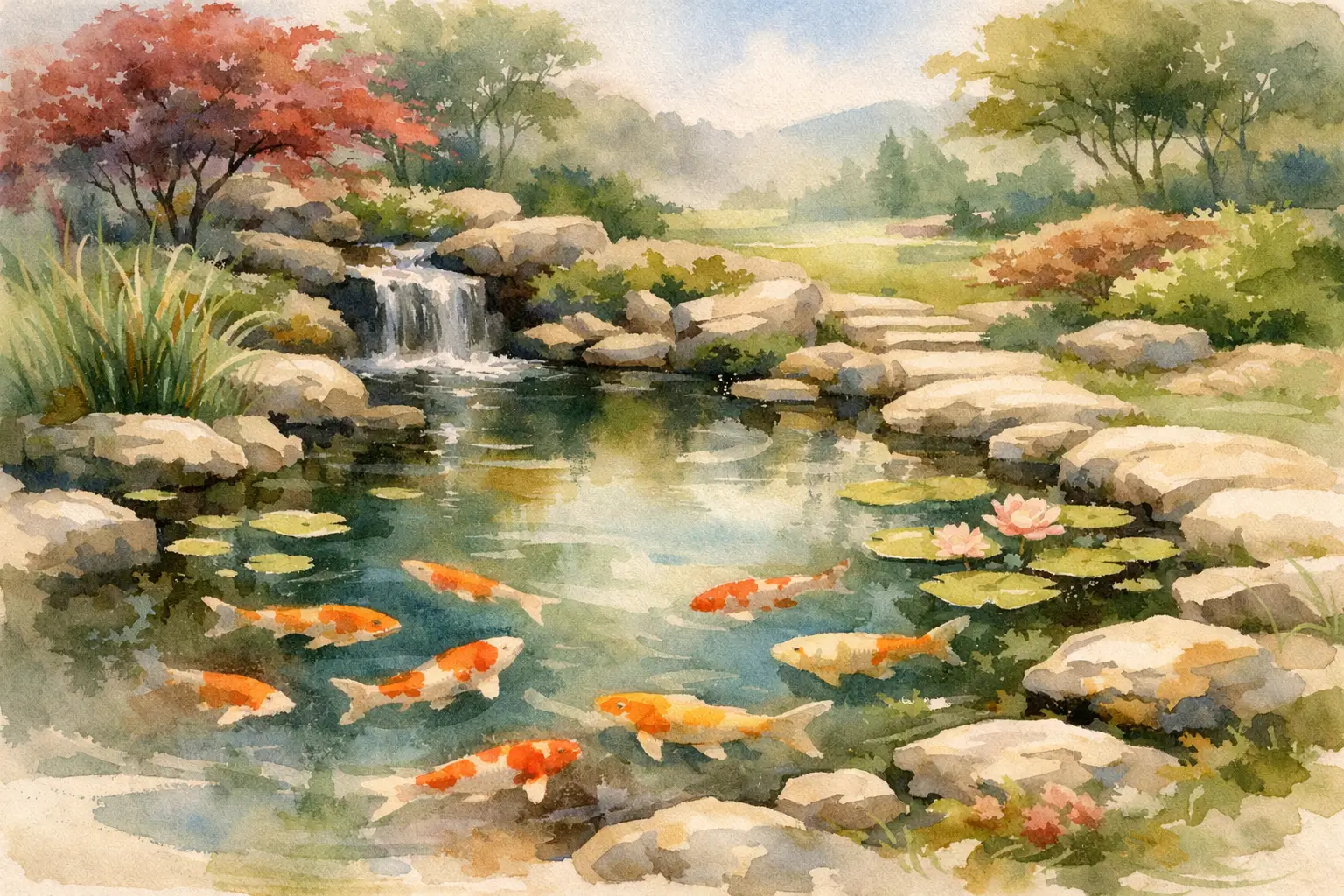
A well-built pond changes the way a backyard is used. The sound of falling water softens street noise, flashes of color draw people outdoors, and a quiet edge beside the pond becomes a favorite place to sit. Koi ponds are not simply landscape accessories. When designed around the property, they become living spaces with their own rhythm, beauty, and sense of permanence.
For homeowners considering a substantial outdoor upgrade, the goal should be more than adding fish and water. A pond should feel as though it belongs to the terrain, architecture, planting, and life of the family who will enjoy it.
What Makes Koi Ponds Feel Natural
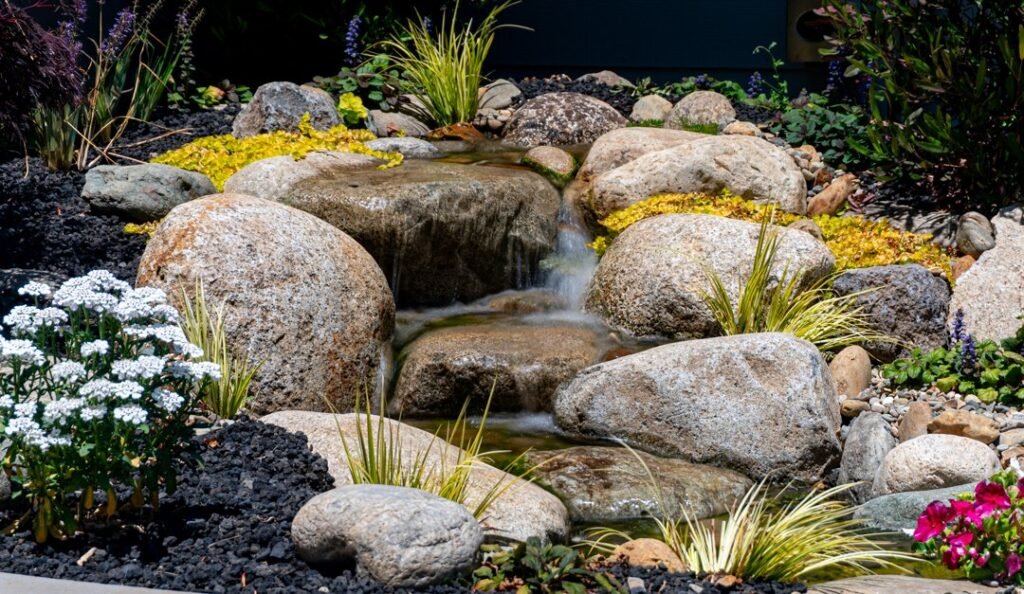
The most memorable ponds rarely look newly installed. They feel settled into the landscape, with boulders placed for scale and character, water moving through natural-looking contours, and planting that softens the transition between stone and garden.
That natural appearance takes careful planning. A waterfall cannot be treated as a decorative attachment. Its sound, height, flow, and viewing angle all matter. A pond that looks beautiful from the patio but has a harsh waterfall sound near an open bedroom window will not feel restful. Likewise, oversized boulders can overwhelm a compact courtyard, while stones that are too small can make a large property feel like it has a miniature feature dropped into it.
A good design begins with how the property is actually lived in. Some clients want a tranquil view from the kitchen. Others want a destination at the far end of the yard, where a bridge, seating area, and stream create a place for family gatherings. On a larger estate, the pond may anchor a full outdoor living environment with gardens, paths, and multiple viewpoints.
Start With the Right Site, Not a Standard Shape
Every property brings its own opportunities and constraints. Sun exposure affects water temperature and aquatic plants. Mature trees may provide welcome shade but also add leaves and roots to the planning equation. Existing slopes can create dramatic waterfall elevations, while a level yard may require more intentional grading to achieve a natural result.
In the Bay Area, microclimates matter as much as lot size. A warm, exposed inland yard needs a different approach than a shaded garden in a cooler neighborhood. The pond’s location should balance visibility, access for maintenance, wind exposure, nearby plant debris, and the practical needs of construction.
A custom shape also matters. Kidney-shaped ponds and rigid perimeter stone can make a water feature look dated or disconnected from its setting. Naturalistic ponds usually benefit from irregular edges, varied depths, strategic inlets, and an arrangement of stone that creates visual depth. The pond should invite the eye to travel, rather than reveal its entire outline at first glance.
Plan Around the View From Inside
Many pond owners spend more time looking at their water feature from indoors than they expect. A kitchen window, family room, primary bedroom, or home office may become the most important viewing location on the property.
Before construction begins, it helps to stand at those windows and consider what should be visible: the waterfall, open water, fish activity, a planting pocket, or a dramatic boulder. Thoughtful sightlines are one of the differences between a pond that is admired occasionally and a living masterpiece that becomes part of everyday life.
Water Quality Is the Foundation of Healthy Fish
The beauty of koi depends on clear, healthy water. That does not happen through a single piece of equipment or a weekly dose of chemicals. It comes from an ecological system designed for the pond’s size, fish load, sunlight, and water movement.
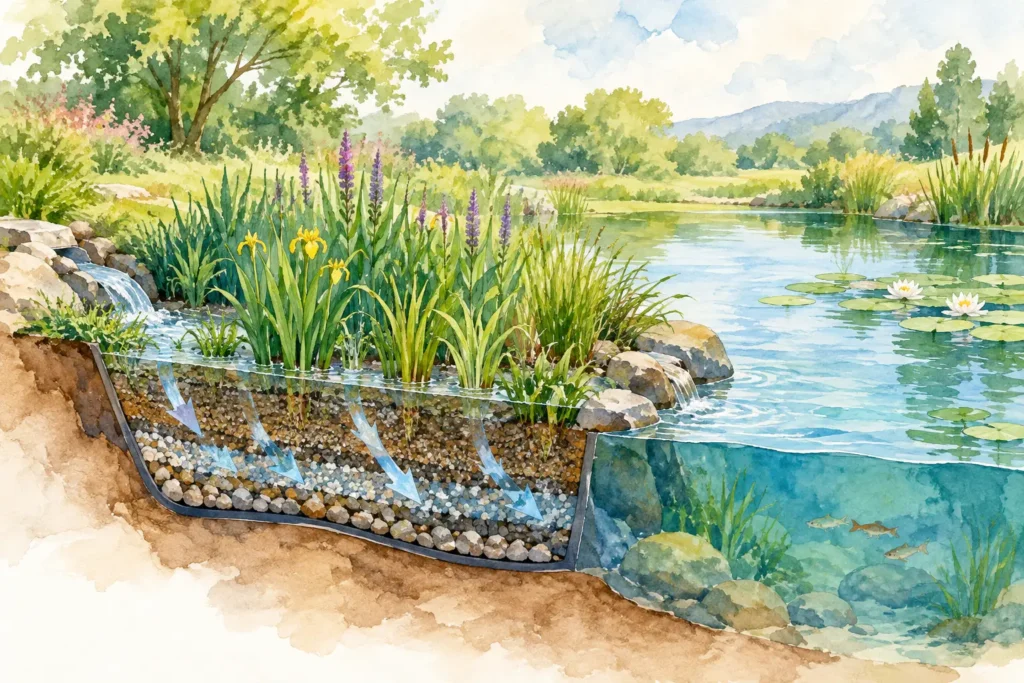
Proper circulation moves debris toward the filtration system while preventing stagnant areas. Mechanical filtration captures solids before they break down in the water. Biological filtration supports beneficial bacteria that process fish waste. Aeration adds oxygen, which supports both koi and the biological life that keeps the pond balanced.
Planting can also be part of the system. Aquatic plants provide shade, visual softness, and nutrient uptake, although the right plant mix depends on the pond’s design and the owner’s maintenance preferences. A highly manicured contemporary setting may call for a more restrained planting approach, while a lush garden pond can embrace layers of marginal plants and seasonal color.
The trade-off is simple: more fish, more feeding, and warmer water all increase the demand on filtration. A pond should be built for the fish population it will support over time, not just the handful of small koi introduced during the first season. Koi grow, and a system that is undersized from the start often leads to murky water, stressed fish, and expensive corrections later.
Build for Depth, Durability, and Service Access
A pond’s hidden construction determines whether its visible beauty will last. Quality liner, underlayment, properly prepared excavation, stable stone placement, and reliable plumbing are not glamorous details, but they protect the investment.
Depth is especially important for koi. Deeper areas give fish greater temperature stability and room to move, while also creating a more substantial visual presence. The ideal depth varies by climate, site conditions, pond size, and design goals, but a shallow decorative basin is rarely the right environment for a serious koi collection.
Equipment should be accessible without becoming an eyesore. Pumps, filters, valves, and electrical components need room for future service. Hiding everything permanently behind stone may look tidy on installation day, but it can turn routine maintenance or repairs into a frustrating excavation project. The best systems are discreet yet serviceable.
At Aquascape Creations, that balance between natural beauty and long-term function is central to the work. A pond is meant to be enjoyed for years, not treated as a delicate feature that requires constant worry.
Choose Koi With the Pond’s Long-Term Capacity in Mind
Koi are engaging, intelligent fish, and it is easy to want more as the collection grows. Their color and movement bring a pond to life, especially when they become comfortable approaching people at feeding time. Still, stocking decisions should follow the pond’s actual filtration and water volume.
Quality matters more than quantity. A smaller group of healthy koi with room to thrive often creates a more graceful, manageable pond than an overcrowded collection. It also allows the water feature itself to remain visible. When fish, plants, stone, and moving water are in balance, each element has space to be appreciated.
Feeding should also shift with the seasons and water temperature. Overfeeding is one of the most common causes of water-quality problems because uneaten food and excess waste quickly add to the system’s workload. A professional maintenance plan can help owners learn the habits that keep their pond clear and their koi active.
Maintenance Should Protect Enjoyment, Not Create Chores
A healthy pond is not maintenance-free, but it should not consume every weekend either. The right maintenance level depends on the pond’s complexity, surrounding landscape, fish population, and how polished the owner wants it to look throughout the year.
Routine care includes observing fish behavior, emptying skimmer baskets, managing debris, checking water movement, and monitoring equipment. Seasonal service may include a more detailed cleaning, filter care, plant trimming, and inspection of pumps, plumbing, and lighting.
Professional care is particularly valuable when a pond has mature koi, complex filtration, a difficult site, or an aging system. A small leak, reduced waterfall flow, or recurring algae issue can have several possible causes. Finding the real source of the problem requires experience, not guesswork. Timely repairs protect the pond’s ecosystem and prevent a manageable issue from becoming a major restoration.
A Pond Should Grow More Beautiful With Time
The first day of a pond installation is exciting, but it is only the beginning. Stone gains character as planting fills in. Fish become more familiar. Water finds its natural voice. The feature begins to reflect the seasons and the people who gather around it.
That is why shortcuts during design and construction are so costly. A pond built with intention can become a daily refuge, a centerpiece for celebrations, and a place children and grandchildren remember. A pond built without enough attention to structure, filtration, and site-specific design can become a recurring maintenance problem.
If you are considering a koi pond, begin by imagining the experience you want to have five years from now: the view, the sound, the healthy fish, and the ease of sitting beside water that feels like it has always belonged there. That vision is the right place to begin a remarkable outdoor space.
The login process is super quick and I never get stuck on the dashboard. Lots of slots and live dealer tables to choose from which makes my evenings very entertaining. Always a solid choice for casual and serious players alike. habanero88login