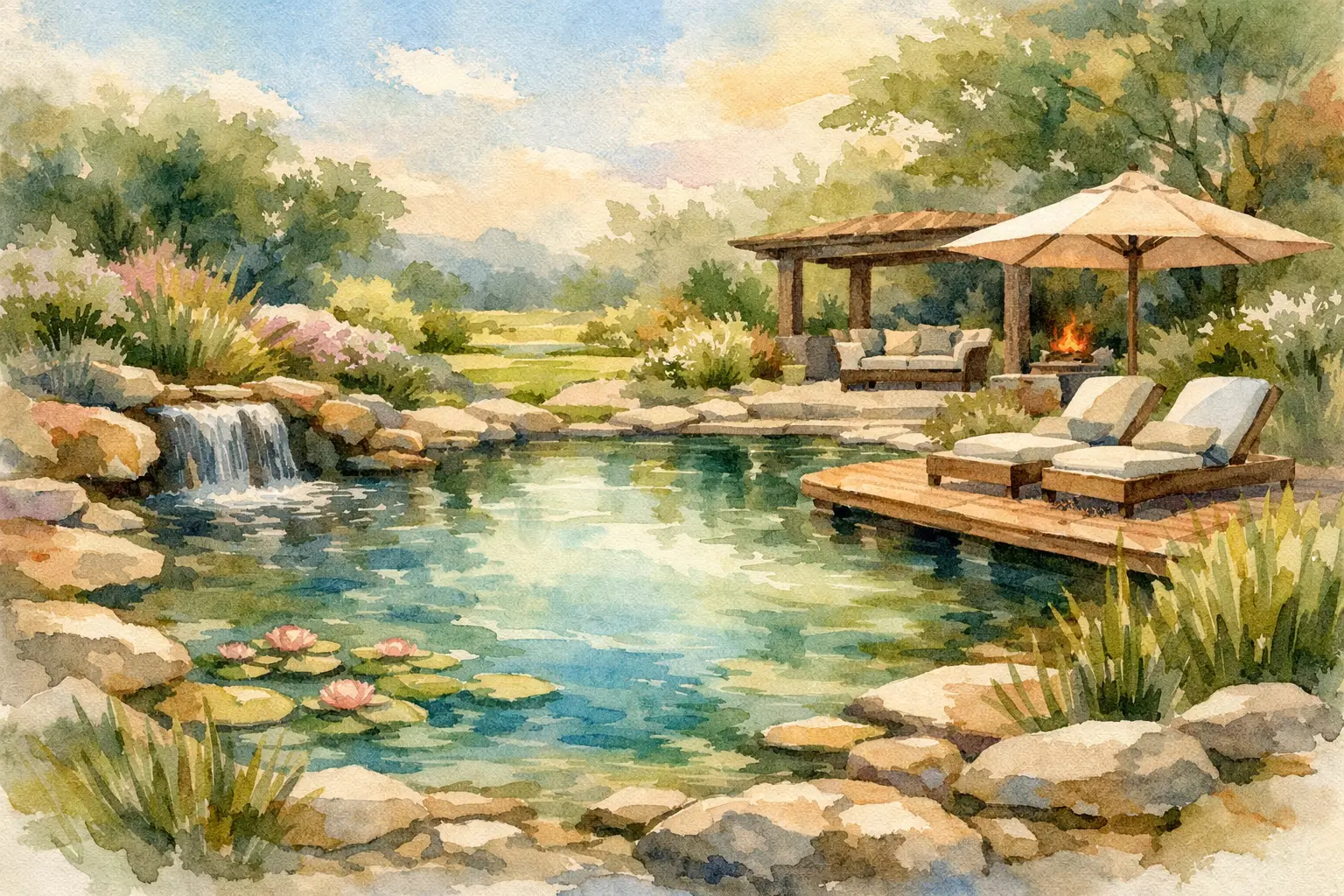
A swimming pool can be a place to cool off. A well-designed natural pool can become the reason everyone gathers outside. With the sound of moving water, boulders shaped into the grade, aquatic plants softening the edges, and space to actually swim, natural pools turn a backyard into a living sanctuary rather than a hardscape feature with water in it.
For homeowners investing in a meaningful outdoor transformation, that difference matters. A natural pool should look as though it belongs to the property, while being engineered to perform through hot summers, changing seasons, family use, and years of enjoyment.
What Makes Natural Pools Different?
Natural pools, often called recreation ponds or natural swimming ponds, combine the enjoyment of swimming with the character of a natural water garden. Instead of a uniform rectangle surrounded by concrete, the water is framed with stone, gravel, plantings, waterfalls, beach entries, or carefully composed edges that reflect the landscape around it.
The goal is not to imitate a wilderness pond without a plan. It is to create a controlled aquatic environment that feels relaxed and organic while using proven construction methods, circulation, filtration, and water-management systems. When the design and technical work support each other, the result is clear, inviting water with a far more natural visual presence than a conventional pool.
For many Bay Area properties, a natural pool also solves an aesthetic problem. A home may have mature trees, hillside terrain, a garden-forward landscape, or architecture that calls for warmth and texture rather than bright plaster and a wide expanse of paving. Stone, streams, plant material, and varying water depths can help a swimming area feel connected to the site instead of imposed on it.
The Best Natural Pool Starts With How You Will Use It
A beautiful image can inspire a project, but the right design begins with real life. Will the pool be a family gathering place with room for active swimming? Is the priority quiet floating, entertaining, or creating a striking focal point viewed from inside the home? Do children need a gradual entry? Will the water feature be enjoyed from a patio, outdoor kitchen, or second-story window?
Those answers shape everything from the footprint to the depth profile. A family that wants room for play needs a different layout than a homeowner seeking a tranquil water garden with occasional swimming. On a large property, the pool may be part of a broader destination landscape with waterfalls, terraces, pathways, and places to sit. In a compact backyard, every line of sight and square foot must work harder.
Topography is equally important. A slope can create a remarkable opportunity for cascading water and layered views, but it also requires thoughtful grading, drainage, retaining strategies, and access planning. Flat lots have their own considerations, especially when the goal is to make the pool feel naturally settled into the landscape rather than placed on top of it.
Design Details That Create a Natural Feel
Naturalism is not achieved by adding a few rocks at the edge. It comes from proportion, material selection, and a clear understanding of how water moves through a space. Boulders should have scale and purpose. Stone shelves, gravel transitions, planting pockets, and varied edge treatments should look intentional from every angle, including the view from the house.
Waterfalls are often used to add sound, movement, and oxygenation. Their design matters. A waterfall that is too small for the pond can feel decorative rather than believable. One that is oversized can create excessive splash, noise, or maintenance demands. The best balance depends on the setting, the pool volume, and whether the homeowner wants a gentle background sound or a more dramatic visual statement.
Plantings bring another layer of life. Marginal plants can soften the perimeter and make the water feel established, while surrounding landscape choices help integrate the pool into the larger yard. Planting should be beautiful, but it must also be selected with visibility, sun exposure, seasonal growth, and maintenance in mind.
How the Water Stays Healthy and Clear
One of the first questions homeowners ask is whether natural pools are truly clean enough for swimming. The answer is yes, when they are designed and maintained as complete systems rather than treated as simple decorative ponds.
Healthy water depends on circulation, mechanical filtration, biological filtration, proper sizing, and regular care. Skimmers collect floating debris before it can sink and break down. Pumps keep water moving. Biological filtration supports beneficial bacteria that process waste, while properly designed intake bays and wetland-style filtration zones can help capture fine particles and improve water quality.
This approach is different from relying on a heavy chemical routine. It does not mean the system is maintenance-free, nor does it mean every natural pool uses the exact same treatment strategy. Bather load, surrounding trees, sunlight, wildlife, water temperature, and the design of the feature all affect what the pool needs. A pool used every day by an active family has different demands than one used occasionally as part of a quiet garden setting.
Water clarity also begins below the surface. Quality liners, underlayment, plumbing, pumps, and filtration equipment are the hidden structure behind the natural beauty. Cutting corners on these components may reduce an initial budget, but it often leads to frustrating repairs, weak circulation, persistent debris, or a feature that never performs as intended.
The Trade-Offs Worth Considering Before You Build
Natural pools offer a distinct experience, but they are not the right fit for every homeowner. Their beauty comes with a more organic visual character, which may not suit someone who wants sharp geometry, open sun decks, and a classic resort-style pool.
They also require professional planning from the beginning. A natural edge has to be stable. Water movement must be calculated correctly. Equipment needs accessible, thoughtful placement. The filtration system must be sized for the pool, not selected as an afterthought. Large boulders, excavation, site access, and drainage can all influence cost and construction timing.
Maintenance is another honest consideration. While many owners appreciate a water environment that is not dependent on the same chemical approach as a conventional pool, leaves still fall, filters still need service, and seasonal adjustments still matter. Properties with heavy tree cover may need more frequent debris management. A service plan can protect the investment and allow homeowners to enjoy the water rather than spend weekends troubleshooting it.
The reward is a feature with much more than one purpose. It can provide exercise, a place for kids to play, a setting for entertaining, a calming view from the kitchen, and a habitat-inspired landscape element that remains interesting even when no one is swimming.
Building for Long-Term Enjoyment
The most successful projects are designed around both the finished view and the years that follow. That means considering equipment access, safety, cleaning needs, water-level management, and how the landscape will mature. A young planting plan may look open on installation day, but mature plants can change shade patterns, drop more organic material into the water, and alter views.
Construction quality is particularly important on complex sites. Proper excavation and base preparation establish the pool’s shape. Durable liner systems protect the basin. Plumbing must be installed and tested carefully before it disappears beneath stone and gravel. Each boulder must be set securely, with placement that looks natural while supporting the structure around it.
At Aquascape Creations, this balance of nature-inspired artistry and technical construction is central to the work. Our team approaches each project as a custom water environment, shaped around the property, the people who will use it, and the performance required for lasting enjoyment.
When a Recreation Pond May Be the Better Choice
The terms natural pool and recreation pond are often used interchangeably, but the best description depends on the project. A recreation pond may place greater emphasis on the broader water-garden setting, with fish, aquatic plants, waterfalls, and swim areas sharing one integrated environment. A natural pool may prioritize open swimming space while preserving a softer, landscape-based appearance.
Neither approach is automatically better. The right choice depends on whether swimming, visual beauty, fishkeeping, entertaining, or the sound and movement of water is the primary goal. An experienced designer can help define those priorities before the first shovel reaches the ground.
A natural pool should make ordinary time outside feel more valuable: early coffee beside moving water, children lingering outdoors past sunset, friends gathering where the landscape gives them a reason to stay. When it is designed with care and built to last, it does not simply fill part of a yard. It gives the property a new center of life.