A well-built water garden does more than fill a corner of the yard. It changes how a property feels at breakfast, after a long workday, and when friends gather outside. The sound of moving water softens neighborhood noise, fish and plants create daily interest, and a thoughtfully designed pond becomes part of the landscape rather than an object placed in it. This water garden installation guide explains the decisions that make the difference between a feature that delights for decades and one that becomes a recurring repair project.
Start With How You Want to Enjoy the Water Garden
The best location is not always the empty area at the back of the property. A water garden should be visible from the places you use most: a kitchen window, patio, outdoor dining area, family room, or pathway. When the pond is within sight and sound, it becomes a living part of daily life instead of a feature you remember to visit only when maintaining it.
Before drawing a shape, consider the experience you want. Some homeowners want a quiet planting pond with the gentle movement of a small waterfall. Others want a koi pond with enough depth, circulation, and filtration to support healthy fish. A pondless waterfall can be the better fit where space is limited, young children frequently play nearby, or the goal is primarily sound and visual movement without an open body of water.
The site itself guides the design. Existing grade, drainage patterns, sun exposure, mature trees, utility lines, access for equipment, and views from the home all matter. In Bay Area landscapes, a slope can become a beautiful opportunity for a natural cascade, but it must be shaped and stabilized correctly so water stays where it belongs. A low spot may appear convenient, yet it can collect runoff, fertilizer, and debris during storms.
Water Garden Installation Guide: Design Before Digging
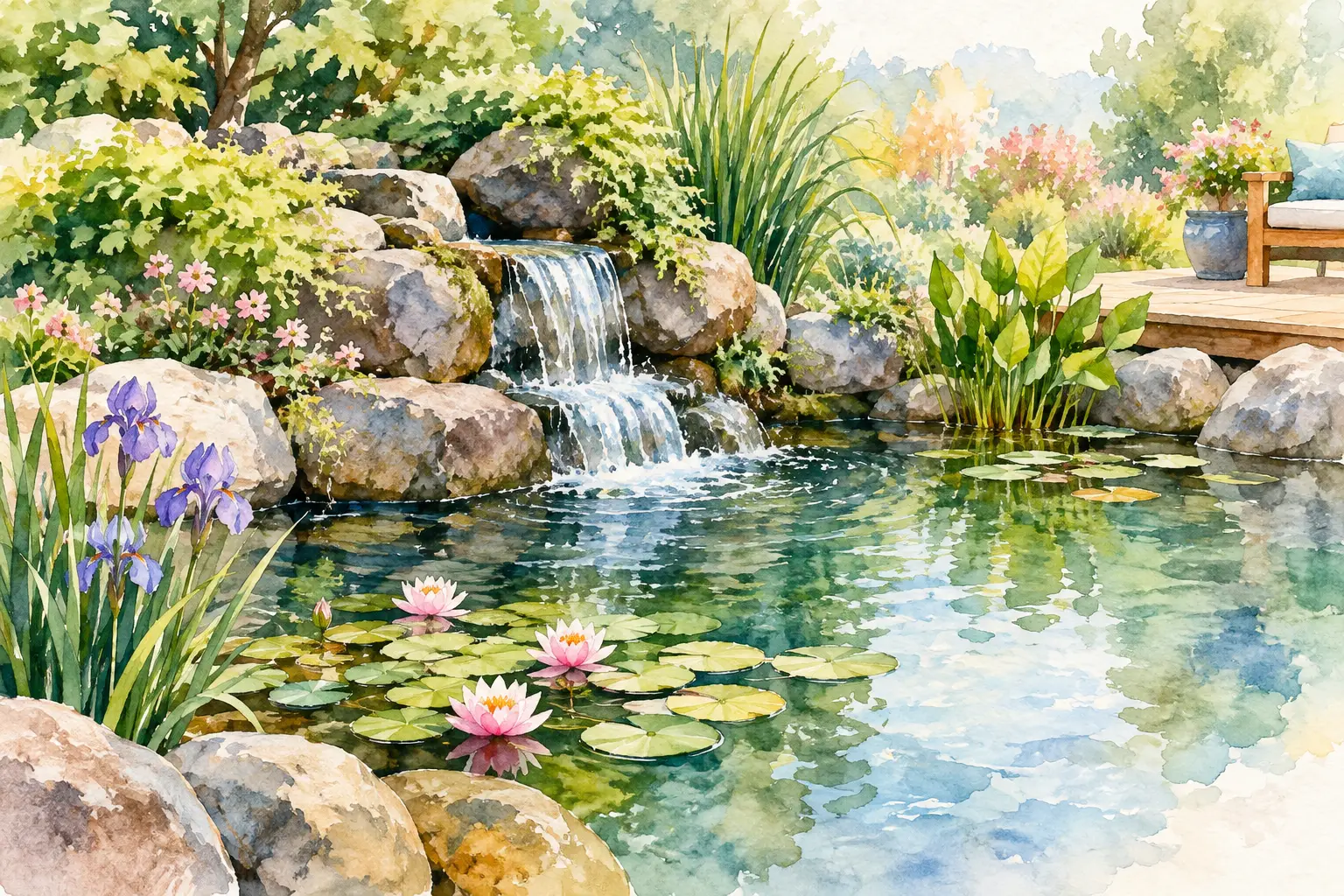
A naturalistic water garden should look as though it belongs to the land. That does not mean it should be random. The most convincing ponds are carefully composed with changing depths, strategically placed boulders, planting pockets, and edges that transition naturally into surrounding landscape materials.
Avoid beginning with a perfectly symmetrical outline unless the home and garden are intentionally formal. Curving shorelines, varied rock sizes, and an irregular arrangement of aquatic plants tend to create a more natural result. At the same time, natural does not mean overbuilt. Too many small rocks can make a pond look busy, while undersized boulders can make a waterfall feel out of scale with the space.
The size of the feature should match the property and its purpose. A compact courtyard may benefit from a focused pondless waterfall with a strong sound profile. A large backyard can support a pond that feels more like a natural sanctuary, with room for fish, marginal plants, and a seating area nearby. If koi are part of the plan, depth and water volume should be determined early. Fish are not an accessory added after construction. They influence the entire filtration and circulation system.
Build in Layers of Depth
Most water gardens need several depth zones. Shallow shelves allow marginal plants to sit at the proper level and provide a visual transition between the pond edge and deeper water. Deeper areas help moderate temperature swings, give fish a place to retreat, and create a more stable environment.
The exact depths depend on climate, fish, the desired planting palette, and the feature’s scale. A professional designer can also account for local safety considerations, circulation needs, and the way water will behave during heavy rain. Planning those details before excavation is far less expensive than correcting them after rockwork and landscaping are complete.
Choose the Right Circulation and Filtration System
The pump, plumbing, skimmer, biological filtration, and waterfall filter are the working heart of a water garden. Beautiful stonework cannot compensate for undersized circulation or poorly planned filtration. Clear, healthy water depends on moving the right amount of water through the system and giving beneficial bacteria a place to do their work.
A skimmer removes floating debris before it sinks and begins to break down. A biological filter supports the natural processes that convert fish waste and organic material into less harmful compounds. A properly selected pump provides the flow needed for the waterfall, streams, and filtration while accounting for elevation changes and plumbing resistance.
It is tempting to reduce the budget by selecting the least expensive pump or using minimal filtration. That decision often leads to weak waterfall flow, cloudy water, frequent cleaning, and early equipment replacement. Quality components cost more at the start, but they protect the investment in excavation, liner, stone, fish, and landscaping.
Access matters just as much as performance. Pumps, skimmer baskets, valves, and filters should be easy to reach without dismantling the landscape. A water garden should ask for regular care, not a weekend of excavation each time a component needs attention.
Prepare the Excavation and Pond Structure Carefully
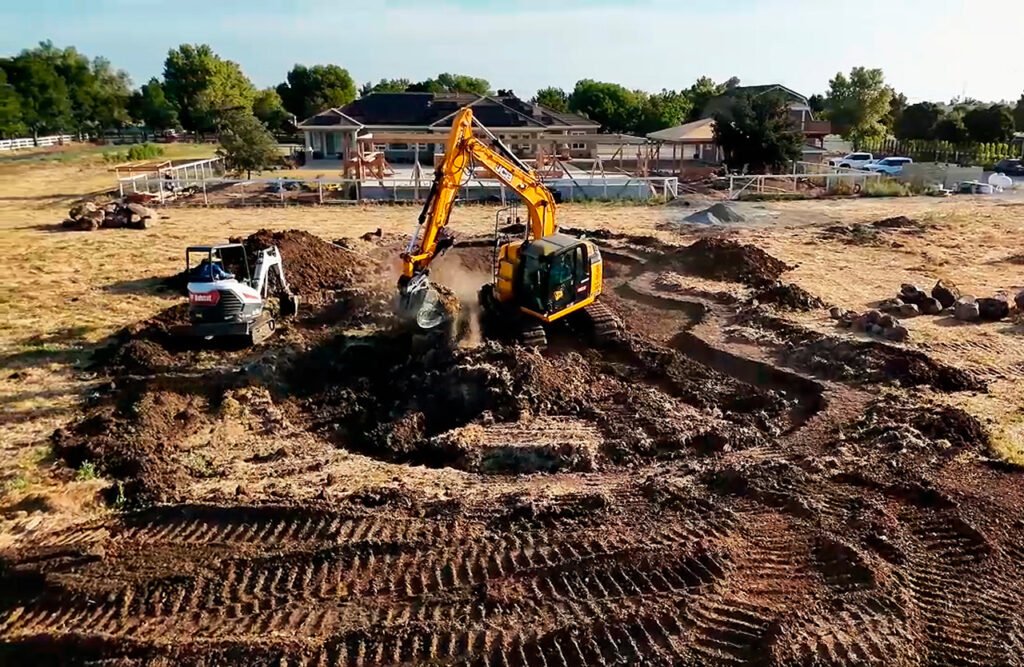
Once the design is finalized, construction begins with layout and excavation. The team should mark the pond perimeter, waterfall route, shelves, and equipment locations before digging. This is the moment to confirm the views from the house and adjust proportions while changes are still simple.
Excavation must account for shelves, deep zones, stable sidewalls, and the final water level. The perimeter needs to be level, even when the surrounding yard is not. If the edge is out of level, water may reveal liner on one side or escape over the lowest point during operation.
A durable liner system typically includes a protective underlayment beneath the liner to reduce the risk of damage from roots, sharp stone, and uneven soil. Plumbing penetrations, stream transitions, and liner folds require particular care. Many leaks are not caused by a failed liner. They occur where water follows a wrinkle, travels behind a waterfall stone, or finds an uncontained edge.
Rock placement is both artistry and engineering. Larger boulders establish the structure of the pond and waterfall, while smaller stones create transitions and cover liner. Each major stone should be stable, supported, and placed with the way water will move across it in mind. A waterfall should not look like water is sliding over stacked rocks. It should feel like the stones shaped the water’s path.
Select Plants and Fish for a Healthy Ecosystem
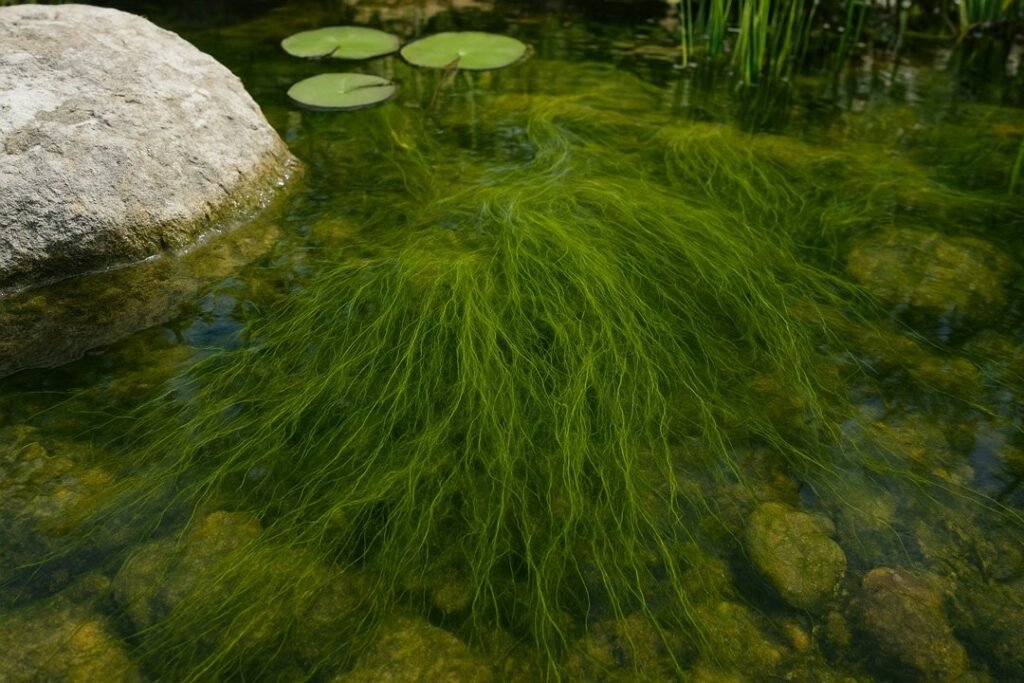
Plants bring softness, color, shade, and ecological balance to a water garden. Water lilies can shade the surface and add dramatic seasonal blooms. Marginal plants soften the pond edge, while submerged plants can support water quality. The right mix depends on sun exposure, pond size, fish load, and the look you want to achieve.
Plant generously enough to create a finished feeling, but leave space for growth. Overcrowding can make maintenance difficult and restrict water circulation. A pond planted for a calm, natural look may use fewer varieties in larger groupings rather than one of everything.
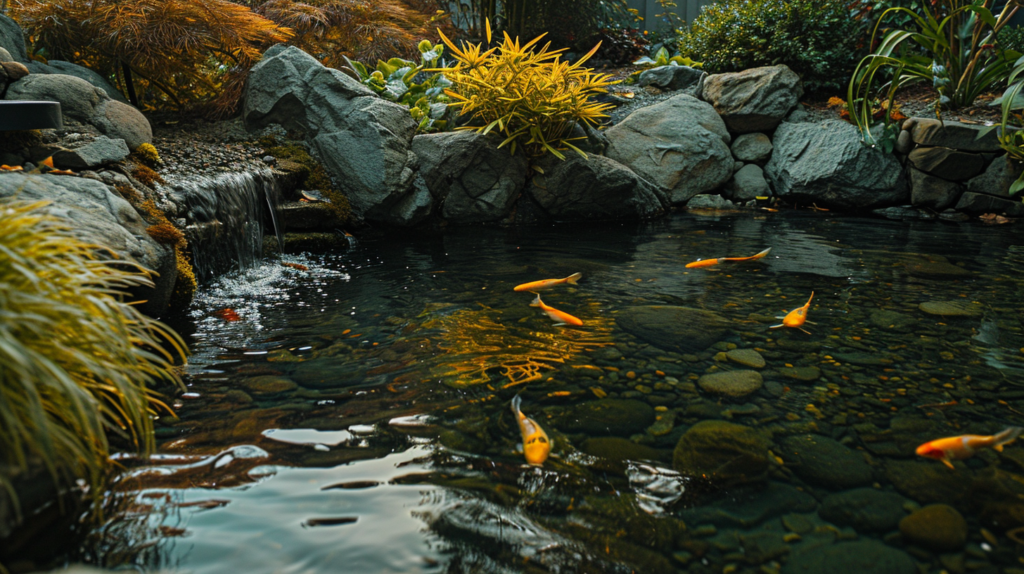
If you plan to keep koi, design for them from the beginning. Koi are beautiful, engaging fish, but they produce substantial waste and may disturb delicate plantings. They need appropriate depth, strong filtration, reliable circulation, and protection from predators. A lightly stocked pond generally remains healthier and easier to maintain than one filled to capacity.
Water Quality Is an Ongoing Relationship
A pond is a living system, not a set-it-and-forget-it installation. Seasonal leaf removal, filter cleaning, pump checks, plant trimming, and water-quality observation preserve its beauty. The workload varies with tree cover, fish population, weather, and the type of filtration installed.
In autumn, netting may be worthwhile for ponds beneath deciduous trees. During warmer months, increased feeding and sunlight can change water conditions quickly. If water becomes cloudy, develops excess algae, loses flow, or drops below its normal level, address the cause rather than adding quick-fix chemicals. A professional inspection can distinguish an evaporation issue from a leak, a clogged intake, or an imbalance in the system.
Know When a Professional Installation Is Worth It
A small container water garden can be a satisfying do-it-yourself project. A built-in pond, waterfall, or koi system is different. It combines grading, excavation, electrical coordination, plumbing, waterproofing, hydraulic design, stonework, and ecological planning. The more complex the terrain or the larger the feature, the more valuable experienced construction becomes.
Aquascape Creations approaches water features as landscape creations with a technical foundation. That balance is especially valuable for properties with slopes, substantial rockwork, large ponds, difficult access, or a vision that needs to complement the architecture rather than compete with it. Clear planning and skilled installation protect the joy of the finished space.
A water garden earns its place in a landscape when it invites you outside without asking for constant attention. Start with a design that reflects how you live, build the unseen systems with care, and give the water room to become the natural sanctuary you imagined.