
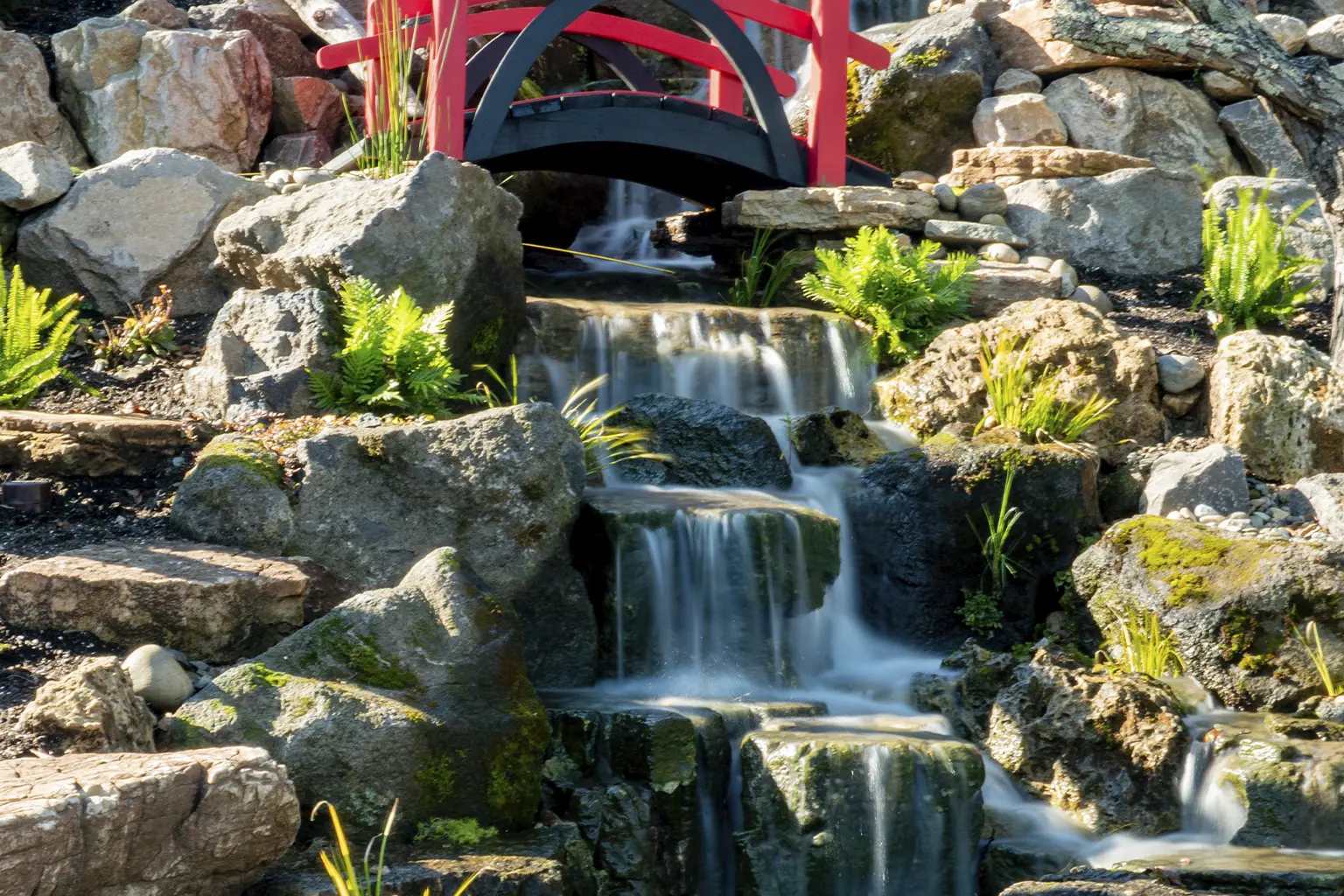
A hillside can make an ordinary pond impossible to forget. The sound of water carries differently across a slope, stone has more visual presence, and every turn in the grade can create a new view. But a Bay Area hillside pond is never simply a pond placed on an incline. It is a carefully engineered water environment that must work with the land, manage runoff, and still look as though nature intended it to be there.
For homeowners in Livermore, San Jose, Moraga, Walnut Creek, and surrounding communities, slopes often come with remarkable potential as well as real construction challenges. Done well, a hillside pond becomes a living masterpiece – a natural sanctuary for quiet mornings, family gatherings, and the simple pleasure of watching water move through the landscape. Done carelessly, it can invite erosion, difficult maintenance, unstable stonework, or persistent water-level problems.
Why Hillside Ponds Need a Different Approach
Flat-ground pond construction is largely about excavation, liner protection, circulation, and edge treatment. On a hillside, those fundamentals still matter, but the grade changes every decision. Water naturally wants to travel downhill, including rainwater from roofs, paths, planting beds, and neighboring portions of the property. A pond that ignores that drainage pattern can become the lowest collection point for mud, debris, and excess runoff.
The best design starts by reading the site rather than forcing a predetermined shape into it. The slope may suggest a waterfall that travels alongside a patio, a series of pools that steps gently downhill, or a pond tucked into a natural bench in the terrain. Sometimes the right answer is a more compact water feature with an ambitious stream. Other properties have the scale and access for a substantial koi pond, recreation pond, or large natural swimming environment.
It depends on the home, the grade, the soil, surrounding trees, available access, and how the space will be used. A family wanting a place to gather will need a different layout than a homeowner whose priority is viewing the pond from a kitchen window or upper terrace.
Start With Water Movement Above and Inside the Pond
The most important water on a hillside is often the water you do not plan to see. Before excavation begins, the site needs a strategy for surface drainage and stormwater. Swales, drain lines, catch basins, retaining solutions, and properly shaped surrounding grades may all play a role. The goal is to direct outside runoff around the feature instead of allowing it to rush through it.
This is especially important during the Bay Area’s heavy seasonal storms. Fine sediment washed into a pond can cloud the water, burden the filtration system, and create an ongoing cleaning problem. More seriously, unmanaged runoff can undermine stone edges or shift soil beneath constructed elements over time.
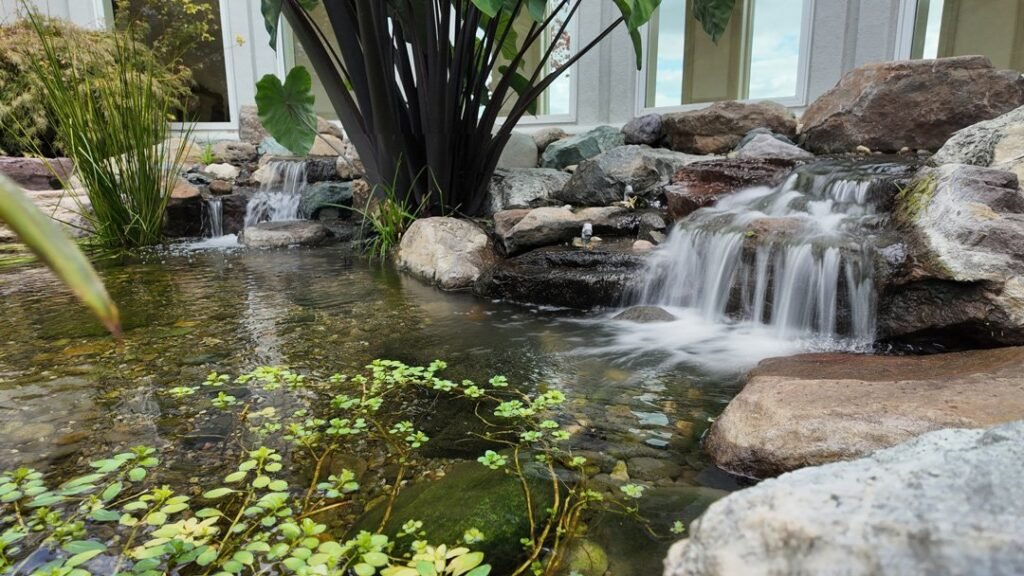
Inside the pond, circulation needs equal attention. A beautiful waterfall alone does not guarantee healthy water. Skimmers, biological filtration, pumps, bottom circulation, and return locations should be planned as a system. They should move debris toward collection points, support oxygen levels, and prevent stagnant pockets that can compromise water clarity.
A naturalistic pond should feel effortless to its owner. That apparent simplicity comes from thoughtful plumbing, correctly sized equipment, and construction details that are hidden from view but easy to service when needed.
Build the waterfall for the grade, not against it
A slope gives a waterfall real opportunity. Instead of manufacturing height with oversized mounds of soil, a designer can use the existing elevation to create a longer, more convincing cascade. Water can disappear around a bend, pass beneath plantings, pause in a small upper pool, then arrive at the main pond with sound and energy.
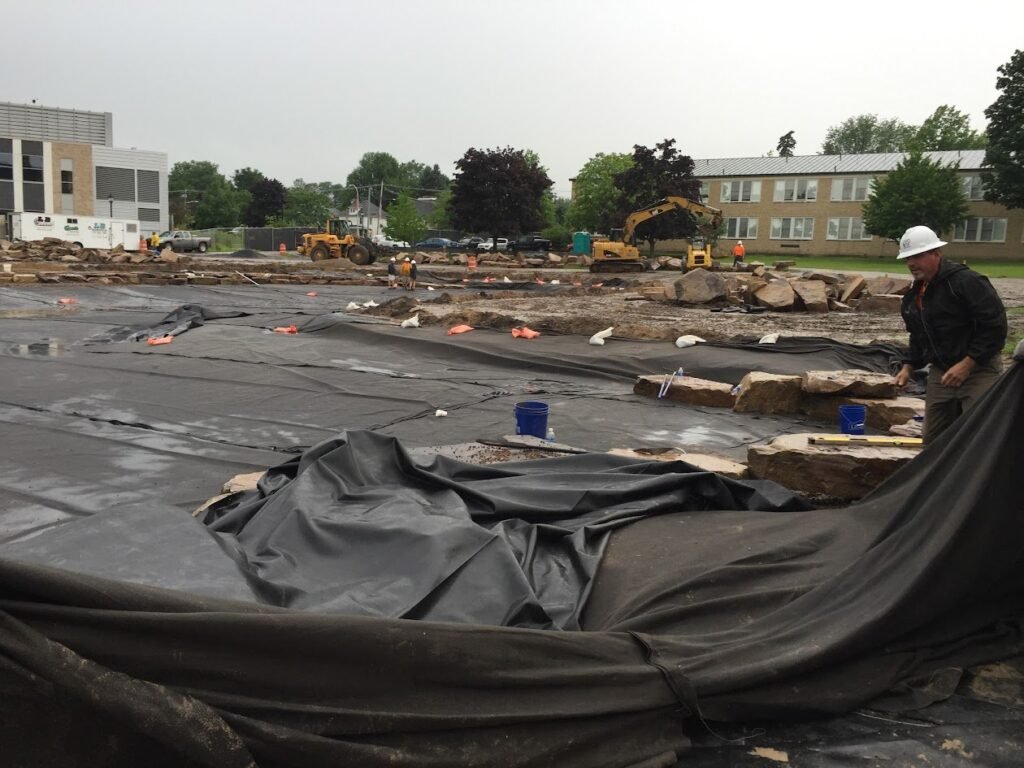
The trade-off is that a long stream requires more liner, more careful underlayment, more stone setting, and greater control of flow. A waterfall that is too steep can look like a chute rather than a mountain stream. One that is too wide for its pump may become a thin sheet of water with little sound or movement. The proportions of each drop, the flow rate, and the stone selection need to work together.
Natural Stonework Must Also Be Structural
On a hillside, boulders are not merely decoration. They define the character of the pond, retain soil, guide water, create seating opportunities, and visually anchor the feature into the landscape. They also need secure placement.
Large stone should be set with an understanding of load, drainage, and long-term settlement. A boulder placed on loose fill or poorly compacted soil may look solid on installation day but move as the ground absorbs water and cycles through seasonal changes. In the wrong location, a shifted stone can affect liner protection, alter a waterfall’s flow, or create a safety concern.
This is where experience matters. Natural stonework should avoid the overly stacked, artificial look while still being built with purpose. Each stone needs a reason to be where it is. Some frame a view. Some soften the edge of a pond. Some create a low transition between a path and the water. Others form the structural backbone of a cascade.
Planting helps complete that illusion of permanence. Grasses, ferns, low-growing groundcovers, and carefully chosen shrubs can soften stone edges and knit the feature into the wider garden. Plant choices should account for sun exposure, irrigation patterns, and the fact that a hillside can have dramatically different microclimates from top to bottom.
Design Access and Maintenance Into the Bay Area Hillside Pond
A hillside pond can be low-maintenance, but it is not maintenance-free. Leaves, fish waste, mineral buildup, seasonal plant growth, and equipment wear are part of owning any living water feature. The difference between a pond that remains enjoyable and one that becomes frustrating often comes down to access.
Can a technician reach the skimmer easily? Is there a safe, discreet route to the pump and filtration equipment? Can a net or cleaning equipment be used without stepping precariously over boulders? Is there enough room to inspect plumbing connections or replace a component years from now?
These questions are easy to overlook when the focus is on the finished view, yet they protect the investment. Equipment can be concealed with stone, planting, or purpose-built enclosures without being buried beyond reach. A service-friendly design makes seasonal cleaning, leak diagnosis, and routine adjustments more efficient and less disruptive to the landscape.
For koi ponds, the design should also account for fish health. Depth, circulation, predation concerns, shade, and water quality all deserve consideration. A shallow, highly exposed pond may look inviting but can create stress for fish during hot weather or make them vulnerable to wildlife. There is no single correct depth or layout. The right choice follows the site’s conditions and the owner’s goals.
Plan the View From More Than One Place
The strongest hillside water features are not designed only from the pond edge. They are composed from the places people actually spend time: an interior window, a dining terrace, a fire pit, a pool deck, or a path descending through the yard.
From above, the pond may need a fuller shape and strong rock composition. From below, the waterfall may become the focal point. From a nearby seating area, the priority may be sound, lighting, and a safe place to sit close to the water. Designing for these perspectives gives the feature a sense of discovery rather than presenting everything at once.
Lighting can extend that enjoyment into the evening. Warm, carefully placed fixtures can reveal moving water, highlight a textured boulder, and create depth along a stream without turning the garden into a stage set. Less is often more. The water and stone should remain the focus.
Choose a Builder Who Understands the Whole Site
A hillside pond is a landscape project, a drainage project, a stonework project, and a water-quality project at the same time. It calls for more than a decorative installation. It requires a team that can evaluate the terrain, communicate clearly about what the site needs, and build every layer for long-term performance.
Aquascape Creations brings certified water-feature expertise and hands-on construction experience to complex properties where details cannot be guessed. From the first consultation through construction and ongoing care, the work should honor both the technical demands of the slope and the feeling the finished space creates.
The most rewarding hillside pond is not the one with the most rock or the loudest waterfall. It is the one that belongs to the property, holds up through changing seasons, and gives you a reason to step outside and stay awhile.

[…] different construction needs. This is particularly true throughout the Bay Area, where sloped lots, hillside access, clay soils, established gardens, and narrow side yards are […]
[…] many Bay Area properties, site conditions make that level of planning especially valuable. Sloped lots, clay soils, established trees, limited access, exposed hillsides, and varying microclimates can […]