A backyard water feature should feel like it belongs to the land, the home, and the way your family lives. The choice between a koi pond versus water garden shapes far more than the look of the finished project. It determines how you interact with the water, what level of care it needs, how close you can get to the wildlife, and whether the feature becomes a quiet planting sanctuary or a living home for remarkable fish.
Both can become beautiful, nature-inspired centerpieces. The right answer is not about choosing the more impressive option. It is about choosing the water feature that will bring you joy year after year.
Koi Pond Versus Water Garden: The Essential Difference
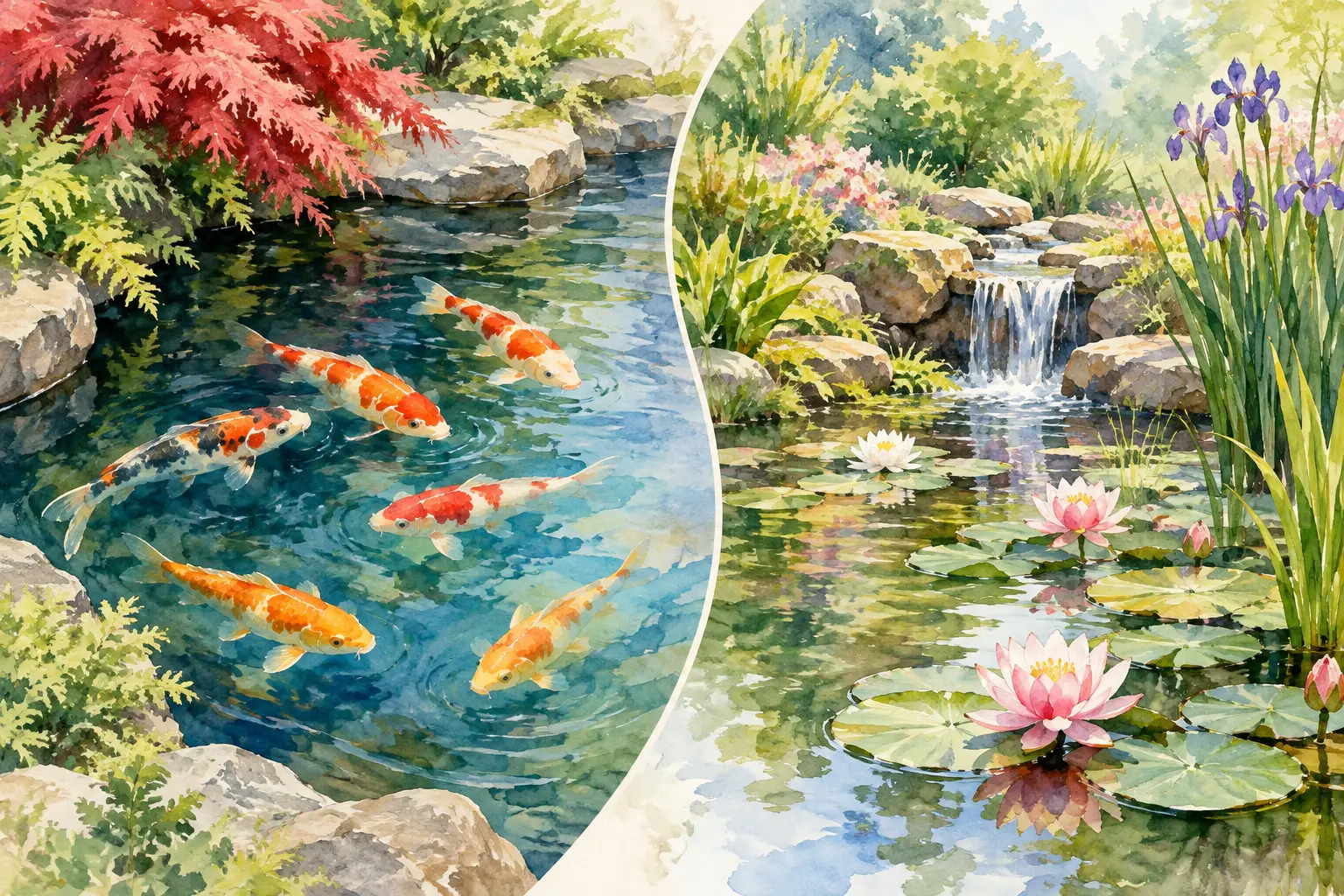
A koi pond is designed around the health, safety, and visibility of koi. These fish are active, personable, and often become part of a family’s daily rhythm. Because koi can grow large and live for decades with proper care, their pond needs sufficient depth, reliable circulation, serious filtration, and construction details that protect water quality over time.
A water garden is designed first around plants, texture, and the softer rhythms of shallow water. It may include small fish such as goldfish, but it can also be centered entirely on water lilies, marginal plants, stonework, waterfalls, and visiting birds. Water gardens tend to have more planting pockets, broader shelves, and a layered shoreline that creates the feeling of a small natural wetland.
There is overlap. A thoughtfully built koi pond can include beautiful aquatic plants, and a water garden can support fish. The distinction comes down to priorities. In a koi pond, the ecosystem is engineered around fish. In a water garden, the fish, if present, are part of a broader planted composition.
Choose a Koi Pond If the Fish Are the Experience
Koi have a presence that plants alone cannot replicate. They gather at the edge during feeding, recognize familiar routines, and bring movement and color to the pond in every season. For homeowners who picture sitting beside the water with children or grandchildren, watching fish drift beneath a waterfall, koi can make the landscape feel deeply personal.
That enjoyment comes with real responsibilities. Koi produce significantly more waste than small ornamental fish, so a koi pond needs a filtration system sized for the actual fish load rather than the pond’s water volume alone. Strong circulation, mechanical filtration, biological filtration, and thoughtful intake placement all matter. These are not decorative extras. They are the foundation of clear, healthy water.
Depth matters as well. In much of the Bay Area, a properly designed koi pond is commonly built with areas deep enough to moderate temperature swings and give fish refuge. The ideal profile depends on sun exposure, site conditions, predators, and the pond’s overall design. A shallow basin may look inviting on installation day, but it can make water temperatures less stable and fish more vulnerable over the long term.
Koi also change how plants are used. They may nibble roots, disturb soil, and treat tender plantings as a buffet. Plants can still have a place in a koi pond, but they often need protected zones, elevated planters, or strategic placement where fish cannot uproot them. If a dense water-lily display is your dream, a fish-heavy koi pond may require more design compromise than you expect.
Choose a Water Garden If You Love Plants and Softer Edges
A water garden gives plants room to lead. Lilies shade the surface and offer seasonal blooms. Iris, rushes, and other marginal plants soften the transition from stone to water. A varied palette of foliage creates color and movement even when no one is sitting beside the pond.
This option is often a natural fit for homeowners who want a living landscape feature without making large fish the central commitment. Smaller fish can be included in appropriate numbers, or the water garden can be allowed to function primarily as a plant-and-water habitat. Frogs, dragonflies, and birds frequently become part of the experience, though every site has its own wildlife patterns.
Water gardens are not maintenance-free. Leaves still need to be managed, pumps and filtration require seasonal attention, and plants need dividing or trimming as they mature. Yet the ongoing work tends to be horticultural rather than fish-centered. Many owners enjoy that rhythm. Tending a water garden can feel less like maintaining equipment and more like caring for a changing piece of the landscape.
A planted water garden can also be more forgiving when the visual goal is a naturalistic, pond-edge appearance. Shallow shelves and generous plant pockets help create depth and texture. On a compact property, that can make the feature appear established and connected to its surroundings rather than like a standalone basin.
Think Beyond the First-Year Budget
The initial cost of either feature depends on size, access, terrain, stone selection, waterfall design, electrical work, and the level of customization involved. A small, simple water garden may cost less than a fully equipped koi pond because it usually requires less depth and a less demanding filtration system.
But comparing only installation costs can lead to the wrong decision. A koi pond built without adequate filtration or proper depth may become expensive to correct. Poor circulation can create chronic algae issues, stressed fish, and frustration that takes away from the pleasure of ownership. Likewise, a water garden designed without enough room for plant growth can quickly become crowded and difficult to enjoy.
Long-term operating costs deserve a clear conversation during design. Pumps use electricity. Fish require quality food and ongoing water care. Plants may need periodic replacement or division. Professional maintenance can be especially valuable for owners who travel frequently, have busy family schedules, or simply want their water feature to look cared for in every season.
The most durable investment is a feature designed honestly around how you intend to use it. A beautiful pond should not depend on constant rescue work.
Site Conditions Can Make the Decision Clearer
Your property may already be pointing toward one option. A sunny area can support abundant aquatic plant growth, although too much direct sun may also increase algae pressure. A heavily wooded setting offers privacy and shade but introduces leaf load, root considerations, and seasonal cleanup. Sloped yards may create a wonderful opportunity for a cascading waterfall, while tight side access can influence excavation and material handling.
Safety and visibility should be part of the conversation from the beginning. Families with young children may prefer a layout that allows clear sightlines from gathering spaces. Clients who entertain often may want a pond edge designed for comfortable viewing, with broad stone seating areas and water sounds that enhance conversation without overwhelming it.
For commercial properties, the priorities can shift toward dependable operation, visual impact, access for service, and a design that remains attractive to visitors throughout the year. In every case, the water feature should respond to the property rather than force a standard shape onto it.
Maintenance Is About Design as Much as Chores
Neither a koi pond nor a water garden should be sold as no-maintenance. Natural systems need attention. The better question is whether the maintenance level matches your expectations and whether the feature has been built to make care practical.
A well-designed koi pond simplifies maintenance through correctly sized filtration, accessible components, effective skimming, and circulation that moves debris toward collection points. A well-designed water garden makes plant management easier with sensible shelf depths, reachable edges, and a planting plan that anticipates mature growth.
This is where experienced construction matters. Quality liner protection, properly installed plumbing, dependable pumps, and stonework that is both beautiful and stable are not details to overlook. They protect the life of the feature and the enjoyment it brings. At Aquascape Creations, the goal is to build water environments that feel like natural sanctuaries while performing reliably behind the scenes.
Can You Have Both?
Yes, with the right design. Some homeowners choose a dedicated koi pond with a nearby bog or stream section that carries more of the planting. Others use protected planters within the pond, creating a fish-focused basin framed by greenery. The key is avoiding a design that asks koi and delicate aquatic plants to compete for the same limited space.
A combined approach works best when it begins with clear priorities. If the koi are the heart of the project, protect their water quality and swimming space first, then add planting in ways that support rather than complicate the ecosystem. If lush plants are nonnegotiable, let the water garden lead and select fish accordingly.
The most rewarding choice is the one you will want to walk outside and visit. Whether that means greeting koi at the edge each morning or watching lilies open beside the sound of falling water, give the design enough care at the start to make that small daily moment last.