A pondless waterfall can turn an unused slope, bare fence line, or ordinary patio edge into a place you want to linger. But pondless waterfall installation cost is not a one-size-fits-all number. The finished feature is shaped by the land, the desired sound and scale of the falling water, the stonework, and the construction details hidden below ground.
For Bay Area homeowners, a professionally built pondless waterfall often begins in the lower five figures. A compact, straightforward feature may fall around $10,000 to $20,000, while a larger naturalistic waterfall with substantial stone, multiple drops, lighting, planting integration, and difficult access can range from $25,000 to $60,000 or more. The right investment depends less on the length of the stream alone and more on what it takes to make the feature look natural, operate reliably, and belong in your landscape for years.
What a Pondless Waterfall Includes
Unlike a pond, a pondless waterfall has no open body of water at its base. Water disappears into a below-grade reservoir, where it is collected, filtered, and recirculated back to the top of the falls. You get the movement, sound, and visual relief of water without an exposed pond.
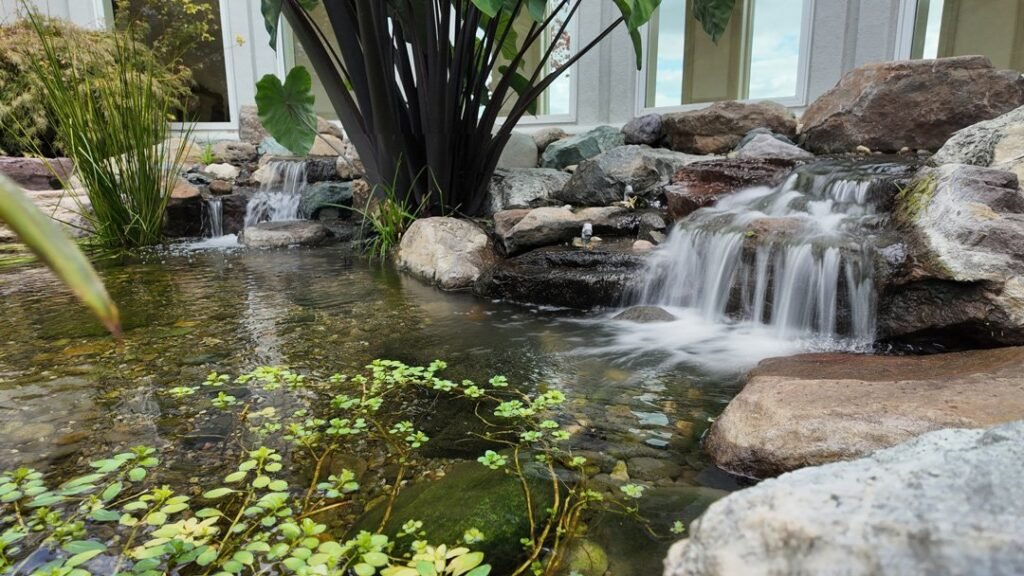
That simple idea requires a carefully built system. Beneath the finished stonework are an excavation, a waterproof liner, an underground water-storage basin, structural components, plumbing, a pump vault, and an efficient circulation pump. Above ground, the artistry begins: carefully selected boulders, gravel, stream transitions, and plantings that make the waterfall feel like it has always been part of the property.
The visible waterfall may be the emotional center of the project, but the hidden construction is what protects its long-term performance. A lower bid that leaves out proper reservoir capacity, access to the pump, or reliable plumbing can become an expensive repair later.
Pondless Waterfall Installation Cost by Project Scale
A modest waterfall tucked into an existing garden bed has very different requirements than a cascading focal point designed around a new outdoor living area. While every project deserves a site-specific quote, these ranges help set realistic expectations.
Compact backyard waterfalls
A smaller feature, often 4 to 8 feet long with one or two modest drops, may cost roughly $10,000 to $20,000 when access is reasonable and the site needs limited grading. This type of waterfall can bring a welcome sense of movement to a courtyard, entry garden, or intimate seating area.
The lower end generally applies when the design is simple, the equipment is close to power, and materials can be brought to the work area without extensive hand labor. Even compact features benefit from thoughtful stone placement. The goal is never to stack rocks into a generic display, but to create water movement that feels convincing from the places you actually use.
Mid-sized naturalistic waterfalls
Many homeowners choose a 10- to 20-foot stream and waterfall that can be enjoyed from a patio, kitchen window, or outdoor lounge. These projects commonly range from $20,000 to $40,000, depending on stone size, the number of cascades, excavation conditions, lighting, and landscape integration.
At this scale, a waterfall can become a true backyard destination. It may include a wider starting pool, gentle stream sections between drops, larger moss rock or boulders, and planting pockets that soften the edges. The sound can also be designed with intention, from a quiet trickle near a bedroom to a fuller cascade that helps mask nearby street noise.
Large or highly customized installations
A dramatic waterfall built into a hillside, surrounding a patio, or serving as the anchor of a complete landscape renovation may begin around $40,000 and extend well beyond $60,000. Larger properties, commercial settings, and projects with multiple streams, major grade changes, oversized boulders, custom lighting, or challenging construction access can require a more substantial investment.
These are the projects where design and construction experience matter most. Large stone must be set securely, water must stay within the intended course, and the feature has to look proportional from every important viewpoint. A remarkable waterfall should feel generous and natural, not oversized for the yard or undersized for the architecture around it.
The Biggest Factors That Shape Your Price
Site access and excavation
Access is one of the most practical cost drivers. A backyard with a wide side yard and room for equipment allows stone, gravel, and excavation materials to move efficiently. A steep property, narrow gate, dense existing landscape, or hillside location can add labor and time.
Soil and underground conditions matter too. Rocky ground, buried concrete, old irrigation lines, drainage concerns, or utility conflicts may require additional planning. On sloped Bay Area properties, careful grading and water management are especially important. The waterfall needs to complement the terrain without directing water toward the home or creating erosion issues.
Stone selection and placement
Natural stone is not merely a finish material. It determines the character, scale, and credibility of the waterfall. Larger boulders create visual weight and can support stronger water movement, but they also require appropriate equipment, skilled placement, and a foundation that will not shift over time.
The quantity of stone is only one part of the equation. Choosing pieces with the right shape, texture, and weathered character takes an experienced eye. A well-built waterfall uses stone to guide the water naturally, conceal the liner, form believable transitions, and create views that remain beautiful in every season.
Waterfall size, sound, and flow rate
A narrow trickle needs less water volume than a wide, energetic cascade. Pump size and reservoir capacity must match the waterfall’s width, elevation change, and desired sound. If the pump is too small, the feature can look weak. If the system is oversized without proper design, it can waste energy or send water where it does not belong.
A skilled builder will ask how you want the waterfall to feel. Do you want gentle sound beside a reading nook, or enough movement to create a lively focal point during family gatherings? That answer affects the mechanical design as much as the visual composition.
Electrical, lighting, and controls
A dedicated electrical connection, GFCI protection, and code-appropriate installation are essential parts of a safe water feature. If power is far from the waterfall location, electrical work may add meaningfully to the project budget.
Low-voltage lighting is also one of the most rewarding upgrades. Properly placed lights can reveal falling water, highlight stone textures, and extend the enjoyment of the landscape after sunset. Timers, photocells, and smart controls can make operation easier, though they add equipment and installation costs.
Plantings and surrounding landscape work
A waterfall looks most at home when the landscape around it is considered at the same time. Plantings can soften stone edges, screen equipment areas, and bring seasonal color and texture to the feature. New patios, pathways, retaining walls, drainage improvements, and irrigation adjustments can also be coordinated with the installation.
This is where budgets can vary widely. Some clients want a waterfall added to an established garden. Others are creating an entire outdoor sanctuary, with the water feature serving as the living centerpiece.
What Should Be Included in a Professional Quote?
A meaningful proposal should clarify more than the visible length of the waterfall. It should explain the expected scope of excavation, reservoir construction, liner and underlayment, pump and plumbing, stonework, electrical needs, and any lighting or landscape elements included.
Ask how the pump will be accessed for service, how the reservoir is sized, and how the feature will be tested before final completion. It is also wise to discuss warranty coverage, ongoing maintenance, and who will handle questions after the work is finished. Clear communication before construction is one of the best ways to protect the experience during and after the project.
Is a Pondless Waterfall Worth the Investment?
For homeowners who want the restorative presence of moving water without caring for fish or an exposed pond, a pondless waterfall can be an excellent fit. It typically requires less day-to-day involvement than a pond, uses recirculating water, and can be designed for a wide range of yard sizes.
It is not maintenance-free. Leaves, debris, seasonal adjustments, and pump care still deserve attention. Yet a properly designed system makes that care manageable, with accessible equipment and construction details intended for lasting use.
At Aquascape Creations, the first conversation is not about forcing a standard package into your yard. It is about understanding the terrain, how you live outdoors, what you hope to hear and see from the water, and what will make the finished space feel genuinely yours. The best waterfall is not simply the one with the lowest initial price. It is the one that brings lasting beauty, dependable performance, and a little more peace to the moments you spend at home.