
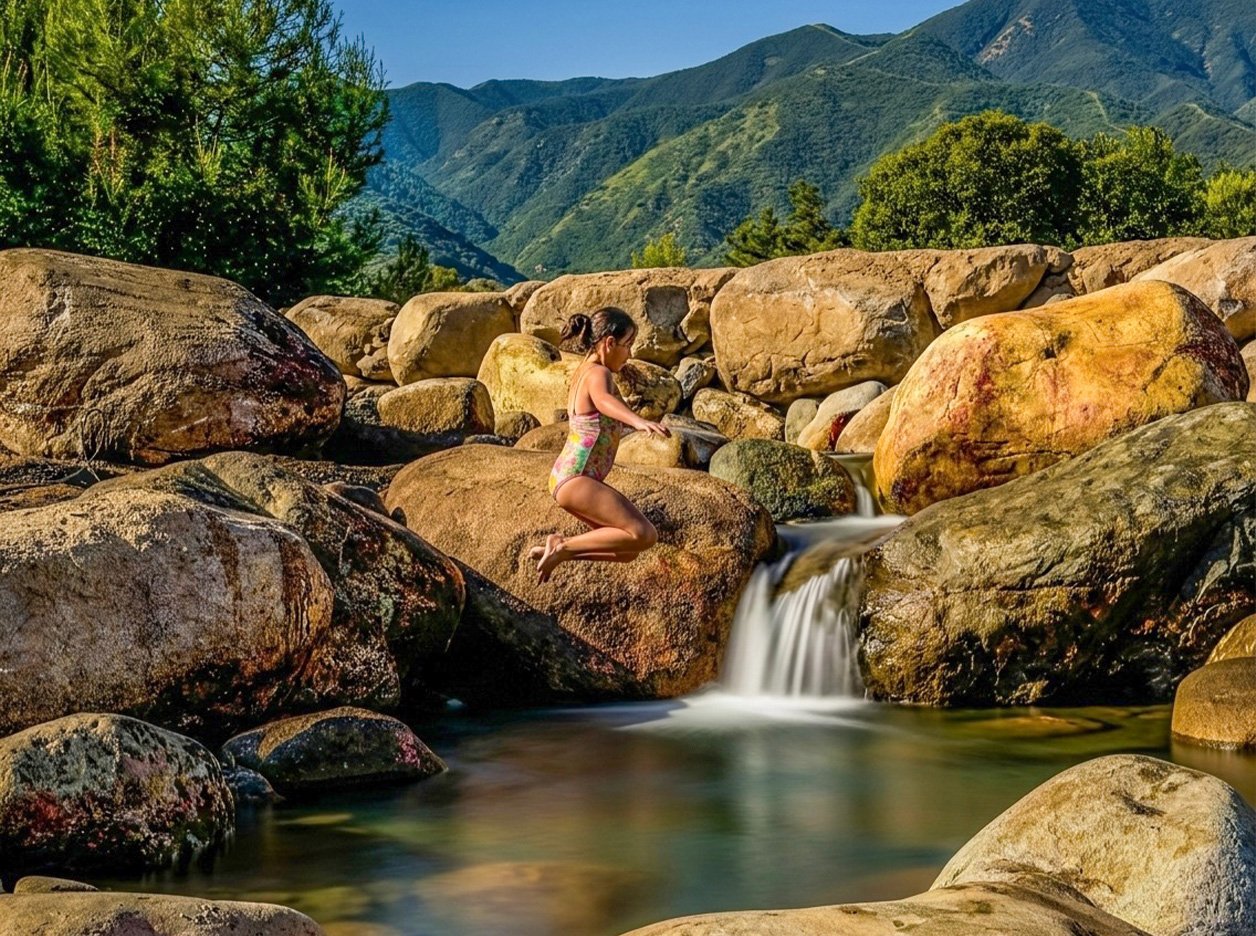
A pool can cool you off. A well-designed swim pond can change the way you use your entire backyard. Swim ponds bring together the pleasure of open-water swimming, the sound of moving water, planted edges, and the kind of natural beauty that makes people linger outside long after the swim is over.
For Bay Area homeowners creating a meaningful outdoor living space, this is not simply a pool with rocks around it. It is a living water environment, designed around your property, your family, and the way you want to spend time outdoors. Done well, it becomes a place for early-morning laps, summer gatherings, quiet evenings beside a waterfall, and the everyday enjoyment of watching nature settle into your landscape.
What Makes Swim Ponds Different?
A swim pond is a recreation pond designed for people, with biological and mechanical systems working together to keep the water clean and inviting. Rather than relying exclusively on a traditional pool’s chemical treatment, a natural swim pond uses circulation, filtration, beneficial bacteria, aquatic plants, gravel, and carefully planned water movement to support water quality.
The visual difference is immediate. Instead of a hard-edged rectangle that asks the landscape to fit around it, a naturalistic pond can follow the grade of the property and feel as though it has always belonged there. Boulders may create a natural entry point. A beach area can offer a gentle place for children to wade. Wetland planting shelves can soften the shoreline while helping support the ecosystem.
That does not mean every swim pond must look wild or rustic. The shape, stone selection, planting palette, waterfalls, patios, and lighting can all be tailored to complement a contemporary home, a hillside estate, or a more traditional garden. Nature-inspired artistry starts with the site, not a standardized package.
A Clear Pond Starts Below the Surface
The most beautiful water feature is only as good as the work beneath the waterline. Clear, healthy water depends on thoughtful engineering long before the first stone is placed.
A properly built swim pond needs a circulation plan that moves water through the entire system, including areas where debris could otherwise collect. Skimmers draw in leaves and floating material. Bottom intake points and plumbing help remove sediment from deeper areas. Pumps deliver water to waterfalls, streams, and biological filtration zones, where beneficial bacteria help process organic waste.
Filtration is not a single box that solves every problem. It is a coordinated system. The size of the pond, expected swimmer use, surrounding trees, sun exposure, fish plans, and local climate all influence the equipment and filtration capacity required. A small ornamental pond and a large recreation pond should never be designed by the same formula.
Plantings also have a role, but they are not a substitute for proper filtration. Marginal plants, water lilies, and wetland areas contribute beauty and ecological balance. They can provide shade, help use nutrients in the water, and create habitat around the pond. Yet a swimming environment needs dependable mechanical and biological support to remain clear during busy summer weekends, changing seasons, and periods of heavy leaf drop.
Designing for the Way Your Family Will Use It
The best first question is not, “How large should the pond be?” It is, “What do you want to do here?” A family that wants cannonballs, floating loungers, and shallow play areas needs a different layout than a homeowner who wants lap space and a peaceful view from the kitchen.
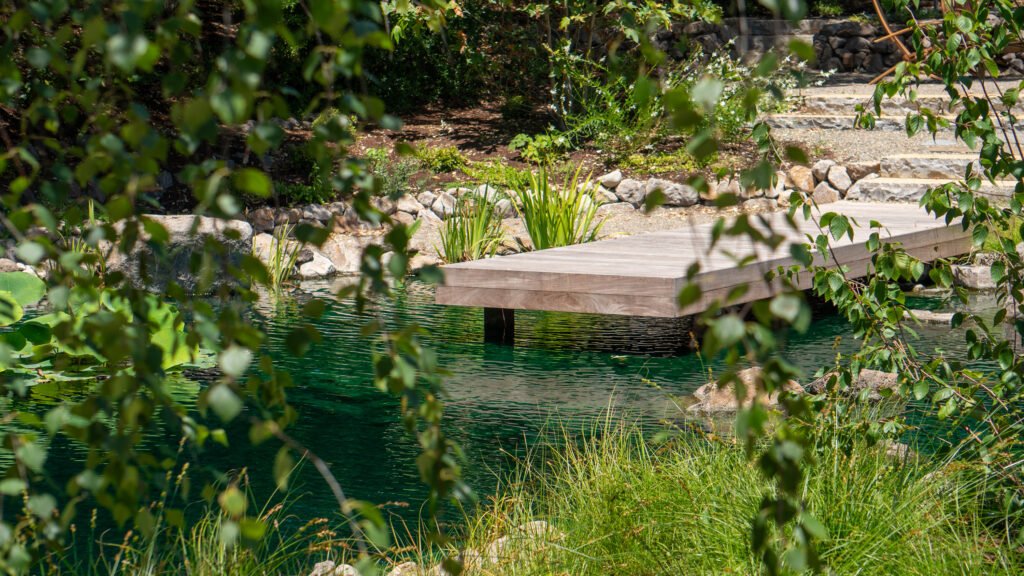
Depth, access, and circulation all deserve early attention. Some clients prefer a gradual beach entry that feels inviting and gives younger swimmers a natural transition into the water. Others prefer stone steps, a defined dock edge, or a deeper central swimming zone. If exercise is important, a longer uninterrupted lane or a current system may be worth incorporating into the plan.
Safety should shape the design without making the space feel overly controlled. Clearly defined depths, secure access, thoughtful lighting, stable walking surfaces, and a plan for supervising children are practical essentials. Local requirements, property conditions, and homeowner association rules may also affect placement, fencing, electrical work, or setbacks. A qualified design-build team can address those details while protecting the natural character of the finished pond.
Privacy matters, too. In many Bay Area neighborhoods, a swim pond becomes more enjoyable when views are framed intentionally. Planting, boulder placement, changes in elevation, pergolas, and seating areas can create a sense of retreat without walling off the yard. The goal is to make the water feature feel connected to the home while giving you a place that feels apart from the day.
The Trade-Offs Worth Understanding
Natural swimming has a particular appeal, but it is not the right answer for every property or every expectation. Homeowners who want perfectly sterile-looking water with no visible plants, no seasonal variation, and no interaction with the surrounding landscape may be happier with a conventional pool.
A swim pond is alive. Water color can shift slightly with the light and season. Leaves will need to be skimmed, especially on a tree-filled property. Plants grow, fish may become part of the ecosystem, and the pond needs routine attention to continue performing at its best. These are not flaws. For many owners, they are exactly what makes the experience more rewarding than swimming in a chemically treated box. Still, they should be understood before construction begins.
Budget is also site-specific. A compact recreation pond on accessible ground is very different from a large, complex project with retaining needs, difficult equipment access, a major waterfall, extensive stonework, or a sloped hillside. The quality of excavation, liner installation, plumbing, filtration, stone setting, and electrical work matters far more than a low initial number. Water features are not forgiving of shortcuts hidden underground.
Maintenance Keeps the Experience Easy
“Low maintenance” should mean manageable and predictable, not no maintenance. A healthy swim pond needs regular observation and seasonal care, much like a high-quality garden or outdoor kitchen.
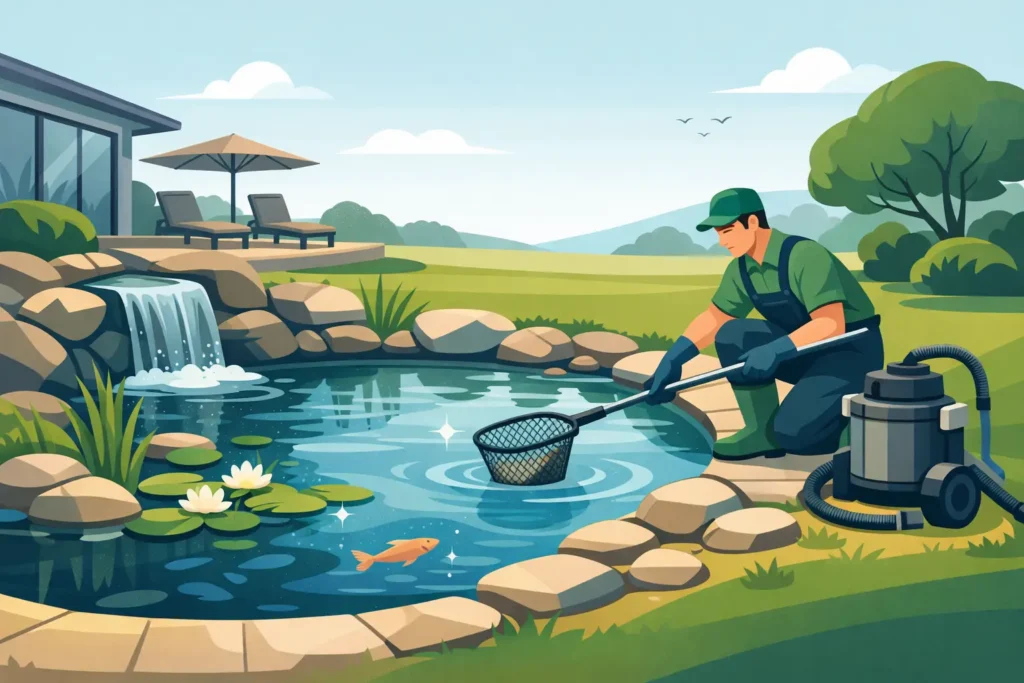
During the swimming season, this typically includes emptying skimmer baskets, checking pumps and water level, monitoring water clarity, and trimming plants as needed. Periodic water testing helps identify changes before they become larger issues. In fall, netting or more frequent debris removal can make a dramatic difference for properties with mature trees. Seasonal cleanouts and equipment inspections help prepare the system for the year ahead.
The right maintenance plan depends on the pond’s size, features, fish population, and surrounding landscape. Owners who enjoy hands-on care may choose to handle routine tasks themselves with professional guidance. Others prefer ongoing service so they can spend their weekends swimming, entertaining, and enjoying the view. Both approaches can work when the pond was built with access, serviceability, and long-term performance in mind.
Why Craftsmanship Changes the Result
Naturalistic water features demand more than good equipment. Stone must be placed with an eye for proportion and with the structural knowledge to keep it stable. Waterfalls need to sound and move naturally rather than spilling from a visible pipe. Edges should feel organic while remaining secure. Every transition, from patio to shoreline to planting shelf, needs to look intentional.
That combination of artistry and construction discipline is where a custom project earns its value. At Aquascape Creations, large and complex water environments are approached as complete landscape experiences, with personal consultation and the hands-on knowledge that comes from working alongside leading professionals in the industry.
A remarkable swim pond should not feel like a feature dropped into a backyard. It should feel like the backyard finally found its center. If you are considering one, begin by standing where you imagine the water, listening to how your property feels, and picturing the moments you want the space to hold.
[…] and returned through streams, waterfalls, intake bays, or jets. The result can resemble a private swimming hole, a mountain lake, or a refined water garden with a dedicated place to […]