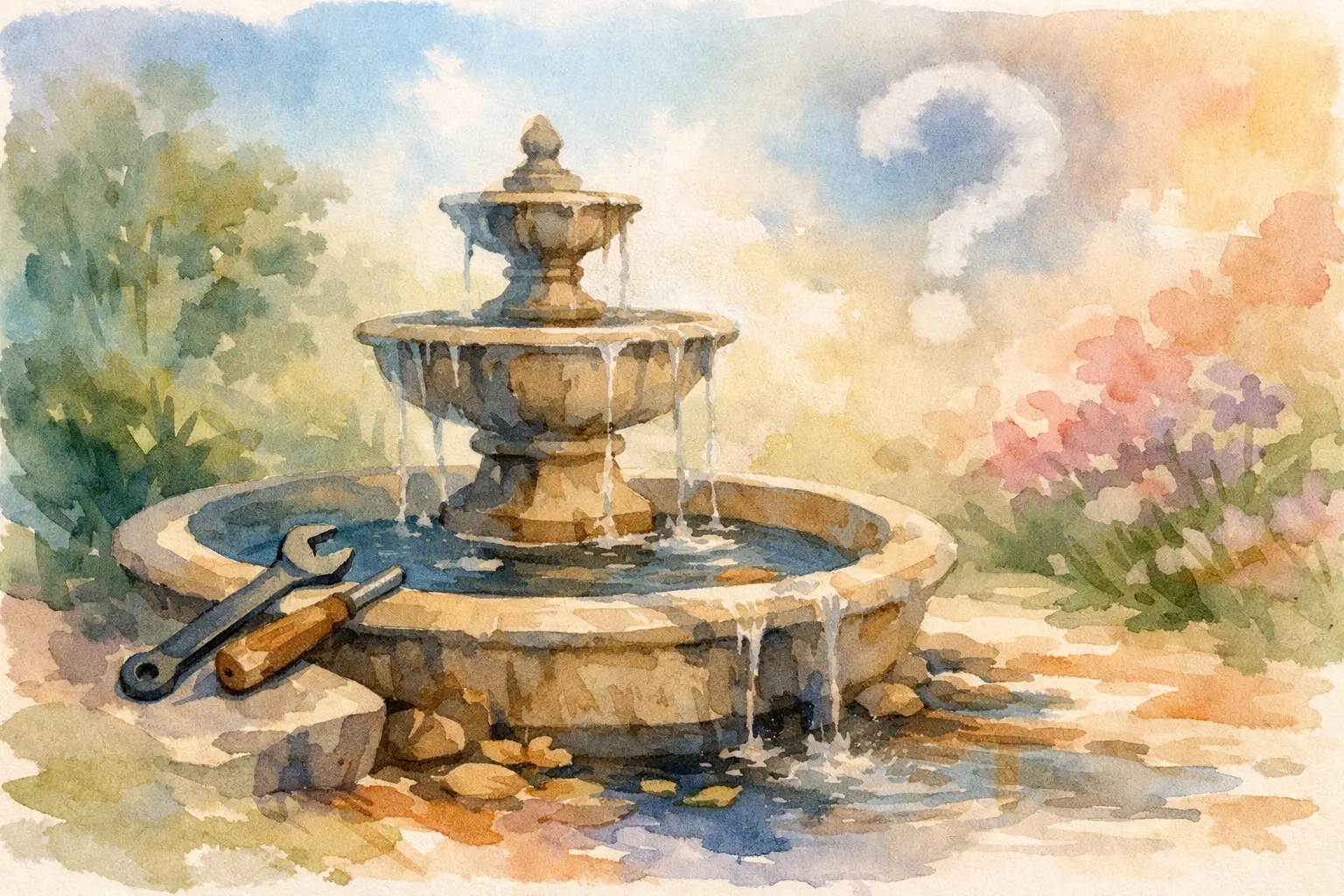
A fountain that suddenly goes silent changes the feeling of an entire outdoor space. The movement, sound, and reflected light disappear, leaving behind a feature that looks unfinished rather than alive. Fortunately, fountain not working troubleshooting often begins with a few clear observations – and knowing when a simple reset is enough versus when the system needs experienced repair.
Before touching the equipment, turn off power at the outlet or breaker. Water and electricity demand caution, especially when cords, transformers, or connections show wear. Once the system is safely off, take a moment to look at the whole feature. Is the basin full? Has the water level dropped? Did flow weaken gradually, or stop all at once? Those details point toward very different causes.
Fountain Not Working Troubleshooting Starts With Water
Many fountain problems are really water-level problems. A pump needs enough water around it to stay cool and move water efficiently. When evaporation, splash-out, or a small leak lowers the basin, the pump may pull in air, surge unevenly, or stop moving water altogether.
Fill the basin to its normal operating level, then restart the system and watch it for several minutes. If the fountain comes back to life but loses water again quickly, do not keep refilling it indefinitely. A recurring water loss can come from a shifted spillway, a splash pattern that sends water beyond the basin, a loose fitting, or damage to the liner or plumbing.
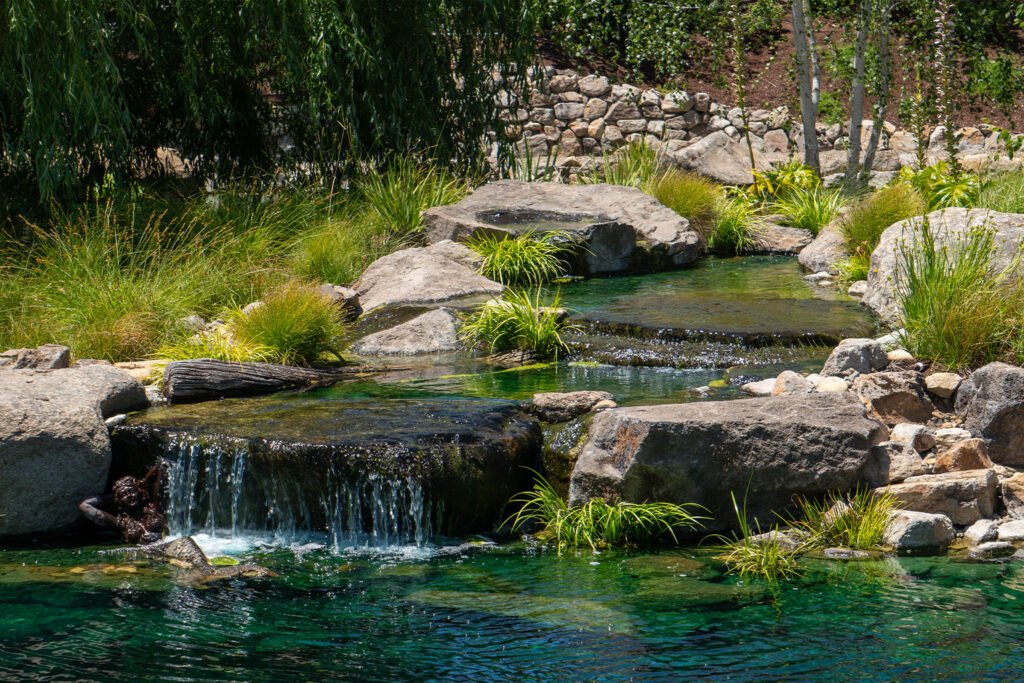
Windy weather and a fountain that has recently been cleaned can also cause temporary splash-out. If the feature has always worked well and the problem appeared after an adjustment, look first for a displaced rock, nozzle, or water-return line. In naturalistic fountains and pondless waterfalls, even a small change in the way water meets a stone can redirect more water out of the system than expected.
Check the Power Supply Without Taking Risks
If the basin is full and there is no sound or vibration from the pump, check the electrical path next. Confirm that the outlet is working by testing it with another suitable device. Reset the GFCI outlet if it has tripped, and check the breaker panel. Outdoor outlets commonly trip after heavy rain, irrigation issues, or a temporary electrical fault.
A tripped GFCI is not always the root problem. If it trips again as soon as the fountain is plugged in, leave the system off. Moisture in a connection, a damaged cord, or a failing pump can create a safety concern. Repeatedly resetting the outlet without identifying the cause is not a repair.
For low-voltage fountain lighting or systems with a transformer, inspect visible connections for loose plugs, corrosion, or signs of water intrusion. Do not open sealed electrical components or splice wet wiring. A qualified water-feature professional can trace the issue without compromising the safety or reliability of the installation.
When the Pump Runs but Water Will Not Move
A humming pump with little or no flow usually means a blockage, an air lock, or a worn component. Leaves, algae, gravel, and organic debris can collect around the pump intake. In a fountain with a filter or protective pump vault, debris may be restricting the water before it reaches the pump.
With the power off, remove the pump according to the manufacturer’s instructions. Clean the intake screen and pump housing gently. Inspect the impeller – the small rotating part inside the pump – for string algae, fine roots, pebbles, or mineral buildup. The impeller should turn freely and should not have chipped or swollen parts.
A clogged impeller is common, but it is not the only explanation. If your fountain was drained, cleaned, or shut down for a period, air may be trapped in the plumbing. Refill the basin fully, make sure the pump is submerged, and restart the system. Some systems need a brief pause and restart to clear the air. If flow improves and then fades, there may be a partial clog or a restriction farther along the line.
Look for Kinks, Pinches, and Closed Valves
Flexible tubing can become pinched beneath a stone, bent sharply during maintenance, or compressed by settling soil. Follow the accessible route of the tubing and look for visible kinks, loose fittings, or a valve that was accidentally closed. A valve that is only partly open can create a weak stream that looks like pump failure.
Do not pull hard on tubing hidden beneath stonework. Natural stone features are built as layered systems, and disturbing structural rocks can create a larger issue than the original flow problem. When access requires removing rock or opening a concealed reservoir, professional service is the wiser choice.
Why a Fountain Has Weak or Uneven Flow
Reduced flow usually develops over time. Mineral deposits can narrow a nozzle, algae can collect in a line, and an aging pump can lose its ability to push water to the intended height. In the Bay Area, hard-water deposits are a frequent consideration, especially in formal fountains with narrow openings and precise spray patterns.
Start by cleaning the nozzle or fountain head with a soft brush and water. Avoid harsh chemicals that may damage finishes, affect nearby plants, or enter a pond connected to the feature. If the fountain is part of a water garden or koi pond, use only methods and products that are appropriate for fish and aquatic life.
A pump has limits. If the stream is weak after cleaning and the plumbing is clear, the pump may be undersized for the lift, tubing length, or number of water outlets. This can happen after a feature has been altered, expanded, or fitted with a new decorative element. Selecting a larger pump is not automatically the answer, because excessive flow can create splash-out, noise, and unnecessary energy use. The right solution depends on the feature’s total head height, plumbing layout, and desired water effect.
Find the Difference Between a Leak and Normal Evaporation
A fountain naturally loses some water to evaporation, especially during warm, dry weather. The key question is whether the water loss stops when the pump stops. Mark the water level, turn off the pump for 24 hours, and compare the result. Then repeat the test with the pump running.
If water loss is much greater while the pump is on, the issue is often in the moving-water portion of the system. Look for overspray, water spilling behind the wall or stone, a loose discharge fitting, or a leak in the return plumbing. If water continues to drop at a similar rate with the pump off, the basin, liner, or plumbing below the waterline may need closer inspection.
Avoid guessing based on one hot afternoon. Weather, wind, and irrigation can affect the result. A careful test creates useful information and can save time when a technician evaluates the fountain.
When to Stop Troubleshooting and Call for Service
Some issues are appropriate for an owner’s routine care: topping off water, clearing leaves, resetting a GFCI once, and cleaning an accessible pump intake. Other symptoms deserve professional attention. These include a repeatedly tripping outlet, burned electrical odor, a pump that overheats, unexplained water loss, damaged plumbing, or a fountain that requires stone removal to access the equipment.
Older fountains can also benefit from a broader evaluation rather than another temporary repair. Pumps, check valves, tubing, fittings, and basin systems all have service lives. Replacing one tired part may restore flow, but a skilled assessment can reveal whether several aging components are close to failure. That is especially valuable for a custom feature built to be a lasting part of the landscape.
At Aquascape Creations, we approach repairs with the same care we bring to new water features. The goal is not simply to make water move again. It is to restore the sound, balance, and natural beauty that made the fountain meaningful in the first place.
A well-built fountain should feel effortless when it is operating. If yours needs more than a straightforward cleaning or refill, give the problem the attention it deserves. A precise repair now can protect the living masterpiece you created outdoors and help it bring calm to your space for years to come.