Victoria waterlilies are an extraordinary genus of waterlilies native to South America. This Victoria waterlily care guide covers their characteristics, temperature requirements, pot sizes, pond conditions, soil, transplanting, and fertilizer needs.
What Makes Victoria Waterlilies Unique?
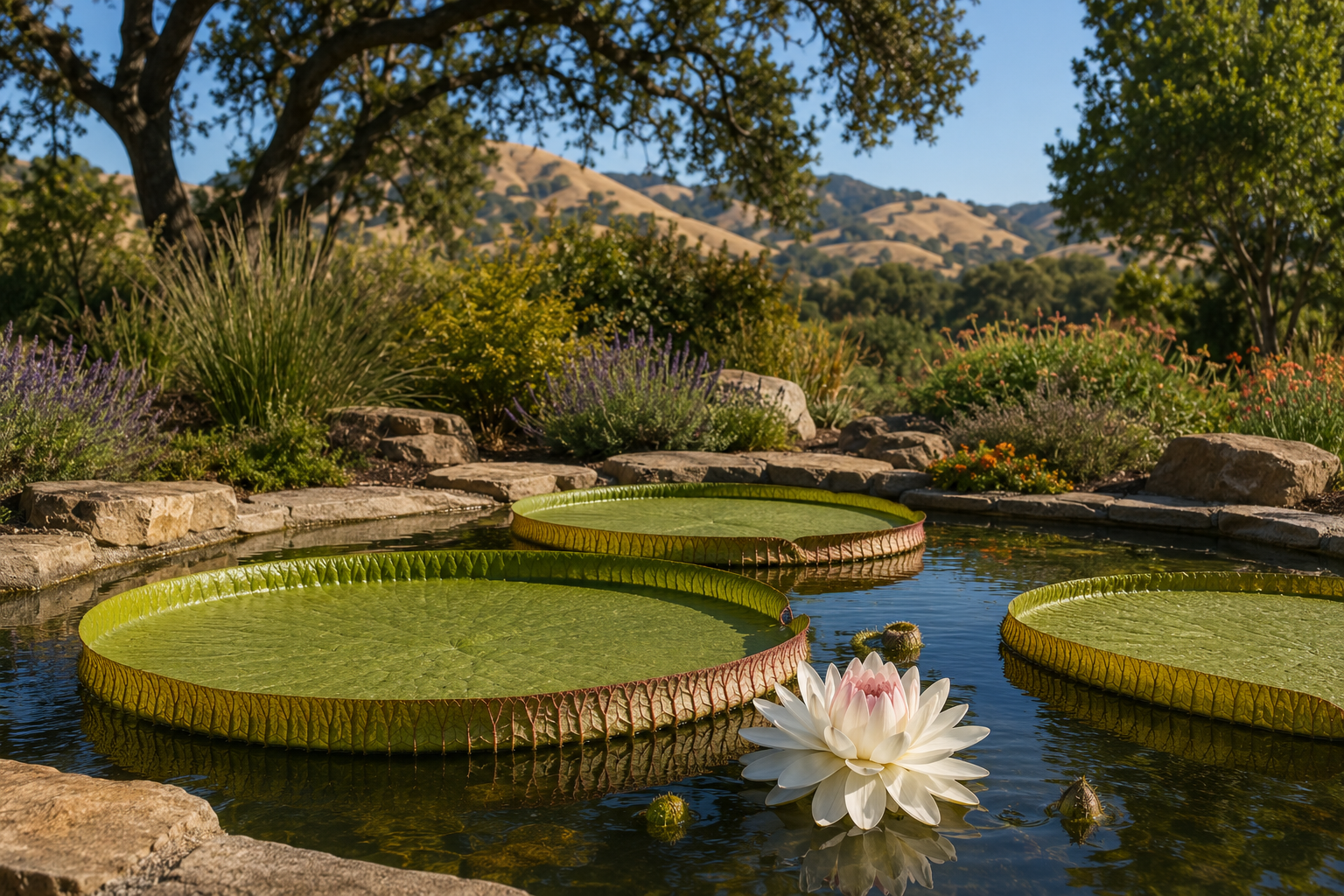
Victoria waterlilies are famous for their huge pads, which can reach up to 6 feet in diameter, and the upturned rims on the pads. Victorias are night-blooming, with large, beautiful blossoms.
Usually, the flowers are white on the first night and pink or red on the second and third nights. A larger plant can bloom almost continuously in hot weather. The fragrance is delightful and powerful, reminiscent of pineapple.
Victoria Waterlily Species and Hybrids
The genus consists of two species: V. amazonica and V. cruziana, as well as hybrids between the two species. Victoria amazonica has larger pads, warmer water requirements, and lower rims than V. cruziana.
Hybrids between the two, the most famous being the Longwood hybrid, tend to combine the best features of both species. We sell hybrid seedlings. We usually ship them with pads between 10 and 14 inches; delivered potted plants are sometimes larger.
Victoria waterlilies are annuals and must be regrown each year from seed.
Water Temperature Requirements for Victoria Waterlilies
We germinate and grow Victoria waterlilies in 85°F water until the plant has pads at least 6 inches in diameter. The temperature may then be reduced gradually to 75°F, although warmer water results in faster growth.
Plants that have been bare-rooted for shipment should be reestablished in water of at least 80–85°F to avoid shock.
A rule of thumb for established plants with pads at least 18 inches in diameter is that they will survive with water temperatures that rise above 73°F daily. Seventy-three degrees seems to be the break-even point: above that, they grow, and below that, they decline. The higher the temperatures, the more they grow. We do not know what the upper limit is.
Choosing the Right Pot Size
Young plants with a pad diameter of 6–15 inches are potted in shallow, wide pots measuring either:
- 10 inches wide × 7 inches deep
- 16 inches wide × 7 inches deep
When they fill out these pots, they may be transplanted into their final pot, which may range from 23 inches wide × 10 inches deep to 60 inches wide × 18 inches deep.
If planting in a shallow pond, a shallow kiddie wading pool is just the right size, although it is a little flimsy. Spray-painting the rim black hides the blue color.
Pot size, water temperature, fertilizer, and room for pads are the major factors determining the ultimate size of the plant.
How to Transplant a Victoria Waterlily
Minimize disturbance of the root ball when transplanting by positioning the smaller pot over the larger one and slipping the root ball out of the smaller pot into the larger one.
Make a depression in the soil of the larger pot for the root ball, or fill the pot around the root ball.
Spines and Safe Handling
Victorias grow spines on their stems, flower buds, and undersides. These spines become bigger and more painful as the plants grow, so do your moving and transplanting earlier rather than later.
Use gloves when handling them. Hip waders also provide good protection when working around larger plants.
Seedlings and young plants are generally grown in greenhouses. Adjusting them gradually to full sun avoids burning the tender leaves.
Pond Size and Water Depth
The pond in which Victoria waterlilies are grown should have adequate surface area. If the area is small, keep the final pot size small to restrict pad diameter. A Victoria in a 10-foot × 12-foot pond with 3-foot pads is still impressive.
Depth depends on the size of the plant and the water temperature. Begin young plants in shallow water, perhaps 6 inches over their crowns.
In warm-summer climates, this may be increased as the plant matures to as much as 2–4 feet over the crown of the plant. In mild-summer climates, keep the plant shallow for warmth.
The Best Soil for Victoria Waterlilies
Use good topsoil or garden soil. Do not use anything high in organic content.
Most commercial aquatic mixes do not contribute to the plant’s nutritional requirements. However, because fertilizer is needed in any case, this is not a major objection.
It helps to leave some extra room at the top of the final container, as Victoria crowns tend to grow upward and out of the soil to the point that they have trouble reaching nutrients in the soil. When this occurs, it is helpful to periodically place a little more soil around the base of the crown.
Fertilizing Victoria Waterlilies
Use a quality aquatic fertilizer, such as Pondtabbs. We use both a quick-release tablet and a time-release granular fertilizer, such as Aquascape Once-A-Year, in combination.
Young plants are sensitive to being overfertilized, but maturing plants grow very quickly and use a lot of fertilizer.
As a general rule of thumb:
- For young plants, use double the amount recommended per gallon of soil for hardy waterlilies.
- For mature plants, use at least quadruple the recommended amount.
If each new leaf of the plant is not bigger than the previous leaf, up to a diameter of 5–6 feet, there is probably insufficient fertilizer, insufficient space, or low temperatures.