
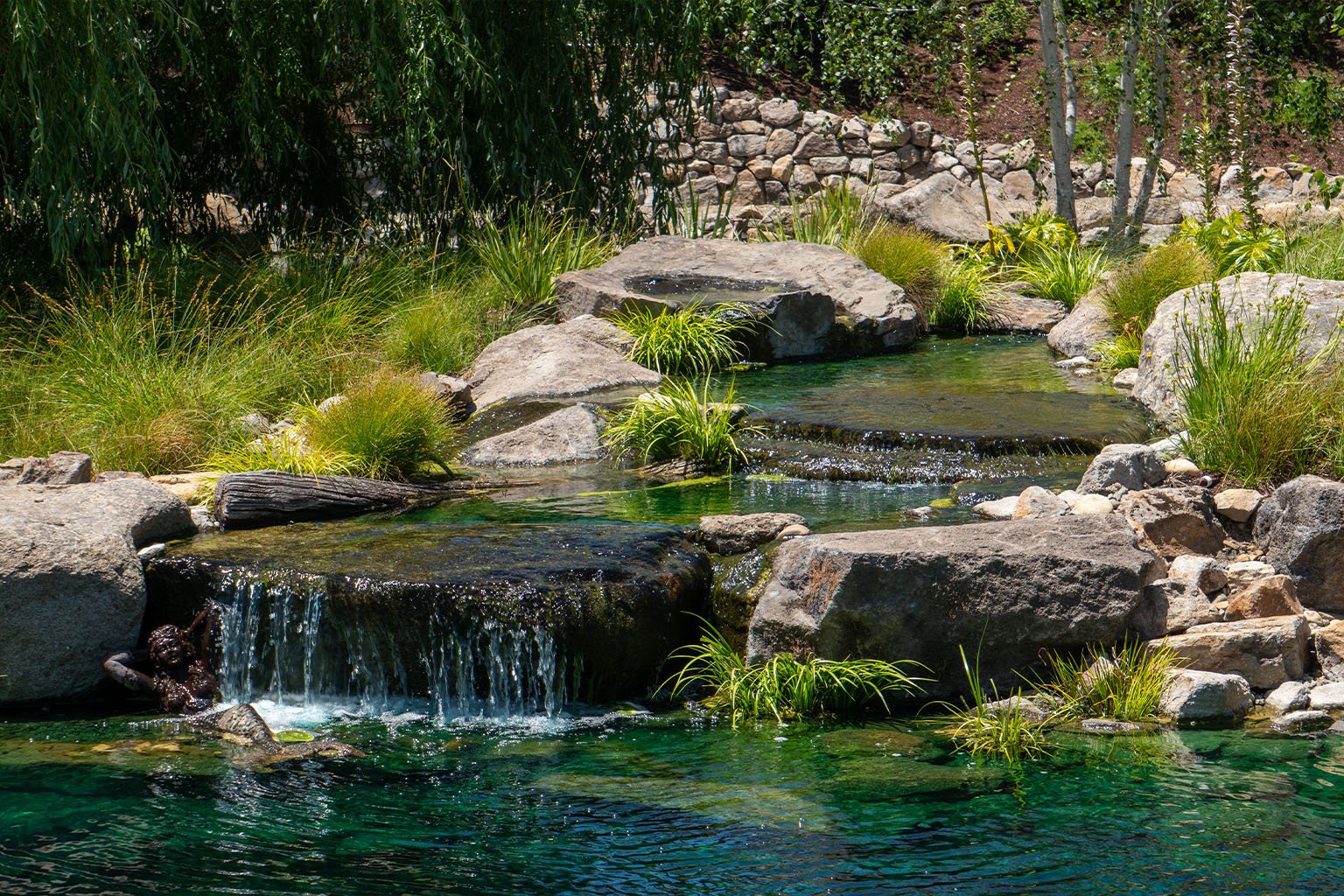
A pond that loses water can turn a peaceful backyard sanctuary into a daily concern. Learning how to find a pond leak starts with separating a true leak from normal evaporation, splashing, or thirsty plants at the edge. The goal is not simply to keep adding water. It is to identify the source carefully, protect fish and aquatic plants, and preserve the craftsmanship that makes your water feature feel like a living masterpiece.
First, Confirm That Water Loss Is Not Normal
Every pond loses some water, particularly during warm, dry, windy weather. In the Bay Area, a shallow pond exposed to afternoon sun may lose noticeably more water than a shaded, deeper pond. Waterfalls also create evaporation through moving water, while an enthusiastic dog, visiting wildlife, or children enjoying the pond can cause ordinary splashing.
A sudden change is more telling than a fixed number. If you have topped off the pond at roughly the same interval for years and now need to add water every day, investigate. A consistently wet patch below the pond, water disappearing after the pump runs, or a water level that settles at the same point are all stronger signs of a leak.
Before testing, turn off any automatic fill valve if your system has one. An auto-fill can hide the speed and severity of water loss, making diagnosis far more difficult. Mark the current water line with a small piece of tape on the skimmer face, a stake, or a nearby stone that will not move.
Use a Bucket Test to Measure the Difference
The bucket test is one of the simplest ways to tell whether the pond is losing more water than evaporation alone would explain. Fill a bucket with pond water and set it on a stable step or shelf where it experiences similar sun and wind exposure as the pond. Ideally, the water inside the bucket should sit at approximately the same height as the pond water.
Mark the water line inside the bucket and the water line in the pond. Leave the pump and waterfall running for 24 hours, then compare both levels. If the pond has dropped substantially farther than the bucket, you likely have a leak or excessive splash-out.
For a more reliable answer, repeat the test with the pump off. This two-part approach tells you whether the water loss is occurring in the pond basin itself or somewhere in the circulating system. Keep in mind that a pond with a stream, multiple cascades, or a large bog filtration area may need a little more investigation than a compact water garden.
Turn Off the Pump and Watch the Water Level
Once you suspect a leak, shut off the pump and allow the pond to sit. Watch the marked water line over the next 24 to 48 hours. If the water level stops dropping, the leak is probably in the plumbing, waterfall, stream, filter, or another component that only holds water while the system operates.
If the pond continues to lose water with the pump off, the issue is more likely in the pond liner, a fitting below the resting water line, or the pond edge. Let the water settle naturally, but do not allow a fish pond to drop so far that fish are crowded, exposed to poor water quality, or left without adequate circulation for an extended period.
The stopping point matters. Water cannot leak below the hole or low edge that is allowing it to escape. If the pond repeatedly stabilizes a few inches below normal, inspect that horizontal band around the entire perimeter. Look closely at liner folds, low spots in the edge treatment, plumbing penetrations, rocks that have shifted, and areas where plant roots meet the liner.
Check the Waterfall, Stream, and Pond Edge
When the pond holds water with the pump off but loses water when it runs, begin with the waterfall and stream. These are common leak locations because moving water can travel surprisingly far through a small gap. A waterfall may look perfectly normal from above while water quietly slips behind a boulder, over a low liner edge, or beneath a spillway.
Run the system and inspect the entire watercourse from top to bottom. Pay attention to the outside curves of the stream, where water naturally pushes toward the edge. Look behind waterfall stones for damp soil, an unusually green patch of lawn, or mulch that remains wet. A small amount of moisture near a naturalistic waterfall can be normal, but saturated ground or a visible trickle beyond the liner is not.
Sometimes the repair is straightforward. A rock may need to be reset, a liner flap lifted and secured, or a stream edge rebuilt to direct water back toward the basin. Other times, the visible symptom is only part of the problem. Heavy rocks, aging mortar, root pressure, or settling soil can alter the way water moves through a feature over time.
Also inspect the pond perimeter. Capillary action can pull water out of a pond when soil, mulch, fabric, roots, or plant material bridge the liner edge. This is often called wicking. Remove material that crosses from the water into surrounding soil and make sure the liner rises high enough behind the edge stones. A pond can lose a surprising amount of water through an edge that appears minor at first glance.
Inspect Plumbing, Filters, and Equipment Connections
A leak that appears only when the pump is on can also come from plumbing. Check exposed pipe, flexible tubing, hose clamps, valves, unions, and connections near the skimmer, biofilter, external pump, and ultraviolet clarifier. Look for drips, fine sprays, mineral staining, or damp soil around fittings.
Do not assume the leak must be visible while you are standing there. A cracked fitting may open only under pressure, and a loose connection may leak only when the pipe shifts. If accessible plumbing runs underground, the diagnosis can be more complex. Repeatedly adding water without finding the cause may saturate soil around the pond, undermine hardscape, and create more expensive repair work later.
If your pump is pulling air, making an unusual sound, or returning less water than usual, mention those details during a service call. They can help narrow the issue to a suction-side plumbing problem, a clogged intake, or a failing connection rather than a liner leak.
Protect Fish and Plants While You Diagnose the Problem
Avoid using dyes, sealers, or household products in a stocked pond unless they are specifically intended for aquatic environments and you understand the cause of the leak. A quick fix applied to the wrong area can complicate a proper repair and may affect fish, beneficial bacteria, or water quality.
Maintain safe water depth for koi and other fish. If the pump must remain off during testing, add aeration if possible and monitor fish behavior, especially in warm weather. Fish gathering at the surface, rapid gill movement, or lethargy can indicate low oxygen. Add dechlorinator whenever municipal water is used to refill the pond, and avoid making a large, cold-water change all at once.
A mature pond is an ecosystem, not just a vessel of water. Patience during diagnosis protects the biological balance you have worked to build.
When a Professional Leak Inspection Makes Sense
Some leaks are easy to identify. Others require experienced eyes, careful isolation of system components, and a repair plan that restores both function and beauty. Professional help is especially worthwhile when the pond is large, heavily rocked, has multiple waterfalls, includes buried plumbing, or supports valuable koi.
A qualified pond contractor can test sections of the system, inspect liner and plumbing details without unnecessary demolition, and address the underlying construction issue. The best repair is rarely the one that merely stops water today. It is the one that prevents the same failure from returning next season.
At Aquascape Creations, we approach leak repair with the same care we bring to building natural water environments. Whether the answer is a shifted edge stone or a more involved system repair, clear diagnosis comes first. Your pond should invite you outside to listen to the water, not send you out each morning with a hose and a worry.

There is nothing quite like the vibrant energy I find at mxpistolocasino whenever I want to spin a few reels. The colorful games and cheerful bonuses make every session feel like a street festival filled with music and laughter. I love how the platform keeps things fair while wrapping me in such a welcoming vibe. Come spin the fun at mxpistolocasino
The mobile app setup was absolutely hassle free and runs like butter on my old tablet. I no longer need to sit at a desk just to check my dashboard or join a live session. Truly a game changer for anyone who prefers playing on the move. yoma777download
[…] change after excavation begins. Ask whether the team provides seasonal service, cleaning, leak diagnostics, or repairs after the […]
[…] These include a repeatedly tripping outlet, burned electrical odor, a pump that overheats, unexplained water loss, damaged plumbing, or a fountain that requires stone removal to access the […]