A waterfall does not need fish, exposed water, or a large pond to become the heart of a backyard. When homeowners ask how to build fishless waterfall features, they are often looking for the sound and movement of water without committing to pond care, fish feeding, or a visible basin. A well-built pondless waterfall delivers that experience while fitting naturally into patios, planting beds, hillsides, and intimate outdoor living spaces.
The difference between a waterfall that feels like it belongs in the landscape and one that looks assembled is rarely the rock alone. It comes down to thoughtful grading, the right water-storage capacity, dependable circulation, and an eye for how water actually moves through stone. The goal is not simply to make water fall. It is to create a natural sanctuary that feels as though it has always been part of the property.
What Is a Fishless Waterfall?
A fishless waterfall, often called a pondless waterfall, recirculates water through a stream and waterfall before it disappears into a concealed reservoir below. A pump inside that reservoir sends water back to the top of the feature through plumbing. There is no open pond for fish, no standing pool to maintain, and no need to sacrifice the sound or visual richness of moving water.
The reservoir is typically built beneath gravel, decorative stone, or a patio-edge planting area. From the surface, the water seems to vanish into the landscape. Below ground, a structural basin or matrix system stores enough water to keep the pump supplied while reducing the amount of excavation needed compared with a traditional pond.
That hidden storage is one reason pondless waterfalls work especially well for homes with children, pets, limited yard space, or a preference for a cleaner landscape profile. They can be designed as a small bubbling source beside a seating area or as a dramatic, multi-drop stream traveling through a slope.
Start With the Experience, Not the Equipment
Before selecting a pump or choosing boulders, decide what you want to feel when you step outside. A narrow cascade near a bedroom window creates a very different experience from a broad, energetic waterfall built to be heard across a large patio.
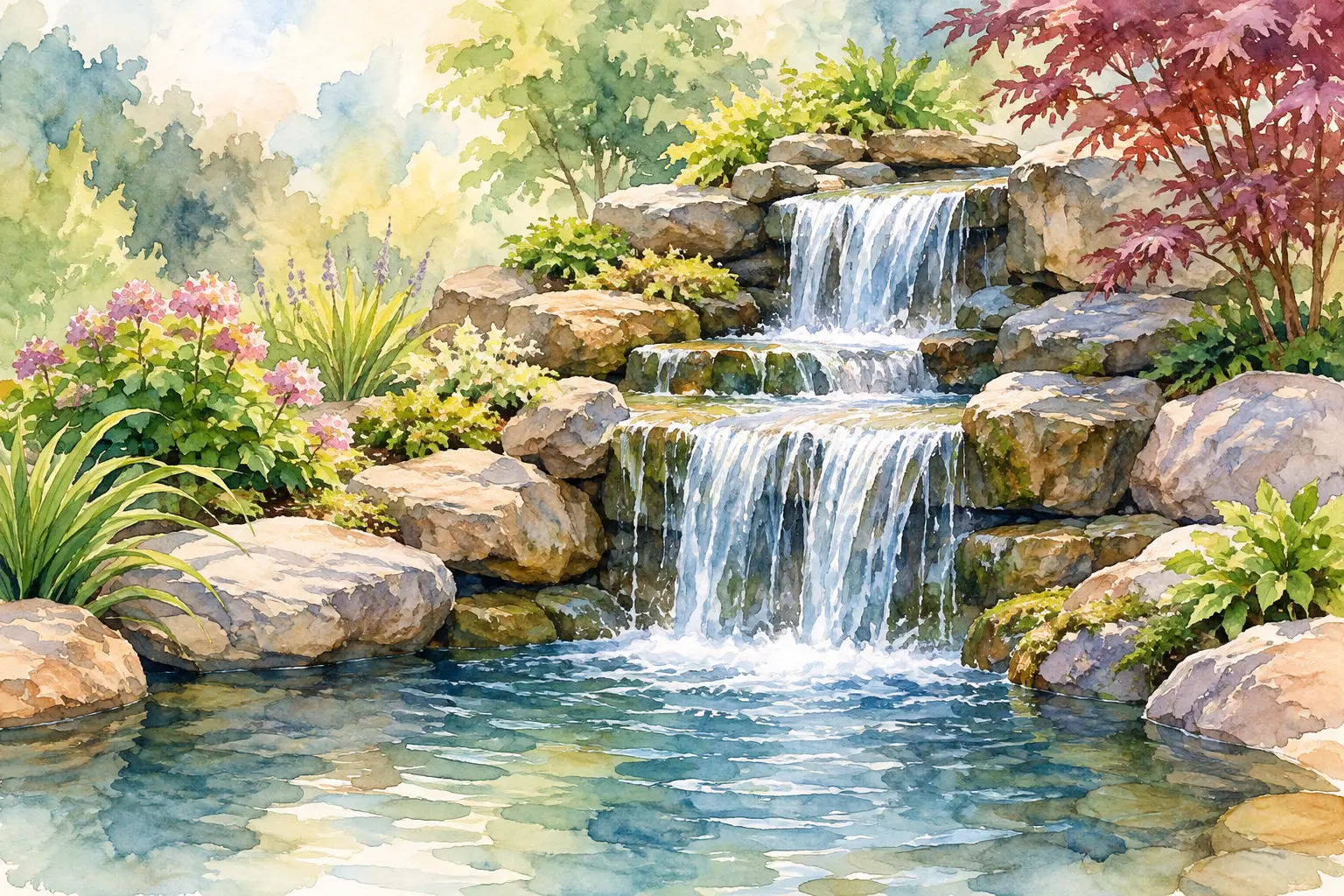
Sound is shaped by water volume, vertical drop, rock placement, and the landing area beneath each fall. Water striking a flat stone creates a sharper sound. Water rolling over rounded edges is softer and more tranquil. A series of short cascades can produce a layered, natural creek sound, while one taller drop may create a bold focal point.
Scale matters as much as sound. An undersized waterfall can disappear beside a substantial home or expansive outdoor kitchen. An oversized feature can overwhelm a compact garden. The surrounding architecture, existing trees, views from inside the home, and how the family uses the yard should all guide the design.
For Bay Area properties, terrain often provides an opportunity rather than a limitation. A grade change that seems inconvenient for planting can become the natural beginning of a stream. On a flat site, the elevation must be created carefully so the feature feels grounded rather than like a pile of imported rock.
How to Build a Fishless Waterfall With Reliable Circulation
A lasting waterfall is built from the ground up. The visible stonework earns attention, but the hidden construction determines whether the system runs reliably through changing weather and years of use.
Shape the stream before placing boulders
Excavation establishes the stream’s path, depth, and falls. The watercourse should have enough variation to feel natural, but it also needs intentional control points. Each waterfall drop requires a stable shelf that directs water forward instead of allowing it to creep behind the liner or escape over the sides.
The stream should generally be wider than many first-time builders expect. Narrow channels can make water appear fast and thin, especially once it encounters irregular stone. Wider sections slow the flow, reflect more light, and give the feature visual weight. The ideal width depends on the desired flow rate and the scale of the setting.
Build a reservoir sized for the system
The underground reservoir must hold enough water to account for the stream, waterfall, plumbing, and normal evaporation. If the basin is too small, the pump can run dry when water is displaced through the feature. If it is oversized without purpose, the project may involve unnecessary excavation and expense.
A properly designed reservoir includes a durable liner, underlayment that protects it from punctures, structural water-storage components, and access to the pump vault. Pump access is not a minor detail. A pump should be serviceable without dismantling boulders or digging through the finished landscape.
The basin also needs to be placed where surface runoff, soil, and mulch are less likely to wash into it. This is particularly important near slopes and heavily planted beds. Good construction anticipates what rainwater and wind will carry into the feature over time.
Match the pump to the waterfall, not just the pipe
Pump selection should be based on the waterfall’s required flow and total dynamic head, which includes vertical lift, plumbing length, fittings, and resistance within the system. A pump that is too small produces a weak trickle. A pump that is too large can waste energy, create excessive splash, and push water beyond the liner edges.
Variable-flow options can be worthwhile when the homeowner wants a softer weekday setting and a fuller display while entertaining. They also allow finer adjustment after the rockwork is in place. The right choice depends on the design, operating schedule, and access to power.
Electrical work should be completed safely and in accordance with local requirements. A dedicated, protected circuit and properly planned equipment location help prevent the kind of troubleshooting that can take the joy out of an otherwise beautiful feature.
Stonework Is Where Naturalism Is Earned
Naturalistic waterfalls are not created by randomly stacking rocks. Each boulder must be stable, visually believable, and positioned to guide water exactly where it belongs.
Large anchor boulders establish the feature’s character. They should be partially buried so they appear rooted in the earth rather than placed on top of it. Smaller stones then bridge transitions, soften liner edges, and create the irregular details seen in a real creek bed. The most convincing designs use a thoughtful mix of sizes rather than relying on rocks that all look identical.
Water should pass over and around stone in a way that looks effortless, but it takes careful shaping behind the scenes. Foam, mortar, and underlayment techniques may be used selectively to direct water forward and prevent it from disappearing beneath stones. The goal is controlled movement without making the construction feel artificial.
Avoid building every drop at the same height or spacing every boulder too evenly. Nature has pauses, pools, narrow passages, and unexpected turns. A short calm section before a lively fall can make the entire composition feel more authentic.
Planting Completes the Living Landscape
Plants turn a waterfall into a landscape creation. They soften rock edges, add seasonal color, and help integrate the feature with the rest of the yard. The best plant palette depends on sun exposure, irrigation, local climate, and the desired level of maintenance.
Use plants in groups and allow room for mature growth. Low, spreading varieties can soften the stream edge, while grasses and upright perennials add movement behind boulders. Shade-loving foliage may be appropriate around protected sections, while sun-exposed slopes may need tougher, drought-conscious choices.
Planting should never block service access to the pump vault or make it difficult to inspect the waterfall’s edges. A beautiful landscape still needs to function when a seasonal cleaning or adjustment is needed.
Plan for Low Maintenance, Not No Maintenance
A fishless waterfall is generally easier to care for than a fish pond, but it is not maintenance-free. Leaves, sediment, mineral buildup, and seasonal changes affect every water feature. The advantage is that a properly constructed pondless system makes routine care straightforward.
Periodic cleaning keeps the reservoir intake clear and helps preserve good flow. In fall, netting or more frequent debris removal may be useful beneath deciduous trees. In dry weather, check the water level regularly, especially during the first season while learning the feature’s normal evaporation rate.
If a waterfall suddenly loses water, do not assume the liner has failed. Water can splash outside the system, wick along an exposed fabric edge, or follow a shifted rock. A professional inspection can isolate the cause before a small issue becomes a larger repair.
For homeowners who want the enjoyment without the upkeep, scheduled maintenance provides peace of mind. The best service approach includes visual inspection, pump care, debris removal, and practical recommendations based on how the system is performing.
When Professional Design Makes the Difference
A compact kit may suit a simple weekend project, but a custom waterfall deserves professional planning when it involves substantial elevation, large boulders, complex drainage, structural hardscape, or a highly visible location. Moving stone safely, managing water flow on a slope, and concealing the mechanics require experience that cannot be replaced by a product diagram.
At Aquascape Creations, each feature is approached as nature-inspired artistry supported by disciplined construction. Our team has worked alongside the best in the industry, helping and learning throughout decades of hands-on water-feature work. That perspective matters when a project calls for more than a decorative cascade – it calls for a durable living masterpiece shaped around the property and the people who enjoy it.
The most rewarding fishless waterfalls are the ones that invite you outside: coffee beside the first morning trickle, a quieter patio conversation, children pausing to watch water disappear among the stones. Build for that daily moment, and the technical choices will have a clear purpose.