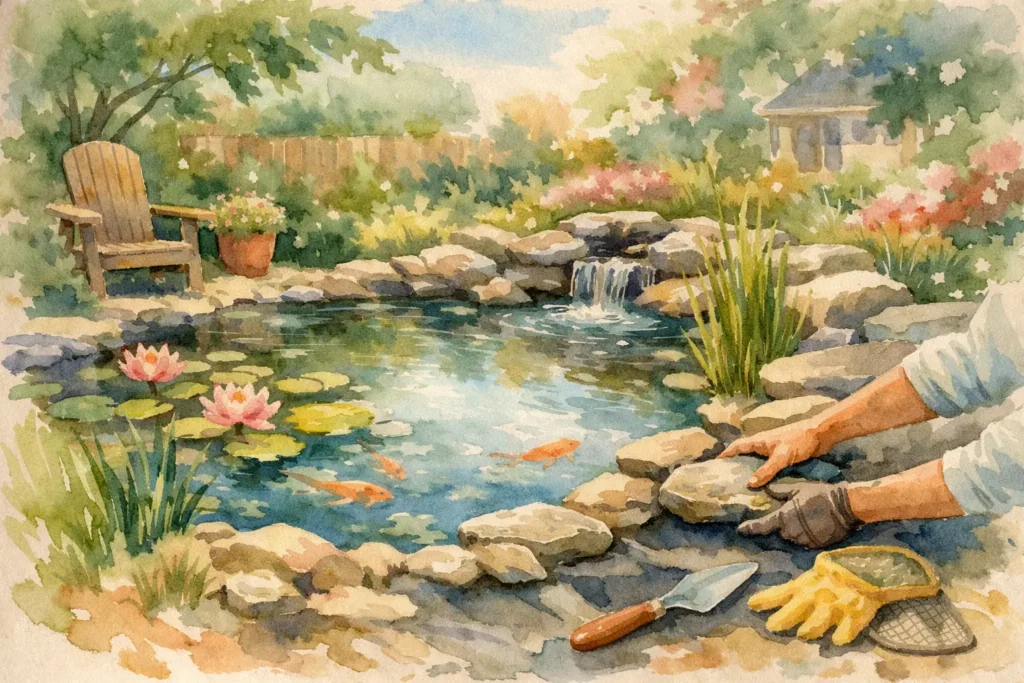
A pond that has turned pea-green, smells of sulfur, or is losing water fast can make draining feel like the obvious next move. Yet San Jose pond drainage is not a routine reset button. For a living pond with fish, plants, beneficial bacteria, and carefully balanced filtration, a full drain is a major intervention. Done at the right time and for the right reason, it can restore beauty, water quality, and long-term performance. Done unnecessarily, it can create stress for fish and erase the biological foundation that keeps the pond healthy.
The best decision begins with diagnosis. A naturalistic pond should look alive, not sterile. Some algae, leaf litter, and seasonal changes are normal. The question is whether the issue is cosmetic, mechanical, structural, or ecological. That distinction determines whether the pond needs a careful drainage plan, a targeted repair, or simply better maintenance.
When San Jose Pond Drainage Is the Right Call
A complete or near-complete drain may be warranted when a pond has accumulated years of decomposing debris and organic sediment. This dark material, often called muck, settles along shelves and the bottom of the pond. A small amount supports the pond ecosystem, but excessive buildup consumes oxygen, feeds algae, clouds the water, and can create unpleasant odors. If cleaning the skimmer, removing surface debris, and improving circulation no longer make a meaningful difference, deeper cleaning may be the responsible next step.
Drainage can also be necessary during substantial repairs. A failing liner, damaged plumbing, compromised bottom drain, or shifting rockwork cannot always be properly evaluated beneath water. In these situations, draining gives a contractor clear access to the construction details that matter most. The goal is not merely to patch what is visible, but to identify why the problem developed and correct it in a way that supports lasting performance.
Renovation is another valid reason. Older ponds are sometimes built with undersized filtration, poor access for maintenance, shallow plant zones, or materials that no longer serve the property. Draining allows the pond to be reshaped, replumbed, or rebuilt into a more functional water garden, koi habitat, or recreation pond. For homeowners investing in a larger landscape transformation, this can be the moment when an aging feature becomes a true natural sanctuary.
There are also times when water quality reaches a point where fish health is at risk. Persistent ammonia concerns, oxygen depletion, severe contamination, or a major die-off in the pond may require immediate professional direction. A drain-and-clean approach can be part of recovery, but it should never be the only response. The water source, filtration capacity, stocking level, feeding habits, and circulation pattern all need attention or the same issue can return.
When Draining Is Not the Best Answer
Water loss is one of the most common reasons people consider draining a pond, but a leak should be confirmed before any major work begins. Water naturally drops through evaporation, especially during warm, dry Bay Area stretches, and a waterfall can increase that loss. Splash-out from active fish, wind, or misplaced rocks may also mimic a leak.
A proper leak investigation compares the water loss with the pump running and with the pump turned off. If the loss changes, the issue may be in the stream, waterfall, plumbing, or a fitting rather than the pond basin. A wet area outside the pond, a low point where the water stops dropping, or an unexplained increase in auto-fill use can provide useful clues. Draining first may hide evidence that would make the repair more precise.
Green water does not automatically require a full drain either. Suspended algae often points to a balance issue: too much sun, excessive nutrient load, inadequate filtration, too many fish, or insufficient plant coverage. The right solution may involve filtration service, improved water movement, a more thoughtful planting plan, or changes to feeding and maintenance. Clear water is not achieved by replacing water alone. It comes from a system designed to support the life within it.
A pond that simply looks tired may benefit from a professional cleaning rather than total drainage. In many cases, debris can be removed while retaining enough established pond water and biological media to help the feature recover quickly. The trade-off is that a lighter service will not expose buried structural problems, but it is often less disruptive when the underlying construction is sound.
Protecting Fish, Plants, and the Pond Ecosystem
If drainage is necessary, fish should be treated as the priority, not an afterthought. They need a clean, aerated holding environment with appropriate temperature conditions and protection from predators and direct sun. Moving fish into a container filled with radically different water can cause dangerous shock. Experienced pond professionals plan the holding process before pumping begins, including aeration, temporary filtration when needed, and a safe method for netting and transporting fish.
Plants deserve similar care. Hardy aquatic plants can often be placed in tubs or protected areas with pond water while work is completed. Marginal plants may also reveal whether shelves are appropriately sized and positioned. A renovation is an opportunity to create stronger planting zones that soften the pond edge, provide shade, and make the feature feel more connected to the surrounding landscape.
The biological filter needs protection as well. Beneficial bacteria live on filter media, gravel, rock surfaces, and throughout the pond environment. A full cleaning should remove accumulated waste without turning the pond into a chemically sterile basin. Harsh cleaning methods and untreated municipal water can damage the biological cycle, leaving a freshly filled pond vulnerable to water-quality swings.
Refilling requires patience. Water should be introduced in a way that protects the liner and avoids disturbing the rebuilt pond floor or rockwork. If using municipal water, chlorine and chloramine must be addressed before fish return. Pumps, skimmers, biological filters, plumbing connections, and lighting should be tested while there is still easy access to every component. A pond may look finished once it is full, but its true success is revealed by how quietly and reliably it operates afterward.
Drainage Should Account for the Whole Site
A pond does not exist separately from its property. Drainage decisions should account for grades, nearby planting beds, patios, retaining walls, and the destination of removed water. Discharging sediment-heavy pond water carelessly can spread debris across a landscape or enter areas where it does not belong. Local discharge requirements can vary, so homeowners should confirm the appropriate approach before directing pond water toward a storm drain or other outlet.
San Jose properties also present varied site conditions. A compact backyard may require a carefully managed work area and temporary fish holding that preserves access through the property. A hillside landscape can introduce runoff, slope stability, and drainage considerations that deserve attention before a pond is emptied. On a large estate or commercial site, the challenge may be coordinating drainage with irrigation, landscaping, and complex equipment systems.
This is why a full evaluation is more valuable than a quick pump-out. The visible concern may be cloudy water or a leak, but the lasting solution could involve reshaping a stream, adding proper underlayment, correcting plumbing, improving filter access, or rebuilding an edge that has settled over time.
A Better Plan for San Jose Pond Drainage
Before scheduling drainage, document what you are seeing. Note how much water is being lost, whether the pond smells different, how the fish are behaving, and when the problem started. Photos of the water level, wet areas around the pond, and equipment can help establish patterns. If the pond has a waterfall, observe it both on and off.
Then ask for a condition-based recommendation rather than assuming replacement is required. A well-built water feature is a long-term landscape investment, and the right scope of work should protect that investment. Sometimes the answer is a focused leak repair. Sometimes it is a thorough cleaning and filtration adjustment. And when the pond’s construction or ecological health has truly reached its limit, a planned drain, repair, and restart can give it a second life.
Aquascape Creations approaches these decisions with the same care given to a new installation: respect for the living system, attention to the terrain, and craftsmanship that supports years of enjoyment. A pond should not demand constant rescue. With a thoughtful diagnosis and the right level of intervention, it can return to being the calm, remarkable part of the landscape your family gathers around.