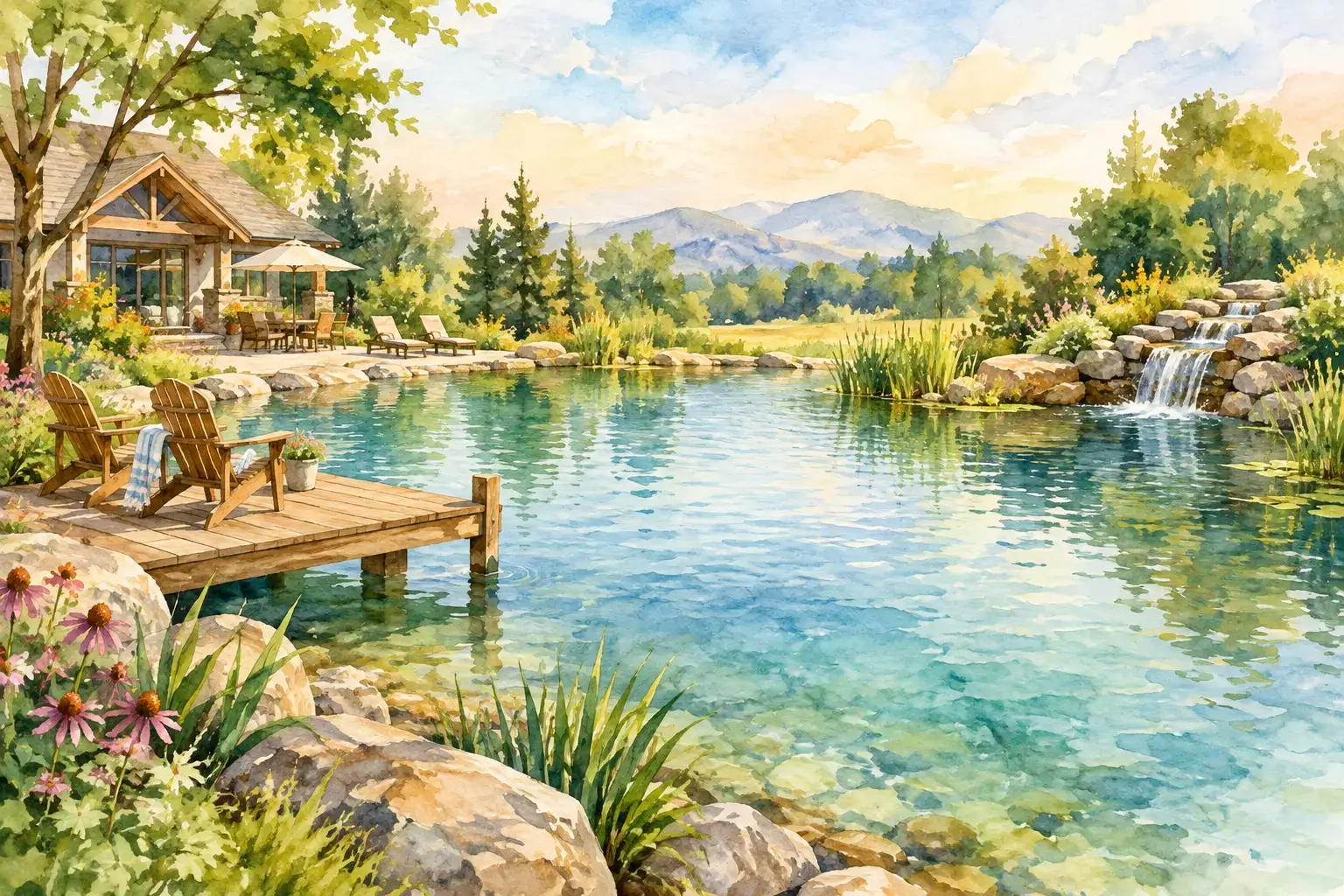
A backyard can have a beautiful pool, a lovely garden, or a patio built for gathering. Recreation ponds bring those experiences together in a more natural, personal way. Designed for swimming, relaxing, and connecting with the landscape, they can turn a large yard or challenging piece of terrain into a living masterpiece that draws people outdoors.
Unlike a conventional swimming pool, a recreation pond is not meant to look isolated from its surroundings. Stone, aquatic plants, waterfalls, beach-style entries, and carefully shaped edges allow the water to feel like part of the property. The goal is not to copy a wild lake. It is to create a clean, functional water environment that carries the calm and beauty of nature while standing up to real family use.
What Makes Recreation Ponds Different?
A well-built recreation pond is a place to swim, but swimming is only part of the experience. It can be a morning retreat before the day starts, a gathering place for children and grandchildren, or the focal point of an outdoor living area made for entertaining. The sound of moving water, the reflection of the sky, and the changing color of aquatic plants give it a presence that a standard pool rarely offers.
The defining feature is the balance between a dedicated swim zone and a planted filtration zone. Water is circulated through gravel, plants, biological filtration, skimmers, and other purpose-built components that work together to keep the pond clear and healthy. This approach reduces reliance on the heavily chlorinated feel many homeowners associate with pools, while still requiring thoughtful design and ongoing care.
That distinction matters. A recreation pond is not simply a decorative pond made large enough to swim in. It is a serious construction project with hydraulic, structural, safety, access, and maintenance considerations. The natural appearance should be the result of precise planning, quality materials, and experienced installation.
Start With How You Want to Use the Water
The best design begins with the life you want to live around it. A family with young children may need broad, shallow areas, gradual access, and clear sightlines from the house or patio. A homeowner who wants daily lap swimming may prioritize length, depth, and a more open swim corridor. For others, the pond is first a sanctuary, with swimming as an occasional pleasure and a waterfall or quiet seating area taking center stage.
Size is often the first question, but it is not the only one. A smaller recreation pond can feel generous when its edges are carefully composed and its circulation system is properly matched to the water volume. A larger pond offers more room for swimming, dramatic boulders, and generous planting, but it also brings greater excavation, filtration, and operational demands.
It also helps to consider the views. What will you see from the kitchen, primary bedroom, outdoor dining area, or favorite lounge chair? Where will guests enter the space? The most successful projects feel intentional from every angle, not just from the water’s edge.
Site Conditions Shape the Design
Every property has its own opportunities and constraints. A sloped Bay Area backyard may be ideal for a cascading stream that feeds the pond, while a flat site may call for subtle grade changes, carefully placed boulders, and a perimeter that feels naturally settled into the landscape. Sun exposure affects water temperature and plant selection. Mature trees can provide welcome shade but may add leaf debris and root-zone limitations.
Access for excavation equipment, soil conditions, drainage patterns, utilities, and local permitting requirements all influence the plan. These are not details to sort out after the design is complete. They are part of creating a pond that performs well for decades.
Clean Water Depends on More Than Plants
The natural character of a recreation pond should never be confused with neglect. Clear, inviting water comes from a system designed around circulation, filtration, and responsible maintenance. Plants are valuable partners in the ecosystem, helping use nutrients and soften the pond’s edges, but they are not the entire filtration strategy.
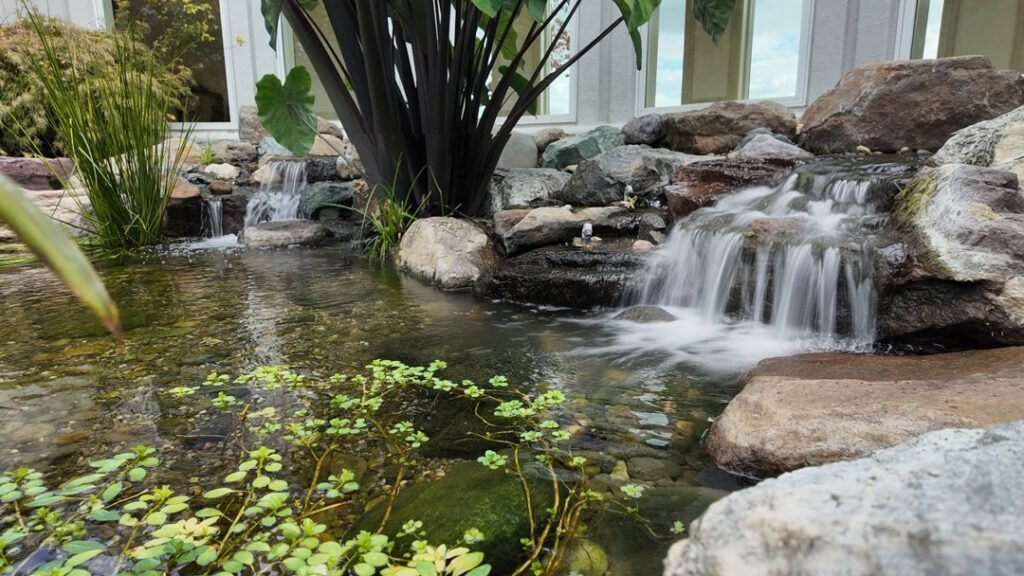
A properly engineered system generally moves water continuously through components that collect debris, support beneficial bacteria, and return filtered water to the pond. A stream, waterfall, or wetland filtration area can do more than create visual interest. It can contribute to circulation and biological performance when designed correctly.
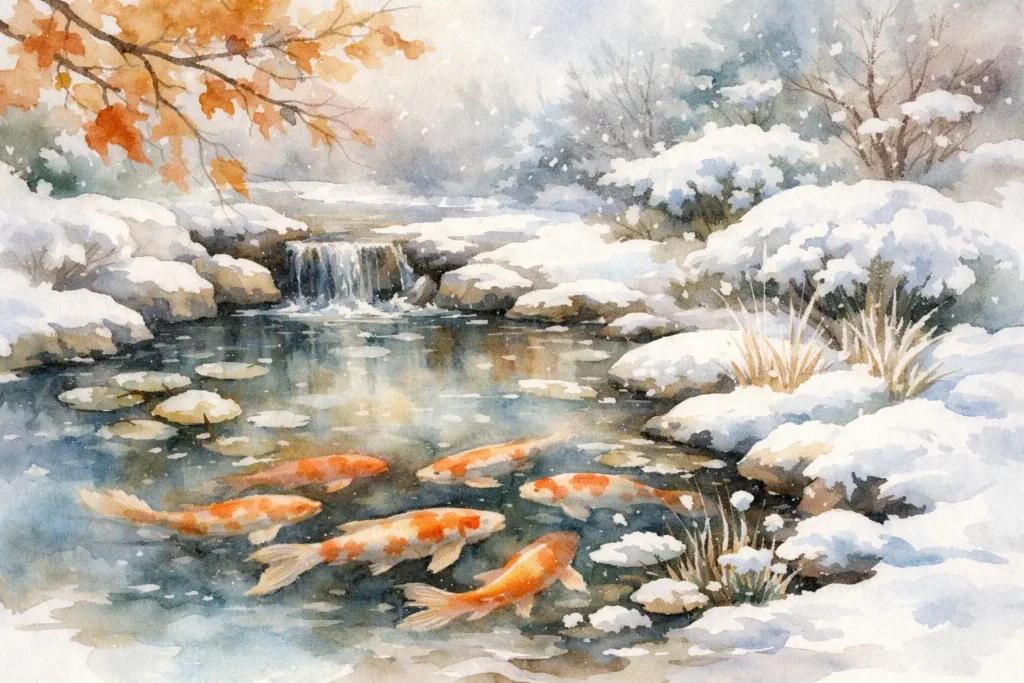
Fish may be appropriate in some recreation ponds, but they should be considered carefully. Koi are beautiful and beloved, yet they produce waste and can change the filtration requirements significantly. For homeowners focused primarily on swimming, a fish-free design may offer a simpler path to water quality and maintenance. There is no one right answer. The right answer depends on how the pond will be used and how much hands-on stewardship the owner wants.
Build for Comfort, Safety, and Long-Term Performance
Naturalistic does not mean improvised. Recreation ponds need stable excavation, reliable liner systems, protected plumbing, correctly sized pumps, and carefully selected stone. The details beneath the surface are what allow the visible landscape to remain beautiful year after year.
Entry and exit deserve special attention. Beach entries create an inviting transition into the water and can be especially useful for children or people who prefer not to use a ladder. Stone steps, integrated handholds, and depth transitions should be planned for the people who will actually use the pond. Thoughtful lighting can make the setting feel magical in the evening while improving visibility around paths and edges.
Safety requirements vary by municipality and property, so fencing, gates, alarms, and other protective measures should be discussed early. A skilled contractor can help homeowners integrate these necessities without making the finished landscape feel like an afterthought.
Material selection is equally important. Natural stone should be chosen and placed with an eye for scale, stability, and the architecture of the home. Oversized boulders can look remarkable on a broad property but may overwhelm a smaller setting. The best stonework feels as though it belongs there, with varied textures, planted pockets, and edges that avoid a repetitive, artificial look.
Expect Maintenance, Not Constant Work
A recreation pond is designed to be enjoyed, not to become a second full-time job. Still, every water feature needs routine attention. Seasonal service may include clearing debris, inspecting pumps and plumbing, trimming plants, checking water conditions, and preparing the system for changing temperatures.
The level of maintenance depends on the pond’s size, fish population, surrounding trees, planting density, and equipment. A pond beneath heavy leaf cover will need more frequent skimming than one in an open setting. A large, complex feature may benefit from professional maintenance so performance issues can be identified before they become expensive repairs.
Homeowners should also plan for the practical side of ownership: electricity for pumps and lighting, water use for occasional top-offs, replacement parts over time, and periodic deep cleaning when needed. Clear expectations at the design stage create a much better ownership experience later.
Why Experienced Design-Build Work Matters
Large water projects ask a great deal of a contractor. The team must understand landscape composition, excavation, plumbing, filtration, stone placement, and the realities of building around an occupied home. Communication matters just as much. Homeowners should know what will happen on site, how the work will affect access and existing landscaping, and what the finished pond will need from them.
At Aquascape Creations, our work is guided by nature-inspired artistry and hands-on construction knowledge gained alongside some of the best professionals in the industry. We look beyond a standard pond layout to consider terrain, architecture, how the space will be used, and the long-term health of the water. That approach is especially valuable on large or complex properties where the project needs both creative vision and technical discipline.
A recreation pond should make you want to step outside more often. When it is designed around your family, your land, and the way you gather, the water becomes more than an amenity. It becomes a place where ordinary afternoons feel worth remembering.