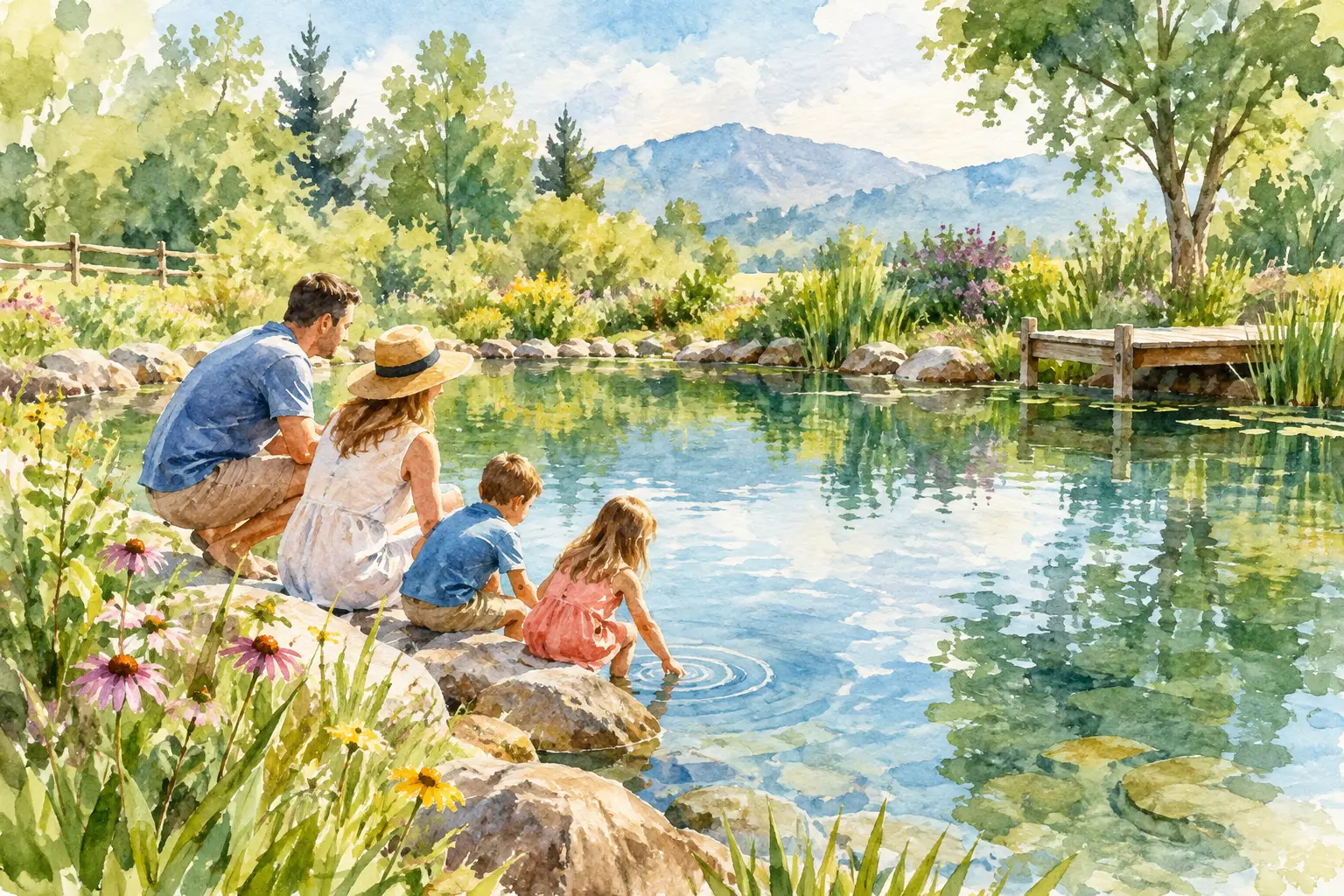
A recreation pond should feel like the part of the backyard where children linger after dinner, friends gather on warm afternoons, and the noise of the day gives way to moving water and birdsong. But before planning that kind of retreat, homeowners rightly ask: are recreation ponds safe?
They can be, when they are designed as swimming environments rather than simply decorative ponds made larger. Safety comes from the entire system working together: thoughtful depth and access, clean moving water, stable edges, sensible circulation, reliable maintenance, and clear expectations for how the space will be used. A beautiful natural swimming pond is not a shortcut around good design. It is a living masterpiece that deserves the same care and planning as any meaningful outdoor investment.
Are Recreation Ponds Safe? It Depends on the Design
A recreation pond is different from a conventional chlorinated pool and different from a koi pond. It is a purpose-built body of water designed for swimming, floating, and family enjoyment, often with planted regeneration zones, rockwork, waterfalls, wetland filtration, or a separate filtration area that supports water quality.
The word “natural” can sometimes make people assume a recreation pond is unmanaged. In a well-built pond, the opposite is true. The water is intentionally circulated, filtered, and balanced through a combination of mechanical filtration, biological processes, plant support where appropriate, and regular observation. The goal is clear, inviting water without relying on a pool-like chemical routine.
Whether a particular pond is safe depends on its layout, its equipment, the site, and the people using it. A steep-sided pond with unclear depth changes is not the same as a pond with generous entry shelves, a designated swimming zone, and visible transitions. A system with undersized filtration or neglected debris is not the same as one that receives professional seasonal care.
Start With Safe Water, Not Just Clear Water
Clear water is encouraging, but it is not the only measure of water quality. A recreation pond needs circulation that moves water through the filtration system consistently, removes suspended debris, and prevents dead zones where organic matter can collect. Biological filtration supports beneficial bacteria that process fish waste, plant material, and other nutrients before they become larger water-quality problems.
Waterfalls and streams can add oxygen, movement, and a sense of natural beauty, but they should be part of a larger circulation plan. A properly selected pump, skimmer, intake bay, bottom circulation strategy, and filtration components must be sized for the pond’s volume, bather load, sunlight exposure, and surrounding landscape. One beautiful waterfall alone cannot solve a circulation problem.
Routine care matters just as much as construction. Leaves, pollen, grass clippings, excess fish food, and decaying plant material all add nutrients to the system. Left unmanaged, they can cloud the water, encourage nuisance algae, and put unnecessary strain on filters. In the Bay Area, long dry periods, windblown debris, and intense sun can change a pond’s needs from one season to the next.
Homeowners should also understand that natural swimming water is not drinking water. Swimmers should avoid entering with open wounds, avoid swallowing pond water, and shower after swimming when practical. After heavy use, storms, or an obvious change in water clarity or odor, it is wise to pause swimming until the cause has been identified and corrected.
Design the Edges for Real People
Many pond safety concerns begin at the water’s edge. Naturalistic stonework can look effortless, but every boulder, shelf, and transition should be placed with people in mind. Secure, stable materials are essential. Loose rocks, sharp edges, or polished surfaces that become slippery when wet do not belong in an active swimming area.
A recreation pond should have a clear way in and out. Broad, gradual entry shelves, underwater steps, or a gently sloped beach entry can make a major difference for children, older adults, and anyone who wants to enter the water without jumping. The exit should be just as obvious as the entrance. A swimmer should be able to locate a stable footing and leave the pond easily from more than one point.
Depth changes deserve special attention. Gentle contours are often more forgiving than abrupt drops, particularly in family spaces. If a project includes a deeper area for swimming, it should be visually understandable from the edge and separated from shallow play zones through design, material changes, or placement. Good design quietly communicates where to step, where to sit, and where to swim.
The surrounding landscape is part of safety, too. Paths should drain well, seating should not crowd the entry point, and low-voltage lighting can make evening use more comfortable. Thoughtful grading directs runoff away from the pond, helping protect the water from sediment, fertilizers, and contaminants washing in during rain.
Supervision and Access Still Matter
No water feature eliminates the need for responsible supervision. A recreation pond, like a pool, should be treated as an open-water environment. Young children and inexperienced swimmers need close, active supervision, not just an adult nearby. Flotation devices can be helpful, but they are not a substitute for watching the water.
For households with small children, visiting grandchildren, pets, or neighbors who may wander into the yard, access control should be part of the initial conversation. Depending on the property, this may include perimeter fencing, self-closing gates, alarms, covers for certain zones, or landscape layouts that establish a clear boundary around the water. Local requirements can vary by municipality, so permit, barrier, and electrical questions should be reviewed early rather than after construction begins.
Pet safety is also worth considering. Dogs often love shallow shelves but may struggle to climb out of steep-sided water. A dedicated gradual exit gives pets a reliable way out and helps prevent panicked scrambling against the liner or stonework.
Mosquitoes, Wildlife, and Natural Balance
A common question is whether recreation ponds attract mosquitoes. Mosquitoes prefer still, stagnant water. A properly circulating recreation pond with moving water, active filtration, and a balanced ecosystem is far less hospitable than an unattended container of standing water. Skimmers and regular debris removal also reduce places where stagnant pockets can develop.
Wildlife is part of the appeal of a natural water environment, but it should be managed realistically. Birds, frogs, dragonflies, and beneficial insects can bring welcome life to the landscape. At the same time, wildlife can introduce organic material to the water, and surrounding trees can create a steady maintenance load. The right balance depends on the site. A heavily wooded property may need more skimming capacity and more frequent service than an open, sunny backyard.
Fish can be included in some projects, though they are not required for a recreation pond. If fish are part of the vision, the filtration system and swimming use must be planned together. Overstocking, overfeeding, or treating fish areas as an afterthought can make water management more difficult.
Build for Maintenance, Not Just Opening Day
The safest pond is one that is easy to care for. Equipment should be accessible for inspection and cleaning, while still being integrated discreetly into the landscape. Valves, pumps, skimmers, intake bays, and filters need room for service. When critical components are buried, undersized, or difficult to reach, routine maintenance tends to be delayed.
A sensible maintenance plan includes checking circulation, removing debris, cleaning skimmers, inspecting pumps, monitoring water appearance, and addressing small concerns before they become costly repairs. Seasonal work may include plant trimming, preparing the system for cooler weather, and reopening or tuning the pond for warmer swimming months.
Professional support is especially valuable for larger or more complex recreation ponds. An experienced water-feature contractor can recognize early signs of a leak, poor flow pattern, failing pump, or filtration imbalance that may not be obvious to a homeowner. At Aquascape Creations, that hands-on understanding is shaped by years spent building and caring for natural water environments, not simply installing equipment.
When a Recreation Pond May Not Be the Right Fit
Recreation ponds are not the best answer for every property. If your household wants a highly controlled lap-swimming environment, a conventional pool may better match your goals. If you have no interest in seasonal care, plant growth, or the changing character of a living ecosystem, a simpler water feature may bring more enjoyment with fewer responsibilities.
They are also a significant design-build project. Site access, grading, soil conditions, utility locations, sunlight, drainage, and local approvals can all influence the final plan and investment. The reward is a far more personal landscape than a standard pool deck: a place that can feel like a private swimming hole, a garden, and an outdoor gathering space at once.
The right recreation pond does not ask your family to choose between natural beauty and peace of mind. It is shaped around how you live, built with quality materials, and cared for as the living water environment it is meant to be. Start by walking your property with a knowledgeable designer and asking the practical questions early. The safest details are often the ones that make the finished space feel most natural.