
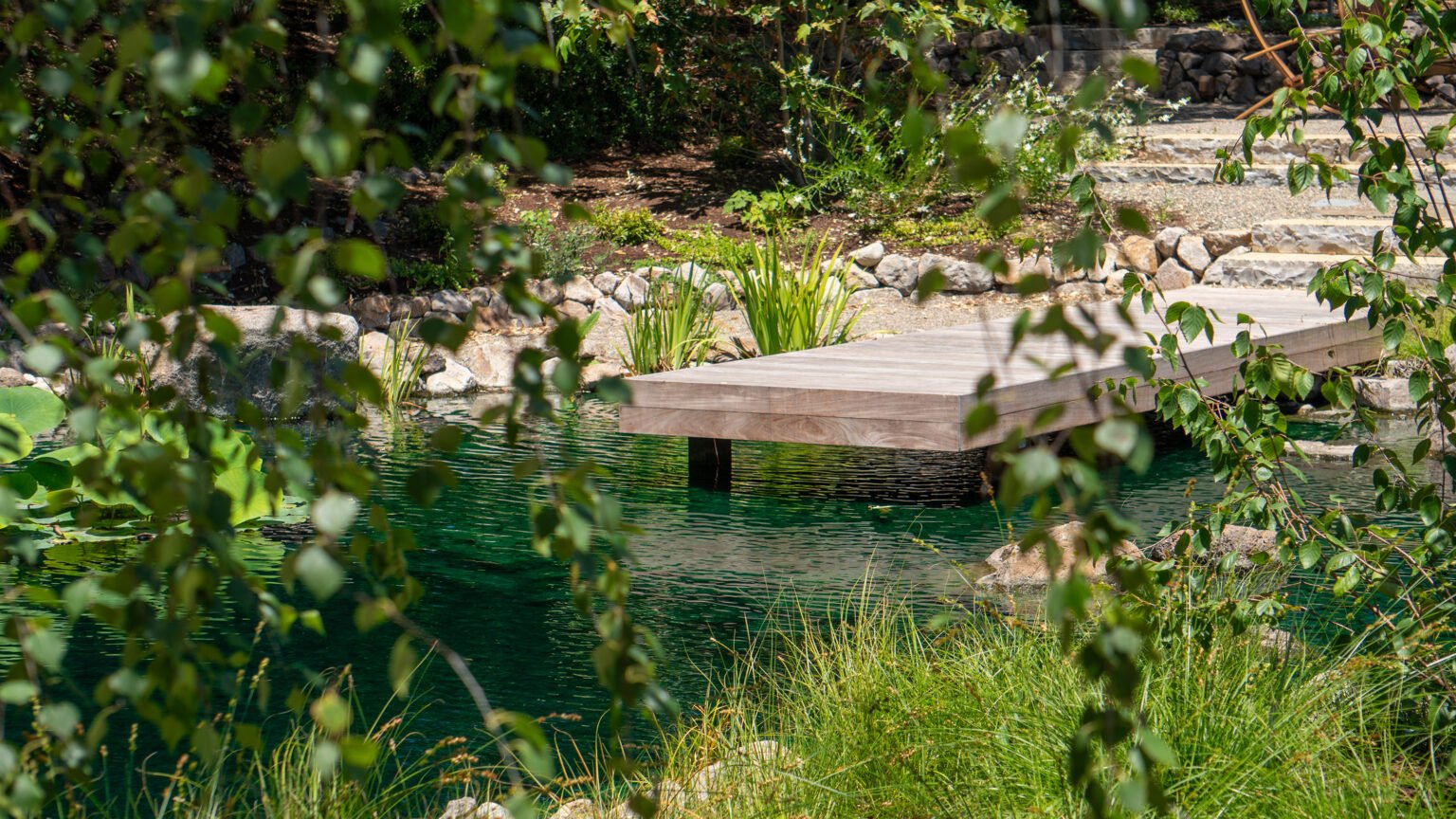
A pond can look like it has always belonged on a property, or like it was placed wherever there happened to be open ground. The difference usually begins long before excavation. Knowing how to choose pond location means balancing the view from your home with sunlight, grade, drainage, utilities, maintenance access, and the way your family actually lives outdoors.
The most beautiful pond sites are rarely chosen by one rule alone. A sunny corner may support better plant growth but sit too far from the patio to enjoy. A shaded area may feel private and cool but require a more thoughtful approach to leaves and water quality. Good placement turns a water feature into a natural sanctuary. Great placement makes it part of daily life.
Start With the View You Will Actually Use
Before considering pond dimensions or waterfall height, stand inside your home. Look through the windows you use most often: the kitchen sink, breakfast nook, family room, primary bedroom, or home office. These are often the best places to begin imagining the water.
A pond should reward ordinary moments, not only outdoor entertaining. Seeing koi glide beneath the surface while making coffee, hearing a waterfall from an open window, or watching the landscape change through the seasons gives a water feature its lasting emotional value. If the pond is hidden at the far edge of the yard, it may still be beautiful, but it will be enjoyed less often.
That does not mean every pond belongs directly against the house. Leave enough room for patios, planting beds, walkways, and proper construction access. Instead, create a clear visual connection. A curving path, a framed view between plantings, or a waterfall visible beyond an outdoor seating area can make the feature feel intentionally woven into the landscape.
How to Choose Pond Location Around Sunlight
Sunlight affects fish, aquatic plants, algae, comfort, and the character of the whole setting. Most garden ponds benefit from roughly four to six hours of direct sun each day. This range generally supports water lilies and other aquatic plants without exposing the pond to relentless afternoon heat.
In the Bay Area, the right answer depends on the property’s microclimate. A warm inland backyard in Livermore or Walnut Creek may need protection from intense late-day sun, especially in a shallow pond. A cooler, more shaded property may benefit from a slightly more open location. The goal is not to chase a perfect number of sun hours. It is to create conditions that can be managed through depth, circulation, aquatic planting, shade structures, and thoughtful landscape design.
Heavy shade creates its own trade-offs. Trees may provide a peaceful canopy, but falling leaves, seed pods, and needles add organic debris to the water. That debris breaks down, increasing maintenance and placing more demand on the pond’s filtration system. A pond near a tree is not automatically a mistake, particularly when the tree is a meaningful part of the landscape. It simply needs a design and maintenance plan that respect the setting.
Avoid Placing a Pond Directly Beneath Large Trees
Large roots complicate excavation and can limit the shape and depth of a pond. Mature trees also shed more than leaves: blossoms, fruit, twigs, and pollen can all find their way into the water. If the site beneath a beloved tree is the only place that offers privacy or a compelling view, a pondless waterfall may be the more practical choice. It offers the sound and movement of water without the same open-water maintenance demands.
Read the Grade Before You Fall in Love With a Spot
Water always follows the land. This simple fact is central to choosing a pond location that will perform well for decades.
A low point in the yard can seem like an obvious place for a pond, but it may also collect stormwater, lawn runoff, mulch, or sediment. During heavy rain, that runoff can cloud the pond and introduce fertilizers or contaminants that affect fish and water quality. A well-built pond has its own controlled edge treatment, drainage strategy, and overflow plan. It should not become the accidental catch basin for the entire property.
Sloped sites can be exceptional locations for naturalistic waterfalls because they give the water movement a believable sense of origin. Yet they require careful engineering. The waterfall must be shaped into the grade, the soil must be properly managed, and water must be directed away from the house, foundations, and neighboring properties. On a complex site, the landscape may need subtle contouring so the finished pond feels organic while functioning predictably.
Ask where water travels during the biggest storms, not just where it sits on a dry summer afternoon. Existing downspouts, roof runoff, retaining walls, and hardscape drainage all deserve attention before a design is finalized.
Respect Utilities, Easements, and Access
A pond is more than a visible body of water. It includes pumps, filtration, plumbing, electrical service, skimmers, overflow management, and often lighting. The best pond location allows these systems to be installed correctly and serviced without disrupting the experience of the space.
Equipment should be accessible but not visually dominant. In a naturalistic design, it can often be screened by boulders, planting, or a carefully designed landscape pocket. What matters is that a technician can reach it when needed. Hiding equipment where it cannot be maintained is a short-term visual win and a long-term frustration.
Before construction, identify underground utilities, irrigation lines, septic components, drainage pipes, and property easements. This is especially important in established landscapes, where years of improvements may not be obvious from the surface. A qualified pond contractor will assess these constraints early rather than forcing a design around them after excavation begins.
Access matters, too. Stone, excavation equipment, liner materials, and construction crews need a workable route into the yard. A narrow side yard does not rule out a pond, but it may influence the pond’s scale, construction method, and budget. Large, complex projects benefit from a plan that considers staging and site restoration from the first conversation.
Place Water Where People Want to Gather
The ideal pond location supports the life you want outdoors. For some families, that means a koi pond beside a patio where guests can sit with the sound of a waterfall nearby. For others, it means a quieter water garden outside a bedroom window or a recreation pond that becomes the center of summer weekends.
Consider noise as carefully as sight. Falling water can soften traffic sounds and create a feeling of privacy, but a large waterfall next to a quiet reading area may be more energetic than you want. Waterfall volume, drop height, and distance from seating areas can all be tailored. There is a meaningful difference between the gentle sound of a woodland stream and the lively presence of a cascading waterfall.
Also think about circulation. Visitors should be able to approach the pond safely, pause at a viewing point, and move around the yard without feeling forced through a narrow space. A pond edge can invite interaction with stepping stones, a small bridge, or a broad boulder where children can sit and watch fish. These details make a feature feel personal rather than decorative.
Plan for Privacy, Safety, and Long-Term Care
Water naturally draws the eye, so placing a pond near a property line or exposed patio can sometimes magnify privacy concerns. Strategic planting, grade changes, and rockwork can create enclosure without making the space feel walled off. The pond should feel like a destination within your landscape, not a display for the neighbors.
Families with young children, pets, or frequent guests should discuss safety during the site-planning stage. Pond depth, edge design, access points, fencing requirements, and visibility from the home all shape the final solution. There is no single design that fits every household. The right approach respects both the dream and the realities of the people who will use the space.
Long-term care belongs in the conversation as well. A pond placed near the home is often easier to inspect, feed fish, and enjoy throughout the year. A feature farther out on the property may need more intentional access for seasonal cleaning and service. Durable construction and quality filtration make maintenance more manageable, but no living water feature is entirely maintenance-free.
Let the Site Guide the Design
A pond should not be dropped into a yard as a separate object. The best projects take cues from existing terrain, architecture, stone colors, mature plantings, and the way light moves across the property. A contemporary home may call for cleaner lines softened by natural materials. A large rural property may invite a more expansive pond with a stream that appears to emerge from the hillside.
At Aquascape Creations, we believe the most remarkable water features begin with careful listening and a walk through the property. The question is not only where a pond can fit. It is where water will bring the most beauty, calm, and connection to the way you live.
Before committing to a location, spend time in the proposed area at different hours of the day. Listen to it after the neighborhood quiets down. Watch where the sun lands, where rain travels, and where you naturally pause. The right site will give a pond more than a place to exist. It will give it a reason to become part of your home.
[…] hillsides, large projects, or sites with unusual drainage, the answer may involve grading, retaining work, engineered footings, or a hybrid construction […]
[…] exposed inland yard needs a different approach than a shaded garden in a cooler neighborhood. The pond’s location should balance visibility, access for maintenance, wind exposure, nearby plant debris, and the […]