A pond that looks perfectly at home beside a patio or beneath a grove of maples can still disappoint if its depth is wrong. The question of how deep should ponds be is not answered by one standard measurement. Depth determines whether fish can thrive, water stays clearer, plants have a place to grow, and the feature feels like a natural sanctuary rather than a shallow decorative basin.
For most custom ponds, the right approach is to design several purposeful depth zones instead of making the entire excavation uniformly deep. A beautiful, durable pond has room for planting shelves, stable fish habitat, circulation, and the particular way your family plans to enjoy the water.
How Deep Should Ponds Be? Start With Their Purpose
A small water garden, a dedicated koi pond, and a recreation pond may all be called “ponds,” but they ask very different things of the landscape. The depth should support the feature’s main job first, then its appearance.
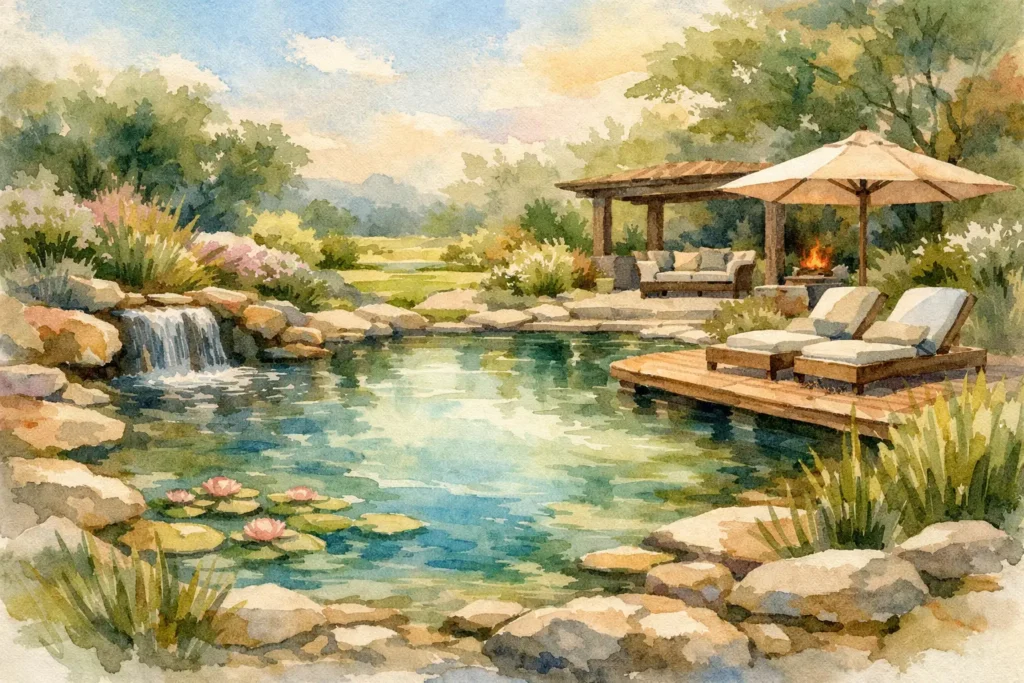
A garden pond without fish can often be shallower than a koi pond, especially when the goal is to highlight water lilies, marginal plants, stonework, and a gentle waterfall. Many successful water gardens include a deeper central area of about 2 to 3 feet, with shelves at shallower elevations around the perimeter. This gives plants the light and water depth they need while preserving a sense of dimension.
For koi, 3 feet is generally the practical minimum for a well-designed pond. A depth of 3 to 4 feet gives fish more consistent water temperatures, better protection from predators, and more space to move away from surface activity. On properties with intense summer sun, a deep fish zone is especially valuable because shallow water warms quickly. Larger koi ponds may benefit from areas of 4 feet or more, depending on their footprint, fish load, filtration, and exposure.
Recreation and swim ponds are a different category altogether. Their depth is shaped by how the pond will be used, applicable safety requirements, access design, water circulation, and the visual transition into the surrounding landscape. A shallow beach-style entry may lead to a swimming area in the 5- to 8-foot range. These larger living-water environments require careful engineering, not just a deeper hole in the ground.
Recommended Depths for Common Pond Types
These ranges provide a useful starting point, but the final plan should reflect the site, the pond’s size, and the life expected to happen around it.
- Water gardens and small ornamental ponds: 18 inches to 3 feet, with shelves for aquatic plants.
- Koi ponds: 3 to 4 feet in the main fish zone, with 4 feet or more often appropriate for larger designs.
- Wildlife ponds: 18 inches to 3 feet, using gradual edges and varied shelves to welcome birds, beneficial insects, and amphibians.
- Recreation and swim ponds: commonly 5 to 8 feet in the swimming zone, with a carefully planned shallow entry and habitat areas.
The measurements are not interchangeable. A 3-foot koi pond with inadequate filtration, a poorly placed skimmer, or too little shade can still struggle. Likewise, a shallow water garden can be healthy and enchanting when its plants, circulation, and sunlight are thoughtfully balanced.
Why Multiple Depth Zones Matter
Natural ponds are not flat-bottomed bowls, and the best constructed ponds should not feel like one. Stepped shelves and varied depths create a more convincing natural edge while serving practical purposes.
A marginal shelf, often 6 to 12 inches below the surface, supports plants that soften stone edges and blend the water feature into the garden. A deeper shelf around 12 to 18 inches can accommodate many hardy water plants and create visual layers below the surface. The central basin provides cooler refuge for fish and a place for sediment to move toward collection points rather than settling everywhere.
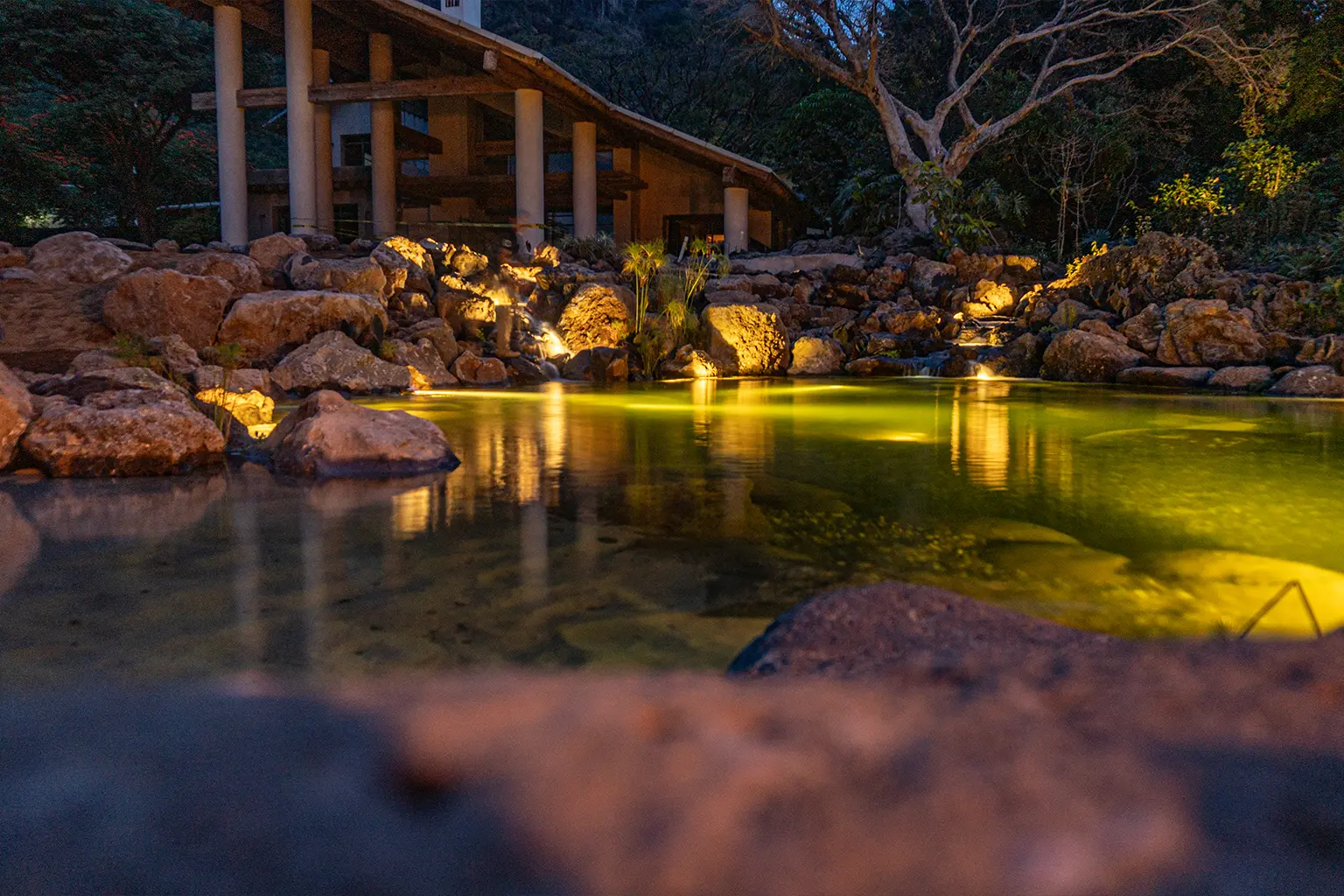
This structure also improves the viewing experience. From a seating area, shallow shelves reveal foliage and stone beneath the water, while the deeper center brings mystery and rich reflections. That contrast is part of what makes a pond feel like a living masterpiece rather than a simple landscape accessory.
Depth, Water Quality, and Fish Health
Deeper water is more stable, but depth alone does not create a healthy pond. It must work with proper filtration, oxygenation, circulation, and a balanced fish population.
In a shallow pond, water temperature can rise rapidly on a hot afternoon and drop quickly overnight. Those swings place stress on koi and other fish. Warm water also holds less dissolved oxygen, which is one reason a waterfall, streams, jets, and well-designed circulation are not merely visual enhancements. They keep water moving and contribute oxygen where the pond needs it.
A deeper pond offers a temperature buffer. It lets fish retreat from surface heat and gives them more reliable conditions through seasonal changes. In much of the Bay Area, severe winter freezing is less of a concern than in colder climates, but heat exposure, direct sun, and drought-conscious landscape choices still shape the right design. On a sunny Livermore property, for example, deeper fish habitat and strategic shade may matter far more than they would in a cool, protected courtyard.
Depth should also be matched to pond volume. A narrow pond that is very deep may have limited surface area for gas exchange and may be difficult to maintain. A broad, shallow pond can become overly warm and vulnerable to predators. The goal is proportion – enough depth for stability, enough surface movement for oxygenation, and enough room for equipment to do its work quietly.
Consider the Site Before Setting a Depth
The property always has a vote. Soil conditions, slopes, drainage patterns, mature roots, utility locations, access for equipment, and the relationship to the home all influence what is practical and wise.
A pond built into a slope may need engineered retaining details and careful management of runoff. Placing the deepest area in the wrong spot can complicate excavation or create an unnatural look from key viewing angles. On compact urban lots, depth can create a sense of scale without consuming the entire yard, but the pond still needs safe, gracious edges and access for future service.
Local requirements may also apply, particularly for larger water features and swim ponds. Setbacks, fencing, electrical work, drainage, and safety provisions should be considered early, not after a design has been finalized. A professional design-build team can coordinate these realities while protecting the beauty of the finished space.
Do Not Make Every Edge Deep
One common mistake is assuming a pond should drop sharply from the coping stone to its full depth. While a steep-sided basin may seem efficient, it limits planting opportunities, makes the water feel less natural, and can be more difficult for wildlife or pets to navigate.
Gentle shelves create safer transitions and offer places for pots, aquatic plants, and natural stone. The exception is a dedicated formal koi pond or a site with very tight space constraints, where the design may call for more vertical walls. Even then, the pond should be planned around fish care, circulation, and access rather than depth alone.
For families, the edge treatment deserves as much attention as the deepest point. A pond can be designed to feel open and inviting while still accounting for children, guests, and pets. That balance comes from thoughtful layout, stone selection, plantings, visibility, and appropriate safety measures – not from a single depth measurement.
Build for Long-Term Enjoyment, Not a Quick Number
A pond’s ideal depth is ultimately part of a larger conversation about the life you want outside. Do you picture koi gliding beneath a waterfall? A lush water garden viewed from the kitchen? A dramatic commercial entry feature? Or a recreation pond where family and friends can spend warm afternoons close to nature?
The answer changes the excavation plan, filtration system, plant shelves, stonework, and maintenance needs. At Aquascape Creations, we believe the strongest water features are shaped around both the land and the people who will enjoy them. When every depth has a purpose, the pond becomes easier to care for, more resilient through the seasons, and more rewarding every time you step outside.
A well-designed pond should invite you to slow down – to watch the water move, notice the plants fill in, and see your outdoor space become a place people naturally gather.