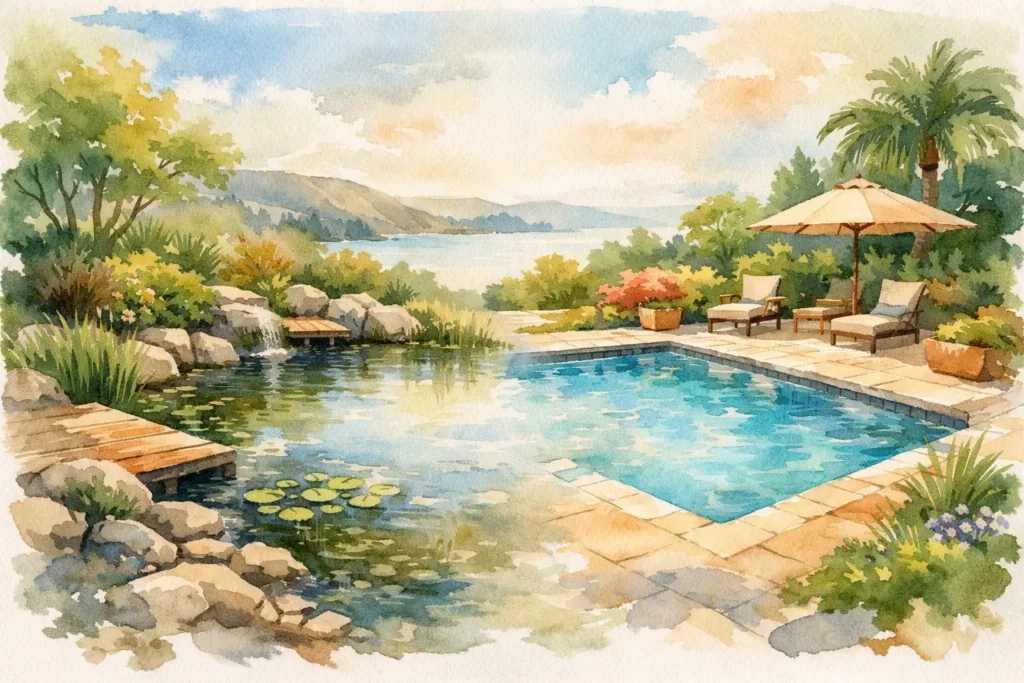
A pond can feel like the coolest place in the yard on a hot Livermore afternoon: moving water catches the light, fish glide beneath lilies, and the sound of a waterfall softens the heat. So, is the Bay Area too hot for a pond? No. But a beautiful, healthy pond here must be designed for its specific sun exposure, wind, terrain, and summer temperature swings.
The Bay Area does not have one climate. A foggy San Francisco Peninsula garden, a sunny San Jose backyard, and an inland property in Walnut Creek or Livermore can experience dramatically different summer conditions. That is why a pond should never be treated as a decorative feature dropped into the middle of a patio. It is a living system – and when it is thoughtfully built, it can become a lasting natural sanctuary even in the warmest parts of the region.
Is the Bay Area Too Hot for a Pond? Not With the Right Design
Heat itself is not the enemy. Stagnant, shallow, unshaded water is the real concern. As water warms, it holds less dissolved oxygen. At the same time, koi and other fish become more active and need more oxygen, while excess sunlight can encourage algae growth. A small pond with weak circulation can become stressed quickly during a string of 90-degree days.
A professionally designed pond manages those conditions before they become problems. Proper depth gives fish a cooler refuge. Effective circulation brings oxygen through the system. A correctly sized skimmer and biological filtration help remove debris and support a balanced ecosystem. Aquatic plants provide shade and compete with algae for nutrients.
The goal is not to fight nature with a complicated collection of equipment. It is to create a balanced water environment that works with the property. That balance is what allows a pond to look natural while performing reliably through summer heat, autumn leaf drop, and the Bay Area’s long dry stretches.
Why Microclimate Matters More Than the Forecast
A weather report offers a starting point, not a pond plan. The conditions at your property matter far more than the regional average.
A backyard enclosed by stucco walls, dark fencing, and stone hardscape can trap radiant heat well into the evening. A hillside property may receive intense western exposure. An open site can lose water more quickly to dry wind. On the other hand, mature trees, a north-facing slope, or morning-only sun may make a property naturally favorable for a water garden.
This is where experienced site evaluation makes a meaningful difference. Before construction, the pond’s location should be considered alongside sun path, drainage, existing trees, nearby structures, views from the house, and how the family intends to use the space. A pond built for viewing from the kitchen may need a different shape, planting plan, and waterfall placement than one designed as the centerpiece of a large outdoor entertaining area.
There are trade-offs. Shade is valuable during hot afternoons, but a pond directly beneath a heavy leaf canopy can require more seasonal maintenance. Full sun supports flowering water lilies, yet too much unfiltered sunlight can fuel algae. The answer is usually not all shade or all sun. It is a carefully chosen mix of sunlight, plant cover, water movement, and maintenance access.
Depth Gives Fish a Cooler Place to Rest
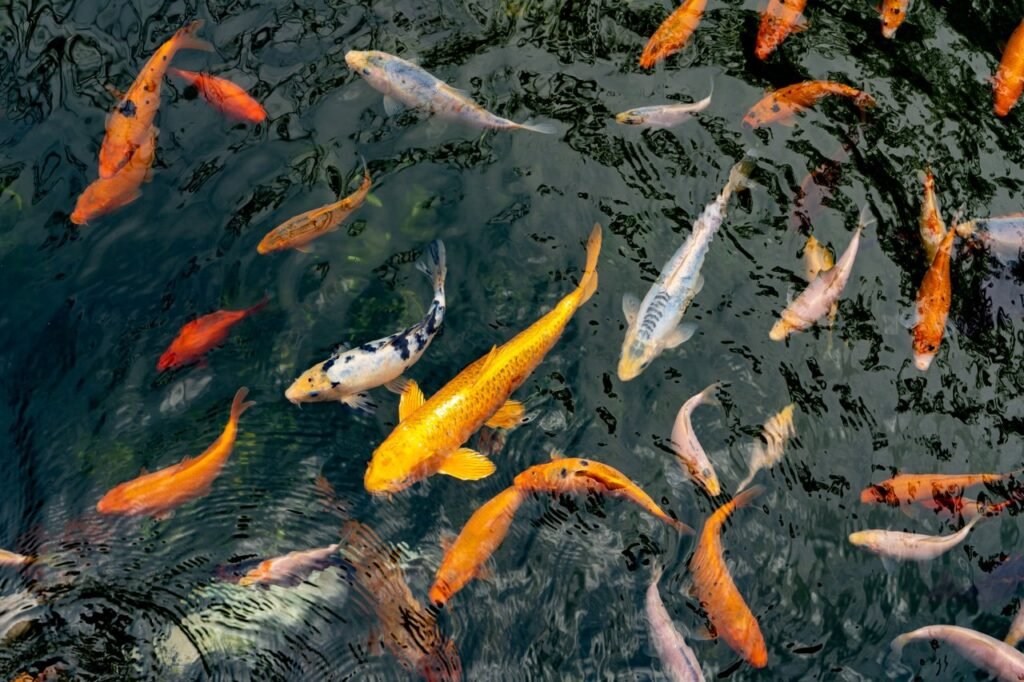
For koi ponds and fish ponds, depth is one of the most practical defenses against extreme summer heat. Shallow water warms fast, especially where it sits against sun-heated rock or receives direct afternoon light. A deeper pond stays more temperature-stable and gives fish a place to move when the surface warms.
The right depth depends on the pond’s scale, fish load, site conditions, and intended use. It should be planned as part of the entire system, not decided after the outline has been dug. A naturalistic pond also benefits from varied depths: shelves for marginal plants, deeper areas for fish, and gently composed edges that make the water feature feel like it belongs in the landscape.
Depth alone is not enough. A deep pond without circulation can still develop areas of poor water quality. But paired with effective filtration and movement, it provides a far more stable foundation for long-term fish health.
Moving Water Does More Than Create a Beautiful Sound
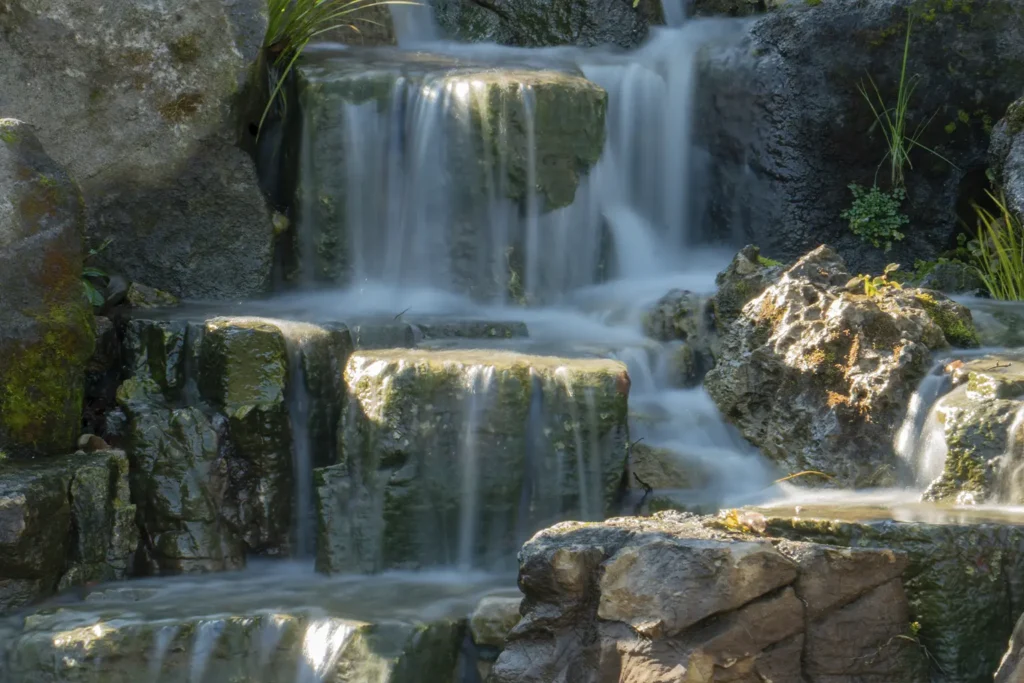
A waterfall is often the emotional heart of a pond, but it also serves a practical purpose. As water moves over rock and returns to the pond, it exchanges gases with the air and helps replenish oxygen. Streams, cascades, and well-designed return jets can all contribute to healthy circulation.
During hot weather, this circulation becomes especially valuable. Fish may gather near a waterfall or stream because those areas tend to have higher oxygen levels. If fish are repeatedly gasping at the surface, clustering around the waterfall, or acting sluggish during warm afternoons, the pond needs attention. Those signs can point to warm water, low oxygen, water-quality imbalance, or equipment that is not performing as it should.
A pond should not depend on a single small pump working at its limit. Pumps, plumbing, biological filtration, and skimming capacity should be matched to the water volume and the feature’s intended use. Larger ponds, heavily stocked koi ponds, and complex recreation ponds require especially thoughtful hydraulic design.
Plants Are Part of the Cooling Strategy
Aquatic plants add softness, seasonal color, and a sense that the pond has grown naturally from the landscape. They also do useful work. Lilies and floating plants shade the water surface. Marginal plants help use available nutrients. Surrounding landscape planting can filter the visual transition between pond, boulders, and garden while providing carefully placed relief from intense sun.
Planting should be beautiful without becoming overgrown. Too little plant coverage leaves the water exposed. Too much can restrict circulation, collect debris, and make maintenance more difficult. The best planting plan is tailored to the pond’s sun levels, fish population, desired look, and the owner’s appetite for seasonal care.
For homeowners who want a very clean, architectural look, shade can also come from strategically placed trees, pergolas, or nearby structures. For those who prefer a lush water-garden setting, the pond itself can carry more of that work through lilies, emergent plants, and natural stone ledges.
Warm Weather Makes Maintenance More Important
Even a well-built pond needs attentive care. Summer brings more feeding activity, more evaporation, more airborne debris, and faster biological changes in the water. A weekly glance at the pond is helpful, but a true maintenance plan goes further.
Water levels should be monitored, especially during heat waves. Significant water loss may be normal evaporation, but it can also signal a leak. Filters and skimmers need routine service so water keeps moving freely. Fish should be observed during feeding, not just admired from a distance. Their behavior often reveals a problem before the water looks noticeably different.
Avoid the temptation to solve every green-water moment with chemicals. Algae is often a symptom of too much nutrient load, inadequate plant coverage, insufficient filtration, too much sun, or a maintenance issue. Correcting the cause is more effective than masking it.
If an aging pond struggles every summer, the issue may be structural rather than seasonal. Undersized plumbing, tired pumps, poor circulation zones, deteriorating liner details, or an outdated filtration layout can limit what routine cleaning can accomplish. In those cases, a thoughtful renovation can preserve the pond’s character while giving it the performance it should have had from the beginning.
A Pond Can Be a Summer Refuge, Not a Summer Problem
The best Bay Area ponds do not feel fragile when temperatures climb. They feel alive. Water moves over stone, plants soften the edges, and the pond remains a place where people gather in the evening after the yard has finally cooled down.
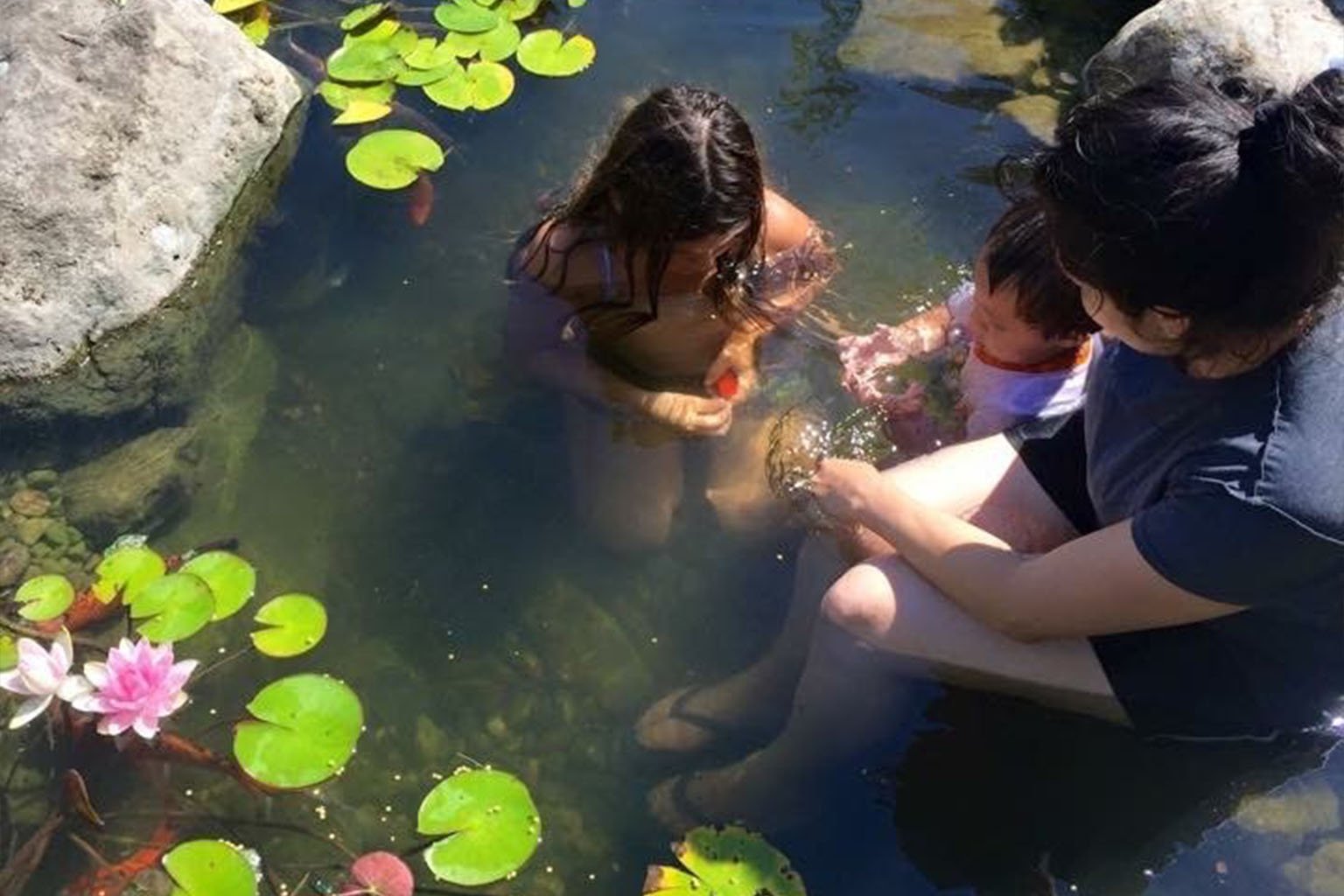
That outcome comes from craftsmanship as much as aesthetics. At Aquascape Creations, we approach each project as a living masterpiece shaped by the land and by the people who will enjoy it. Whether the vision is a compact water garden, a koi pond, or a large recreation pond, design choices made before construction determine how peaceful ownership feels years later.
A hot backyard is not a reason to give up on the pond you have imagined. It is a reason to build it with depth, circulation, shade, and care worthy of the landscape around it.