A pond can look beautifully finished on installation day and still struggle a few weeks later if water is not moving with purpose. This pond circulation guide explains what healthy movement really does, where it needs to happen, and why a properly designed system protects both the beauty and the living balance of your water feature.
Circulation is not simply about making a waterfall look active. It is the work happening beneath the surface: moving debris toward collection points, supplying oxygen, supporting beneficial bacteria, and preventing quiet pockets where sediment and nutrients can collect. When those systems work together, a pond becomes less of a chore and more of the natural sanctuary it was meant to be.
Why Pond Circulation Matters More Than Most Owners Expect
Still water tends to collect problems. Fish waste, leaves, fish food, pollen, and windblown debris all add organic material to a pond. As that material settles, it breaks down and consumes oxygen. The result may be murky water, excess algae, unpleasant odor, stressed fish, or a layer of sludge that makes routine maintenance far more difficult.
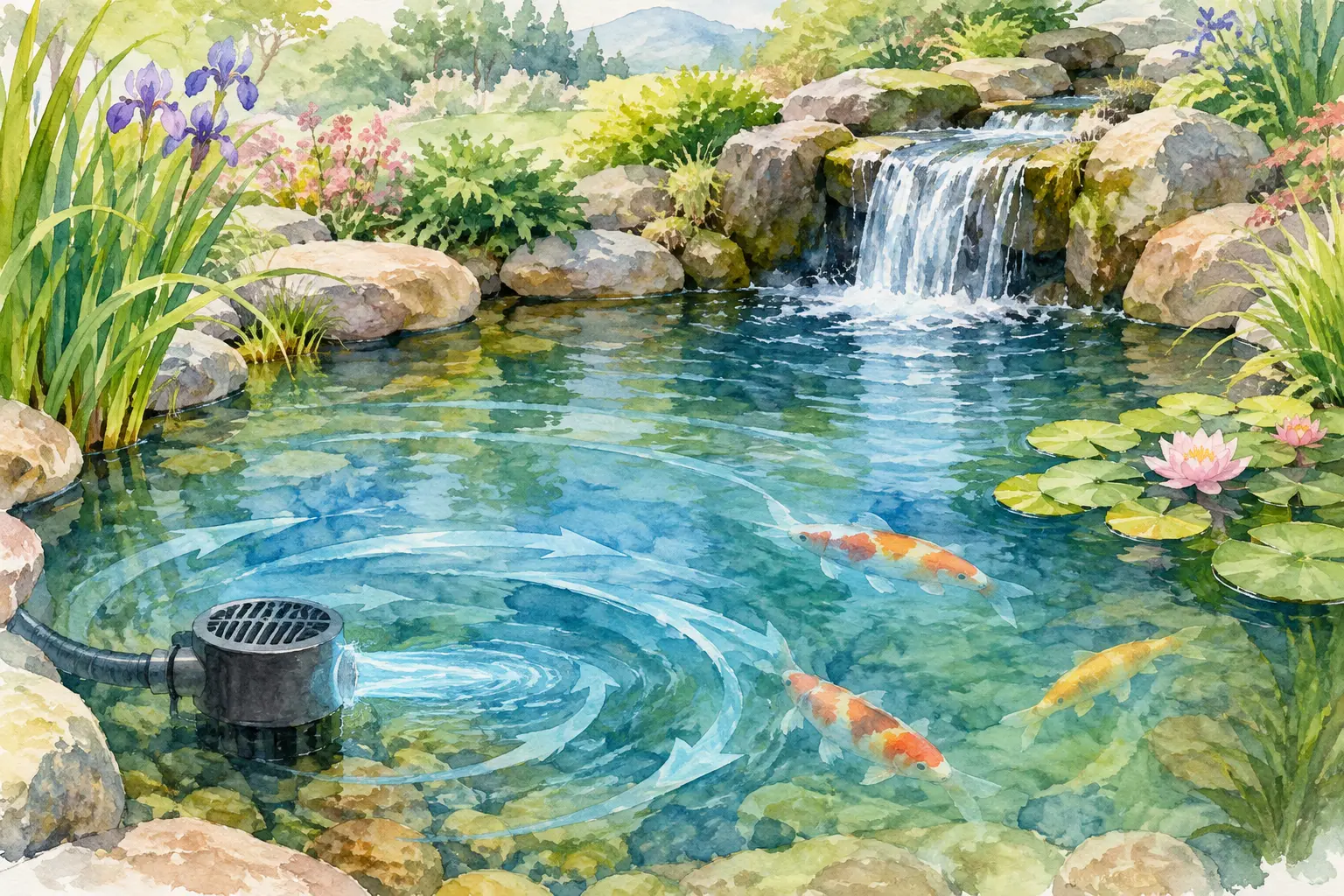
Good circulation gives filtration a chance to do its job. Water carrying fine debris and dissolved waste must reach the skimmer, intake bay, wetland filter, biological filter, or other filtration components built into the system. At the same time, water returning through a stream, waterfall, jets, or returns creates surface movement that improves gas exchange.
For koi ponds, this is especially significant. Koi produce more waste than a lightly stocked water garden, and they need stable oxygen levels. A pond designed for a few water lilies has different circulation demands than one designed around active, growing fish. The right answer depends on pond volume, fish load, depth, shape, planting, sun exposure, and the way the feature is used.
The Building Blocks of a Well-Circulated Pond
A well-built pond does not depend on one oversized pump to solve every water-quality issue. It relies on components that each have a clear role, placed with the pond’s contours and natural appearance in mind.
The Pump Creates the Working Current
The pump is the heart of circulation, but pump size should never be chosen by horsepower alone. A pump must move enough water after accounting for the lift to the waterfall, pipe length, fittings, filter resistance, and the desired look and sound of the falls.
As a starting point, many garden ponds benefit when the full pond volume passes through the system about once per hour. That guideline is useful, not absolute. A heavily stocked koi pond may need greater flow and stronger filtration. A large recreation pond often needs several zones of movement rather than one dramatic waterfall trying to push water across a broad body of water.
Selecting a pump that is too small can leave debris stranded and filtration underfed. Selecting one that is unnecessarily large can create excessive current, waste energy, make a shallow pond uncomfortable for fish, and overwhelm a feature designed for a quieter, reflective surface. The best system feels natural while working hard out of sight.
Surface Skimming Removes Waste Before It Sinks
A skimmer is often one of the most valuable circulation tools in a landscape pond. Positioned to take advantage of prevailing winds and the pond’s return flow, it draws floating leaves, pollen, fish food, and surface debris into a collection area before those materials settle to the bottom.
In the Bay Area, this matters during seasonal leaf drop and when warm, dry weather carries dust and plant debris into the water. A skimmer basket still needs regular attention, particularly after wind or storms. Yet that simple service is far easier than removing decomposed material after it has settled into every corner of the pond.
Bottom-Level Collection Prevents Dead Zones
Surface movement alone does not guarantee healthy circulation below. Ponds with shelves, boulders, coves, deep centers, or irregular naturalistic outlines can develop low-flow areas where fine sediment gathers.
Depending on the design, bottom drains, intake bays, strategically placed pickups, or carefully directed returns can help move water from these quieter areas toward filtration. This is where custom construction makes a substantial difference. Water follows the shape it is given. A system should be designed around the pond’s actual depths, rockwork, and flow path, not treated as a standard kit dropped into the ground.
Biological Filtration Needs Oxygenated Flow
Beneficial bacteria convert fish waste and other harmful compounds into forms that are safer for fish and plants. Those bacteria need oxygen-rich water moving through the filter media. When flow is restricted by clogged pads, dirty filter mats, a blocked intake, or an undersized pump, biological performance can suffer even if the waterfall still appears to be running.
A planted wetland filter can be a beautiful and effective part of this process. Water moves slowly through gravel and plant roots, where beneficial bacteria can colonize and plants use available nutrients. It is not a replacement for appropriate mechanical filtration in every pond, particularly a densely stocked koi pond, but it can add a meaningful layer of natural treatment.
Waterfalls and Returns Complete the Loop
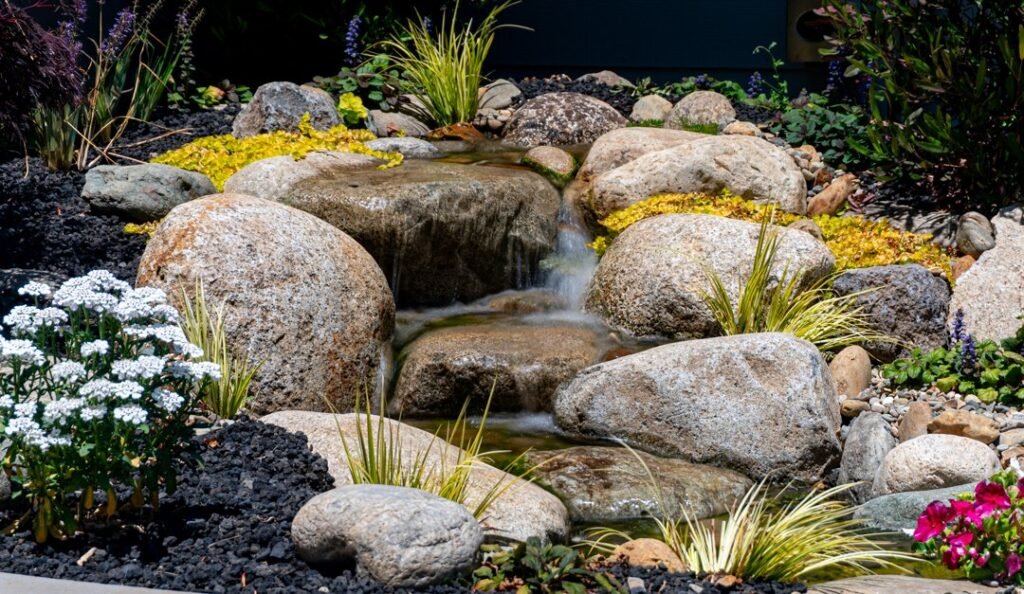
A waterfall does more than provide sound and visual movement. As water spills and tumbles over rock, it mixes with air and returns oxygenated water to the pond. Returns positioned away from the skimmer or intake help establish a circular flow pattern, encouraging debris to travel toward collection rather than resting in a far corner.
The placement matters. A waterfall aimed straight at the skimmer may create a short loop, where water returns and is immediately pulled back into the system while distant areas receive little movement. On large or complex ponds, multiple returns and separate circulation zones are often a better solution.
How to Tell Whether Your Pond Is Circulating Properly
Clear water alone is not proof of good circulation. A pond can appear clear while sediment accumulates below or oxygen levels swing during warm weather. Watch how the pond behaves over several days, especially in the morning and during the hottest part of the afternoon.
Common warning signs include:
- Leaves and fish food consistently collect in one area rather than moving toward the skimmer.
- Fine sediment builds up in sheltered corners or along the pond bottom.
- Fish gather near the waterfall, return jets, or surface during warm periods.
- The waterfall weakens, filter water levels change, or the pump makes unusual noise.
- Algae returns quickly even though routine cleaning and water treatment are being maintained.
Each symptom can have more than one cause. Fish at the surface, for example, may point to low oxygen, elevated water temperature, water-quality concerns, or illness. Treat the observation as a reason to inspect the full system rather than assuming one adjustment will fix everything.
Seasonal Adjustments Protect Long-Term Performance
Pond circulation should be managed with the seasons. During hot weather, warmer water holds less oxygen while fish and biological filters become more active. This is often when additional aeration is most helpful, particularly in deeper koi ponds or ponds with limited waterfall action.
Aeration is not the same as circulation. An air pump and diffuser provide valuable oxygen and water movement, but they do not reliably move leaves to a skimmer or send suspended solids through mechanical filtration. Think of aeration as support for the pond’s oxygen budget, especially during heat, not a substitute for a properly designed hydraulic system.
In fall, remove leaves before they sink and keep the skimmer basket clear. In winter, pond needs vary with local temperatures and fish activity. Do not make major changes based only on a calendar. Observe fish behavior, water temperature, weather patterns, and the manufacturer’s requirements for your equipment.
Maintenance Keeps the Design Working as Intended
Even the finest circulation plan needs care. Pump vaults, skimmer baskets, intake screens, filter pads, and plumbing connections should be inspected on a schedule that matches the pond’s conditions. A heavily planted pond beneath mature trees will need more frequent attention than an open water garden with little debris exposure.
Avoid the temptation to over-clean biological filter media with chlorinated tap water. The goal is usually to remove accumulated solids while preserving as much beneficial bacteria as possible. Likewise, do not strip every bit of algae from every rock. A light natural biofilm is part of a healthy pond ecosystem. Thick string algae, heavy sediment, and restricted flow are different matters and deserve targeted correction.
When circulation problems persist, professional diagnosis can save considerable time and expense. A weak waterfall may be a simple clogged intake, but it can also indicate a failing pump, undersized plumbing, a hidden restriction, a leaking line, or a system that was never matched to the pond’s scale. Aquascape Creations approaches these details as part of the whole water environment, pairing nature-inspired artistry with the technical work that keeps it enjoyable for years.
A pond should invite you outside, not give you another weekend task list. If the water is sluggish, debris keeps returning, or your fish seem to favor one corner of the pond, pay attention to what the feature is telling you. A thoughtful circulation adjustment can restore the quiet clarity and natural movement that made you want water in your landscape in the first place.