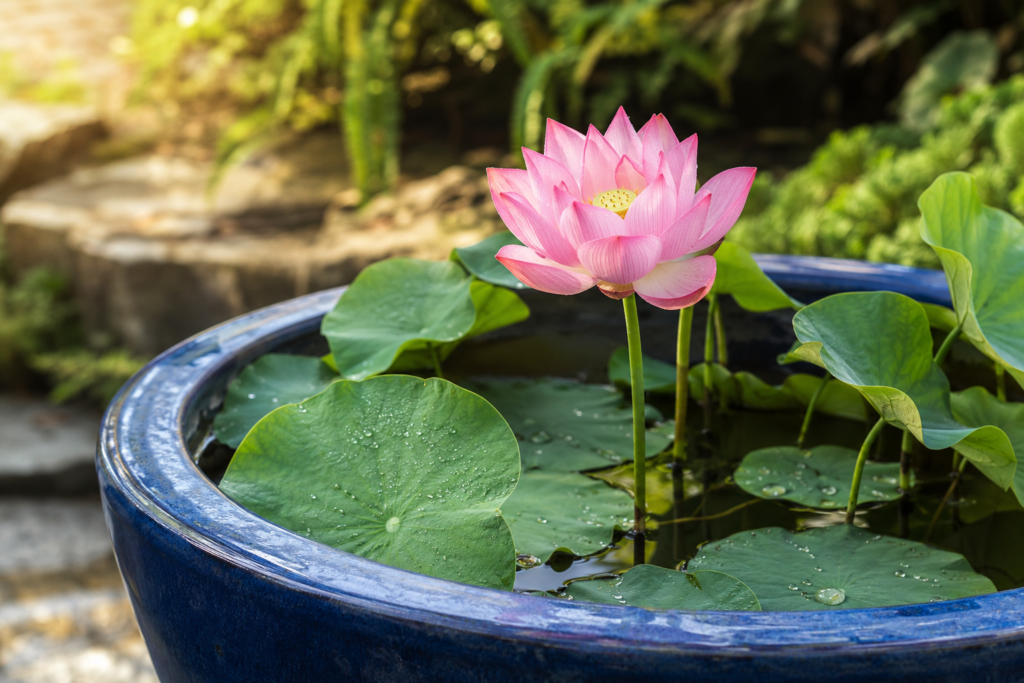
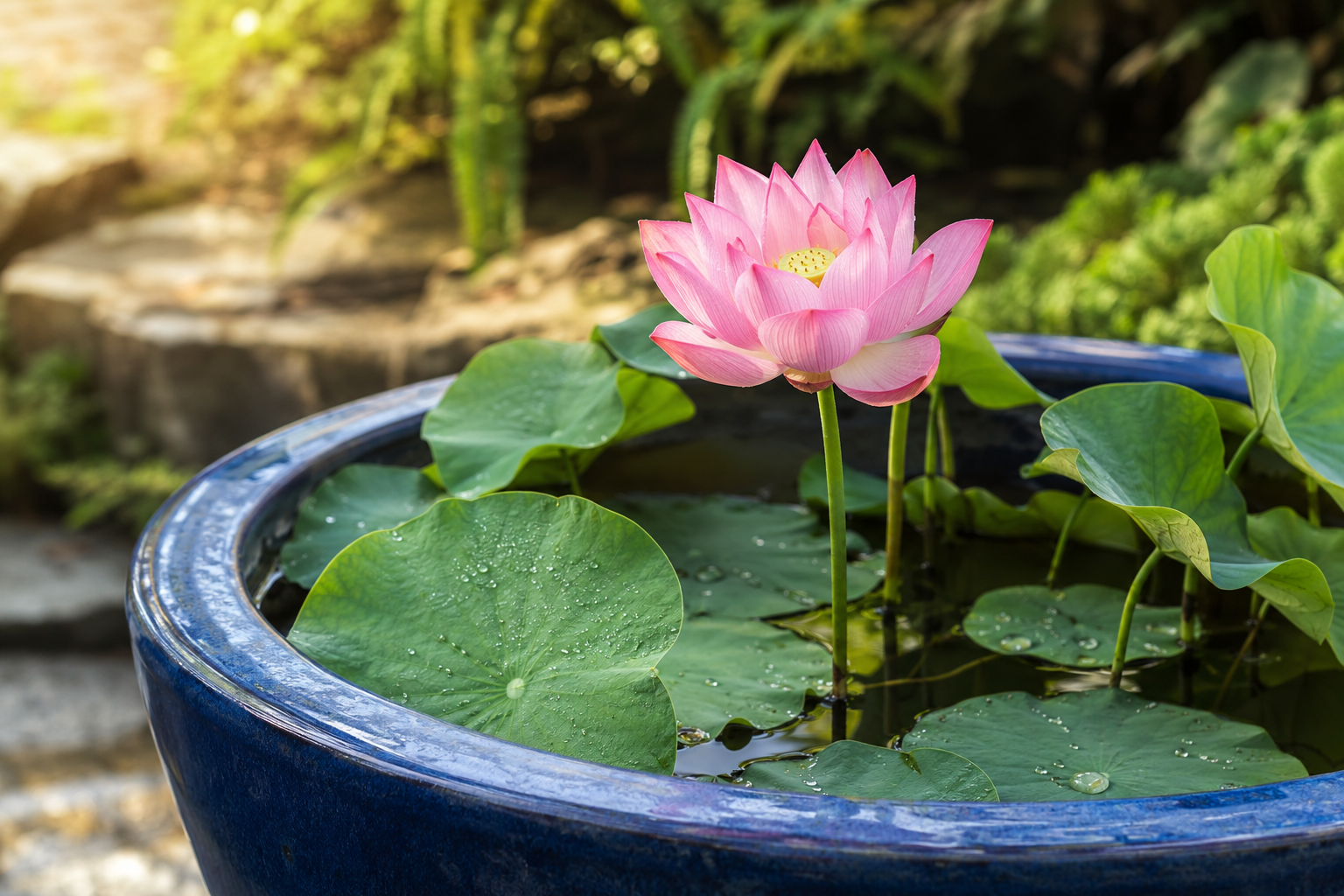
Lotus can transform a pond or a flower pot into a striking focal point. Their large leaves, tall flowers, and bold architectural form create a look that few other aquatic plants can match. They are vigorous plants, however, and their success depends heavily on sunlight, warmth, container size, soil, and water depth.
Whether you want to add lotus to a koi pond, grow one in a patio container, or use several plants in a filtration pond, this guide explains how to give them the space and care they need.
How Much Sun and Heat Does a Lotus Need?
Lotus grow and bloom best in full sunlight. They can tolerate some shade—especially in hot inland climates—but too much shade may produce plenty of leaves with few or no flowers.
Temperature is equally important. Lotus need a genuinely warm growing season, with temperatures around 75°F or higher for at least three months. This makes them well suited to many Bay Area communities, particularly Livermore, Brentwood, Tracy, and other warmer inland areas. In exceptionally hot locations, some relief from intense afternoon sun may be beneficial.
Choosing the Right Container
Container size has a major effect on the height, vigor, and flower production of a lotus.
Standard lotus varieties may grow five feet tall or more. For healthy growth and frequent blooms, use a round container at least two feet across. A container measuring three to five feet across can produce a dramatic specimen with larger leaves and a stronger display.
Dwarf varieties often reach three to four feet tall. Although they can survive in smaller pots, many still perform best in a container approximately 24 inches wide. Micro or bowl lotus can be grown in pots around 10 inches across, but small containers require much closer attention because their water temperature and chemistry can change rapidly.
Suitable options include:
- Wide aquatic planting containers without drainage holes
- Sturdy fabric aquatic pots
- Ceramic or plastic patio containers
- Bathtubs or small preformed ponds incorporated into the landscape
- A separate upper pond that spills into the main pond
A shallow header pond filled with pea gravel and lotus can be particularly attractive. When designed correctly, it may also serve as part of a planted filtration system for the main pond.
If the lotus will be placed directly in the main pond, always use a wide container without holes. Lotus spread through powerful runners and can escape through openings.
The Best Soil for Lotus
Use ordinary mineral-based garden soil with a low organic content. Sandy soil, clay soil, or a combination of sandy loam and clay can work well.
Avoid commercial potting mixes, compost-heavy garden blends, bark products, and perlite. These lightweight ingredients tend to float out of the container and cloud the pond.
Most lotus need only about four inches of soil. Large varieties with oversized leaves and blooms may benefit from a little more. Leave open space above the initial soil level because the growing mass of roots, runners, and tubers will gradually push the soil upward.
Shallow aquatic lotus containers—generally two feet wide and about 7 to 10 inches deep—provide the broad growing area lotus prefer without adding unnecessary soil depth.
How Deep Should Lotus Be Placed in Water?
The soil surface should remain underwater at all times. In most cases, maintain approximately two to four inches of water above the soil.
Mature standard lotus may eventually grow in water up to 18 inches deep, and sometimes deeper in warm climates. Deeper placement requires more energy from the plant, so shallow water is preferable during spring or in cooler locations. Shallow water warms faster and helps the lotus begin growing earlier.
Dwarf lotus generally perform best with 2 to 12 inches of water above the soil.
When and How to Fertilize Lotus
Lotus are heavy feeders once they begin actively growing. Use a fertilizer made specifically for aquatic plants and follow its application instructions. Because lotus grow more aggressively than hardy waterlilies, they usually require considerably more fertilizer for the same amount of soil.
Timing matters. Lotus typically produce floating leaves first, followed by leaves that stand above the water. Begin fertilizing when the first standing leaves start to develop. Applying too much fertilizer while the plant is only beginning to sprout can damage the young growth.
Once a lotus is growing vigorously, it can use a generous amount of nutrients. Stop fertilizing in fall so the plant can use the remaining nutrients and prepare for winter dormancy.
Can Lotus Be Planted Loose in a Pond?
They can, but it is rarely the best choice for a balanced ornamental pond. An unrestricted lotus may eventually colonize most or all of the available shallow area, leaving little open water for fish, waterlilies, or other aquatic plants.
For a controlled planting, keep the lotus in a large pot without holes and inspect it periodically. A vigorous runner may occasionally grow over the rim and “jump” the container. Trim these runners before they establish elsewhere.
Moving a Lotus Into a Larger Pot
Early spring, just as the plant begins waking from dormancy, is the easiest time to repot or divide lotus. However, an actively growing lotus that is crowded in a small nursery pot should be moved into a larger container rather than left restricted for the entire season.
To minimize damage:
- Place the smaller pot inside the new, larger container.
- Slide one hand carefully between the pot and the root mass.
- Support the soil and root mass while gently easing the old pot away.
- Center the intact root mass in the larger container.
- Place aquatic fertilizer around the root mass near the bottom of the new pot.
- Fill around it with suitable soil, keeping the new soil surface close to its previous level.
Some existing leaves may lean after transplanting. They can be supported temporarily, but new leaves should grow upright.
Managing Hard Water and Mineral Buildup
Lotus tolerate a broad range of water conditions, but mineral buildup can become a problem in above-ground containers filled with very hard water.
Water evaporates while dissolved minerals remain behind. Each refill adds more minerals, causing their concentration to rise over time.
Prevent excessive accumulation by occasionally overfilling the container so some of the old water flushes out while fresh water is added. This is less common in a large pond, although periodic overflow can still help.
Lotus may struggle when total dissolved solids or water hardness rises much above 1,000 parts per million. An inexpensive TDS meter can help identify a mineral problem.
Never add salt as a fish treatment to a pond or container containing lotus because the plants are sensitive to it.
Growing Lotus With Koi and Goldfish
Goldfish generally coexist well with lotus. Large koi can be more challenging because they may disturb the soil, uproot young growth, or damage floating leaves.
Several measures can protect the plants:
- Use enough aquatic plants that the koi do not concentrate on one pot.
- Position lotus pots close enough to the surface for strong growth.
- Cover the soil with rocks that are too large for the koi to move.
- Create a protected planting corner with boulders.
- Use a sturdy barrier with openings of approximately two inches for exceptionally large or determined koi.
Any protective arrangement should allow water circulation while preventing fish from reaching the soil and tender growth.
Pruning Lotus Correctly
Never cut a lotus leaf or flower stem below the waterline. The hollow stems help carry oxygen to the roots and tubers, even after the visible growth has declined. A submerged cut can also provide a direct path for water into the plant tissue.
Cut unwanted stems above the water surface. If the container will be lowered into deeper water for winter protection, lower it first and then prune the remaining growth.
Common Lotus Pests
Aphids, whiteflies, spider mites, caterpillars, slugs, and snails may affect lotus, depending on the location.
Lotus leaves have a delicate coating of fine hairs, so sprays containing oils or detergents—even some products labeled organic—can seriously injure the plant.
For aphids, whiteflies, or spider mites, diatomaceous earth may be applied dry or mixed with water and sprayed. Systemic pesticides should not be used in ponds containing fish or other aquatic animals unless the product is specifically labeled for that application.
China mark moth caterpillars chew large sections from floating leaves. A Bt product labeled for caterpillars can be effective and is generally considered suitable around aquatic life when used according to its label.
Once the lotus has several healthy standing leaves, removing the remaining floating leaves can reduce caterpillar habitat and may also slow aphid problems.
Overwintering Lotus
Lotus naturally become dormant during winter. Their tubers remain below the soil and send out new runners when warm conditions return.
In the Bay Area’s milder climate, established lotus can normally remain outdoors. In colder climates, the tubers must be protected from freezing:
- Zones 5 and colder: Lower the pot below the expected ice or frost depth, or move it into a frost-protected garage.
- Zones 6 and 7: Pots in a pond are generally protected, while above-ground containers may need insulation or mulch.
- Zones 8 and warmer: Lotus can usually remain outdoors, including in many above-ground containers.
The plant’s foliage may disappear completely during winter. This is normal and does not mean the lotus is dead.
Dividing and Refreshing an Established Lotus
Older lotus containers eventually become crowded with tubers and roots. Their soil can also become depleted or turn anaerobic as old plant material decomposes underwater. This happens faster in small pots and may weaken or kill the plant.
Divide lotus in early spring when the first leaf spikes begin to appear. Use one or two strings of attached tubers in each freshly prepared pot. A good division normally includes two or three connected tubers.
Handle every tuber carefully. The growing tips are extremely fragile, and a tuber with all its growing points broken off will not sprout, regardless of its size.
How to Encourage Faster Spring Growth
Warmth is the key to waking lotus in spring. After the danger of frost has passed, an above-ground container can be placed in full sun so the shallow water and soil warm more quickly.
Keep water over the soil at all times and return the plant to its permanent pond location by early summer.
Some experienced growers use a small 25- to 50-watt submersible aquarium heater set around 70°F for several weeks to accelerate early growth. Any electrical equipment used in or near a pond should be designed for underwater use and connected to a properly installed GFCI-protected circuit.
Are Lotus Plants Edible?
Lotus has a long culinary history. Depending on the culture and preparation, the tubers, seeds, stems, and leaves may all be used as food. The leaves are also commonly used as cooking wraps.
An ornamental lotus may technically be edible, but varieties selected specifically for food production generally offer better tuber size, texture, and flavor.
Never eat a plant that has been treated with a pesticide or chemical that is not labeled for edible crops.
Final Thoughts
A healthy lotus needs three things above all: warmth, direct sunlight, and room to grow. Start with a wide container, use heavy mineral-based soil, keep the plant in shallow water while it becomes established, and wait for standing leaves before beginning a regular fertilizer program.
When properly contained and cared for, lotus can become one of the most impressive plants in a koi pond, recreation pond, or dedicated aquatic planter without taking over the entire water feature.
If you are planning a new pond or want to add lotus without creating maintenance or fish-related problems, Aquascape Creations can help you choose the right planting area, container, water depth, and protective design. We design and build custom ponds and water features throughout the Bay Area. Contact us to discuss your project.