A pond can look effortless while its pump works every minute of the day behind the scenes. Choosing a submersible versus external pond pump affects more than the sound of moving water. It shapes energy use, maintenance access, fish health, waterfall performance, and how gracefully the equipment disappears into your landscape.
For a small water garden, the answer may be straightforward. For a koi pond, pondless waterfall, recreation pond, or a feature with significant elevation changes, pump selection deserves the same thoughtful attention as stonework, filtration, and planting. The best pump is not automatically the strongest or the least expensive. It is the one designed around the way your water feature needs to live.
Submersible Versus External Pond Pump: The Real Difference
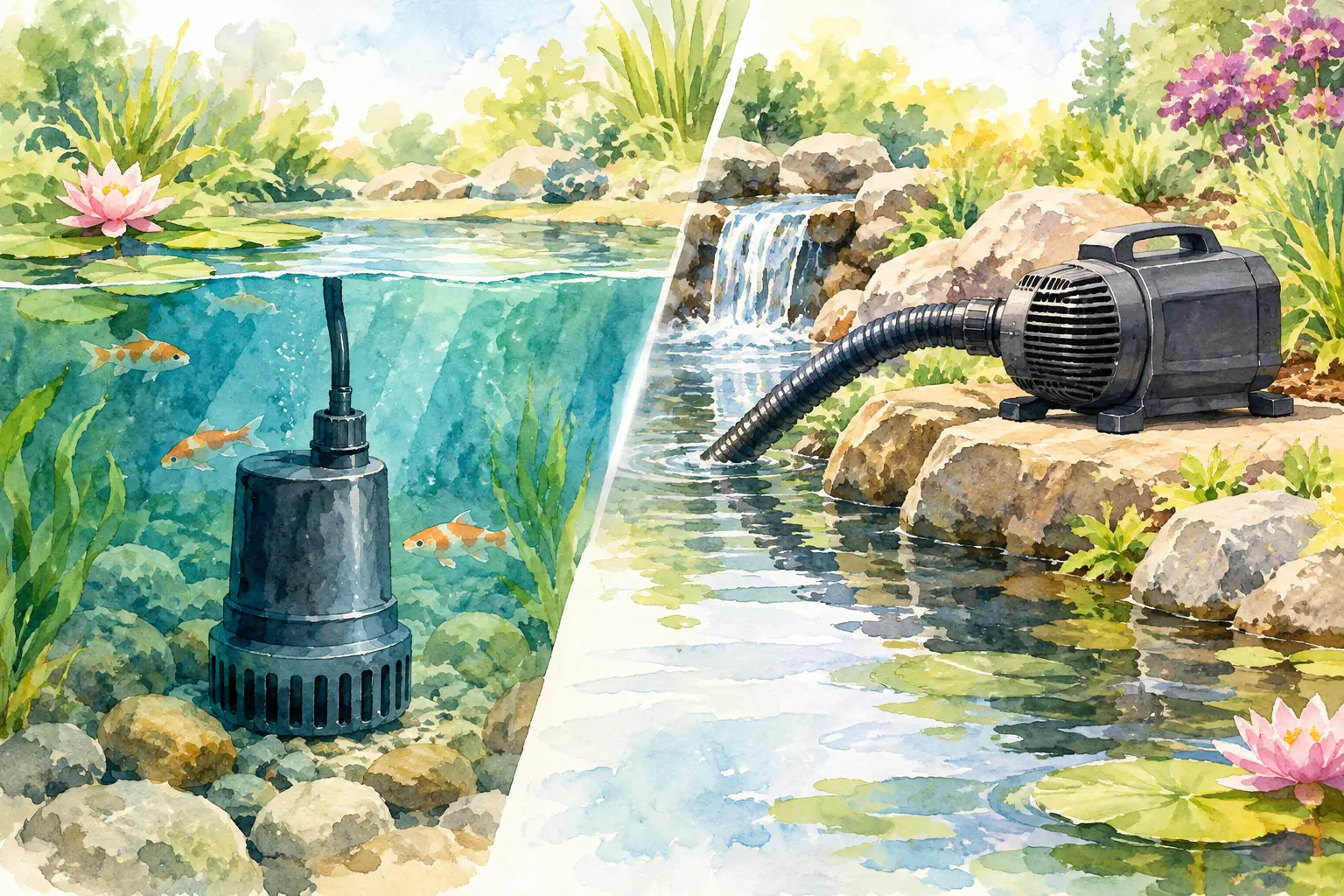
A submersible pump operates underwater, usually inside a skimmer, pump vault, or protected section of the pond. It pushes water through plumbing to a filter, waterfall, stream, fountain, or other water feature. Because the motor is submerged, the surrounding water helps cool it, and much of the operating sound is naturally muffled.
An external pump sits outside the pond in a dry, accessible equipment area. It pulls water through a suction line and sends it onward to the filtration system or waterfall. It must be installed correctly, with appropriate pipe sizing, a primed or flooded suction line where required, and protection from weather and debris.
Neither design is inherently better. A submersible pump often offers the cleanest solution for compact or moderately sized features. An external pump can be the better long-term choice when a larger, more complex pond needs high flow, serious filtration, or frequent service access.
When a Submersible Pump Makes Sense
Submersible pumps are popular for good reasons. They are generally simpler to install, especially when building a new pond with a skimmer system or retrofitting an existing feature. The pump can remain out of sight, preserving the natural, uninterrupted feeling that makes a pond feel like a true landscape sanctuary rather than a piece of equipment.
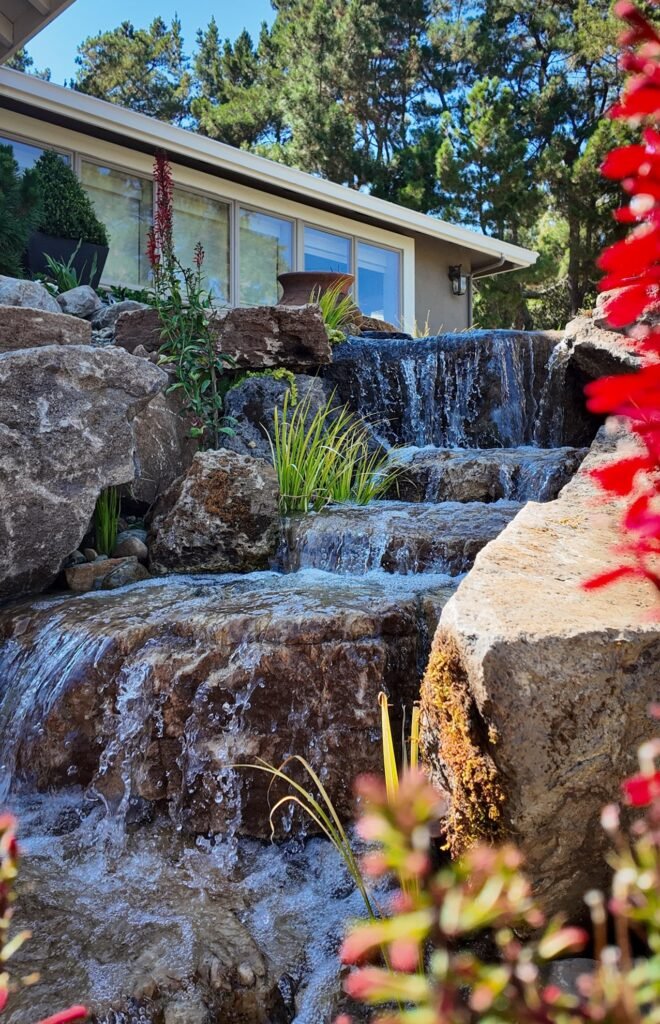
They are also a strong fit for many pondless waterfalls. The pump can sit within the reservoir, circulating water back to the top of the falls without requiring an equipment pad, exposed plumbing, or a separate pump enclosure. For homeowners who want the sound and movement of water with minimal visible infrastructure, that simplicity is valuable.
Noise is another advantage. A properly installed submersible pump is often exceptionally quiet, which matters when a waterfall is close to a patio, bedroom window, outdoor dining area, or a peaceful sitting garden. The water itself may become the only sound you notice.
Submersible pumps are especially practical when the feature has modest flow demands and the pump can be accessed without dismantling stone or disturbing the pond. A well-built skimmer makes this possible. Routine cleaning then becomes a straightforward service task rather than an excavation project.
The trade-off is that the pump must be removed from the water for certain maintenance or replacement needs. Its electrical cord and connection also require careful planning from the start. Every pond pump installation should be protected by a properly functioning GFCI circuit, whether the pump is underwater or mounted externally.
Best applications for submersible pumps
A submersible pump is often an excellent choice for small to medium garden ponds, pondless waterfalls, water gardens, and features where quiet operation and concealed equipment are priorities. It can also perform beautifully in a well-designed koi pond when the plumbing runs, flow requirements, and filtration demands are within its intended range.
Why Larger Ponds Often Benefit From an External Pump
An external pump earns its place on projects where performance, efficiency, and serviceability carry more weight. Large koi ponds, recreation ponds, long streams, substantial waterfalls, and multi-zone systems often need more water moved through larger plumbing at greater heights. In those situations, an external pump can provide the power and hydraulic flexibility the system requires.
Because the pump remains outside the pond, technicians can inspect, clean, winterize when necessary, or replace components without reaching into the water. That access is especially useful for properties with elaborate stone edges, mature landscaping, fish that should not be disturbed, or equipment that supports several parts of the water feature.
External pumps can also be more energy-efficient for high-flow applications, particularly when paired with correctly sized plumbing. A pump forced to move water through undersized pipe wastes energy and may fail to deliver the waterfall effect the design promised. With an external system, there is more opportunity to build a thoughtful equipment layout around flow, valves, filtration, and future service.
However, external pumps demand greater installation precision. A small air leak on the suction side can reduce performance or cause priming problems. The pump needs a protected location, sensible drainage, adequate ventilation, and a layout that allows service without turning maintenance into a major disruption. The equipment should be accessible, but it should not dominate the view from the garden.
Best applications for external pumps
External pumps are well suited to high-volume koi ponds, large water gardens, recreation ponds, commercial water features, and custom projects with long runs of plumbing or multiple filtration components. They are also a smart consideration when the owner wants a long-term maintenance plan built around easy access and minimal disturbance to the pond itself.
Do Not Choose by Gallons Per Hour Alone
Pump labels can make comparison seem easy: one model moves a certain number of gallons per hour, and another moves more. But the number printed on the box is usually measured under ideal conditions, with little or no resistance. Your pond does not operate under ideal conditions.
Every foot the water rises to reach a waterfall creates head pressure. So do elbows, valves, filters, UV units, narrow plumbing, and long pipe runs. A pump that appears large enough on paper may produce a disappointing trickle once it is connected to a high waterfall or a complex filtration system.
The right approach is to determine the total dynamic head of the system, then review the pump curve at that operating point. This is where professional design makes a meaningful difference. The goal is not merely to make water move. It is to create the intended waterfall sound, circulation pattern, filtration turnover, and visual presence without overspending on electricity.
For a koi pond, circulation also supports water quality. The pump should work in harmony with the biological filtration system and the pond’s fish load. A beautiful pond with undersized circulation can become harder to maintain, especially during warm Bay Area weather when fish are active and oxygen demand rises.
Consider Maintenance Before Construction Begins
The easiest pump to maintain is the one you can reach. That sounds obvious, but it is often overlooked when a water feature is designed around the first installation rather than years of ownership.
Ask where leaves and debris will collect, how a pump will be removed if needed, whether valves are accessible, and how the feature will be shut down for service. If an external pump is selected, ask how its enclosure will blend with the property. If a submersible pump is selected, make sure the skimmer or vault is sized for real access, not just for placing the pump inside.
A quality system should make maintenance feel manageable. It should not require moving boulders, draining the pond, or taking apart carefully crafted landscaping to address a routine issue. This is one reason custom water-feature construction matters: the hidden mechanical choices protect the visible beauty of the finished space.
Cost, Efficiency, and Long-Term Value
A submersible pump may cost less to install because it usually involves less exterior plumbing and fewer equipment components. For a simple feature, that can make it the sensible investment. Yet lower installation cost does not always mean lower ownership cost. If the pump runs continuously, electrical consumption becomes part of the decision.
An external pump may require a greater upfront investment in plumbing, valves, housing, and labor. On a larger system, though, its efficiency and service access can justify that investment over time. This is particularly true when a pond needs to move a substantial volume of water day after day.
There is no universal winner. A quiet submersible pump may be exactly right for a modest waterfall beside a patio. An external pump may be the dependable heart of a large koi pond built for decades of family enjoyment. The best choice comes from matching the pump to the whole system, not forcing the whole system to fit the pump.
At Aquascape Creations, we look at the water feature as a living masterpiece with practical needs beneath the surface. When the pump, plumbing, filtration, and stonework are designed together, you are free to spend more time enjoying the reflection, movement, and natural beauty of the water – and less time wondering what is happening behind it.