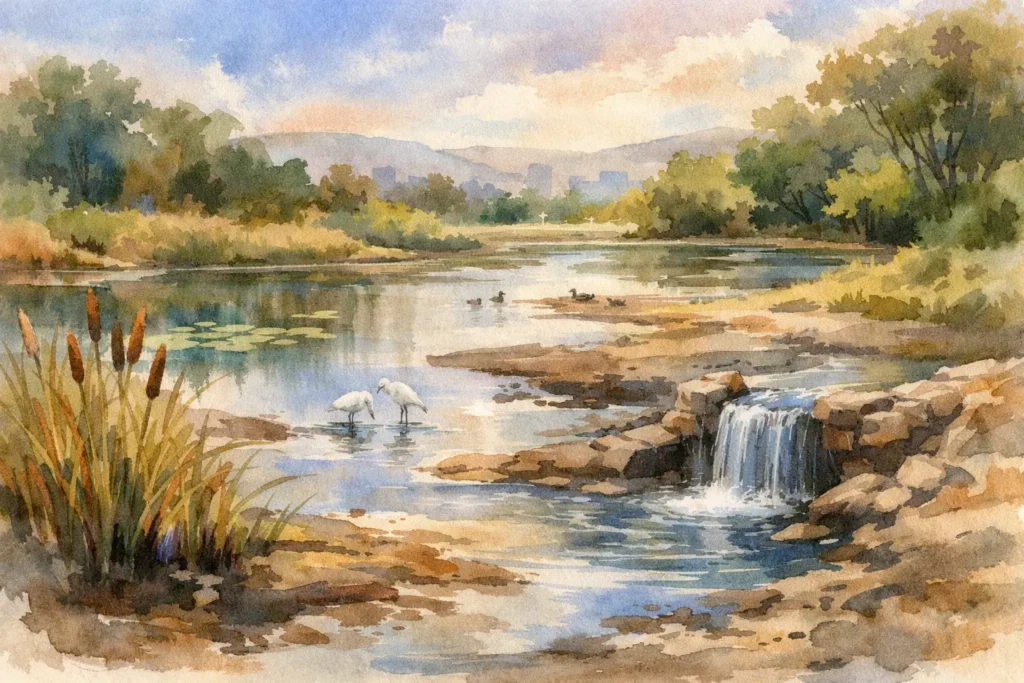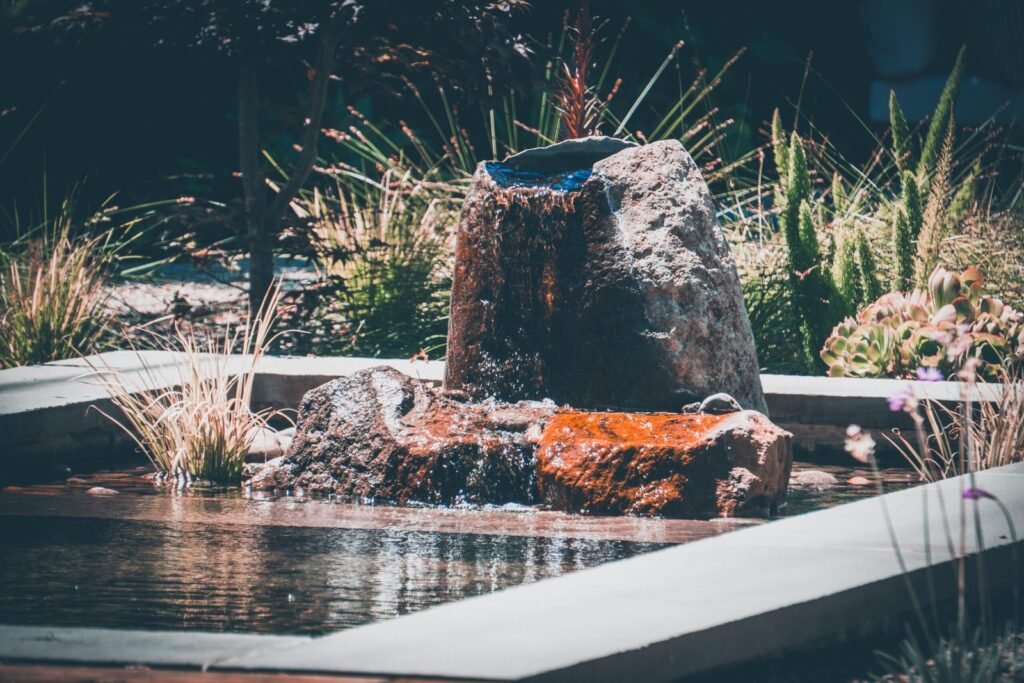
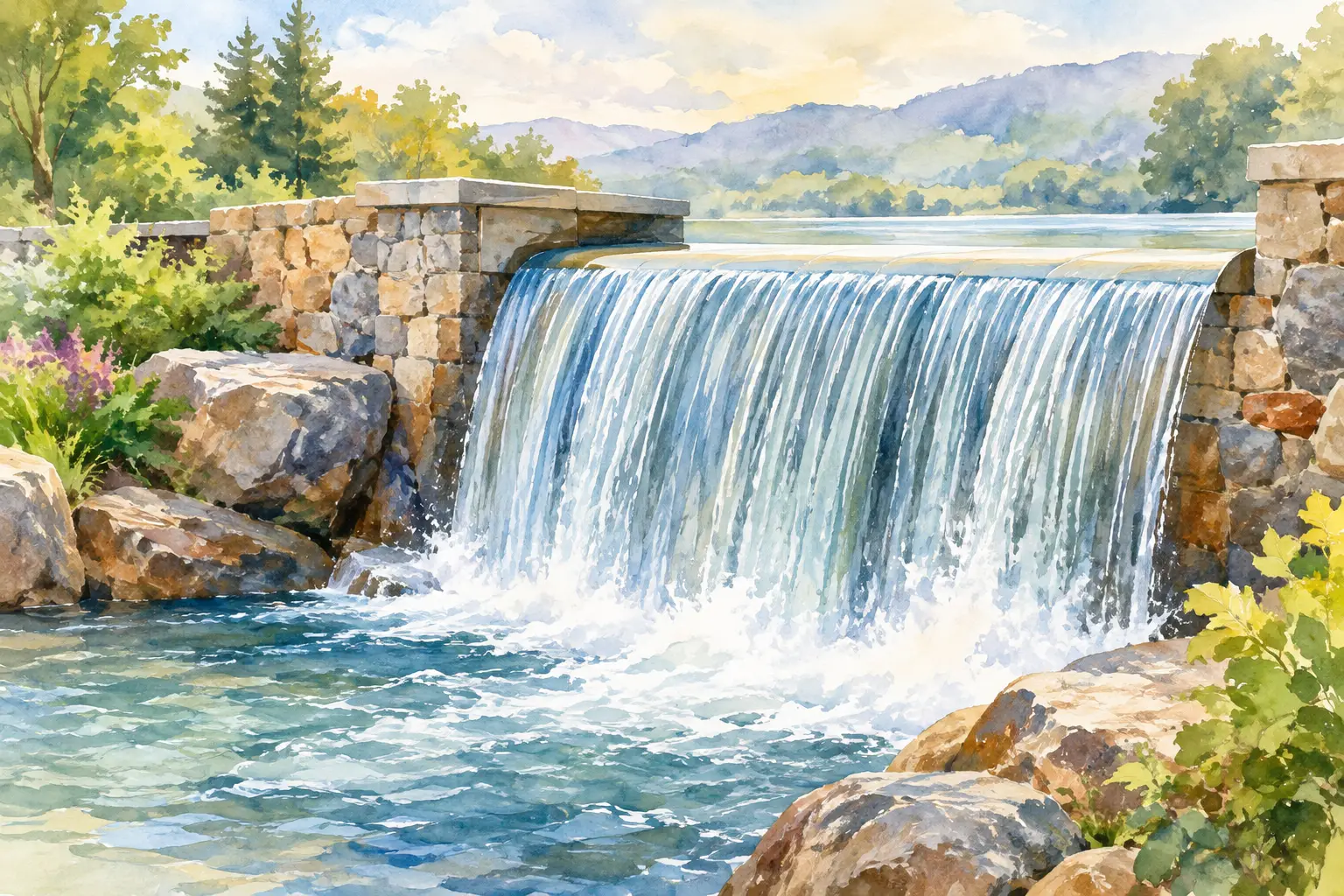
A waterfall spillway is where the water feature earns its emotional impact. It is the moment water gathers, releases, catches the light, and creates the sound that turns a patio or garden into a place people want to linger. Learning how to design a waterfall spillway is not simply a matter of selecting a wide stone or metal weir. The best results come from matching the spillway’s look, flow, plumbing, and surrounding stonework to the property itself.
A well-designed spillway should look as though it belongs in the landscape while performing reliably through changing seasons. Whether it feeds a pond, recreation pond, or pondless waterfall, the details behind the visible water make all the difference.
Start With the Experience You Want to Create
Before selecting materials or sizing a pump, decide what the waterfall should feel like. A narrow spillway with a modest flow can create a quiet, intimate ribbon of water near a seating area. A broad spillway with multiple sheets of water creates a stronger visual focal point and a more pronounced sound that can help soften nearby traffic or neighborhood noise.
The location matters just as much as the water itself. Consider where the feature will be viewed from inside the home, from the patio, and while moving through the yard. A waterfall that faces the primary entertaining space often feels more connected to daily life than one tucked into a distant corner.
For Bay Area properties, grade changes can become an advantage. A natural slope may provide the elevation needed for a convincing cascade, while a flat yard may need carefully built berms and boulder placement to create depth without looking forced. The goal is not to make a waterfall look manufactured. It is to create a natural sanctuary that feels rooted in the site.
Choose the Right Type of Waterfall Spillway
The word spillway can describe several different approaches. Each creates a distinct character, and the right one depends on the desired style, budget, and maintenance expectations.
A natural stone spillway uses carefully selected flat stones to guide water over an uneven, organic edge. This is often the best choice for a landscape-inspired pond or waterfall because the water breaks, gathers, and changes character as it travels across the stone.
A formal sheer-descent spillway uses a concealed manufactured weir to produce a clean, consistent sheet of water. It can complement contemporary architecture, retaining walls, or a structured patio design. While the water effect is beautiful, the spillway must be installed perfectly level. Even a slight imbalance can make the sheet favor one side.
A multi-tiered spillway introduces several smaller drops rather than one large fall. It creates more movement, more sound, and more opportunities for planting pockets between stones. This approach often works well on larger properties or sites with meaningful elevation changes.
There is no universal best choice. A crisp sheet of water may suit a modern courtyard, while a rugged stone cascade may better serve a garden designed around koi, aquatic plants, and naturalistic boulders.
Size the Spillway for the Water You Want to See
The width of the spillway and the volume of water moving through it must work together. A wide spillway supplied by too little water often looks weak and uneven. Too much water over a narrow edge can create excessive splash, noise, and water loss beyond the collection basin.
For a formal sheet waterfall, a common starting point is roughly 100 to 150 gallons per hour for every inch of spillway width. The exact requirement depends on the product, the desired thickness of the sheet, plumbing resistance, and how high the water must travel from the pump to the spillway.
Natural stone spillways are more flexible because an irregular edge is part of their charm. Even so, a strong-looking cascade needs sufficient flow. A broad, heavily textured stone may require more water than expected before it reads as a waterfall rather than a wet rock.
The drop height affects the experience, too. A low drop can create a gentle, glassy movement. A taller fall gains sound and energy but may splash farther than anticipated. In family gathering spaces, the sweet spot is often enough sound to feel immersive without making conversation difficult.
Account for pump head and plumbing loss
The pump cannot be chosen based on gallons per hour alone. It must deliver the required flow at the system’s total dynamic head, which includes vertical lift, pipe length, fittings, valves, and filters. Long runs, undersized pipe, and unnecessary elbows all reduce real-world performance.
Using larger-diameter plumbing where appropriate can reduce friction loss and give the system room to perform. A professional design also includes valves or flow controls, allowing the waterfall to be adjusted after installation. This matters because water behavior is easier to refine on site than on paper.
Build a Spillway That Holds Water Where It Belongs
Most waterfall failures are not visible on opening day. They show up later as shifting stone, hidden leaks, splash-out, or water bypassing the intended route. A lasting installation begins with proper excavation, underlayment, liner placement, stable support, and thoughtful water containment.
The liner should extend well beyond the waterfall’s visible edge and be shaped to keep water moving back toward the channel or basin. This is especially important behind and beside the spillway stone. Water naturally looks for the path of least resistance. If there is a low point behind a boulder or along an unprotected edge, water can escape into the soil rather than return to the system.
The spillway stone itself needs solid support. It should not rest loosely on smaller rocks or soil that may settle over time. Large structural stones are typically supported by compacted base material, carefully positioned boulders, or concrete where the design calls for it. The objective is stability without creating a visible construction joint that interrupts the natural look.
A pondless waterfall requires particular attention to the collection basin. The basin must hold enough water to keep the pump submerged when the system is running, while also receiving the water that drains back when the pump shuts off. Undersizing this reservoir can lead to frequent low-water issues and premature pump wear.
Shape the Stonework Around the Water, Not the Other Way Around
The most memorable waterfalls have variation. They may include a primary spillway, a secondary trickle, a calm pool where water collects briefly, and a larger drop that becomes the visual centerpiece. These changes in pace make a feature feel more like a living landscape and less like a uniform wall of water.
Use larger stones to establish the structure, then integrate smaller accent stones to soften transitions. Avoid creating a symmetrical staircase of rocks. Nature is layered, imperfect, and full of subtle changes in size and angle.
Planting also has an important role. Grasses, ferns, groundcovers, and moisture-tolerant plants can soften hard edges and help the feature settle into the surrounding landscape. Leave enough access for service, however. A beautiful waterfall should not require dismantling mature plantings to reach a pump vault, filter, or plumbing connection.
Plan for Maintenance Before Construction Begins
Low maintenance does not mean no maintenance. Every water feature needs periodic attention, but good design makes that care simple and predictable. Pumps, skimmers, intake bays, filters, and autofill components should remain accessible without disturbing the main stonework.
If the property has mature trees, plan for leaf load and seasonal debris. A spillway near a heavily planted slope may need easier cleanout access than one in an open courtyard. If the waterfall serves a koi pond, filtration and circulation must support fish health as well as visual appeal.
Lighting deserves early consideration, too. Underwater fixtures can reveal the texture of a spillway after sunset, while discreet landscape lighting can illuminate surrounding boulders and planting. Plan conduit and fixture locations before the final stonework is set so the finished scene remains clean and intentional.
When a Custom Design Is Worth It
Preformed spillways and packaged waterfall components can be appropriate for small, simple projects. But larger or highly visible water features benefit from custom planning. Complex sites may involve retaining conditions, drainage concerns, steep grades, existing structures, large boulders, or a need to blend the feature into a broader outdoor-living renovation.
This is where hands-on construction experience matters. Aquascape Creations approaches each waterfall as a landscape composition supported by sound hydraulics, durable materials, and access for long-term care. The result should feel personal to the property, not pulled from a catalog.
A spillway is more than the point where water leaves the stone. It is the beginning of the feature’s rhythm. When its flow, structure, and setting are designed with care, the waterfall becomes a place your family and guests will return to long after the work is complete.