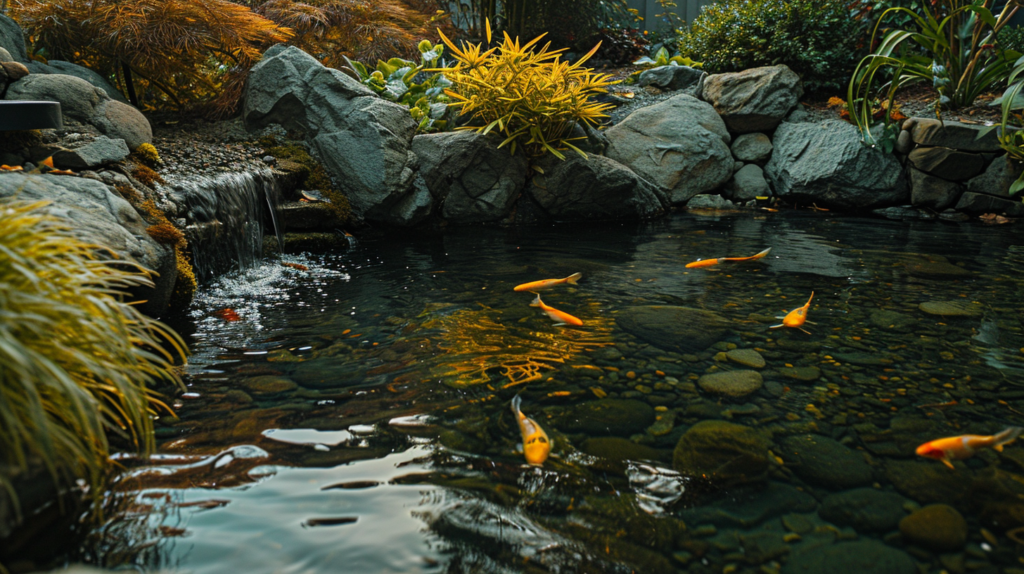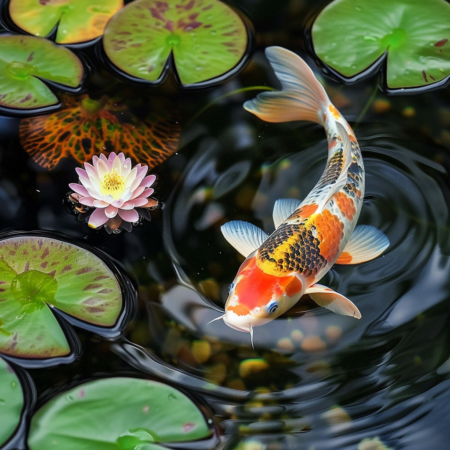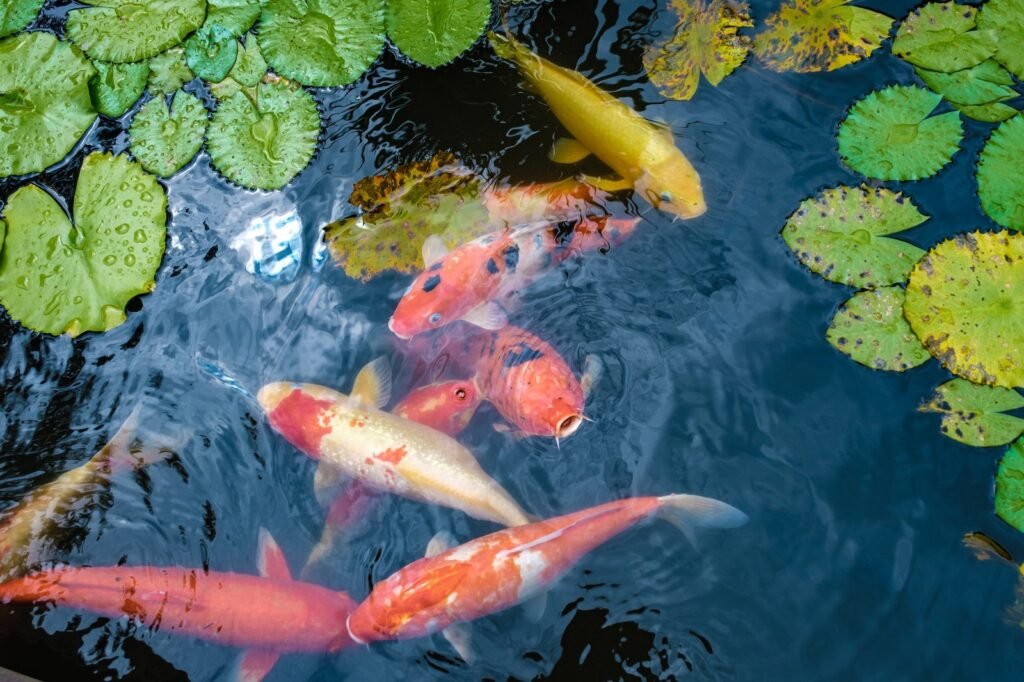
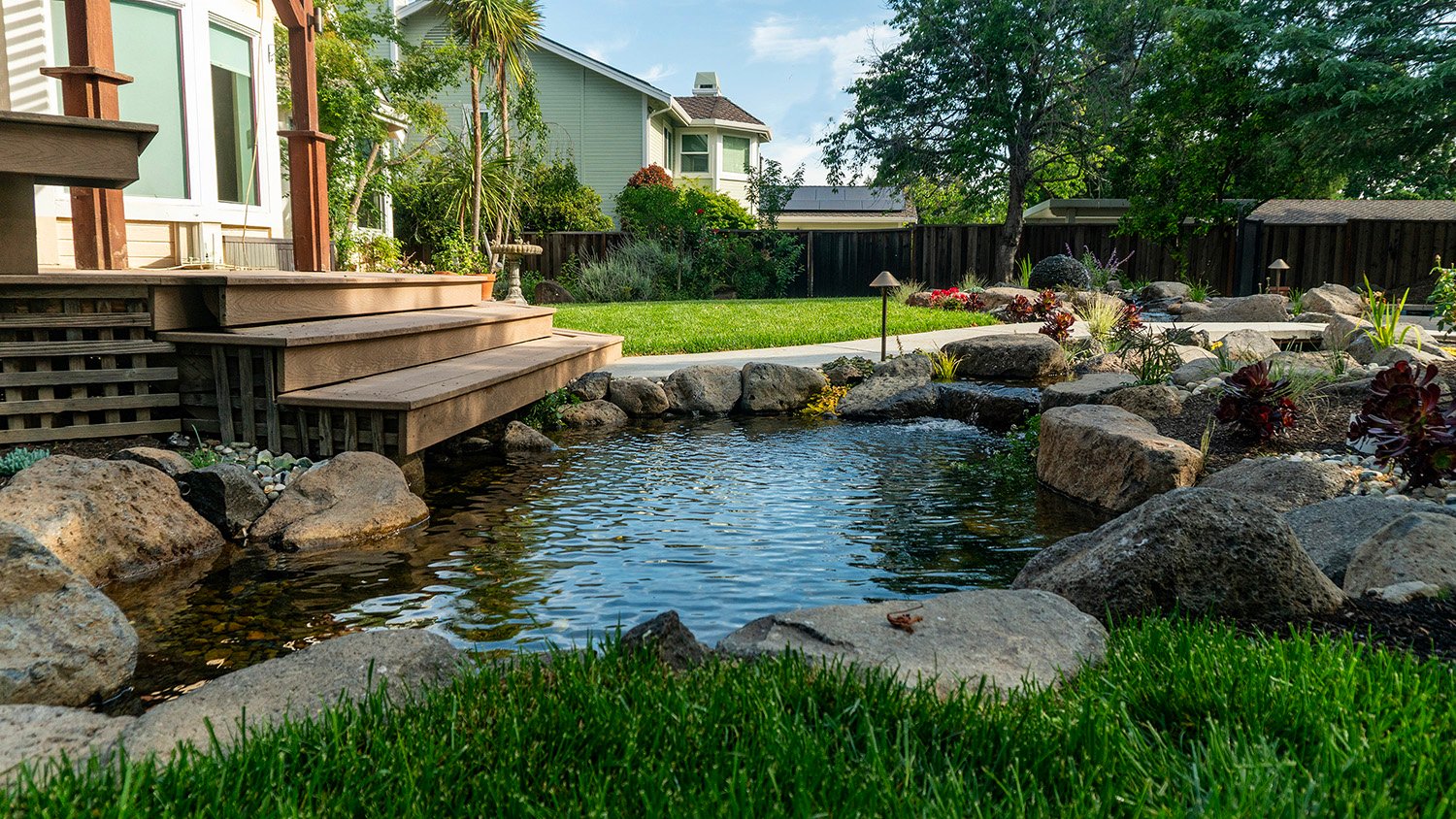
A 1000 gallon koi pond is one of the most requested sizes we design, and it is also one of the most misunderstood. It sounds large, and in a small yard it feels generous. But “1000 gallons” is a volume, not a footprint, and the number tells you almost nothing about how the pond will look, how deep it needs to be, or what it will cost to build. Before you dig, here is a plain-spoken look at the space, depth, and budget a 1000 gallon koi pond actually requires.
What 1000 gallons really means for koi
Start with the math. One cubic foot of water holds about 7.48 gallons, so a 1000 gallon pond is roughly 134 cubic feet of water. How you shape that volume is up to you, and the shape changes everything about the build.
It also changes how many fish the pond can comfortably hold. A widely used starting guideline for koi is 250 to 500 gallons of water per adult fish once you account for growth, filtration, and the waste a full-size koi produces. That puts a 1000 gallon pond in the range of two to four adult koi – not the dozen a first-time buyer often imagines. If your dream is a pond crowded with large, healthy fish, 1000 gallons is a starting point, and a good design leaves room to grow.
How much space does a 1000 gallon koi pond need?
The footprint depends on depth. A shallower, wider pond spreads the same volume over more ground; a deeper, narrower pond concentrates it.
As a practical reference, a pond that measures roughly 8 feet by 10 feet and averages 2.5 to 3 feet deep lands close to the 1000 gallon mark. If you go wider, say 10 by 12 feet, you can reach the same volume with less depth – but shallow, wide ponds are harder to keep stable, which is why we rarely recommend them for koi.
A few placement realities matter as much as the dimensions:
- Access for equipment. Excavators, rock, and liner arrive by truck or through a gate. A pond that fits on paper may not fit your access route.
- Sightlines. In a Bay Area backyard, the pond usually wants to be visible from a patio, kitchen window, or main living area. A pond nobody sees gets used less.
- Slope and drainage. Bay Area lots are often graded, and a 1000 gallon pond on a slope needs careful engineering so runoff does not end up in the water.
- Sun and trees. Too much direct sun fuels algae. Heavy tree cover means leaves and roots, so keep distance from large trees.
- Utilities. Pumps, filters, and lighting need power, and a clean route for electrical work saves cost later.
How deep should a 1000 gallon koi pond be?
Depth is the single most important decision for fish health, and it is where cheap builds cut corners.
For koi, plan on a minimum of 2 feet, with 3 feet or deeper as the real target. A deeper pond:
- Gives koi room to swim and grow properly.
- Buffers water temperature through hot Bay Area summers and cool winters.
- Gives fish a retreat from predators like herons and raccoons that patrol nearly every neighborhood.
- Supports better water quality, because a larger water volume is more stable than a small one.
In our mild Bay Area climate, koi can overwinter in a well-built 3-foot pond without the elaborate heating setups colder regions need. Go shallow, and you trade a little excavation savings for constant problems.
What actually drives the cost of a 1000 gallon koi pond
The title question everyone asks is budget, and the honest answer is that cost swings widely based on how the pond is built. Materials alone are a small part of the picture. What you are really paying for is design, excavation, proper filtration, and the craftsmanship of a natural-looking finish.
The main cost drivers:
- Excavation and access. Rocky ground, tight access, or a long haul for spoil adds labor fast.
- Filtration and pump system. This is where ponds succeed or fail. Ecosystem-based filtration sized correctly for 1000 gallons costs more than a bargain kit and saves years of murky water.
- Liner and underlayment. A professional-grade pond liner, properly bedded, protects the investment. Liner lifespan is measured in decades when installed correctly and replaced constantly when it is not.
- Rock, stone, and boulders. The naturalistic look that makes a koi pond a centerpiece comes from careful stone placement, not a pile of rocks.
- Plumbing, skimmer, and waterfall. Moving water keeps the pond clear and gives it sound and life.
- Electrical work and permits. Done right the first time, not patched in later.
A do-it-yourself kit for a 1000 gallon pond might run a few thousand dollars in materials, while a professionally designed and built koi pond typically lands well into the five figures in the Bay Area. The gap is not markup – it is the difference between a hole with water in it and a pond that looks natural, stays clear, and holds its value. Treat any quote that promises a finished koi pond for kit prices as a red flag.
Where a 1000 gallon pond fits in a Bay Area yard
A 1000 gallon koi pond is an ideal size for a courtyard, a smaller backyard, or a patio focal point. It is large enough to feel like a real feature with waterfalls and mature planting, yet compact enough for lots where a full recreation pond is not practical. It also makes an excellent first pond, one that can be expanded or paired with a separate water feature later.
If your goal is swimming, a 1000 gallon pond is not the right fit – recreation and natural swim ponds need far more volume. But if you want a healthy koi pond that becomes the quiet centerpiece of your landscape, this is a size worth designing carefully rather than approximating.
The mistake that costs the most
The costliest error is treating a koi pond as a bucket instead of an ecosystem. Volume, depth, filtration, and planting all have to work together. Ponds that skimp on depth or filtration almost always cost more to fix than to build correctly the first time.
Build it right the first time
At Aquascape Creations, we design and build custom koi and garden ponds throughout the Bay Area, including ecosystem-based filtration that supports clear water, healthy fish, and low-maintenance performance. As a Certified Aquascape Contractor trusted by 100+ clients, with a 4.8 rating and the 2026 Water Artisan of the Year award, we bring both the craftsmanship and the clear communication to guide you from first sketch to finished pond.
If you are weighing a 1000 gallon koi pond for your yard, request a design consultation. We will walk your space, talk through size and depth honestly, and give you a plan that fits your landscape and your budget – no guesswork.