A quiet pond in January can make even experienced owners nervous. Your koi are barely visible, the waterfall may be running more gently, and the lively feeding routine of summer has disappeared. So, can koi survive winter? Yes – when the pond gives them the stable water, oxygen, depth, and protection they need.
Koi are remarkably resilient fish. They do not need to be brought indoors simply because temperatures drop, but they do need a pond designed and maintained for winter conditions. The goal is not to keep the water warm. It is to let the fish rest safely while preserving water quality and gas exchange beneath the surface.
Can Koi Survive Winter in an Outdoor Pond?
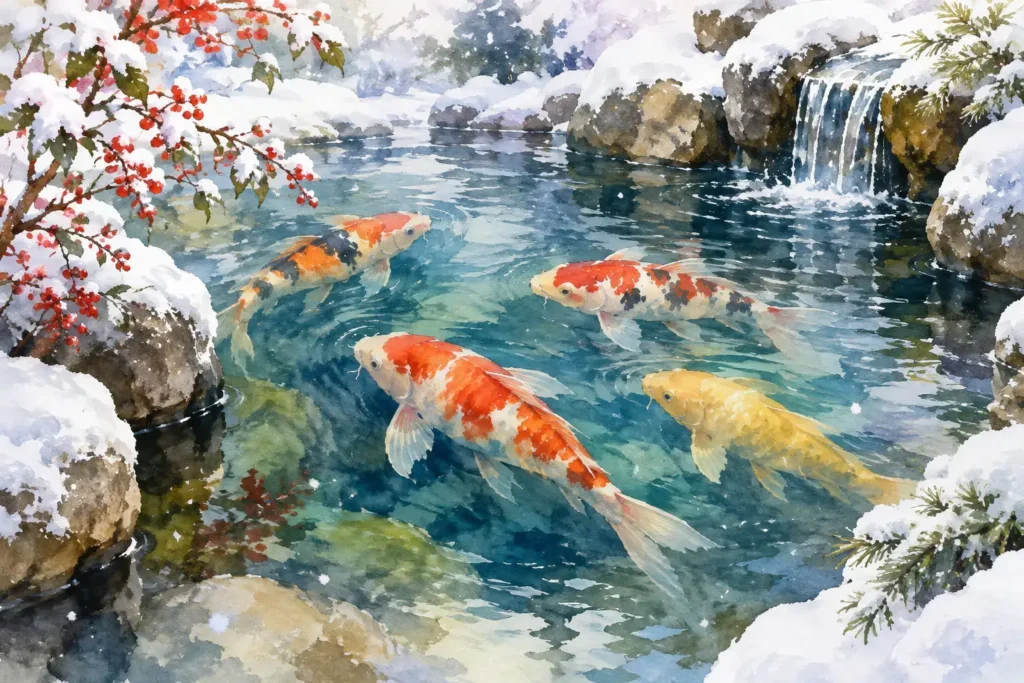
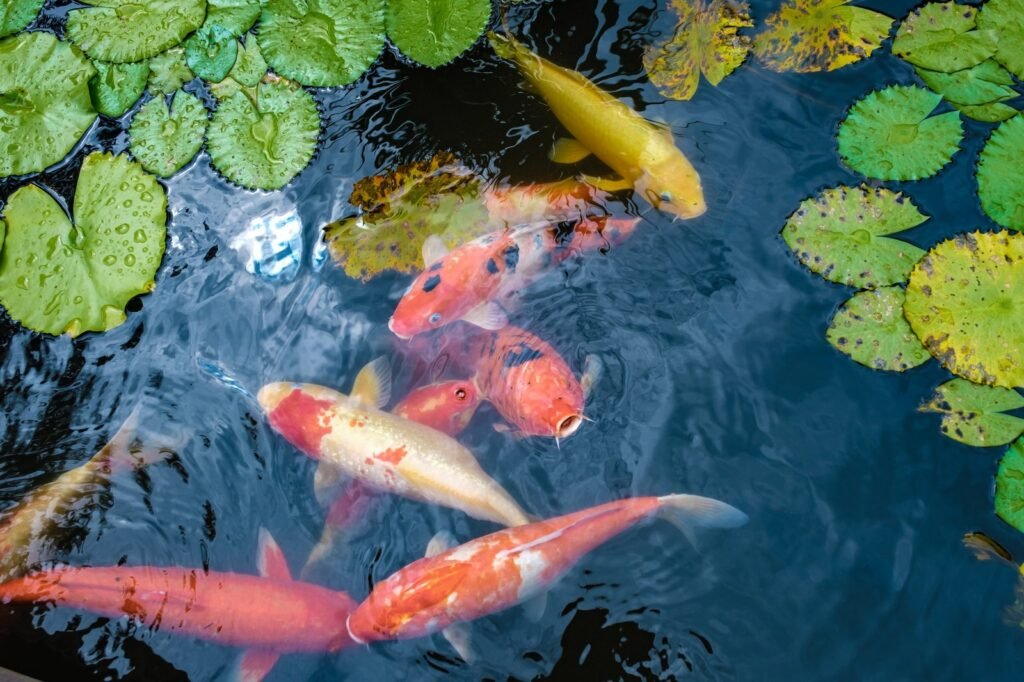
Koi can survive winter outdoors by entering a period of slowed metabolism called torpor. As water cools, they become less active, stop looking for food, and settle into the most temperature-stable part of the pond. They are not hibernating in the same way a bear does, but their bodies are conserving energy.
A properly built koi pond helps them do this naturally. Depth is the foundation. In most climates, koi need a pond with a sufficiently deep zone that remains more stable than the surface water. For many established koi ponds, a depth of at least 3 feet is a sensible starting point, while deeper ponds offer a wider margin of safety in colder regions. The ideal depth depends on local winter temperatures, pond size, exposure, and whether the pond has a history of icing over.
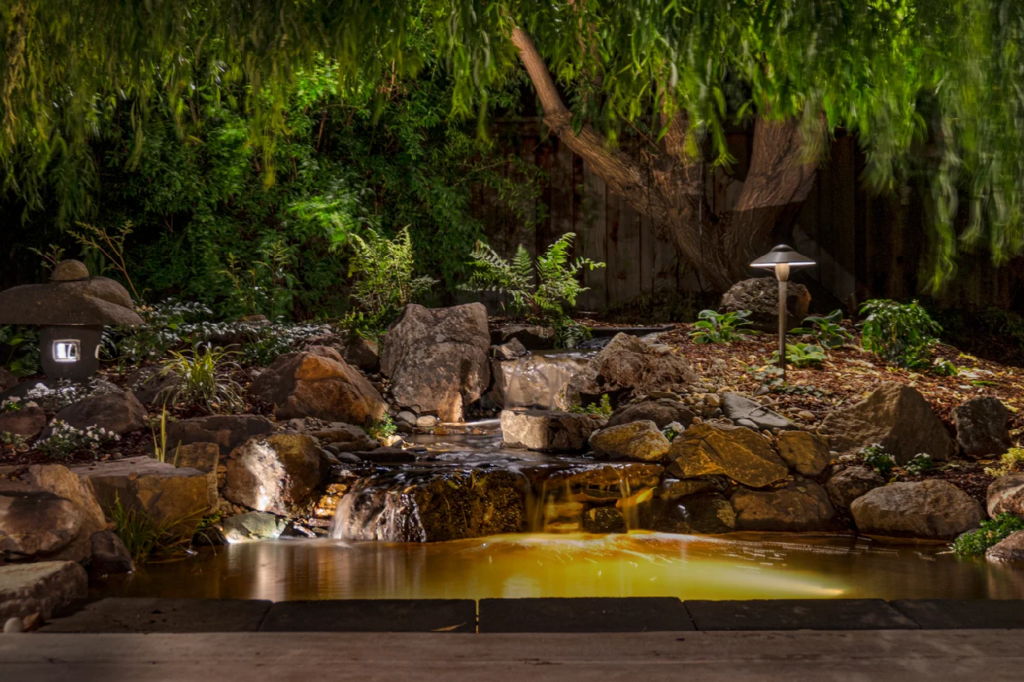
Bay Area winters are often mild enough that a well-built pond rarely develops thick, lasting ice. Still, cold rain, overnight freezes, leaf debris, and reduced biological activity can create problems. A pond that appears fine in summer may reveal design or maintenance weaknesses once the weather changes.
What Koi Need When the Water Gets Cold
Winter success comes down to steady conditions rather than constant intervention. Koi need enough oxygen, a path for naturally occurring gases to escape, and water clean enough to avoid stressing fish when their immune systems and digestion are slow.
A Stable Deep-Water Refuge
Water is densest at about 39 degrees Fahrenheit, so the deepest portion of a pond tends to remain more stable than the surface. This lower area is where koi rest during cold spells. Shallow shelves are beautiful for planting and visual interest, but they should not be the only habitat available to fish.
Depth alone is not a guarantee. A pond exposed to persistent wind, built without adequate circulation planning, or crowded with large koi may need more careful winter management. A professional evaluation can identify whether the pond’s layout truly supports the fish it holds.
Oxygen Without Chilling the Bottom
Koi still require oxygen in winter, even though they are far less active. An aeration system can help maintain gas exchange and prevent stagnant conditions. Placement matters, however. Positioning an air stone too deep can mix the warmer lower water with the cold surface water, reducing the stable refuge koi depend on.
For most ponds, winter aeration is best placed on a shelf or at a moderate depth rather than directly on the pond bottom. The objective is gentle surface movement, not a powerful current that turns the entire pond into one uniformly cold body of water.
An Opening in the Ice
In regions where ponds freeze, a small opening in the ice allows carbon dioxide and other gases to escape while oxygen enters the water. This opening does not need to be large. It simply needs to remain available during freezing weather.
Never chop through pond ice with a hammer or sharp tool. The shock waves can stress or injure resting fish. A floating de-icer, properly placed aeration, or a covered pond design is a much safer approach. If ice forms only occasionally, monitor the pond and respond before it seals over completely.
Clean Water and Lower Waste Loads
Cold weather slows beneficial bacteria, fish metabolism, and plant growth. That means the pond’s natural biological systems work differently than they do in summer. Leaves, excess sludge, and uneaten food can contribute to poor water conditions at precisely the time fish have fewer reserves to cope with stress.
A fall cleanup is one of the kindest things you can do for a koi pond. Removing accumulated debris, trimming back decaying plant material, and checking filtration components reduces the organic load that can build up through winter. A protective net can also keep leaves from turning a natural sanctuary into a decomposing debris trap.
Should You Keep the Waterfall Running?
It depends on the pond, the climate, and how the system was built. In the Bay Area, many pond owners can run a waterfall through winter, enjoying the sound and movement that make a water feature feel alive year-round. Continuous circulation can support oxygen levels and keep water moving through the biological system.
But a waterfall is not automatically the right winter choice. In hard-freeze conditions, exposed plumbing and stream sections can freeze, restrict flow, or redirect water outside the pond. A low pond level caused by winter leakage is dangerous for fish and can damage pumps. If the waterfall creates strong circulation at the deepest area, it may also disturb the warmer water where koi are resting.
Look closely at your system. A naturalistic stream, wetland filtration area, and pond edge all behave differently in cold weather. If you are unsure whether to keep the system operating, have the pump, plumbing, and filtration layout assessed before the coldest part of the season. A thoughtful winter setting can preserve both the fish and the craftsmanship of the feature.
When to Stop Feeding Koi
Feeding is one of the most common winter mistakes because koi may still approach the edge when they see a familiar person. Their behavior does not always mean their digestive system is ready for a meal.
As water temperatures consistently fall below about 55 degrees Fahrenheit, transition away from heavy summer feeding. Below roughly 50 degrees, most koi should not be fed at all. Their digestion slows dramatically, and food that is not properly processed can create serious health problems and foul the water.
Use a reliable pond thermometer rather than guessing based on the air temperature. A sunny afternoon can feel warm while the water remains cold. Once spring temperatures rise consistently, reintroduce food gradually and watch how the fish respond.
Warning Signs That Need Attention
Winter ponds should look calm, not lifeless. Koi resting near the bottom are usually behaving normally, but fish gasping at the surface, gathering around a single opening, floating abnormally, or showing red streaks and visible sores need prompt attention. These signs can point to oxygen shortages, poor water quality, parasites, or temperature stress.
Also watch the pond itself. Falling water levels, a pump that sounds strained, unusually cloudy water, or an odor of decay are not conditions to ignore until spring. Winter repairs may be more straightforward when a problem is addressed early, before it becomes a larger leak, equipment failure, or fish-loss event.
A Winter Plan That Fits Your Pond
There is no single setting that works for every pond. A compact ornamental pond in a sheltered Livermore backyard has different needs than a large exposed koi pond in the hills, and a pond with mature fish deserves more planning than a new water garden with a few small koi.
The best winter preparation begins before cold weather arrives: clean the pond, inspect equipment, remove leaf debris, confirm water depth, and decide how circulation and aeration will operate. This is also the right time to address aging liners, marginal plumbing, or filtration that has struggled through previous seasons.
At Aquascape Creations, we see winter care as part of protecting a living masterpiece, not merely keeping equipment running. A well-crafted pond should give its fish a safe place to rest and give its owners confidence when the garden grows quiet. Before the next cold snap, take a few minutes to look beneath the surface of your pond’s winter plan – your koi are depending on it.