A clear pond is satisfying. A clear pond that also supports healthy fish, balanced water, and a reliable waterfall is the real goal. When homeowners compare a biological filter versus pressure filter, the first point to understand is that these are not always competing choices. One describes what the filter does, while the other often describes the filter’s construction and water flow.
That distinction matters when you are investing in a naturalistic water feature built to be enjoyed for years. The wrong filtration approach can lead to cloudy water, frequent cleaning, stressed fish, weak waterfall flow, or equipment that is undersized before the pond has even had time to mature.
Biological Filter Versus Pressure Filter: The Key Difference
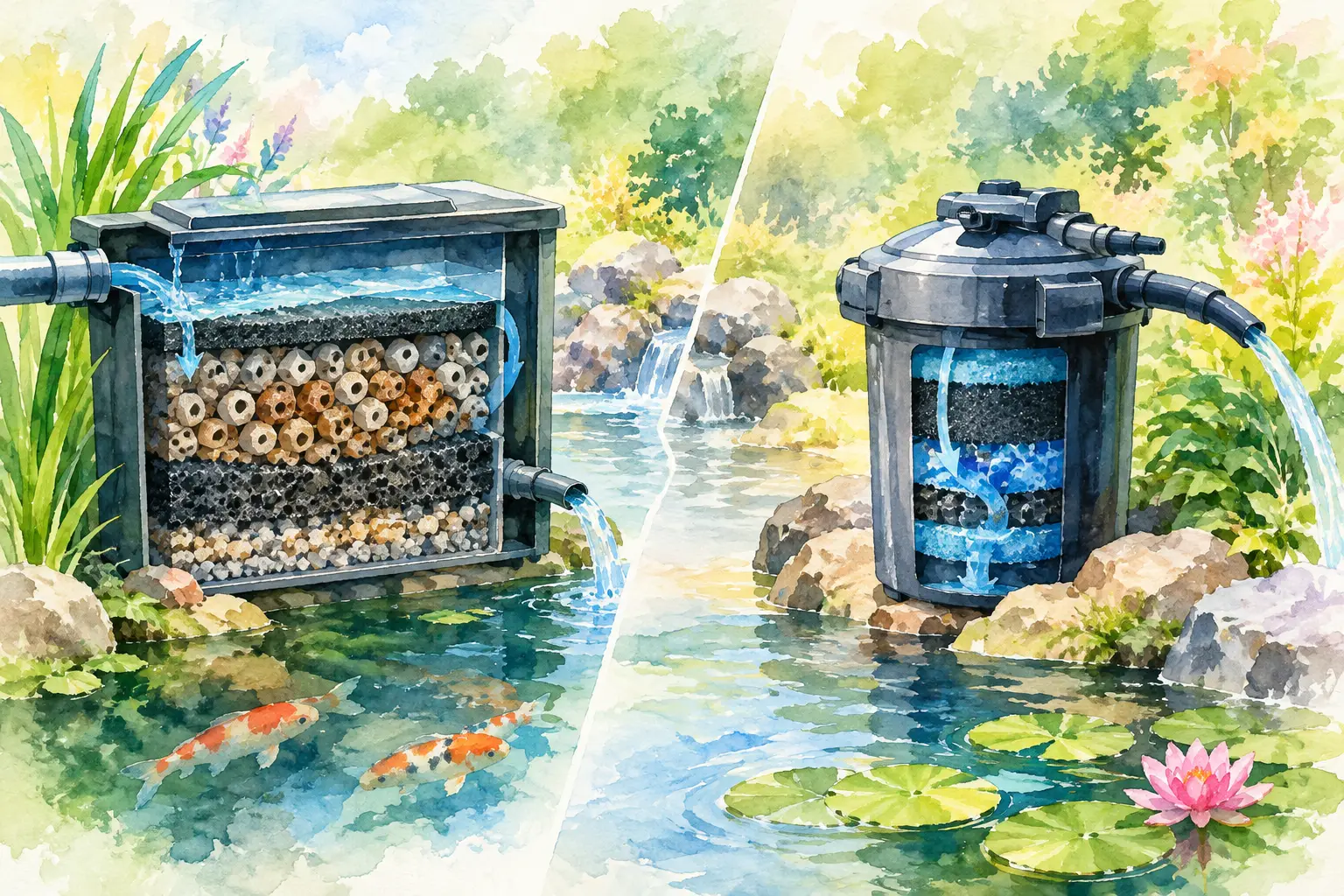
A biological filter provides a home for beneficial bacteria. Those bacteria convert harmful fish waste and decaying organic material through the nitrogen cycle, changing ammonia into nitrite and then into the less harmful nitrate. Plants, water changes, and normal ecosystem processes help manage the remaining nitrate.
Biological filtration is essential in virtually every healthy pond, especially one with koi, goldfish, or a meaningful fish load. It can take the form of biofalls at the top of a waterfall, large filter bays, wetland filtration zones, moving-bed units, or biological media housed inside another type of filter.
A pressure filter is a sealed canister that pump-fed water is pushed through under pressure. Many pressure filters contain both mechanical and biological media. Mechanical media catches suspended debris, while biological media offers surface area for beneficial bacteria. Some models also include an ultraviolet clarifier that helps control green-water algae.
So the more accurate question is not always biological filter or pressure filter. It is often whether a pressure filter provides enough biological capacity, mechanical filtration, and practical access for the pond you plan to build or maintain.
Why the Filter Choice Changes the Pond Experience
A small ornamental pond with a light fish load has very different needs than a large koi pond with a powerful waterfall. A compact pressure filter may be a sensible choice for the first pond, particularly when space is limited and the equipment needs to stay out of sight. For the second pond, a larger biological system with easy cleaning access is usually the better long-term investment.
Filter selection also affects how your water feature looks and feels. Natural pond systems are often designed around skimmers that collect floating debris and biofalls that return filtered water at the head of a stream or waterfall. The filtration becomes part of the landscape construction itself. Water is cleaned as it moves through the system, then re-enters the pond with circulation and oxygenation.
A pressure filter can be tucked behind planting, near a pump vault, or in a discreet equipment area. That can be useful where a formal layout, limited footprint, or existing pond leaves little room for a larger external filter. But hiding equipment should never mean making it difficult to service. A filter that cannot be reached comfortably tends to be cleaned too late.
Biological filtration needs room to work
Beneficial bacteria need oxygen-rich water, suitable media, and enough contact time to do their job. They also need a filter sized for the reality of the pond, not just its water volume on paper. Fish size, feeding habits, sun exposure, leaf drop, and water temperature all change the demand placed on filtration.
This is why a manufacturer rating can be misleading when read without context. A filter rated for a certain number of gallons may be adequate for a lightly stocked water garden, yet too small for the same-size pond filled with large koi. In the Bay Area, warm stretches of weather and year-round landscape debris can also keep a pond’s biological system working harder than owners expect.
A properly designed biological filter does not eliminate maintenance. It does, however, create a more stable foundation. Instead of constantly reacting to poor water quality, you are supporting the living processes that keep the pond balanced.
Pressure filters offer compact convenience
The best reason to choose a pressure filter is often its compact, self-contained design. Because water leaves the unit under pressure, the filter may be able to feed a waterfall or return line located above the filter itself, depending on the pump, plumbing, and elevation. This can make installation more flexible than a gravity-fed system.
Many pressure filters also include a backwash or cleaning function. With the right plumbing arrangement, you can redirect flow and flush accumulated waste without opening the entire unit. That convenience is appealing for modest ponds and for homeowners who want a straightforward maintenance routine.
There are limits. Fine mechanical media eventually clogs, especially in ponds under trees or ponds with active fish. As debris builds, water flow can drop and the pump has to work harder. Cleaning too aggressively or too often with chlorinated tap water can also disrupt the beneficial bacteria living in the filter media.
For a small pond, these trade-offs may be perfectly reasonable. For a heavily stocked pond or a large, complex water feature, repeated cleaning and limited media volume can become frustrating. The smallest equipment footprint is not always the lowest-maintenance choice.
When a Larger Biological System Is the Better Fit
A dedicated biological system is generally the stronger choice when a pond is designed as a substantial landscape centerpiece. This includes koi ponds, water gardens with broad surface area, ponds connected to long streams, and projects where a full, natural waterfall is central to the design.
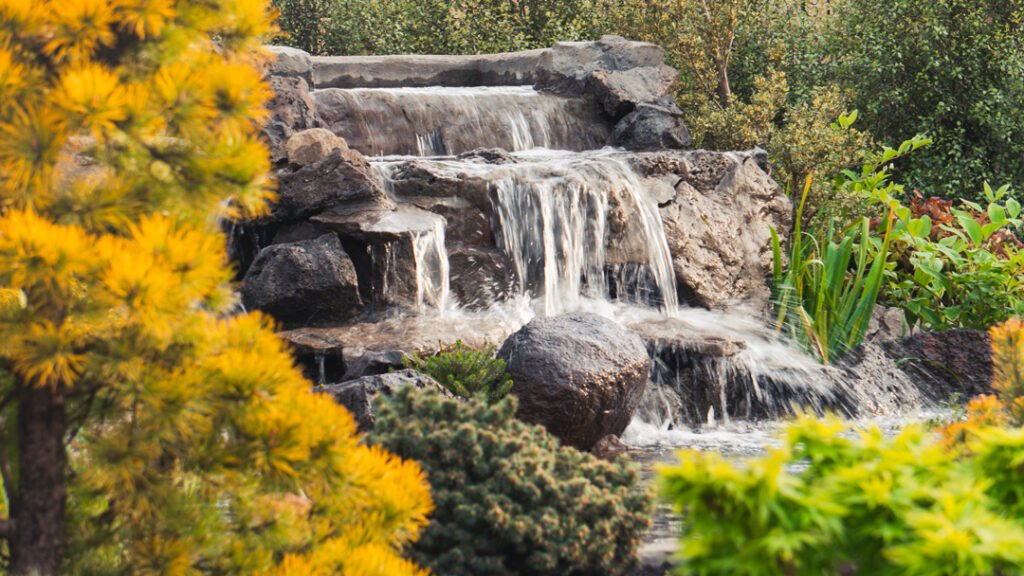
Biofalls and wetland-style filters are especially effective in naturalistic settings because they combine filtration with the visual experience of moving water. Filtered water can emerge from a planted area or cascade from a carefully built waterfall, rather than returning through a visible pipe. The result feels less like equipment and more like a living part of the landscape.
Larger systems can also hold more biological media and distribute water more evenly. That extra capacity provides a buffer when fish grow, seasonal debris increases, or guests and family spend more time feeding the pond. It does not mean the pond can be ignored. It means the system has been built with realistic breathing room.
For aging ponds, upgrading biological filtration can solve persistent water-quality issues that no amount of clarifier or quick cleaning seems to fix. A professional assessment should look beyond the filter itself at pump size, plumbing restrictions, skimmer performance, water turnover, leaks, and the amount of organic material collecting on the pond bottom.
How to Make the Right Choice for Your Pond
Start with the intended life of the pond, not simply the installation budget. Ask whether you want a few small fish or a growing koi collection. Consider whether the pond will sit beneath deciduous trees, whether it has a waterfall, and how much hands-on maintenance you want to perform. A compact pressure filter may be appropriate for an intimate water garden, while a larger pond deserves filtration that can grow with it.
It is also wise to separate water clarity from water health. Ultraviolet clarification can be very helpful against suspended green algae, but it does not replace biological filtration. Likewise, a pond can look clear while still carrying excessive waste, poor circulation, or unstable water chemistry.
For custom ponds, the strongest designs usually combine methods. A skimmer removes leaves before they sink. A biological filter supports healthy water. Pumps and properly sized plumbing maintain circulation. Aquatic plants add beauty while contributing to the pond ecosystem. In some situations, a pressure filter becomes one useful component rather than the whole solution.
At Aquascape Creations, we approach filtration as part of the complete water-feature design, not an afterthought hidden behind the pond. The terrain, waterfall height, fish goals, planting plan, equipment access, and long-term maintenance all belong in the same conversation.
The right filter should quietly protect the experience you built the pond for: sitting beside moving water, watching fish glide beneath the surface, and sharing a landscape that feels more alive with every season.