A beautiful pond can look calm on the surface while struggling beneath it. When oxygen levels fall, fish become stressed, beneficial bacteria slow down, odors develop, and water quality can decline quickly during a warm Bay Area afternoon. A properly designed pond aeration system keeps the water moving where it matters most, helping your pond remain a healthy, living centerpiece rather than a feature that demands constant correction.
For a natural pond, water garden, koi pond, or recreation pond, aeration is not an optional accessory added after problems appear. It is part of the ecological foundation. The right equipment supports the fish, plants, filtration, and natural processes that make a water feature enjoyable for years.
What a Pond Aeration System Actually Does
A pond aeration system introduces oxygen into the water and encourages circulation from the bottom upward. Most systems use an air compressor located on shore, tubing that runs to the pond, and diffuser stations placed in deeper areas. The diffusers release a steady stream of fine bubbles that rises through the water column.
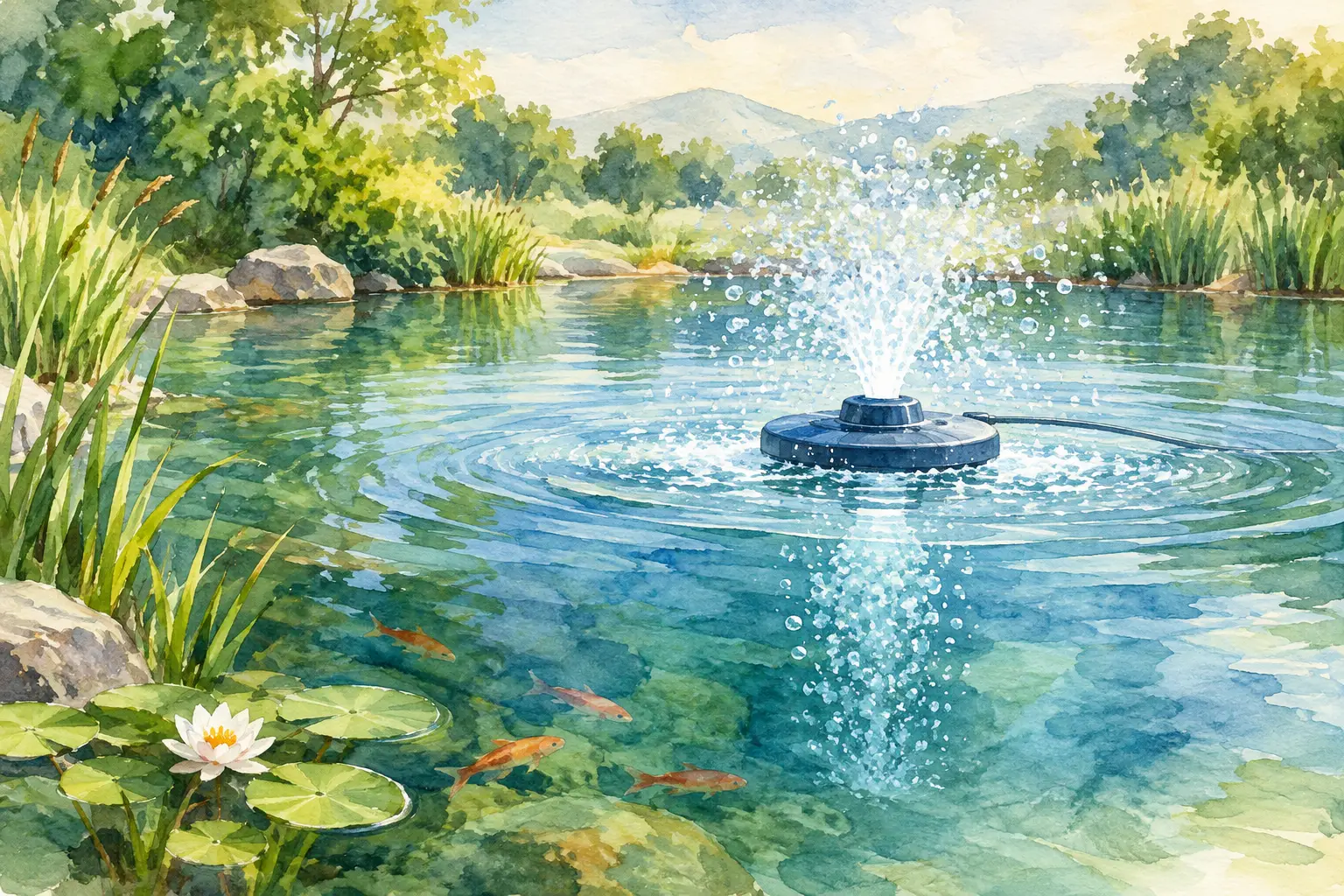
Those bubbles do more than create a pleasant visual effect. As they rise, they pull lower, oxygen-poor water toward the surface, where it can exchange gases with the air. This circulation helps distribute oxygen more evenly throughout the pond, including areas that a waterfall or surface fountain may not reach.
That distinction matters. A waterfall adds valuable surface movement and creates the sound and beauty many homeowners love, but it does not always provide sufficient oxygen at depth. In a deeper pond, especially one with fish or a substantial organic load, bottom aeration can be the difference between a balanced ecosystem and recurring water-quality problems.
Why Oxygen Is Essential for a Healthy Pond
Oxygen supports nearly every healthy process in a pond. Koi, goldfish, frogs, and other aquatic life need dissolved oxygen to thrive. Beneficial bacteria also depend on it to break down fish waste, leaves, uneaten food, and other organic material before it becomes a larger problem.
Without adequate oxygen, decomposition shifts toward anaerobic activity. This is the process associated with dark sludge, unpleasant odors, and gases trapped in sediment. A pond may still appear acceptable from the patio, yet its biological balance is becoming more fragile below the surface.
A well-planned aeration system helps reduce that risk. It can improve circulation, support biological filtration, and make conditions less favorable for stagnation. It may also help limit the nutrient buildup that contributes to algae, although aeration alone is not an algae cure. Excess sunlight, fish load, runoff, inadequate filtration, and plant coverage all affect algae growth. The best results come from looking at the whole pond rather than relying on one piece of equipment.
Fish need more oxygen in warm weather
Warm water holds less dissolved oxygen than cool water. At the same time, fish metabolism increases as temperatures rise, meaning they often need more oxygen precisely when less is available. This is why ponds can experience stress during extended summer heat, particularly when fish populations are high or the pond has limited circulation.
Early morning is often the most vulnerable time. Aquatic plants and algae produce oxygen during daylight through photosynthesis, but they consume oxygen overnight. If a pond is already marginal, fish may gather near a waterfall, skimmer, or edge at dawn, sometimes gasping at the surface. That is a warning sign worth addressing quickly.
Choosing the Right Pond Aeration System
The correct system depends on the pond itself, not just its surface dimensions. Pond depth, volume, fish population, shape, bottom contour, exposure to sun, and existing water movement all influence the design. A small ornamental pond with a modest fish load has different needs than a large natural pond, a stocked koi pond, or a recreation pond designed for swimming and gathering.
For many deeper ponds, bottom-diffused aeration is the preferred approach because it moves water throughout the full depth of the basin. Diffusers are positioned in locations that encourage complete circulation without disrupting shallow planting shelves or creating excessive turbulence in areas meant to remain calm.
Shallow ponds may benefit more from a combination of circulation and surface agitation. In some cases, adding a properly sized waterfall pump, stream return, or fountain improves oxygen exchange enough to complement the pond’s filtration. The goal is not to make the pond churn constantly. It is to create healthy movement while preserving the natural, peaceful character of the water.
Size the equipment for real conditions
An undersized aeration system can run continuously and still leave low-oxygen areas untouched. An oversized system may create unnecessary noise, visual disturbance, energy use, or excessive movement in a delicate water garden. Quality design begins with understanding the actual pond volume and depth rather than selecting a system based on a broad retail label.
Compressor location also deserves attention. It should be protected from weather, positioned for service access, and installed where operating sound will not interfere with outdoor living. Air tubing should be routed cleanly and securely so the finished landscape retains its natural appearance.
For custom ponds, this planning is best handled during design and construction. Aeration lines, electrical needs, and diffuser locations can be integrated before rockwork and plantings are complete. For existing ponds, a thoughtful retrofit can still make a meaningful improvement without rebuilding the entire feature.
Aeration, Filtration, and Waterfalls Work Together
A healthy pond is a system, not a collection of separate components. Aeration supports the biological processes that filtration depends on, while filtration removes debris and provides habitat for beneficial bacteria. Waterfalls and streams add circulation, beauty, and sound. Aquatic plants soften the edges, provide shade, and help create the natural sanctuary that makes a pond feel connected to its landscape.
Each element has a different role. A large waterfall is not automatically a replacement for bottom aeration, just as an air diffuser does not replace mechanical filtration or regular maintenance. When one component is neglected, the others have to work harder.
This is especially true in mature ponds. Leaves, pollen, fish waste, and windblown debris accumulate over time. Even an expertly built pond can lose performance when organic material collects in the basin or a pump begins operating below capacity. Periodic cleaning, inspection, and seasonal adjustments protect the investment and preserve the clarity and beauty homeowners expect.
Signs Your Pond May Need Better Aeration
Some warning signs are obvious, while others develop slowly. Fish lingering near the surface or gathered near moving water should never be ignored. Cloudy water, persistent odor, excessive bottom sludge, or repeated algae outbreaks can also indicate that circulation and oxygen levels need evaluation.
A pond that looks still in the deepest areas may not be unhealthy on its own. Many naturalistic designs include quiet zones. The concern is whether those areas are receiving enough oxygenated water to support the pond’s biological load. A professional assessment can distinguish between a peaceful pond and one that is becoming stagnant.
If fish have recently been added, a pond has been expanded, or a major landscape change has increased leaf drop or runoff, the original equipment may no longer match the pond’s needs. Aeration should be reviewed whenever the pond’s conditions change.
Seasonal Operation and Maintenance
In much of the Bay Area, pond aeration can operate year-round. Summer operation is particularly valuable because heat creates the greatest oxygen demand. During cooler months, the system continues to support water quality and beneficial bacteria, though runtime and settings may be adjusted according to the pond’s design and stocking level.
Maintenance is generally straightforward, but it should not be overlooked. Compressors need clean intake filters, air lines should be checked for damage or leaks, and diffusers may require periodic cleaning if mineral buildup reduces bubble output. A diffuser producing large, uneven bubbles or noticeably weaker airflow is worth inspecting before performance drops further.
For ponds with koi or significant fish populations, reliable aeration is a form of protection. A backup plan for power outages, particularly during hot weather, can provide additional peace of mind. The right solution depends on the pond and the owner’s needs, but it is far easier to plan for oxygen loss than to respond after fish are in distress.
A Healthier Foundation for Your Water Feature
The most successful ponds feel effortless because their essential systems are working quietly in the background. Water stays fresher, fish move comfortably through the pond, and the feature remains a place for family gatherings, reflection, and the simple pleasure of watching nature at work.
At Aquascape Creations, we believe a pond should be built and maintained as a living masterpiece, with the technical care needed to protect its natural beauty. Whether you are planning a new water feature or improving an aging pond, the right aeration approach can give the entire ecosystem a healthier foundation – and give you more time to enjoy the water you love.