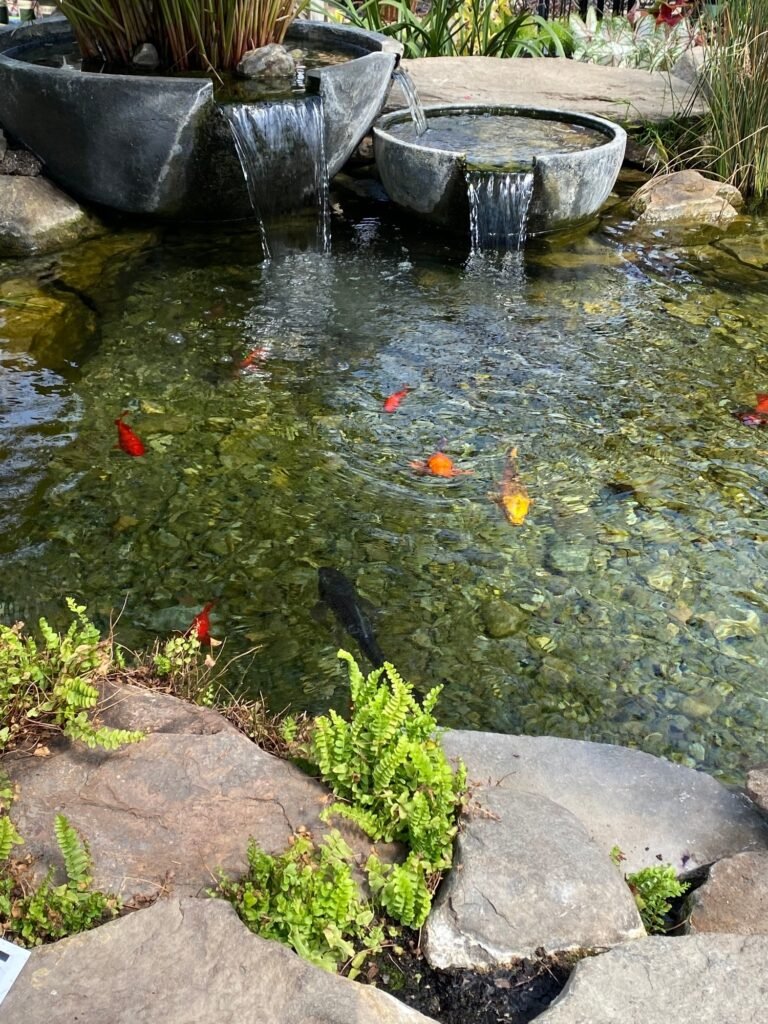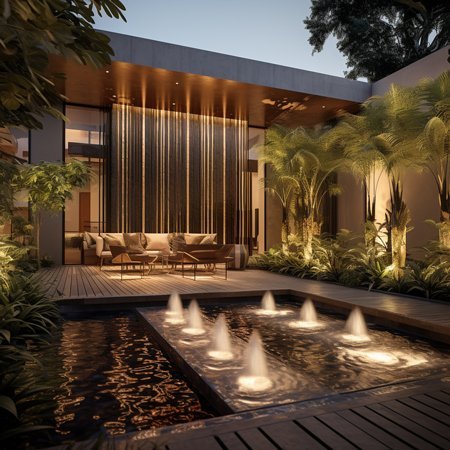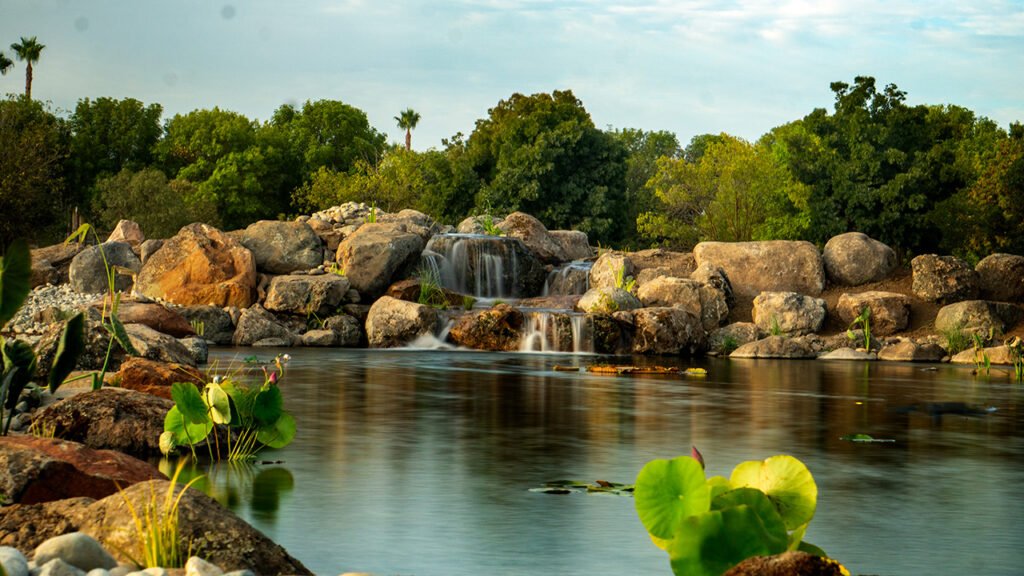
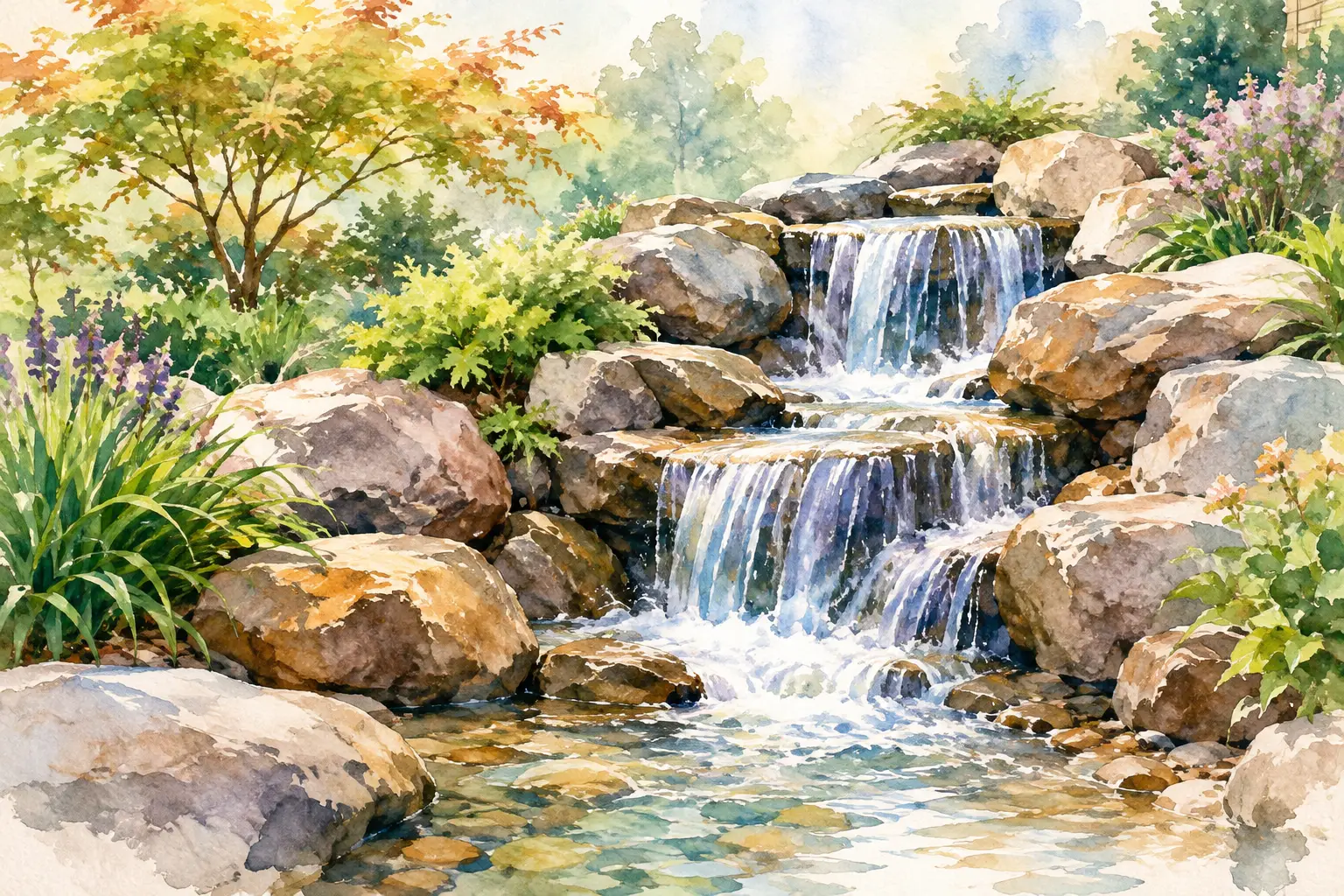
A bare slope beside a patio, an unused planting bed, or a backyard corner that feels too quiet can become the setting for a remarkable pondless waterfall transformation. Water slips over natural stone, gathers in small pools, and disappears beneath the landscape before recirculating again. The result is more than a landscape upgrade. It is a living focal point that adds sound, movement, and a sense of retreat without requiring an open pond.
For Bay Area homeowners, that distinction matters. A pondless waterfall offers the restorative presence of moving water while fitting comfortably into family spaces, compact yards, entertaining areas, and properties where safety or maintenance concerns make a traditional pond less practical. When it is designed around the site rather than placed on top of it, the feature feels as though it has always belonged there.
What Changes in a Pondless Waterfall Transformation
The visible change is immediate: an ordinary outdoor area gains texture, sound, and a natural destination. But the most meaningful transformation happens below the surface. A properly built pondless system captures water in a concealed reservoir, then returns it to the top of the waterfall through plumbing and a pump. There is no exposed basin of standing water at the bottom.
That design gives homeowners flexibility. A waterfall can begin near a seating area and cascade toward a lawn, frame a front entry, soften the edge of a pool deck, or turn a difficult grade change into an asset. In the right setting, even a narrow side yard can become a private passage with the gentle sound of water.
Naturalistic work is not about stacking a few attractive boulders. Stone size, shelf placement, elevation changes, planting pockets, and the path of the water all have to work together. Water should break and gather in ways that look convincing, not rush down a smooth, artificial channel. Every rock must also be placed with structural purpose so the system remains stable through changing seasons and years of use.
Begin With the Way You Want to Use the Space
The best pondless waterfall is designed around daily life, not just a photo. Before selecting stone or deciding on a footprint, consider where people will sit, walk, and look. A waterfall meant to be heard from the kitchen window needs a different flow rate than one created as a dramatic backdrop for an outdoor dining area.
A compact feature can create a quiet, close-up experience, where the sound is gentle and the stonework invites inspection. A larger cascade can carry across a broad landscape and balance the scale of a substantial home, pool, or outdoor kitchen. Neither approach is automatically better. It depends on the property’s proportions, existing architecture, desired sound level, and the feeling the owners want to create.
The terrain shapes the design as well. A natural slope may provide the elevation needed for a convincing stream and waterfall. On a flat lot, the elevation can be built carefully with soil, stone, and planting, but it must be composed so it does not look like a pile added to the yard. Drainage, access for construction, sun exposure, mature trees, and underground utilities all deserve attention before work begins.
Sound Is Part of the Design
People often say they want the sound of a waterfall, but the preferred sound varies widely. Water falling a short distance over broad stone creates a soft, calming sheet of sound. A more concentrated drop produces a brighter, livelier note. Multiple cascades add rhythm and can help mask neighborhood noise.
The goal is not maximum volume. A well-designed feature has a sound that suits the setting, remains enjoyable during conversation, and feels peaceful rather than constant or harsh. Pump selection and flow control allow the water movement to be tuned to the feature, rather than forcing the landscape to accept a one-size-fits-all system.
Stone and Planting Create a Sense of Place
A pondless waterfall earns its beauty through composition. Larger character boulders establish the bones of the feature. Supporting stone creates transitions, directs water, and avoids gaps that expose liner or construction materials. Gravel, mosses, groundcovers, ornamental grasses, and carefully chosen shrubs soften the edges and help the waterfall settle naturally into the garden.
Planting should reflect the amount of sun, water, and care the area will receive. A lush, layered look may be right for one property, while another calls for a cleaner composition with drought-tolerant plants and open views of the stone. The aim is always the same: to make the water feature feel connected to the landscape, not separate from it.
The Hidden Construction Determines Long-Term Enjoyment
Beautiful stonework is only as reliable as the system beneath it. A pondless waterfall transformation requires careful excavation, appropriate underlayment and liner installation, a correctly sized reservoir, dependable plumbing, and a pump chosen for the head height and desired flow. These are not details to leave to guesswork.
The underground reservoir must hold enough water for the feature to run without starving the pump. It also needs to be accessible for service and designed to support the stone and gravel above it. The pump vault, check valve, plumbing connections, and electrical components should be installed in a way that allows future inspection and maintenance without dismantling the entire waterfall.
Water containment matters just as much. Water naturally seeks the lowest point, including areas outside the intended stream. Proper liner placement, overlap, edge treatment, and stone setting keep water moving where it belongs. This is especially important when a waterfall runs near foundations, hardscape, or valuable planting areas.
Experienced construction also accounts for how a feature will age. Settling soil, root growth, seasonal debris, and mineral buildup can affect performance over time. Quality materials and thoughtful access points make routine care far simpler and protect the investment in the landscape.
Why Pondless Waterfalls Work for Active Homes
Without an exposed pond, many homeowners feel more comfortable placing a water feature close to patios, paths, and areas used by children or pets. The water recirculates through the system while the basin remains hidden beneath decorative gravel and stone. That creates a more flexible landscape without losing the experience of a natural waterfall.
Maintenance is generally straightforward, though low maintenance does not mean no maintenance. Leaves and organic debris should be cleared from the stream and intake area, especially beneath deciduous trees. The system may need periodic cleaning, pump inspection, and seasonal adjustments. A professionally built feature makes these tasks manageable because the components are accessible and the water course is designed to shed debris rather than collect it.
Pondless systems can also be a smart choice for homeowners who want water without taking on fish care or pond ecology. If your dream includes koi, aquatic plants, and the reflective surface of a true water garden, a pond may be the better fit. If your priority is the sound and beauty of falling water with a simpler footprint, pondless construction is often the right answer.
Repairing an Existing Waterfall Can Be a Transformation Too
Not every project starts with an empty yard. Older waterfalls can develop leaks, lose circulation, become overgrown, or simply feel dated and disconnected from the rest of the property. In those cases, the first step is diagnosis, not a quick cosmetic fix.
A leak may come from a liner issue, a settling edge, plumbing damage, or water escaping from a poorly formed stream. Weak flow can point to a clogged intake, undersized plumbing, an aging pump, or an original design that never allowed adequate water volume. Addressing the actual cause protects the property and prevents repeated repairs.
Sometimes the existing stone can be incorporated into a renewed design. Other times, rebuilding the water course and reservoir is the wiser long-term decision. The right choice depends on the condition of the materials, the desired scale of the new feature, and whether the original construction can support lasting performance.
Choose Craftsmanship Over a Decorative Add-On
A water feature is one of the few landscape elements that engages nearly every sense. You see light moving across water, hear it from inside the home, feel the cooling effect near the cascade, and watch family and guests naturally gather around it. That is why design and construction deserve the same care as any major outdoor improvement.
Aquascape Creations approaches each project as nature-inspired artistry supported by hands-on technical expertise. From a small garden cascade to a complex, large-scale landscape installation, the purpose is to build a natural sanctuary that performs beautifully long after construction is complete.
The most rewarding pondless waterfall transformation is not the one with the most stone or the loudest cascade. It is the one that makes you pause at the back door, step outside for another minute, and feel that your landscape has become a place you genuinely want to be.