
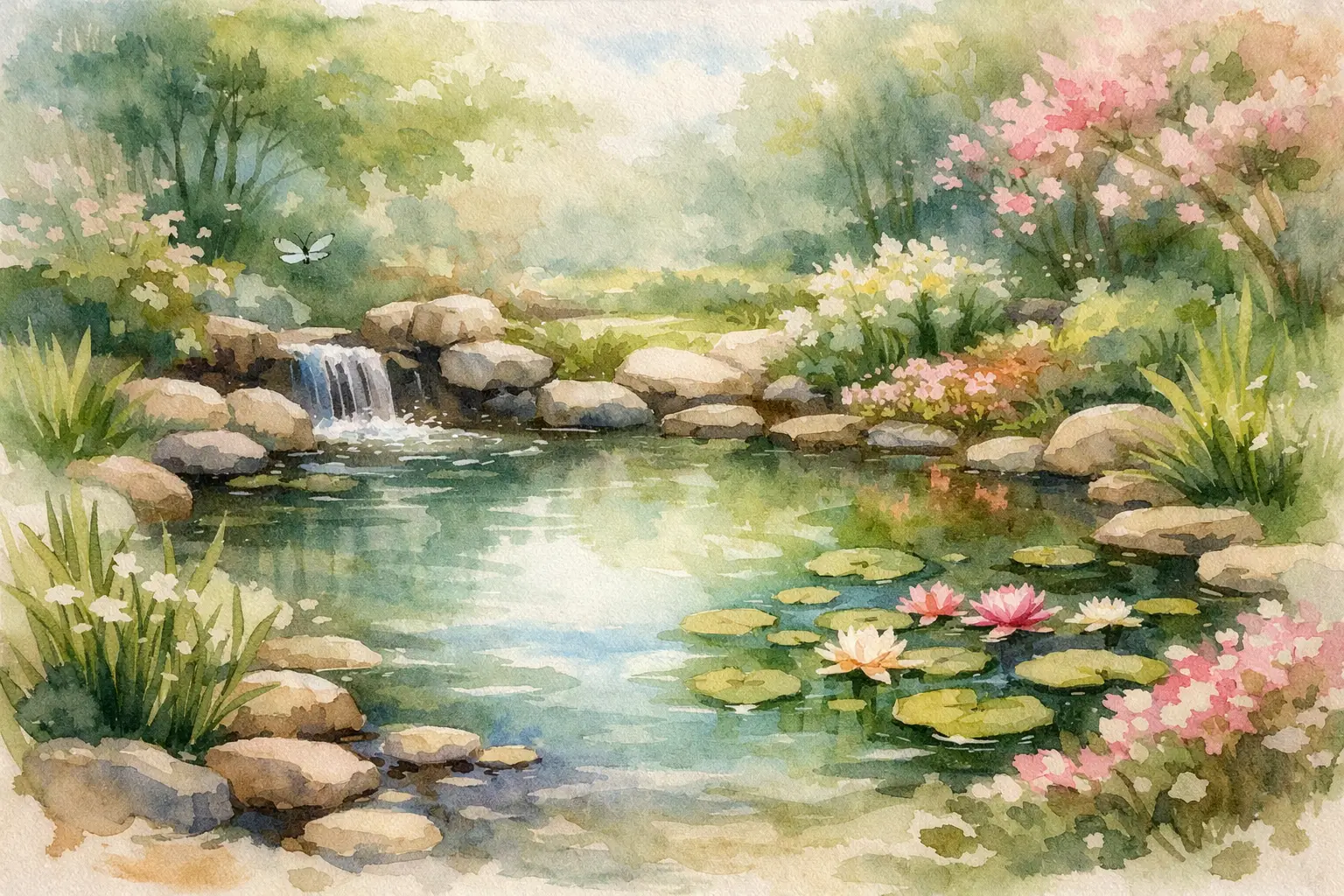
A pond should never feel like a decorative object dropped into the yard. The best garden pond design ideas begin with the way you want to live outdoors: where you gather, what you see from inside, how the land slopes, and whether the sound of moving water should be a quiet backdrop or the heart of the space. When those details guide the plan, a pond becomes a living masterpiece that feels as though it has always belonged there.
For Bay Area properties especially, thoughtful design matters. A compact courtyard, a sunny hillside, and a broad family backyard each call for a different approach to water, stone, plants, and circulation. These ideas can help you shape a pond that is beautiful on installation day and rewarding for many years afterward.
Garden Pond Design Ideas Start With the View
1. Place the pond where it can be enjoyed every day
The most successful pond location is often visible from the kitchen, family room, patio, or primary outdoor seating area. A water feature tucked into a distant corner may look beautiful, but it will not become part of daily life in the same way as a pond seen with morning coffee or from the dining table at night.
Consider more than the main view. Think about the approach from a gate, the view from a favorite chair, and what you will see when looking out after dark. A pond should reveal itself naturally rather than demand attention all at once.
2. Let the terrain shape the water feature
Naturalistic ponds work best when they follow the character of the site. A gentle grade can create a stream that appears to travel through the garden before reaching the pond. A change in elevation may be the right place for a waterfall, while a level yard may call for a stiller water garden with a low edge and lush planting.
Trying to force a rigid shape onto a sloped or irregular landscape can lead to excessive retaining work and an artificial result. Skilled pond construction uses grade, drainage, and existing landscape features as design opportunities, not obstacles.
3. Build a waterfall with a reason to exist
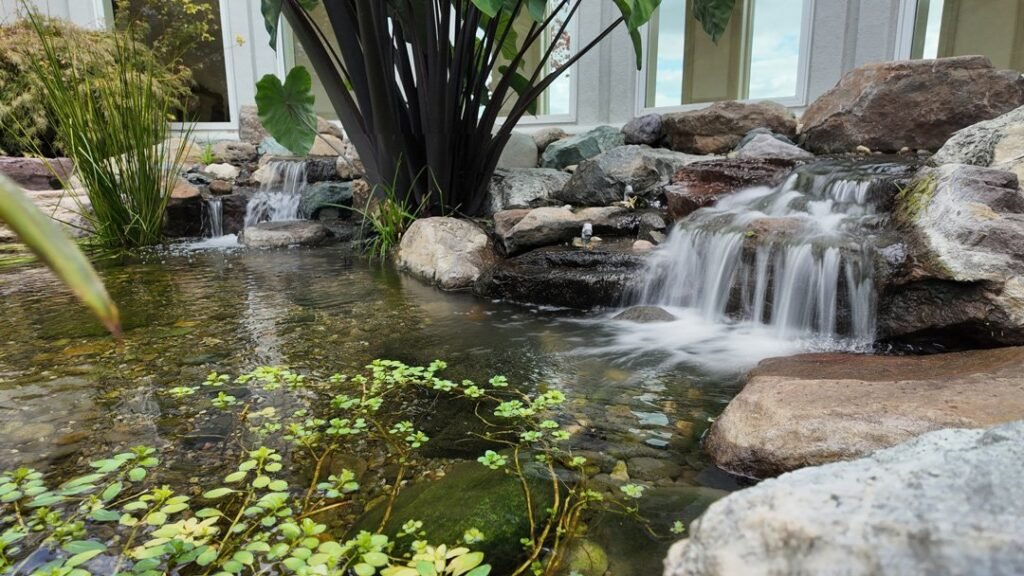
A waterfall adds sound, oxygen, and movement, but it should suit the scale of the pond. A small, delicate cascade can feel right in an intimate garden. A larger backyard may support a broader series of falls with deeper pools and bolder stone.
The trade-off is sound. More drop and more flow create stronger visual impact, but they can also overwhelm conversation near a patio. If relaxation is the priority, a lower, wider waterfall often produces a softer, more natural sound than a steep, forceful chute.
4. Create shelves for plants, wildlife, and visual depth
A natural pond is not one uniform bowl. Plant shelves at different depths allow marginal plants to soften the edges, while deeper zones provide stable water temperatures and refuge for fish. These transitions also create the layered look found along natural shorelines.
Avoid treating the perimeter as a clean ring of exposed rock. Vary the planting pockets, stone sizes, and contours so the eye moves through the scene. The goal is a pond edge that feels alive, not overly manicured.
Design for a Living Water Environment
5. Use stone in varied sizes and natural groupings
Stone is one of the defining elements of a pond, yet more stone does not automatically mean a more natural result. The best compositions use substantial anchor boulders, supporting stones, gravel, and planting to create a believable transition from water to landscape.
Choose materials that complement the home and surrounding hardscape without making every surface match exactly. A contemporary home can still have a natural pond, but the lines, stone color, and planting palette should be intentional. Consistent craftsmanship is what keeps a natural look from becoming cluttered.
6. Add aquatic plants with a clear purpose
Plants do more than decorate the pond. They provide shade, visual softness, seasonal color, and habitat while helping the water feel integrated with the garden. Water lilies can shade the surface, while marginal plants add texture along shelves and streams.
Planting needs to be balanced, not excessive. Too little can leave the pond looking bare and exposed. Too much can restrict circulation, conceal stonework, and increase maintenance. The right mix depends on sun exposure, pond size, fish load, and the desired level of care.
7. Plan for koi before they arrive
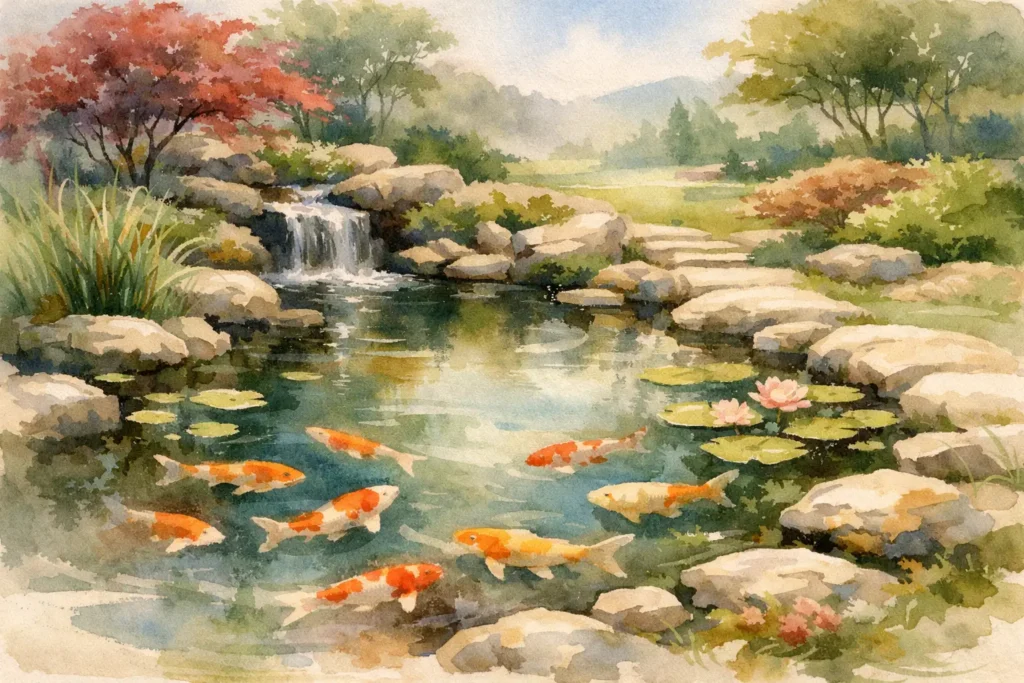
Koi bring movement and personality to a pond, but they also raise the bar for design and filtration. They need adequate depth, dependable circulation, protection from predators, and a biological filtration system sized for the fish population rather than just the water volume.
A pond intended primarily as a water garden can be planted more densely. A koi pond usually needs more open swimming space and stronger mechanical filtration. Neither approach is better. They simply support different experiences, and deciding early prevents costly changes later.
8. Make water quality part of the design, not an afterthought
Clear, healthy water comes from the entire system working together: properly sized pumps, filtration, plumbing, water movement, aquatic plants, and sensible fish stocking. A beautiful pond cannot perform well for long if its mechanical components are undersized or difficult to service.
Equipment should remain accessible without becoming the focal point. Thoughtful placement makes seasonal cleaning, inspections, and repairs much easier. At Aquascape Creations, this practical side of construction is treated with the same care as the visible stonework because lasting enjoyment depends on both.
Turn the Pond Into an Outdoor Destination
9. Connect the pond to a patio or gathering space
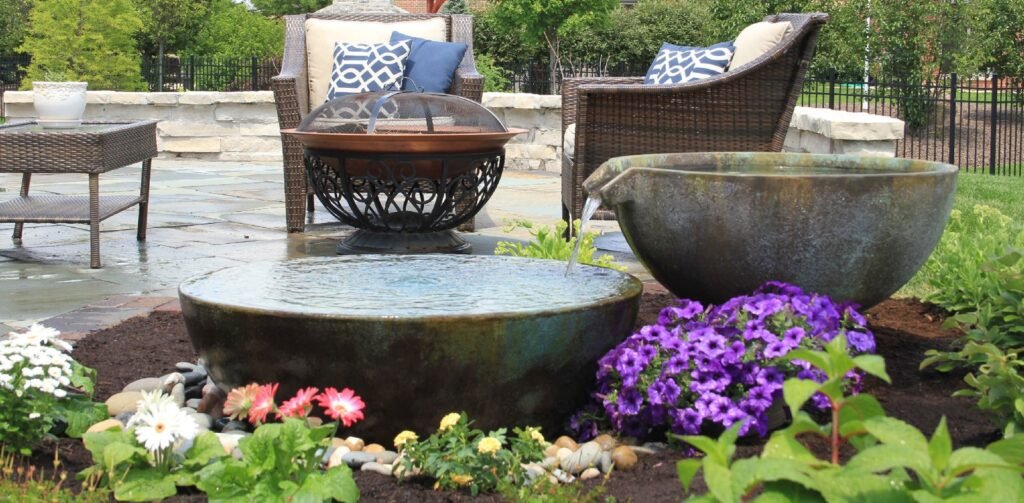
A pond becomes more meaningful when people have a reason to linger beside it. Position a sitting wall, a pair of chairs, a dining area, or a small overlook where the water can be experienced at close range. The edge should invite people in without creating an awkward barrier between the patio and the garden.
For families, this can mean a clear view of the pond from gathering areas and a design that accounts for how children and guests move through the yard. Safety, access, and enjoyment should work together from the first sketch.
10. Light the water with restraint
Underwater lighting can make a pond feel magical after sunset, revealing fish, waterfalls, and stone contours that disappear during the day. The strongest lighting plans are selective. They create depth and atmosphere instead of turning the pond into a bright stage set.
Aim light across a waterfall or toward a key boulder rather than placing a fixture everywhere. Warm, controlled illumination also extends the value of the pond through evening entertaining, when the garden becomes a quieter, more reflective space.
11. Use a stream to make a small pond feel larger
When yard space is limited, a short stream can add a sense of journey and make the feature feel more expansive than the pond alone. It can begin behind planting, emerge from a boulder grouping, or turn gently before entering the water.
The stream must have enough width and stone detail to look convincing at its length. A narrow, straight channel often reads as constructed. Even a modest run benefits from changing widths, small pools, planted edges, and water that moves with purpose.
12. Consider a pondless waterfall when open water is not the right fit
Not every landscape needs a visible pond. A pondless waterfall recirculates water into a concealed reservoir, offering the sound and movement of a stream without a standing pool. It is an excellent option for narrow side yards, entry gardens, commercial spaces, or homeowners who want a lower-maintenance water feature.
This is not a lesser version of a pond. It is a different design decision. If fish, aquatic planting, and reflective water are central to your vision, choose a pond. If the main goal is moving water, natural stone, and a restorative soundtrack, a pondless design may be the better fit.
Give the Design Room to Mature
A finished pond continues to change. Plants establish, stone develops character, fish become familiar companions, and the surrounding garden settles around the water. That evolution is part of the reward, but it also calls for consistent care. Seasonal maintenance, thoughtful pruning, filter service, and attention to water levels protect the investment and keep the ecosystem performing as intended.
Before choosing a shape or a waterfall style, stand in the yard and imagine the moments you want the water feature to hold: a quiet morning, children watching fish, friends gathered outdoors, or a view that softens the end of a long day. Let that feeling lead the design, then build it with the technical care needed for it to last.
This place has such a vibrant atmosphere and I enjoy every session I spend here. The game selection is impressive and the payout times are always on point. It really feels like a community built around genuine enjoyment. incricaza