A layer of dark sediment at the bottom of a pond is not automatically a problem. A natural pond should have some organic material working through its ecosystem. Trouble begins when that layer becomes thick, foul-smelling, or visible in clouds each time a fish moves through it. Knowing how to reduce pond sludge means addressing the conditions that create it, not simply vacuuming the bottom once and hoping it stays clean.
For a beautiful water garden or koi pond, the goal is balance: enough natural biology to support healthy water, with enough circulation and maintenance to prevent decaying material from taking over. The right approach preserves the pond’s living character while making it more enjoyable to care for.
What Pond Sludge Really Is
Pond sludge is the accumulation of decomposing organic material. Fish waste, uneaten food, fallen leaves, dead algae, plant debris, soil washed in from surrounding beds, and even airborne dust eventually settle to the bottom. Microorganisms break much of it down, but they need oxygen, time, and an ecosystem that is not overwhelmed by the incoming debris.
As sludge builds, it can consume oxygen and release nutrients back into the water. Those nutrients feed algae, contribute to cloudy water, and can leave a sulfur-like odor in stagnant areas. In a heavily stocked koi pond, the effects can show up quickly. In a lightly stocked garden pond under mature trees, the buildup may be slower but just as persistent.
A thin, soft layer of sediment is normal. Several inches of black, compacted material is a sign that the pond needs attention. The distinction matters because an aggressive cleanout can disrupt beneficial bacteria, stress fish, and turn a manageable maintenance issue into a temporary biological reset.
How to Reduce Pond Sludge at Its Source
The most lasting results come from reducing the material that enters the pond in the first place. This is especially true for naturalistic ponds, where the water feature is designed to feel connected to the surrounding landscape.
Start with fish feeding. Feed only what the fish can consume within a few minutes, and adjust for water temperature. Fish metabolism slows as water cools, so feeding heavily in cool weather creates waste that the pond’s biology may not be able to process. High-quality food also produces less waste than inexpensive food filled with low-value fillers.
Next, stay ahead of leaves and spent plant material. A skimmer is designed to collect floating debris before it sinks, but it can only work when the basket is emptied regularly. During autumn or a windy stretch in the Bay Area, that may mean checking it several times each week. Remove yellowing lily pads, trim dying marginal plants, and net out leaf clusters before they break apart underwater.
Landscape runoff deserves attention as well. Mulch, loose soil, lawn clippings, and fertilizer can all find their way into a pond during irrigation or rain. Direct downspouts away from the water feature where possible, stabilize bare soil near the edge, and avoid using chemical lawn products near the pond. A well-planned pond edge should look natural while still helping keep the landscape from washing into the water.
Keep Water Moving and Oxygen Available
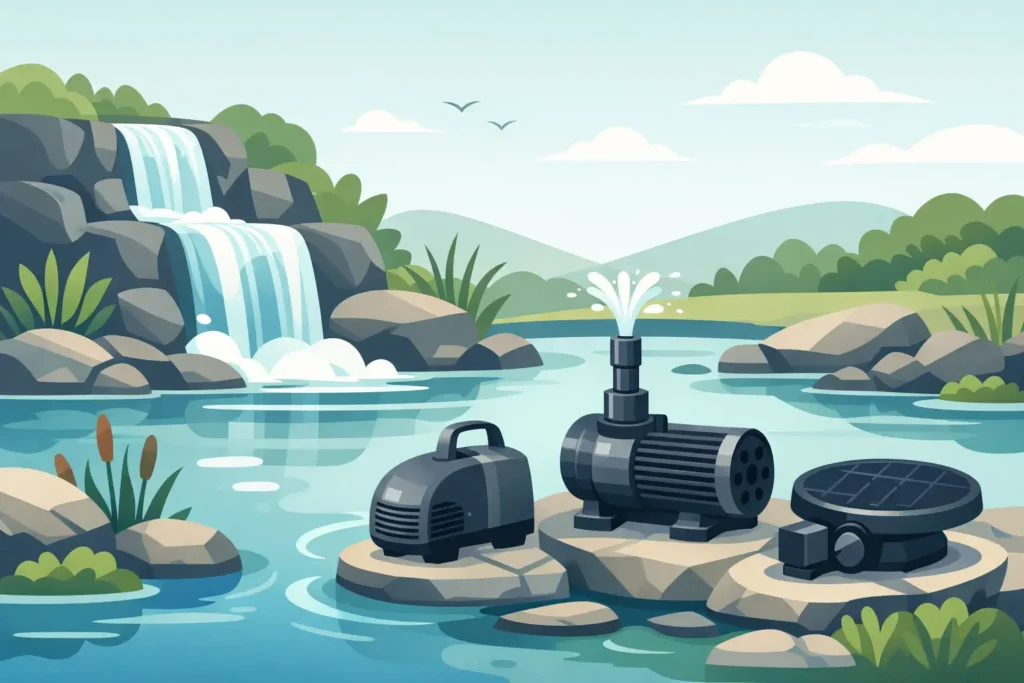
Sludge develops fastest in areas where water barely moves. Corners, deep shelves, low spots behind boulders, and sections far from a return flow can become collection zones. Good circulation does more than make a waterfall sound inviting. It carries fine debris toward the skimmer and filtration system while helping maintain oxygen levels that support beneficial bacteria.
Check that the pump is running at its intended flow and that the intake bay or skimmer is free of obstruction. A pump can be operating while still delivering much less water than it should because a filter pad is clogged, plumbing has a restriction, or the impeller is worn. If the waterfall looks weaker than usual, treat it as a maintenance signal rather than only a cosmetic concern.
In ponds with fish, aeration can be particularly helpful during warm weather. Warm water holds less dissolved oxygen, while fish and microbial activity need more of it. An aeration system does not replace proper filtration, but it can improve conditions in deeper areas where sludge tends to settle.
The right circulation pattern depends on the pond’s shape, depth, boulder placement, fish load, and filtration design. Adding more pump power without considering those details can create awkward current, disturb planting zones, or waste energy. A properly designed system moves water with purpose, not brute force.
Remove Existing Sludge Gently and Consistently
When sludge is already present, physical removal is often necessary. A pond vacuum can remove loose sediment from accessible areas without completely draining the pond. Work methodically in sections rather than stirring up the entire bottom at once. The aim is to lift settled waste out of the system, not suspend it throughout the water column.
For a modest amount of buildup, a few targeted vacuuming sessions paired with improved skimming and filtration may be enough. For a pond that has been neglected for years, a professional cleanout may be the wiser route. Deep deposits can conceal sharp debris, compromised liner areas, or trapped pockets of decomposing material. Fish also need temporary, aerated holding conditions if a more thorough cleaning is required.
Avoid the temptation to pressure-wash every surface spotless. Rocks, gravel, and filter media carry beneficial biology. Stripping them completely clean can trigger cloudy water or algae issues afterward because the pond has lost much of the microbial community that processes waste. Clean what needs cleaning, preserve what is functioning, and allow the system time to stabilize.
Use Beneficial Bacteria With Realistic Expectations
Beneficial bacteria treatments can help break down organic waste, especially when water temperatures are warm enough for biological activity. They are most useful as part of a maintenance routine after debris has been removed and circulation has been restored. They are not a shortcut for a clogged skimmer, overloaded fish population, or inches of compacted muck.
Choose products intended for ornamental ponds and use them according to the label. More is not necessarily better. If oxygen is low or the pond is receiving a constant supply of leaves and excess food, bacteria alone cannot keep up.
Think of beneficial bacteria as the maintenance crew inside a healthy pond. They work best when the pond has the circulation, oxygen, and reasonable organic load they need to do their job.
Maintain Filters Without Washing Away Their Biology
Mechanical filtration captures particles before they settle, while biological filtration supports bacteria that convert fish waste into less harmful forms. Both systems need care, but the cleaning method matters.
Empty skimmer baskets routinely and rinse filter mats or pads when flow begins to drop. Where possible, use pond water rather than heavily chlorinated tap water to rinse biological media. Chlorine and chloramine can damage the very bacteria that make the filter effective.
A biological waterfall filter or wetland-style filtration area may collect sediment over time, particularly after storms or periods of heavy leaf drop. Inspect it seasonally. If water is bypassing the media, flowing unevenly, or carrying visible debris back into the pond, the filter may need a more detailed service.
Seasonal Pond Care Prevents the Big Cleanup
Spring is the time to assess winter debris, inspect pumps and plumbing, and restart the pond’s biological rhythm before temperatures climb. Early summer calls for closer attention to feeding, algae, and oxygen. In fall, leaf management becomes the priority. A pond net can be worthwhile when mature trees are dropping heavily, provided it is installed neatly and removed once the major leaf fall has passed.
Winter maintenance is generally lighter, but it should not be ignored. Remove accumulated debris from the skimmer, keep circulation appropriate for the climate, and avoid disturbing dormant fish unnecessarily. In milder Bay Area conditions, ponds often remain active enough that routine observation still matters throughout the year.
A seasonal service plan is often more cost-effective than waiting for odor, algae, or declining water clarity to force a major intervention. It also gives a trained eye the chance to spot a weakening pump, leak symptoms, failing check valve, or filtration issue before it affects the entire water feature.
When Sludge Points to a Larger Pond Problem
If sludge returns quickly after cleaning, look beyond the bottom of the pond. Excessive fish stocking, undersized filtration, poor water circulation, a failing pump, or too much runoff may be creating more waste than the system can handle. New sludge following a major rain can point to an erosion or drainage issue. Sludge concentrated in one location often reveals a dead spot in the water flow.
This is where a thoughtful inspection is more valuable than another bottle of treatment. A pond should function as a living masterpiece, but it also needs sound hydraulic design and dependable equipment behind the natural beauty. Aquascape Creations approaches maintenance and repair with that full-picture mindset, protecting both the visible landscape and the systems that keep it alive.
A cleaner pond does not need to look sterile. It should feel alive: clear enough to enjoy the fish and stonework, balanced enough for plants to thrive, and cared for enough that its quiet beauty remains a source of pride rather than a weekend problem.