A pond can look perfectly calm while debris is collecting beneath the surface, a pump is working harder than it should, or a small water-quality issue is beginning to affect fish and plants. The right essential pond maintenance tools help you notice those changes early and care for your water feature without disturbing the natural balance that makes it special.
For a Bay Area garden pond, the goal is not to make the water look artificially sterile. A healthy pond is a living system. It should have moving water, beneficial bacteria, appropriate plant growth, and enough clarity to enjoy the stones, fish, and reflections that make it a focal point in the landscape. Good tools make routine care more precise, less stressful, and far more effective.
Essential Pond Maintenance Tools Worth Keeping Nearby
The best tool kit depends on the size of your pond, whether it contains koi, and how much surrounding tree cover it has. A compact water garden does not need the same equipment as a large koi pond or recreation pond. Still, several tools earn their place around nearly every water feature.
A long-handled pond net
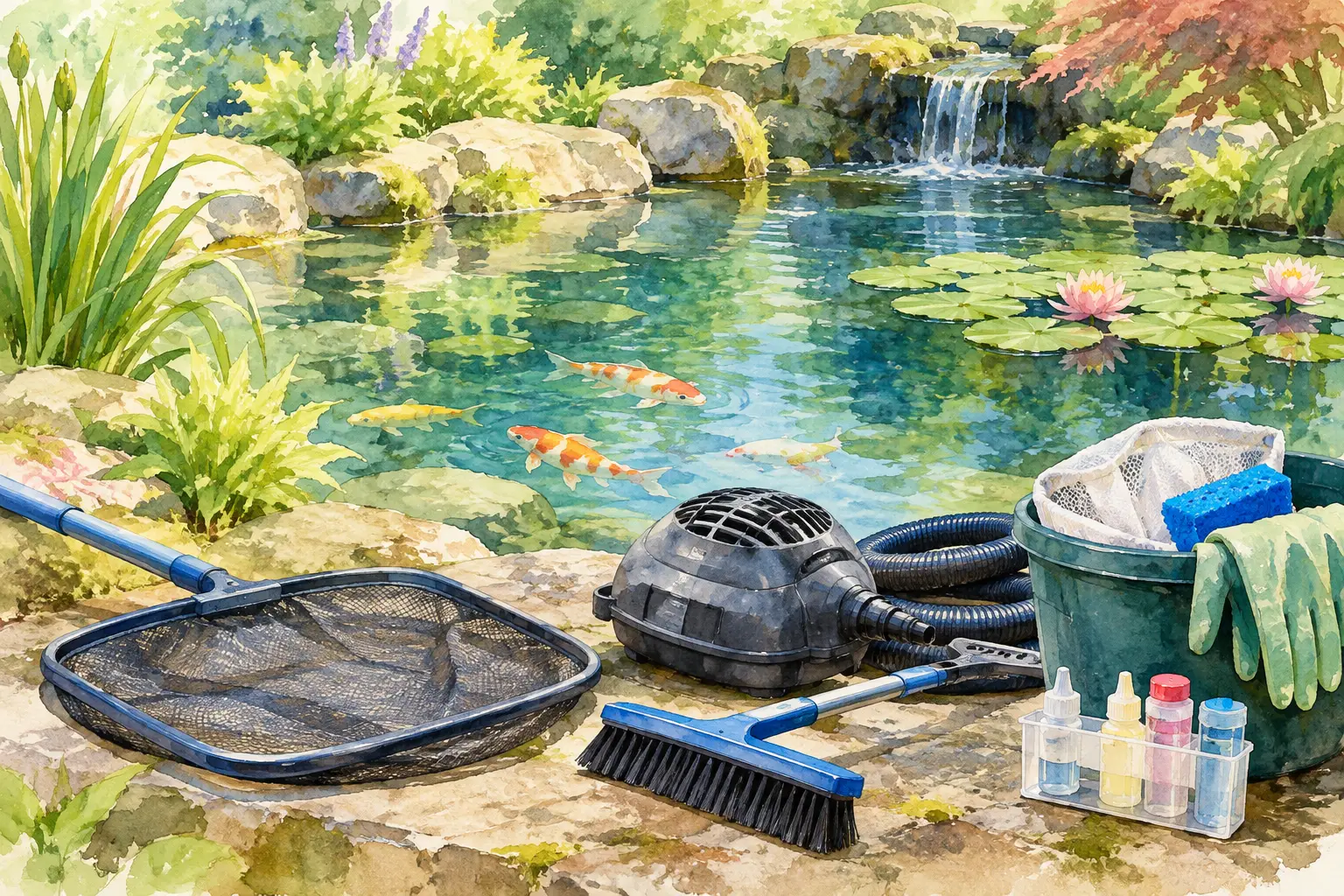
A quality pond net is one of the most useful items a pond owner can own. Use a fine mesh skimmer net to remove floating leaves, seed pods, and windblown debris before they sink and begin decomposing. A sturdier debris net is better for lifting larger material from shelves or reaching into deeper areas.
Avoid aggressively sweeping through the pond every day. Netting is most helpful when used with intention, especially after wind, pruning, or a heavy leaf drop. Frequent stirring can cloud the water and disrupt fish, while neglected debris adds nutrients that can feed unwanted algae.
Pond scissors and pruning tools
Aquatic plants are part of a pond’s filtration system, but they still need management. Long-handled pond scissors allow you to trim yellowing water-lily leaves, spent blooms, and overextended marginal plants without stepping into the pond or damaging the liner.
Remove dying foliage before it breaks down in the water. This simple habit keeps the pond looking cared for and reduces the organic load reaching the filter. It also gives you a chance to inspect plant baskets, check for crowded roots, and make sure plants are not blocking skimmer openings or waterfall flow.
A pond vacuum for settled debris
Even a well-designed pond collects sediment over time. Fish waste, fine soil, decomposing leaves, and airborne dust settle into low areas where a net cannot reach. A pond vacuum can remove this material from the pond floor and rock pockets with less disruption than draining the feature.
The trade-off is that a vacuum is not a substitute for good filtration or seasonal maintenance. Overusing one can remove beneficial material from areas that do not need attention, while underusing it can allow sludge to build up. For most residential ponds, targeted vacuuming during a spring cleanout or when debris becomes visible is more practical than constant deep cleaning.
A water test kit
Clear water is not always healthy water. A reliable pond test kit helps you check the conditions that matter most, including pH, ammonia, nitrite, nitrate, and carbonate hardness. These readings are especially valuable after adding fish, changing water, cleaning a filter, treating a problem, or noticing unusual fish behavior.
For koi ponds, ammonia and nitrite deserve immediate attention because both can become dangerous to fish. pH matters too, but stability often matters more than chasing a single ideal number. In the Bay Area, source-water characteristics can vary by municipality and season, so testing provides better guidance than guesswork.
A thermometer
Water temperature influences fish metabolism, feeding, oxygen levels, plant growth, and algae activity. A simple pond thermometer gives context to what you see at the surface. If koi seem less interested in food during cool weather, for example, the temperature may explain it. Feeding heavily when water is cold can create unnecessary waste and strain the filtration system.
Temperature readings are also useful during heat waves. Warm water holds less dissolved oxygen, which makes circulation, waterfalls, streams, and aeration more important for fish-bearing ponds.
Filter-cleaning supplies
Every filtration system needs periodic attention, but the proper cleaning method depends on the filter type. Keep the tools recommended for your specific system close at hand, such as a soft brush, hose nozzle, gloves, and a bucket reserved for pond use.
One common mistake is cleaning filter media too thoroughly with chlorinated tap water. Beneficial bacteria live on that media and help process fish waste. Rinse only as much as necessary, ideally using pond water when appropriate, and avoid turning routine maintenance into a full reset of the biological system.
A hose with a shutoff nozzle
A dedicated garden hose makes topping off the pond, rinsing equipment, and directing water during maintenance much easier. The shutoff nozzle helps you control flow and avoid wasting water while working around delicate plants and stonework.
Before adding a substantial amount of tap water, use a water conditioner that neutralizes chlorine and chloramine if fish are present. Small top-offs may be handled differently depending on pond volume and local water treatment, but a sudden untreated water change can create avoidable stress.
Protective gloves and waders
Pond work involves slippery stones, sharp plant stems, filter debris, and occasionally a need to reach below the surface. Waterproof gloves protect your hands while keeping soaps, lotions, and other contaminants out of the water. For larger ponds, properly fitting waders can be useful during planned cleanouts or plant work.
Safety comes first. Never lean too far over deep water, and do not enter a pond simply because a task seems faster that way. Wet rock, liner edges, and uneven shelves can be hazardous. Complex projects often call for a second set of hands and professional equipment.
Tools That Protect the Pond’s Circulation
A pond’s pump and plumbing do much of the unseen work. When circulation weakens, debris settles faster, oxygen exchange drops, and the waterfall or stream loses the lively sound that brings the landscape together.
Keep a small brush set for cleaning pump intake screens and skimmer components. A flashlight is useful for inspecting vaults, plumbing connections, and shaded areas around the equipment. If your pond has an autofill system, check it occasionally for leaks or continuous flow that could raise water bills and conceal a larger issue.
Do not use harsh household cleaners on pumps, filters, or water-contact surfaces. These products can harm fish, plants, and beneficial bacteria. If a pump is repeatedly clogging, making new noises, or losing flow soon after cleaning, the issue may be more than routine debris. A worn impeller, undersized filtration, plumbing restriction, or hidden leak needs a closer evaluation.
When DIY Tools Are Not Enough
The right tools help homeowners stay connected to their pond, but not every problem should be solved with more cleaning. Persistent green water, unexplained water loss, recurring fish stress, damaged liner edges, or a waterfall that no longer flows correctly can point to a system-level concern.
Water loss deserves particular care. Evaporation is normal, especially in warm, dry weather, but a consistent drop beyond expected evaporation may indicate a leak. Adding water day after day can mask the problem and may change water chemistry over time. Leak detection is most effective when approached methodically, from stream and waterfall components to plumbing, fittings, and the pond basin.
Seasonal cleanouts are another area where experience makes a difference. Draining a pond without a plan can put fish at risk, disturb established biology, and leave equipment reassembled incorrectly. A professional maintenance team can clean with purpose, inspect components, preserve what is working well, and identify wear before it becomes a larger repair.
At Aquascape Creations, we see pond maintenance as stewardship of a living masterpiece, not a checklist of chores. The most rewarding ponds are the ones whose owners can enjoy the sound of moving water and the presence of fish without wondering what is happening behind the scenes.
Keep your tools clean, use them thoughtfully, and pay attention to small changes in water level, flow, and fish behavior. Those quiet observations often protect the natural sanctuary you created long before a minor concern becomes a major repair.