A pond should not look as though it was dropped into the yard after everything else was finished. The most memorable naturalistic ponds feel as if the land made room for them: water slips between weathered boulders, plants soften the shoreline, and every view from the patio, kitchen, or garden path feels intentional.
That sense of ease is carefully built. Behind a convincing natural pond is a disciplined process of studying grade, circulation, sunlight, viewing angles, stone scale, planting, and the way the water will behave year after year. For homeowners investing in an outdoor retreat, those details are the difference between a beautiful living landscape and a feature that becomes difficult to maintain.
What Makes Naturalistic Ponds Feel Real?
Naturalism is not about making a pond look wild or unfinished. It is about creating a believable relationship between water, rock, plants, and the surrounding property. A well-designed pond has movement and variation. Its edge may open into a planting shelf in one area, then become a quiet gravel margin or a more dramatic rock outcrop in another.
The water also needs a reason to move. A stream may appear to enter from a higher point in the landscape, gathering around boulders before falling into the pond. A waterfall should feel proportionate to the pond below it. Too much water volume in a small basin can create noise and splash without the calm, restorative quality many owners want. Too little movement can leave the feature feeling static and make circulation harder to manage.
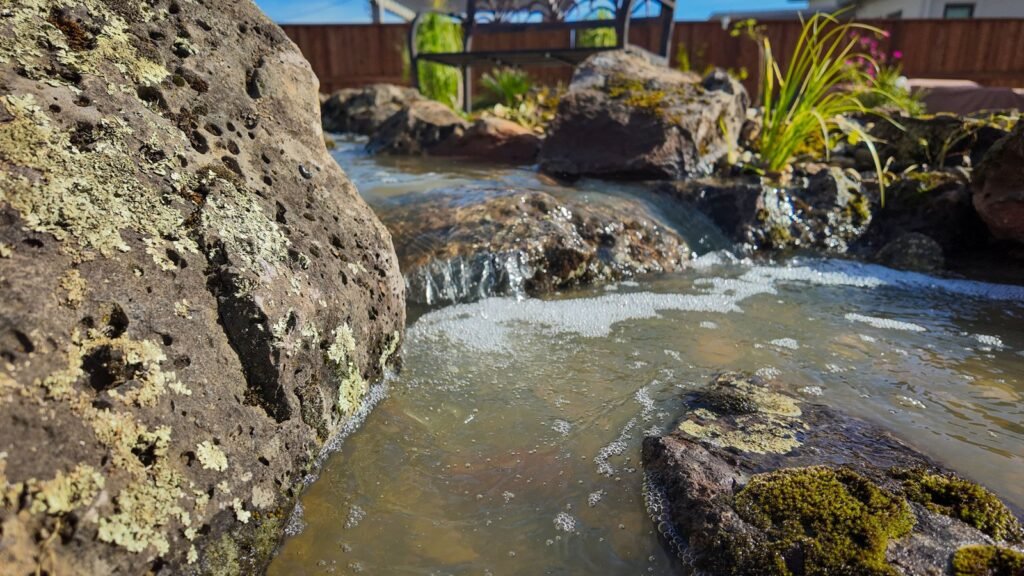
Stone selection matters as much as placement. Rocks should carry enough size and visual weight for the property, particularly on larger homes and expansive backyards. Small, uniformly placed stones often reveal the construction rather than suggesting a natural watercourse. Larger boulders, varied gravel, carefully layered edges, and plant pockets help establish scale and depth.
Start With the Way You Want to Live Outside
The best pond design begins with life around the pond, not a catalog image. Some families want a place to gather at the end of the day, with the sound of water carrying across an outdoor dining area. Others picture children watching fish from a shallow edge, a private garden seat beside a stream, or a dramatic view that makes a front entry feel welcoming.
Those priorities guide the layout. The main viewing point may be a family room window, a pool deck, a kitchen, or a favorite place to sit outside. A pond that is technically beautiful but hidden from daily life will not deliver the same value as one that becomes part of the household routine.
Privacy is another consideration in Bay Area landscapes, where neighboring homes, elevation changes, and compact lot lines can shape the experience. Planting, boulder placement, and the orientation of a waterfall can direct sightlines while preserving a natural feel. On a larger estate, a pond may anchor a broad outdoor-living plan. On a tighter property, a carefully composed pond and waterfall can create a sense of escape without overwhelming the space.
The Site Sets the Rules
Every property offers opportunities and constraints. Natural slopes can make a waterfall feel especially believable, but they also require thoughtful grading and drainage control. Flat yards may need sculpted elevation so the stream and falls have a convincing source. Existing trees, utility routes, access for equipment, and soil conditions all influence the construction approach.
Sun exposure deserves early attention. Aquatic plants need light, but excessive full sun can encourage algae and raise water temperatures, particularly in a fish pond. Shade can reduce heat and algae pressure, yet heavy leaf drop may increase seasonal maintenance. There is no single perfect exposure. The right balance depends on the pond’s depth, fish load, plant plan, filtration, and the owner’s expectations.
A skilled design-build team studies these conditions before construction begins. That work prevents costly compromises later, such as a waterfall aimed away from the main living area, undersized filtration for the pond volume, or an edge that does not handle runoff properly during winter rains.
Beauty Depends on What Happens Below the Surface
A natural appearance does not mean relying on nature alone to keep water clear. Healthy naturalistic ponds are engineered ecosystems. Their biological filtration, mechanical filtration, circulation, and aquatic planting work together to support water quality and reduce the amount of hands-on upkeep required.
Water must circulate through the system effectively, carrying debris toward skimming and filtration components rather than allowing it to settle in inaccessible corners. Bottom cleanout systems, skimmers, pumps, and properly sized plumbing should be selected for the specific pond, not simply installed as standard equipment. The layout of these components affects both performance and how discreetly they can be integrated into the landscape.
For koi ponds, planning becomes even more specific. Koi produce a meaningful bioload, grow larger than many first-time owners expect, and need adequate depth, oxygen, and filtration. A pond designed for a few ornamental fish is not automatically ready for a thriving koi collection. The goal is to give fish room to flourish while maintaining the clear, inviting water that makes the pond enjoyable to view.
Plants contribute more than color. Marginal plants soften the shoreline and provide habitat, while water lilies and other surface coverage can offer shade. Their role should be balanced, however. Overplanting can restrict open water and make maintenance more difficult; too little planting can leave a pond looking stark. The best planting plan changes through the seasons while preserving the pond’s essential structure.
Natural Materials Need Skilled Construction
The romance of a pond comes from its organic look. Its longevity comes from what cannot be seen: proper excavation, underlayment, liner installation, stable rock setting, protected plumbing, and equipment sized for real conditions.
Boulders are not decorative objects to perch along the edge. They must be placed securely, tied visually into the grade, and positioned so they do not shift or create awkward gaps. Waterfalls need careful shaping beneath the stone so water travels where it is intended rather than disappearing behind a liner or splashing beyond the pond. Edges need to be stable enough for routine access while blending into nearby planting areas.
This is where experience has real value. Construction shortcuts may not reveal themselves immediately, but they can lead to settling, exposed liner, poor circulation, leaking watercourses, or rockwork that feels forced. High-quality materials and thoughtful installation cost more upfront than a decorative kit approach, yet they protect the investment and make the feature more enjoyable over time.
At Aquascape Creations, the work is approached as both landscape artistry and technical construction. Large, complex projects demand that combination, especially when a pond must relate to terraces, existing architecture, drainage, mature landscaping, or a broader outdoor-living transformation.
Maintenance Is Part of the Design, Not an Afterthought
No living water feature is maintenance-free. Leaves fall, plants grow, fish need care, and filters need periodic attention. The goal is not to eliminate maintenance with a promise that no pond can keep. It is to design a system that makes upkeep predictable, manageable, and effective.
A thoughtful pond can be serviced without disturbing the entire landscape. Equipment should be accessible. Seasonal cleaning should be anticipated. Fish health, water clarity, pump performance, and leak concerns should be addressed promptly rather than allowed to become expensive repairs.
Owners who enjoy hands-on pond care may prefer to take an active role in plant trimming, feeding, and simple cleaning. Others want professional service so their weekends remain focused on enjoying the space. Both approaches work when the pond has been designed with long-term operation in mind.
Choosing the Right Scale for Your Property
Bigger is not always better, but undersizing a pond can make it feel disconnected from a substantial home or large landscape. Scale should be judged from the places where the pond will be experienced, not only from the construction area. A feature that looks impressive standing beside it may disappear when viewed from a second-story window or across a broad lawn.
Conversely, a compact courtyard may call for restraint. A smaller pond can still have depth, sound, and a compelling sense of discovery when its rockwork, circulation, and planting are proportioned carefully. In some settings, a pondless waterfall may better suit the property, delivering the sound and movement of water without open water or fish care.
The right choice depends on how you want the landscape to serve your life. A pond can become a gathering place, a garden habitat, a focal point, or a quiet personal sanctuary. When it is shaped around the land and built with respect for the systems beneath it, it has the rare ability to feel both remarkable and completely at home.
A naturalistic pond is ultimately an invitation to spend more time outside: to pause beside moving water, notice the changing seasons, and enjoy a landscape that feels more alive with every passing year.