A fountain can have beautiful stonework, thoughtful planting, and a perfect place in the landscape, yet it will never feel complete if the water movement is weak, noisy, or inconsistent. Fountain pumps are the working heart of the feature. They create the lift, circulation, and sound that turn a static basin into a living part of the garden.
For a small bubbling urn, the right pump may be a simple, compact component. For a custom water garden, formal fountain, or naturalistic waterfall, pump selection becomes a design and performance decision. The goal is not simply to move water. It is to create the right visual energy while protecting the system for years of dependable enjoyment.
Why Fountain Pumps Matter More Than Most Homeowners Expect
A pump determines how water looks, sounds, and behaves. Too little flow and a spillway may barely trickle, leaving the feature underwhelming. Too much flow can make a modest fountain splash outside its basin, waste water, and overwhelm the peaceful sound a homeowner hoped to create.
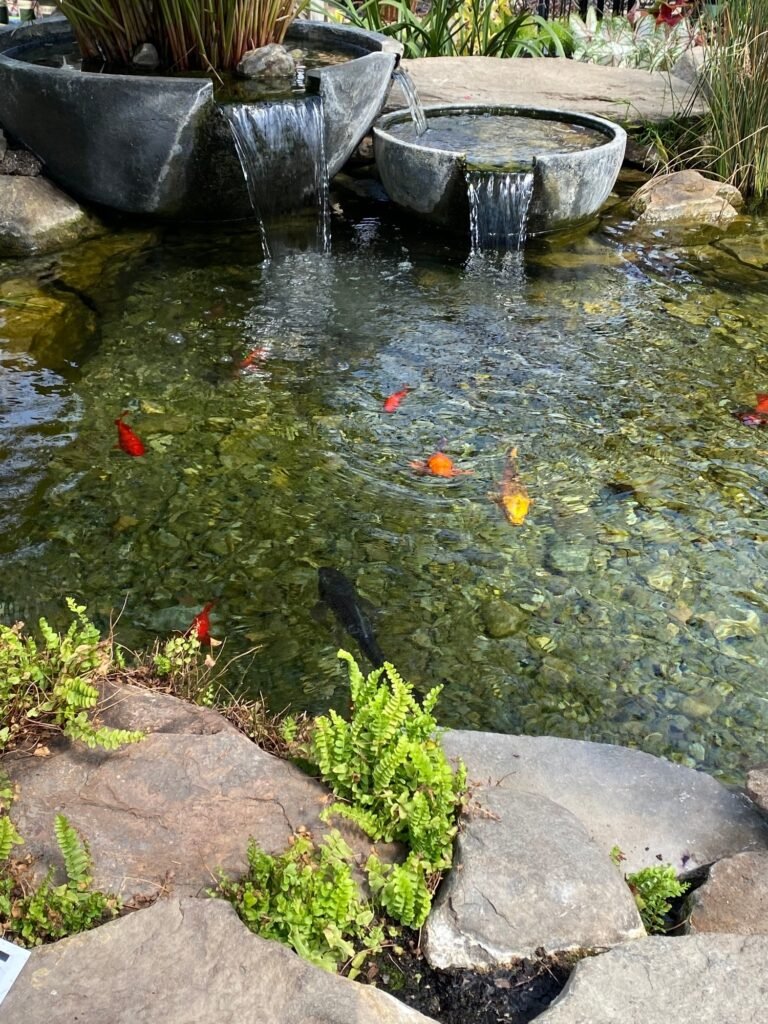
The right flow also supports water quality. Circulation helps prevent stagnant areas where debris can collect, gives filtration equipment the water it needs to do its job, and helps distribute oxygen through a pond or water garden. In fish ponds, that circulation is part of the larger ecosystem, not just a visual effect.
Pump performance affects the daily experience as well. A properly sized, well-installed pump should let the water feature be heard without making the equipment heard. Excess vibration, humming, surging, or an unnatural roar are signs that the system may need attention.
Choosing Fountain Pumps by Flow and Lift
The first question is usually, “How much water do I want to see?” That is important, but it is only one part of proper sizing. Pumps are rated by flow, commonly gallons per hour, but that rating is often measured with little or no vertical lift. Once water must travel up a pipe to a fountain head, waterfall, or spillway, the actual flow decreases.
Understand total dynamic head
Total dynamic head describes the resistance a pump must overcome. Vertical rise is the most obvious factor, but it is not the only one. Pipe diameter, pipe length, fittings, elbows, valves, filters, and fountain nozzles all create resistance.
A pump that delivers 3,000 gallons per hour at ground level will not necessarily deliver that amount at a six-foot lift through a long run of undersized plumbing. This is why pump curves matter. They show how much flow a particular model can deliver at different head heights.
For a custom installation, the best approach is to design the water effect first, then match the plumbing and pump to it. Trying to force a desired waterfall or spray pattern from an undersized pump often leads to disappointment. Oversizing without a way to regulate flow can be just as frustrating.
Match the pump to the water feature
A bubbling feature needs enough flow to create movement without spraying the surrounding patio or planting beds. A formal fountain needs steady pressure so its pattern remains clean and balanced. A waterfall needs enough volume to create the intended sheet of water across the rockwork.
Naturalistic waterfalls are especially dependent on thoughtful pump selection. The width of the falls, the texture of the stone, the number of drops, and the desired sound all influence the needed flow. A broad, energetic cascade requires a different approach than a quiet ribbon of water slipping between boulders.
Variable-speed pumps can be a worthwhile option for certain projects. They allow homeowners to increase flow when entertaining, reduce it for a softer evening atmosphere, or adjust performance seasonally. They cost more initially, but energy savings and control can make sense for a feature that runs many hours a day.
The Difference Between Submersible and External Pumps
Most residential water features use either submersible or external pumps. Neither is automatically better. The right choice depends on the feature’s scale, access, operating schedule, and long-term service needs.
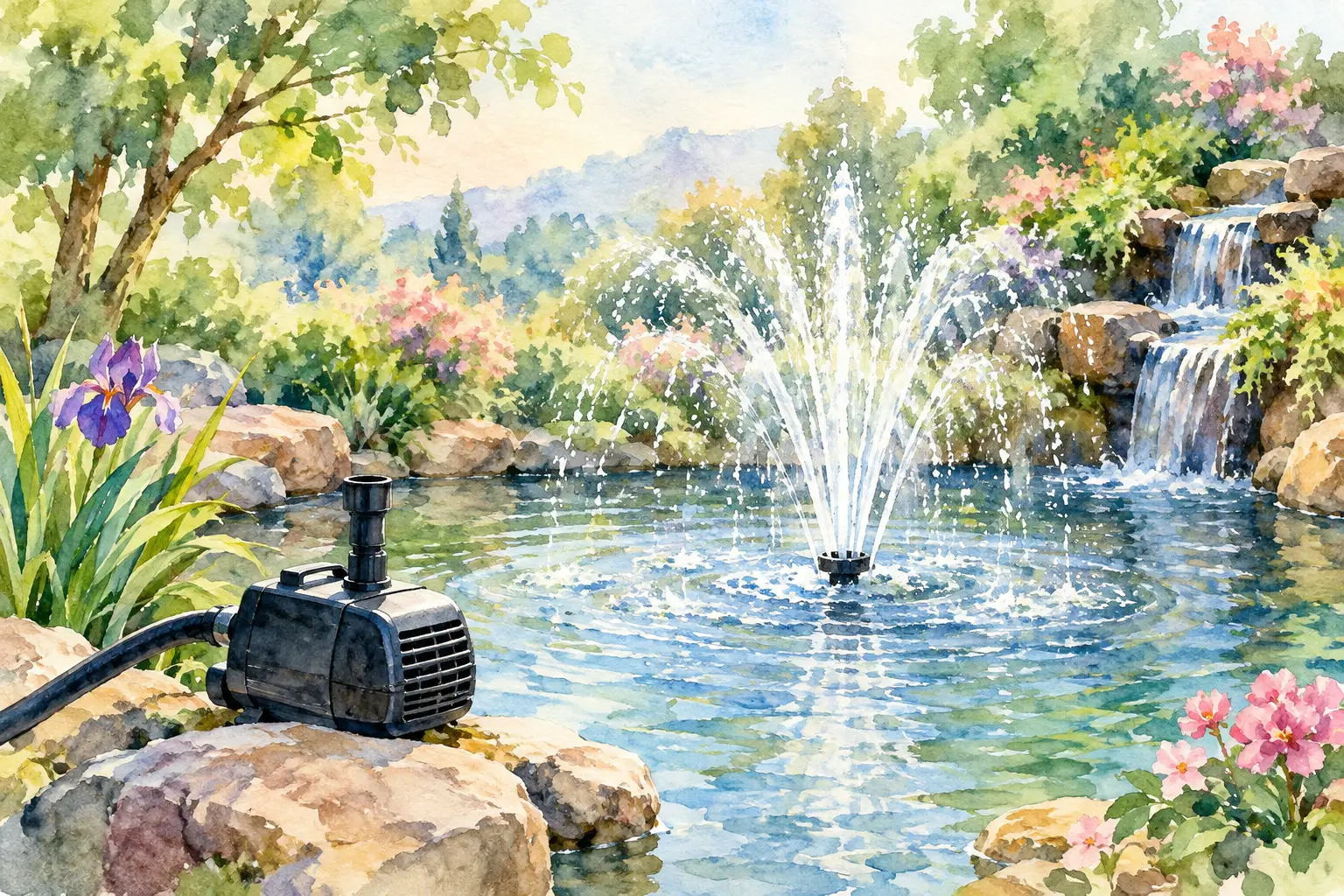
Submersible pumps sit underwater, typically in a skimmer, vault, or pump chamber. They are popular because they are quiet, compact, and straightforward to integrate into smaller fountains, pondless waterfalls, and many garden ponds. Since the water helps muffle motor sound, they are a strong choice where a peaceful setting matters.
External pumps sit outside the water and connect through plumbing. They are often selected for larger ponds, commercial installations, swim ponds, and complex systems where higher flow and easy service access are priorities. A quality external pump can be efficient and long-lasting, but installation must be precise. Air leaks on the intake side, poor priming, or inadequate protection from the elements can compromise performance.
For either type, accessibility matters. A pump is not a set-it-and-forget-it component. It should be reachable for inspection, cleaning, and eventual replacement without dismantling the surrounding landscape.
Installation Details That Protect Performance
A dependable pump system begins with installation practices that are rarely visible once the project is complete. Proper pipe sizing is one of the most valuable details. Plumbing that is too narrow restricts flow, makes the pump work harder, and can increase energy use.
The pump should be protected from large debris with an appropriately designed intake area, skimmer, or vault. That protection reduces clogging while still allowing adequate water to reach the pump. In a pondless waterfall, the reservoir must also hold enough water to keep the pump supplied when the entire stream and falls are operating.
Check valves, unions, and ball valves may seem like small technical details, but they can make service far easier. A union allows equipment to be removed without cutting plumbing. A valve allows flow adjustment. A correctly placed check valve can help maintain prime where needed. Each component should serve a real purpose rather than add unnecessary complexity.
Electrical safety deserves equal care. Outdoor water features should be connected through properly protected, code-compliant electrical service. An experienced water-feature contractor coordinates the technical work so the finished space is as safe and dependable as it is beautiful.
Keeping a Fountain Pump Running Well
Even high-quality fountain pumps need routine attention. The amount of maintenance depends on the feature, local tree cover, windblown debris, water chemistry, and whether fish are present. In the Bay Area, dry summers and seasonal leaf drop can each affect how often a system needs to be checked.
Watch for a change in water level, reduced flow, unusual noise, or a fountain pattern that suddenly looks uneven. Sometimes the cause is simple: leaves have collected around an intake, a filter needs cleaning, or the basin is low on water. Other times, the issue may involve a failing impeller, a plumbing restriction, a leak, or an electrical concern.
Regular maintenance is less expensive and less disruptive than waiting for a complete failure. A service visit can include cleaning pump intakes, inspecting connections, checking flow, removing debris, and looking for early signs of wear. For ponds and waterfalls, the pump should be evaluated as part of the full circulation system, including filtration and water loss.
When repair makes sense and when replacement is wiser
A clogged intake, worn impeller, or damaged fitting may be repairable. If a pump repeatedly trips power, loses flow after cleaning, makes persistent grinding sounds, or has reached the end of its expected service life, replacement is often the better decision.
It can also be a good moment to reconsider efficiency. An older pump may still run, but a newer model could provide more useful flow with lower operating costs. The decision depends on the existing plumbing, the water feature’s needs, and whether the homeowner wants to change the look or sound of the water.
A Water Feature Should Feel Effortless
The best fountain pumps disappear into the experience. You notice the shimmer of moving water, the gentle sound near a seating area, and the way a fountain draws the eye through the garden. You do not notice constant adjustments, weak flow, or equipment noise.
At Aquascape Creations, we approach pump selection as part of the whole landscape story: the water’s path, the stonework, the planting, the feature’s scale, and the way your family will use the space. If your fountain has lost its energy or you are planning a new water feature, a professional evaluation can turn a frustrating mechanical problem into the lasting beauty you intended to enjoy.