A disappearing waterfall versus fountain is not simply a choice between two ways to move water. It is a decision about how you want your outdoor space to feel when you step outside: quiet and architectural, lively and dramatic, or like a private piece of nature shaped by stone, water, and planting. Both can bring life to a courtyard or backyard, but they perform very differently once the project is built.
For many Bay Area properties, the best answer comes down to the site, the desired sound level, how the feature will be used, and how naturally it should blend into the landscape. A well-designed water feature should not look like it was dropped into the yard. It should feel as though it belongs there.
Disappearing Waterfall Versus Fountain: The Core Difference
A disappearing waterfall, also called a pondless waterfall, recirculates water from a hidden underground reservoir. Water spills over natural stone, travels through a stream or series of cascades, and seemingly vanishes into gravel at the base. Beneath that gravel is a properly engineered basin that captures the water and sends it back to the top through a pump and plumbing system.
A fountain usually creates a more defined display of moving water. It may send water upward in a jet, allow it to spill from a vessel, or circulate it through a formal basin. Its visual focus is typically the water pattern itself: the arc, spray, sheet, or bubbling movement. A fountain can be elegant, playful, contemporary, or traditional, depending on its materials and design.
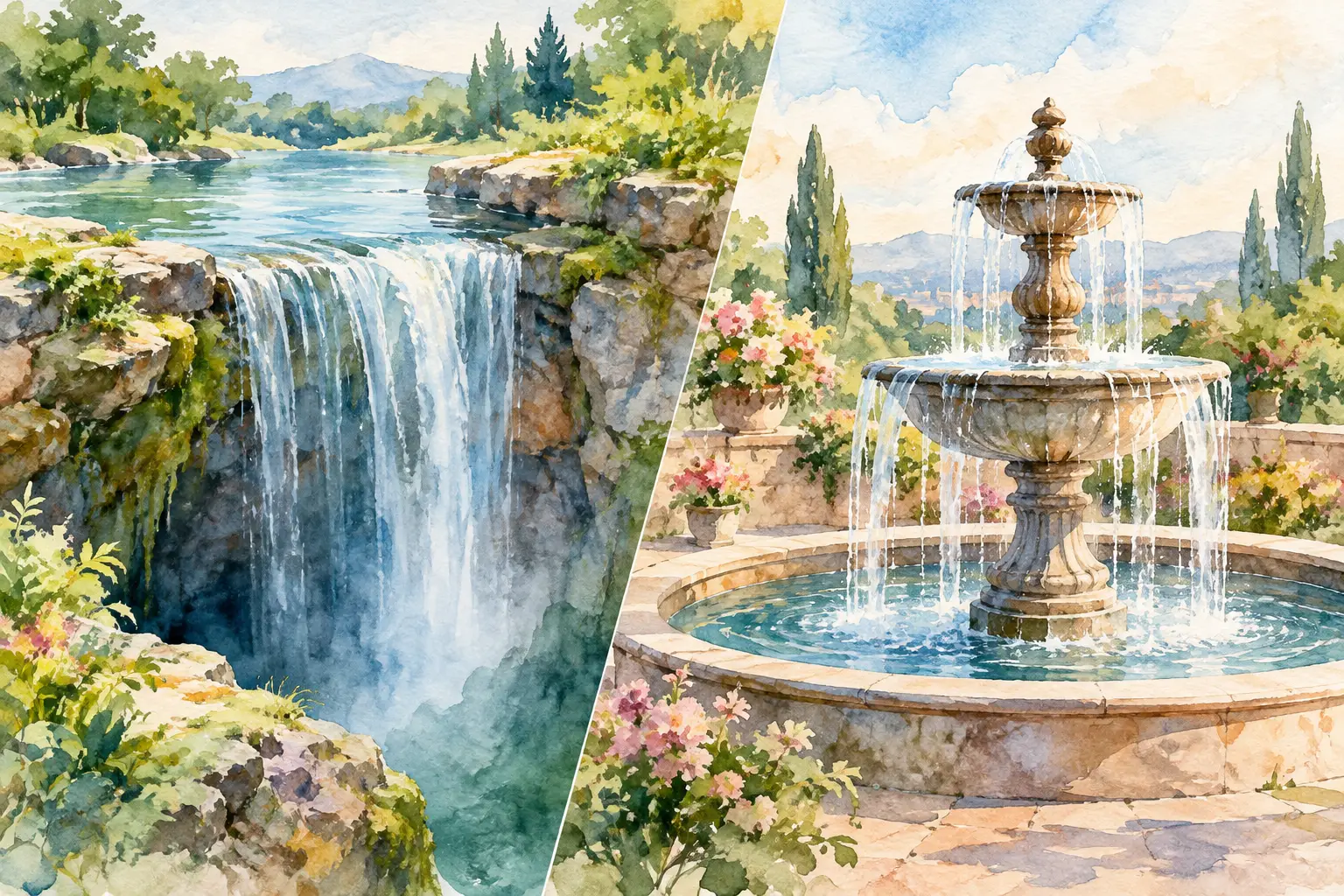
The distinction matters because a disappearing waterfall is often experienced as part of the landscape. A fountain is more often experienced as a focal object within the landscape. Neither approach is automatically better. The right choice depends on what you want the water to do for the space.
Choose a Disappearing Waterfall for a Natural Escape
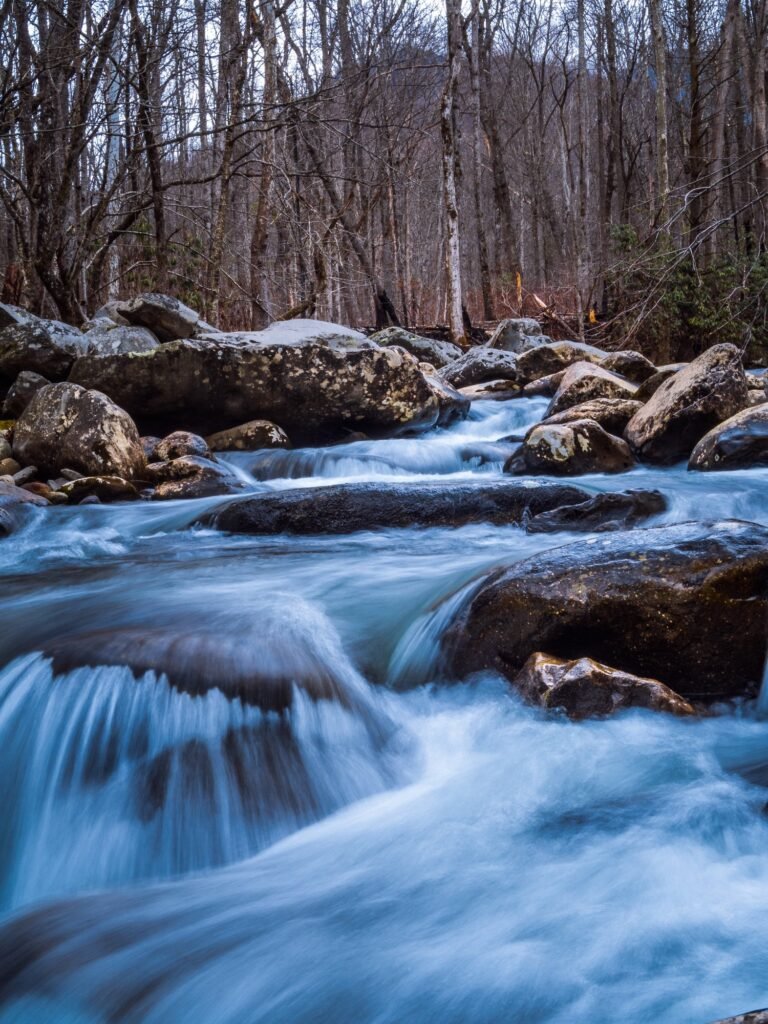
A disappearing waterfall is a strong fit for homeowners who want the sound and movement of water without maintaining an open pond. It can soften a property line, turn an unused slope into a destination, or create a natural transition between a patio and garden. With the right rock selection and planting, the feature can resemble a mountain stream that has always been part of the property.
Sound is one of its greatest strengths. Water falling over several stone drops creates a layered, soothing sound that can help mask traffic, neighborhood activity, or mechanical noise. The volume can be designed intentionally. A broader, gentler cascade produces a quieter effect, while a taller drop or more concentrated flow creates a stronger rush of water.
Safety is another reason families often choose this style. Because the water collection area is underground, there is no exposed pond depth to manage. That can make a pondless waterfall particularly appealing near patios, walkways, and family gathering areas. It also gives homeowners a water feature that can be enjoyed with less daily responsibility than a stocked koi pond or water garden.
A disappearing waterfall is not maintenance-free, but its care is straightforward when it is built correctly. Seasonal debris removal, periodic pump inspection, water treatment when needed, and attention to surrounding plants will keep it looking and operating as intended. Quality components and accessible service points are especially important. Beautiful stonework should never prevent practical maintenance later.
Where a Pondless Waterfall Works Best
This style shines on properties with grade changes, planted borders, larger backyards, or areas that need more texture and movement. A naturalistic waterfall can also make a compact space feel deeper by drawing the eye through a short stream and toward a planted destination.
It is less ideal when the homeowner wants a crisp, geometric centerpiece or has limited room for a stream, reservoir, and surrounding stone. In those situations, a fountain may make a clearer visual statement with a smaller footprint.
Choose a Fountain for a Defined Focal Point
A fountain brings a different kind of energy. Its form is often more deliberate and architectural, making it a natural companion for formal gardens, entry courtyards, clean-lined patios, and commercial spaces. Where a disappearing waterfall may encourage the eye to wander, a fountain gives the eye a place to land.
Fountains can be designed for subtle sound, but many create a lighter, more rhythmic water note than a cascading waterfall. A bubbling urn, for example, may offer soft movement close to a seating area. A more energetic spray fountain can create sparkle and animation, although wind can carry mist beyond the basin and affect how well it performs in an exposed location.
The visible basin is both a design advantage and a practical consideration. It can frame the fountain beautifully, reflecting sky, planting, and surrounding architecture. At the same time, an open basin collects leaves and debris, may require more frequent cleaning, and needs close attention to water level. In sunny locations, algae management can also be part of routine care.
For a front entry, a courtyard, or a compact garden with a strong architectural style, a fountain can be exactly right. The key is choosing proportions that suit the property. A feature that is too small can disappear visually; one that is oversized can overwhelm the landscape and the home.
Compare Sound, Maintenance, and Water Use
The most useful disappearing waterfall versus fountain comparison is not about appearance alone. It should include how the feature behaves year after year.
A waterfall generally creates more sound because water moves across several surfaces. This is valuable when privacy and sound masking are priorities. A fountain provides a more contained sound and can be better near a conversation area where a louder cascade might compete with voices.
Maintenance depends heavily on design quality, surrounding trees, water exposure, and the feature’s components. A fountain basin often needs more visible cleaning because debris lands directly in the water. A pondless waterfall hides its reservoir, but the pump vault, intake area, and gravel basin still need professional access and occasional cleaning. Poor construction can make either type frustrating to maintain. Proper circulation, correctly sized plumbing, reliable pumps, and thoughtful filtration reduce those issues substantially.
Both features recirculate water, so they do not need a continuous fresh-water supply to operate. Still, evaporation is real, particularly during warm, dry weather. A fountain with spray can lose more water to wind than a low, contained waterfall. Automated fill systems can be useful, but they should be designed carefully to avoid concealing a leak or creating unnecessary water use.
Design Should Follow the Property, Not a Catalog Photo
A dramatic waterfall may look beautiful in a mountain setting but feel out of place against a minimal courtyard. Likewise, a formal fountain can look disconnected in a garden built around boulders, native plantings, and natural grade changes. The best projects begin by reading the site: existing views, slopes, sunlight, drainage, access, architecture, and how the family actually uses the yard.
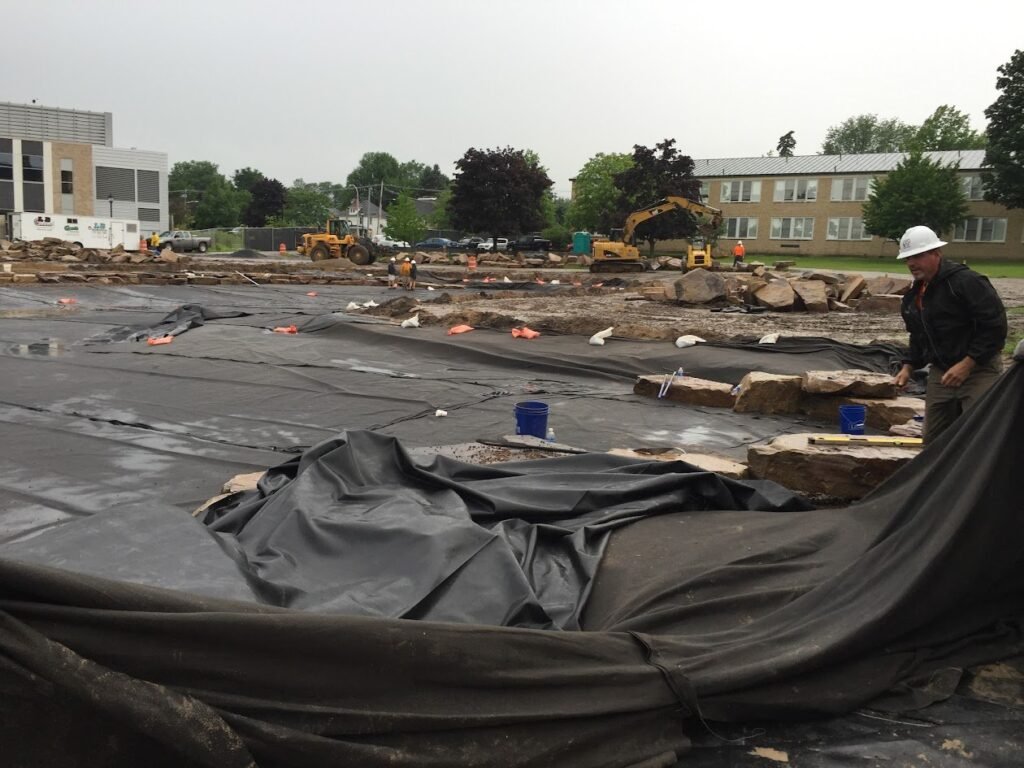
Natural stone color and scale deserve special attention. Small stones stacked into an oversized waterfall can look artificial, while large boulders placed without technical support can create settlement problems over time. The goal is not simply to place rock around water. It is to build a stable water environment in which every layer, from excavation and liner to pump capacity and finishing details, supports the final experience.
At Aquascape Creations, that design-and-build mindset guides every project. A water feature should be a living masterpiece, but it must also be serviceable, durable, and built with the technical care that lets it remain beautiful long after installation day.
When Each Option Makes the Most Sense
A disappearing waterfall is usually the better choice when you want a natural sanctuary, stronger waterfall sound, a family-friendly layout without open pond water, or a feature that blends into a planted landscape. It is also an excellent answer for awkward slopes and underused corners that need a reason to be enjoyed.
A fountain is often the better choice when the landscape calls for a clear centerpiece, a formal or contemporary look, a compact installation area, or controlled water movement close to an entry or patio. It can bring remarkable presence without requiring the larger stone composition of a stream and waterfall.
There is also room for a hybrid approach. A bubbling stone, decorative vessel, or architectural spillway can use a hidden reservoir while delivering the compact focus of a fountain. This can be a thoughtful option for homeowners who like the low-profile function of a pondless system but prefer a cleaner, more sculptural appearance.
The most rewarding water feature is the one that still feels right on an ordinary Tuesday evening, not just the day it is completed. Stand where you expect to sit, listen for nearby noise, picture the view from inside the home, and let the character of the property guide the water’s path.