A silent fountain at the entrance of a hotel, office campus, community, or retail property changes the feeling of the entire space. Commercial fountain restoration is not simply about getting water moving again. It is an opportunity to correct hidden failures, renew the feature’s visual presence, and create a water environment that is easier to operate for years to come.
A fountain is often one of the first details visitors notice, but its working parts are usually out of sight. Pumps, plumbing, basins, waterproofing, electrical components, filtration, and water-treatment practices must all work together. When one part fails, surface symptoms such as cloudy water, weak flow, leaks, or staining can quickly follow.
When a Fountain Needs More Than Routine Service
Routine cleaning and maintenance can keep a fundamentally sound fountain looking good. Restoration becomes the better path when recurring issues point to aging materials, a construction defect, or a system that no longer matches the property’s needs.
A fountain that repeatedly loses water may have more than ordinary evaporation at play. Failed plumbing connections, a compromised basin, damaged waterproofing, or overspray from poorly aimed jets can each contribute to water loss. Replacing a pump without identifying the true source may offer a brief improvement while leaving the costly issue untouched.
Surface damage can tell a similar story. Cracked stone, failing grout, loose coping, efflorescence, rust stains, and deteriorated finishes are not always cosmetic concerns. They can allow water into places it does not belong, accelerate material failure, and create safety concerns around walking surfaces.
Other common signs include inconsistent flow, excessive noise, algae that returns immediately after cleaning, unpleasant odors, frequent electrical trips, and equipment that must be repaired again and again. These symptoms deserve a complete assessment, especially at a commercial property where closures, appearance, water use, and tenant or guest experience all matter.
Commercial Fountain Restoration Starts With Diagnosis
The quality of a restoration depends on what happens before demolition begins. A thoughtful site evaluation should look beyond the visible finish to identify why the fountain is struggling.
The process often begins by documenting water loss, inspecting the basin and surrounding hardscape, checking equipment performance, and reviewing how the feature has been maintained. A technician may isolate plumbing lines, examine valves and fittings, assess pump sizing, and inspect filtration and skimmer systems. Electrical components should also be evaluated carefully for safe operation and code considerations.
Water behavior matters as much as equipment condition. Wind exposure, splash patterns, drainage around the fountain, direct sun, and nearby planting can all affect how a feature performs. A fountain designed for a sheltered courtyard may need a different approach when it is exposed to Bay Area wind, heat, leaves, and changing seasonal conditions.
This diagnostic stage helps separate restoration needs from optional upgrades. Some properties need targeted repairs and a renewed finish. Others benefit from rebuilding the basin, replacing obsolete equipment, improving access for service, or rethinking the entire circulation system. The right scope depends on the fountain’s condition, its role on the property, and the owner’s long-term plans.
What a Complete Restoration Can Include
Commercial fountains vary widely, from formal entry features to naturalistic water gardens and large landscape focal points. The restoration plan should reflect that character rather than forcing every project into the same solution.
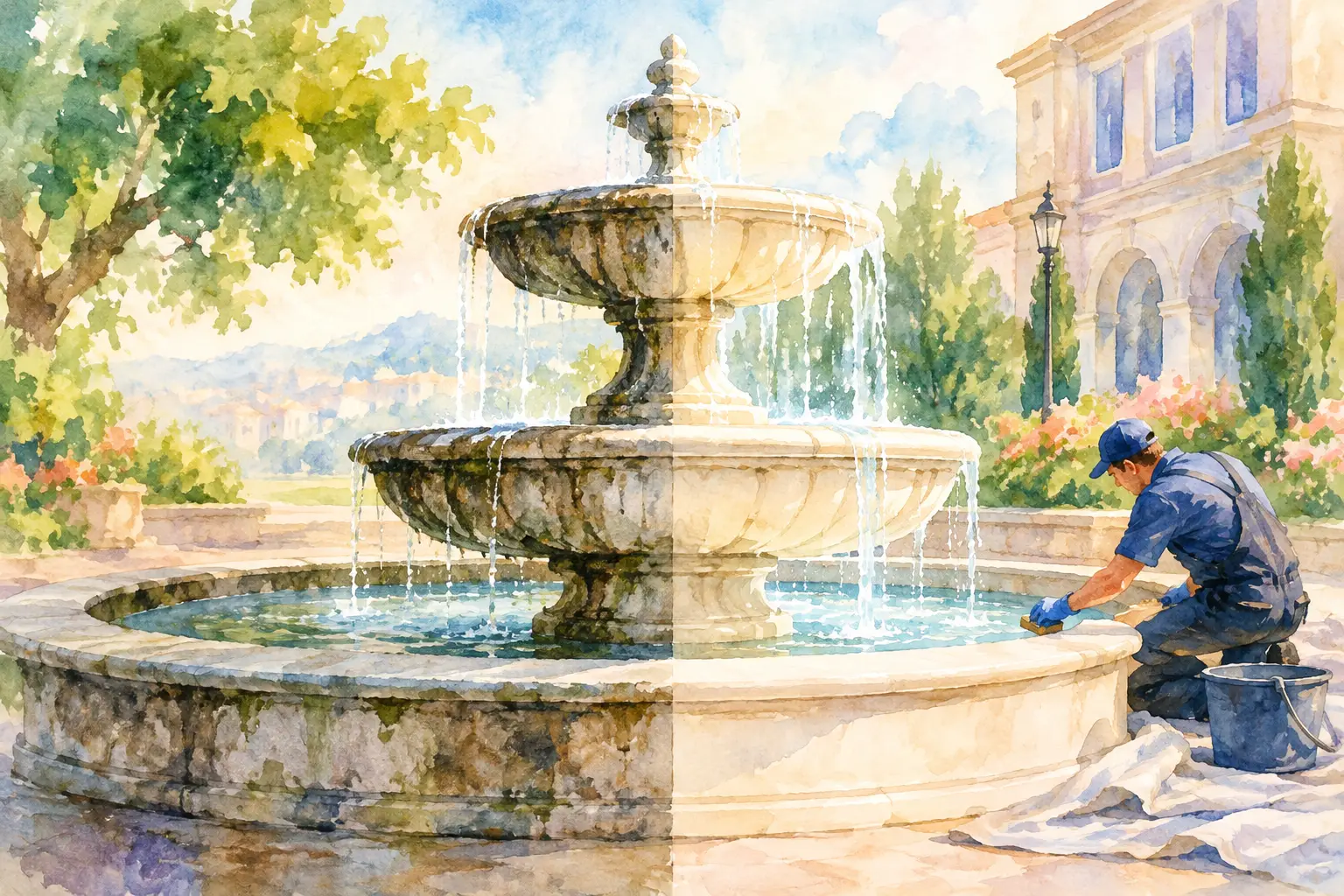
A complete project may involve draining and cleaning the fountain, removing deteriorated materials, repairing structural cracks, rebuilding plumbing, replacing waterproofing, and resetting stone or tile. It can also include new pumps, filtration, skimmers, autofill systems, lighting, controls, and more efficient circulation equipment.
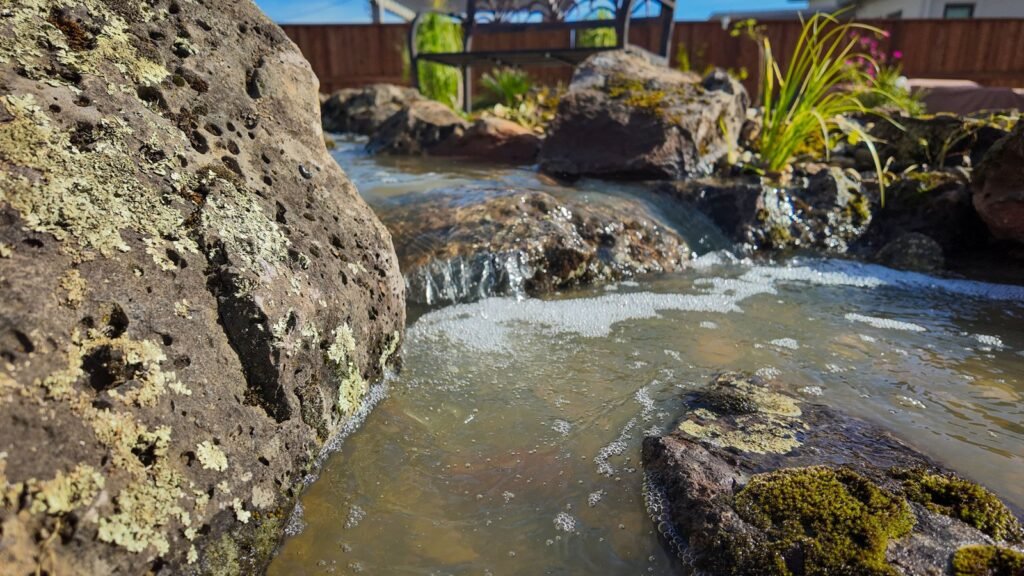
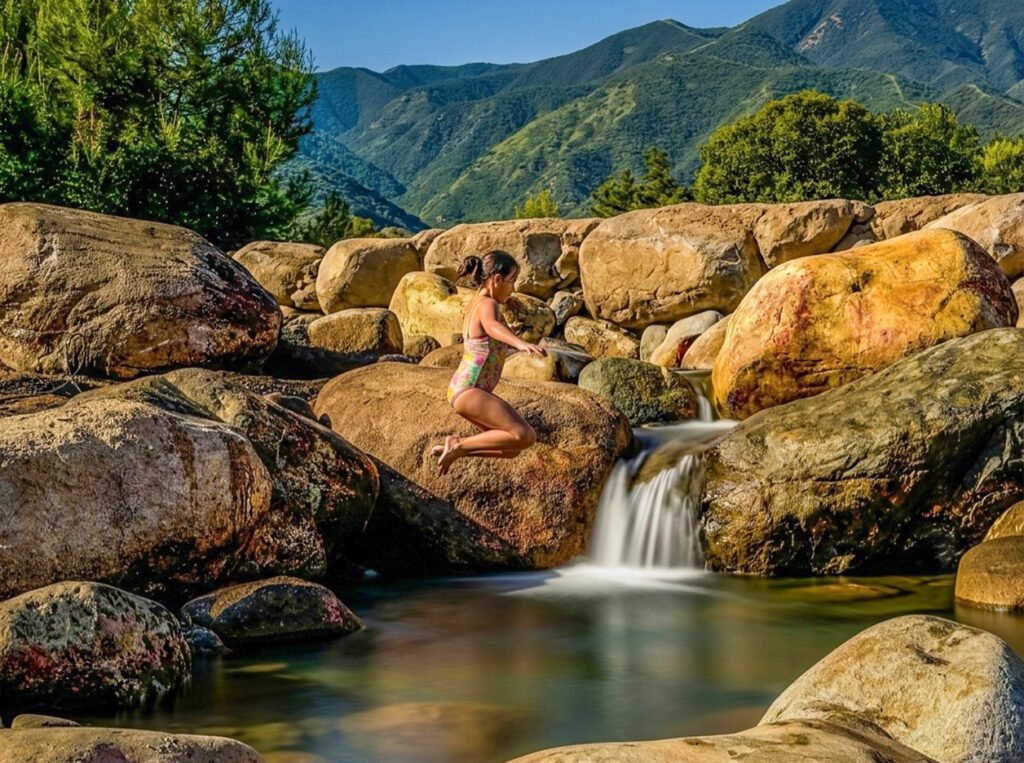
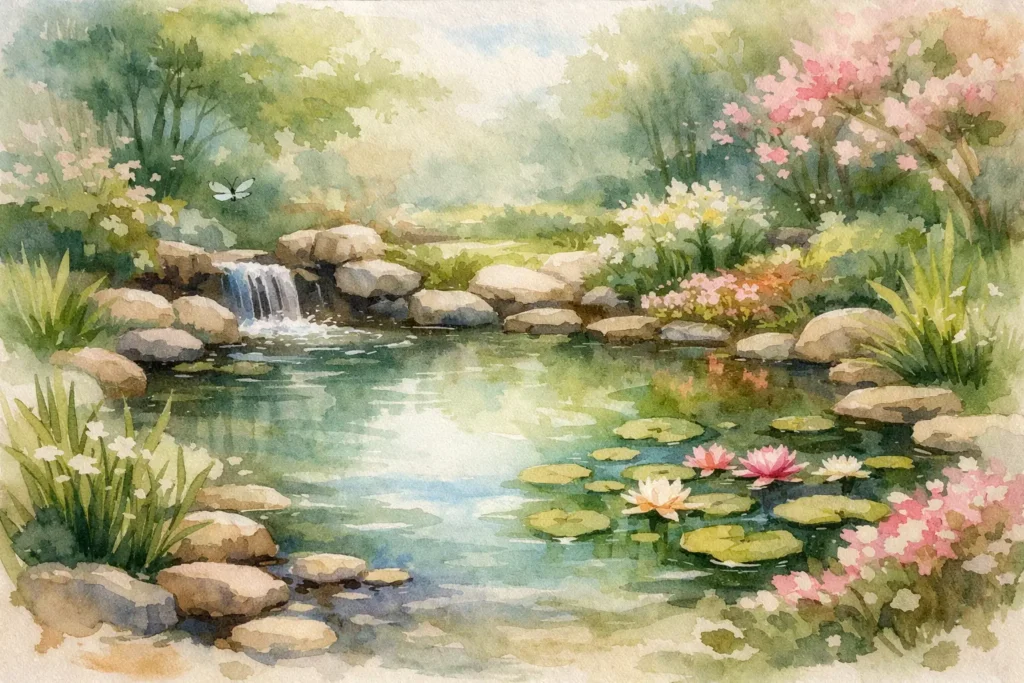
For a naturalistic feature, restoration may focus on reshaping stream transitions, stabilizing boulders, refreshing gravel, improving biological filtration, and restoring the layered planting that makes the water feel connected to the landscape. The goal is not to make nature-inspired artistry look overly manufactured. It is to preserve the sense that water belongs there while giving the feature dependable technical foundations.
Material selection deserves close attention. The least expensive finish or equipment package can become expensive if it fades, corrodes, cracks, or is difficult to service. Commercial properties benefit from durable materials, accessible equipment layouts, properly sized plumbing, and components selected for the actual demands of the site.
Balancing Beauty, Operations, and Budget
A fountain restoration is a property investment, so the budget conversation should be clear from the beginning. Owners may be tempted to address only what is visible, particularly when the feature still operates intermittently. Yet a surface-only repair can be a poor value if failing waterproofing or undersized equipment remains underneath.
At the same time, a full rebuild is not always necessary. If a fountain’s structure, basin, and circulation system are sound, a focused repair paired with cleaning and finish renewal may deliver the right result. An experienced contractor should explain the condition of each system, what can reasonably be preserved, and where repair carries a higher risk of repeat failure.
Consider the ongoing operating picture as well. Newer pumps and properly designed filtration can reduce service headaches. Better access to valves, skimmers, and equipment makes maintenance faster. Improved water management can limit waste from overfilling, leaks, and unnecessary draining. These details are less glamorous than new stonework, but they often determine whether the fountain remains a source of pride or a recurring maintenance concern.
Design Upgrades That Give a Fountain New Life
Restoration does not have to mean recreating the past exactly. It can preserve what people love about a feature while bringing it closer to the property’s current architecture and landscape.
Lighting is one of the most effective upgrades. Carefully placed low-voltage fixtures can reveal moving water, texture, and stone after sunset without creating glare for guests or neighboring residences. Adjusting the sound and height of water can also change the experience. A quiet courtyard may call for a gentle, restorative flow, while a larger arrival space may need a more confident visual presence.
Planting and surrounding landscape details matter, too. A fountain looks more intentional when its edges relate to pathways, seating areas, walls, and plant material. For properties seeking a softer, more natural setting, stone, gravel, aquatic plants, and layered landscape planting can transform an aging water feature into a living masterpiece rather than a standalone object.
Accessibility for future maintenance should be part of every design decision. Concealed equipment is visually appealing, but it should not require removing major hardscape or landscaping every time a pump needs service. The best restoration work respects the view while planning for the people who will care for the fountain afterward.
Choosing a Restoration Partner
Commercial fountain work involves more than attractive finishes. Look for a contractor with hands-on experience in water-feature construction, troubleshooting, leak investigation, equipment selection, and long-term maintenance. Ask how the team determines the source of a leak, how they approach waterproofing, what equipment they recommend, and how they will protect surrounding landscape and hardscape during construction.
Clear communication is equally valuable. Property managers and owners need to understand the proposed scope, expected disruptions, equipment access requirements, and maintenance needs after completion. A restoration partner should be willing to explain the reasoning behind the work, not simply present a list of replacements.
At Aquascape Creations, restoration is approached as both a technical repair and a chance to renew the feeling a water feature brings to a property. Years spent working alongside leading professionals in the industry have reinforced a simple standard: diagnose carefully, build with quality materials, and leave behind a water feature people are proud to experience.
Protecting the Investment After Restoration
Once a fountain has been restored, consistent care protects the work. Maintenance schedules should account for debris removal, water-level checks, pump and filter inspection, water treatment, seasonal cleaning, and observation of flow patterns. The exact plan depends on the fountain’s design, water volume, plant material, public exposure, and local conditions.
Small changes deserve attention. A new sound from the pump, a sudden change in water clarity, wet areas near the basin, or reduced flow can be an early warning. Addressing these concerns promptly is usually simpler and less disruptive than waiting for visible damage.
A well-restored fountain should feel effortless to the people who enjoy it, even though careful craftsmanship is working below the surface. With the right diagnosis, thoughtful design, and ongoing care, an aging commercial fountain can return to its rightful place as a memorable part of the property.