A beautiful waterfall should feel as though it has always belonged in the landscape. The water should move with purpose, the boulders should appear settled by time, and the sound should invite you to stay outside a little longer. This waterfall building guide explains what creates that effect – and what separates a lasting water feature from one that looks good only on installation day.
For Bay Area properties especially, a waterfall has to do more than look natural. It must work with changing grades, compact yards, drainage concerns, sun exposure, and the realities of long dry seasons followed by heavy rain. Thoughtful design at the beginning protects the enjoyment you will have for years afterward.
Start With the Experience You Want
Before selecting a pump or moving a single boulder, decide what you want the water feature to do for your home. A compact pondless waterfall can bring movement and sound to a courtyard, entry garden, or narrow side yard without adding an open pond. A stream and waterfall flowing into a koi pond or water garden can become the heart of a family backyard. On larger properties, a waterfall may be part of a recreation pond, swim pond, or complete outdoor living environment.
The desired experience shapes every construction decision. Do you want a quiet, gentle trickle near a seating area, or enough sound to soften nearby traffic? Should the waterfall be visible from the kitchen, patio, primary bedroom, or all three? Will children and pets spend time around it? These are not decorative afterthoughts. They determine the feature’s scale, water volume, access, and safety planning.
A naturalistic waterfall also needs a believable setting. The best location is not always the empty corner of the yard. It is often the place where a rise in grade, existing planting, retaining element, or view from inside the home gives the feature a reason to be there.
Waterfall Building Guide: Design From Grade Down
Waterfalls rely on elevation. Even a modest feature needs enough vertical change to create visible movement and a satisfying sound. Where a property is flat, the necessary rise can be built with soil, structural fill, and carefully placed boulders. The goal is to create a landform, not a pile of rocks.
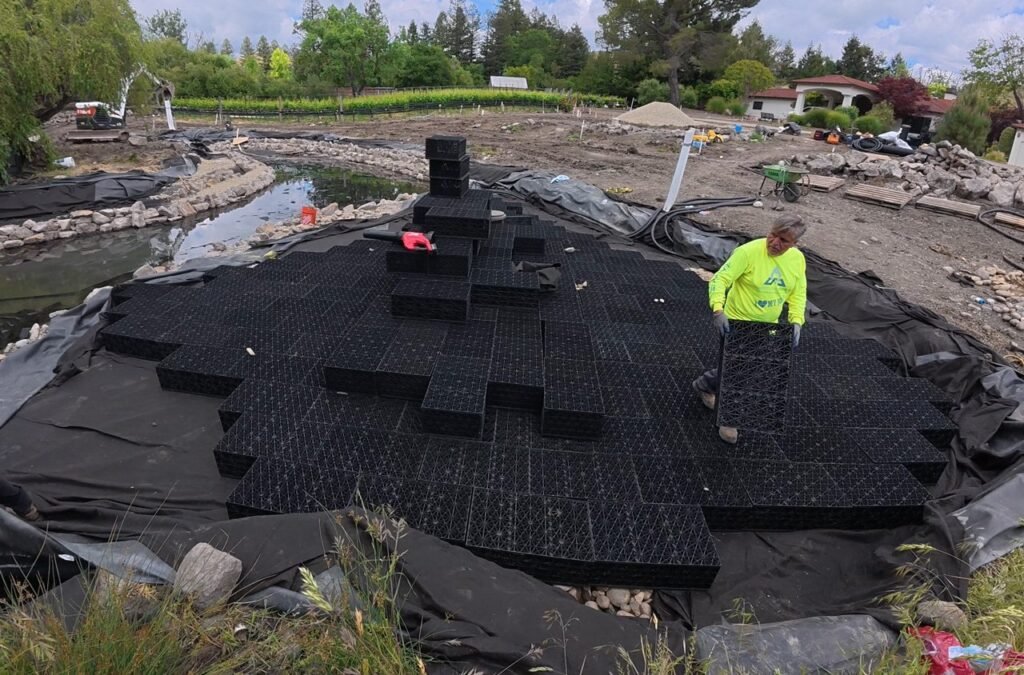
The base of that landform must be stable. Loose soil settles, and settling changes the pitch of the stream, shifts stones, and can create unwanted leaks around the liner. A professional builder evaluates soil conditions, compacts the foundation in stages, and accounts for the weight of every large stone before construction moves upward.
Drainage deserves equal attention. Water from the surrounding property should be directed around the feature, not allowed to rush beneath it during a storm. On sloped sites, proper drainage planning prevents runoff from carrying soil into the stream and undermining the edges. This is one reason a waterfall that appears simple can require substantial behind-the-scenes work.
Plan the Water’s Route Before Setting Stone
A convincing stream does not run like a straight channel. It widens, narrows, turns, pauses in shallow pools, and changes speed. Those variations make the feature visually interesting while giving water a more natural rhythm.
Every section needs to be pitched toward the next pool or drop. Small imperfections in the underlayment, liner, and stone arrangement can send water outside the intended course. Builders create protective liner folds and edge treatments that guide splash back into the stream. The water should remain where it belongs even when the pump is running at full output.
The stream should also be scaled to its surroundings. A wide, forceful cascade can overwhelm a small garden, while a thin ribbon of water may disappear against a large estate landscape. There is no universal formula. The right proportions depend on viewing distance, available elevation, boulder size, and the sound level you want to achieve.
Build the System That Makes the Beauty Possible
A waterfall is a living landscape feature, but its long-term performance rests on practical equipment. The pump, plumbing, filtration, basin, liner, and access points should be selected as one system rather than as disconnected parts.
For a pondless waterfall, water disappears into a concealed underground reservoir, then recirculates to the top of the stream. This option is popular for homeowners who want the sound and movement of water with less open water at ground level. The reservoir must be sized to hold the water that drains from the stream when the pump stops. If it is undersized, the system can run low and cause the pump to pull in air.
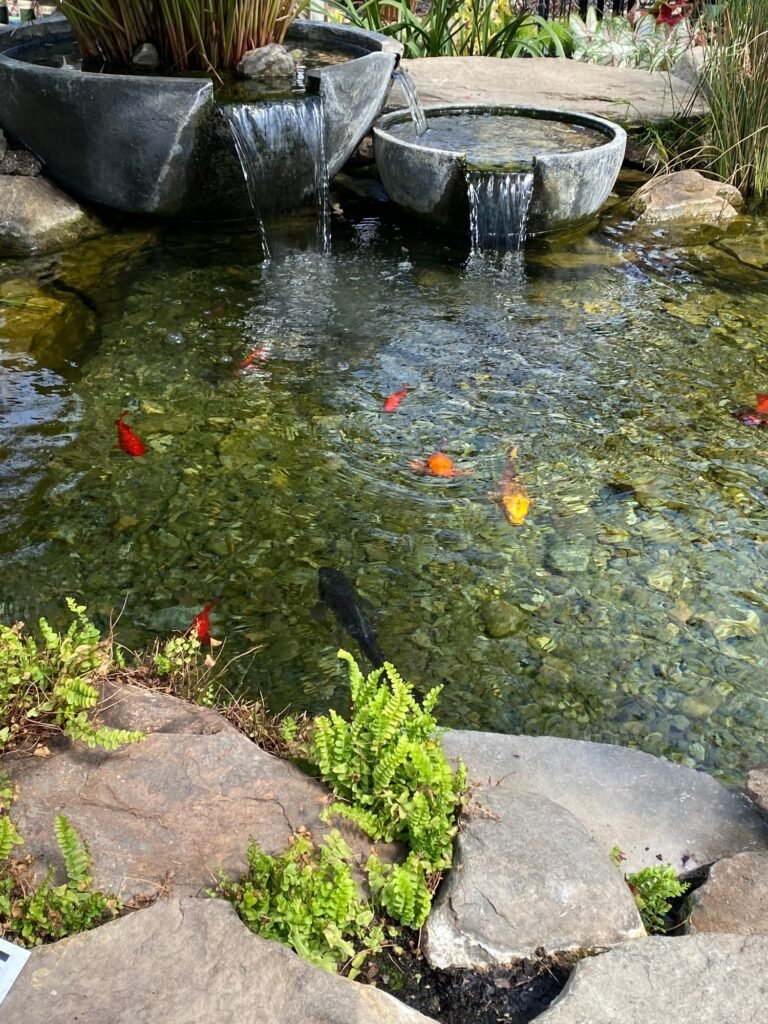
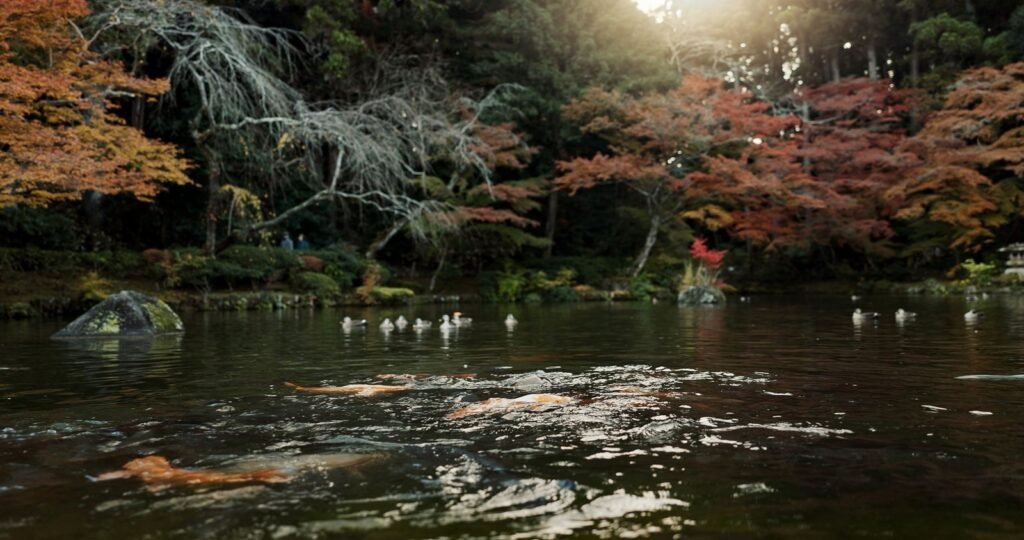
For a pond or water garden, the waterfall may add oxygenation and circulation while creating a dramatic focal point. Fish load, plantings, sun exposure, and pond volume affect the filtration approach. A feature that supports koi requires a different level of planning than a simple decorative pond, particularly when water clarity and fish health are priorities.
Pump selection is about more than horsepower. A pump must deliver the proper flow after accounting for vertical lift, plumbing length, fittings, and the resistance created by the overall system. Too little flow leaves a waterfall flat and quiet. Too much can cause excessive splash, waste energy, and make the feature look forced.
Equipment should remain serviceable. Pumps, filters, valves, and intake areas need practical access for seasonal care and future repairs. Hiding equipment is part of good design. Making it impossible to reach is not.
Stonework Is Where Craftsmanship Shows
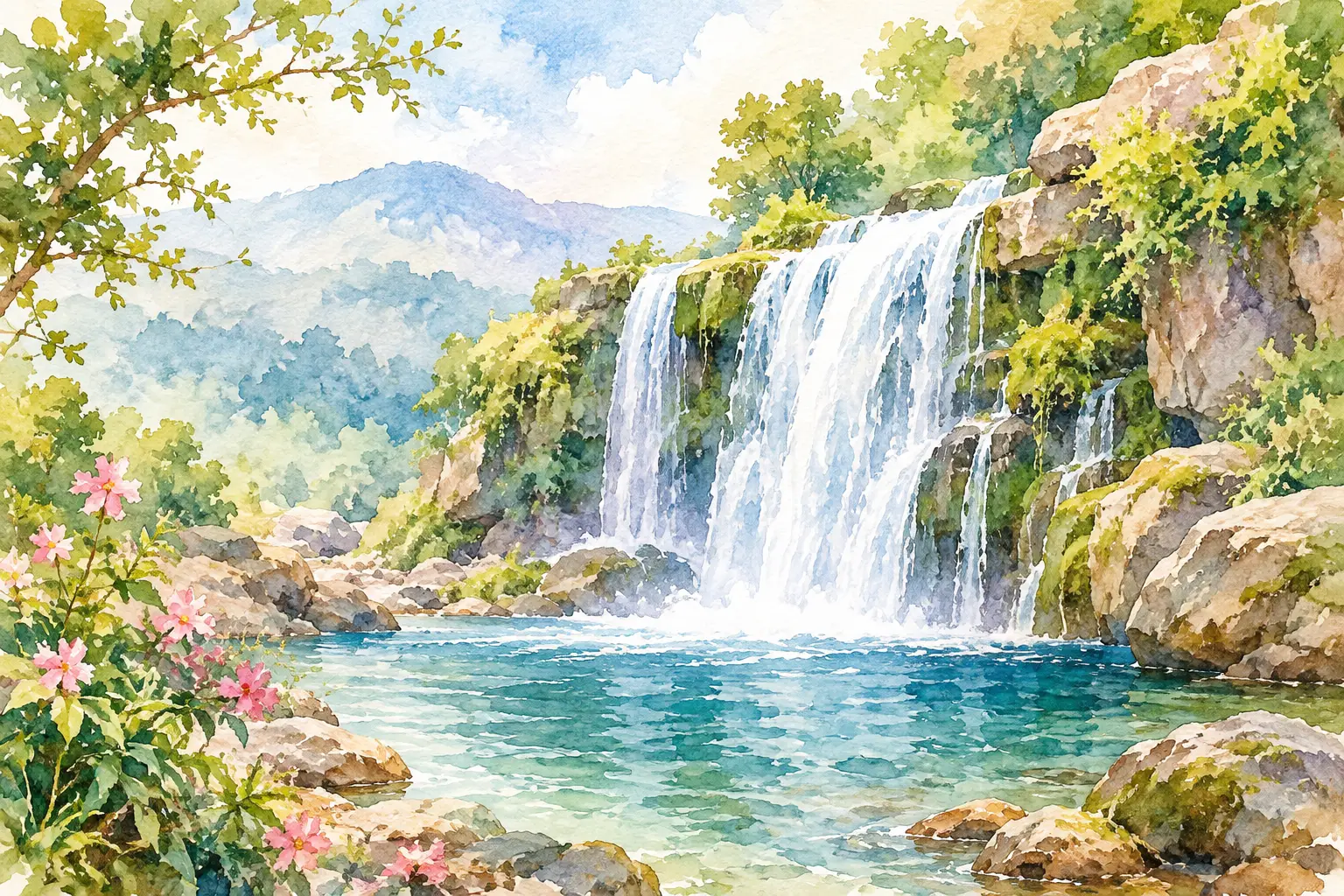
The strongest naturalistic waterfalls are built from stone that relates to the site and to itself. Boulders should have variation in size, texture, and color, but they should not look randomly scattered. Large anchor stones establish scale. Smaller rocks help transition the feature into planting areas and soften the visible liner edges.
Each major cascade stone must be stable enough to handle water pressure, seasonal movement, and the occasional curious child stepping too close. It should be supported from beneath, not balanced on a few smaller rocks. Proper placement is physical, precise work, often requiring machinery, rigging, and experienced hands.
Water behaves differently over every stone. A flat spillway can create a clean sheet of water, while a more irregular stone produces a broken, energetic fall. Shallow pockets above a drop can spread the flow. A carefully positioned boulder can turn the water slightly to create a richer sound. These details are what make a waterfall feel like nature-inspired artistry rather than a decorative rock arrangement.
Planting completes the transition. Marginal plants, ornamental grasses, ferns, groundcovers, and carefully selected shrubs can soften hard edges and give the waterfall a settled appearance. Plant choices should fit the sun, irrigation needs, and maintenance preferences of the property. A lush look is wonderful, but plants should not crowd access points or block the water’s path.
Avoid the Shortcuts That Create Expensive Repairs
Many waterfall problems can be traced to a few early shortcuts: undersized plumbing, poorly supported boulders, insufficient reservoir capacity, exposed liner, or no plan for stormwater. A leak is not always a torn liner. Water may be wicking over an edge, splashing beyond the basin, or finding a low point behind a stone.
Another common issue is building with appearance alone in mind. A waterfall can look impressive before the pump starts, yet perform poorly once water is moving. Every drop, pool, and edge must be tested during construction. Adjustments are far easier before surrounding grades and plantings are finished.
Maintenance should be considered part of ownership, not a sign that something was built incorrectly. Leaves, debris, mineral buildup, changing plant growth, and normal equipment wear all affect performance over time. Regular inspection helps preserve water flow, protects the pump, and catches small issues before they become major repairs.
When Professional Construction Makes Sense
A homeowner can create a small garden water feature with patience and careful research. But a custom waterfall becomes more complex when it includes large boulders, meaningful elevation changes, a pond ecosystem, difficult access, steep grades, drainage challenges, or integration with a pool and outdoor living space.
In those situations, experienced design-build work brings real value. The team should understand both the artistry and the hidden construction: excavation, compaction, plumbing, liner detailing, electrical coordination, equipment sizing, and long-term service. Aquascape Creations approaches these projects as living masterpieces, built with the same care given to the landscape around them.
The right waterfall does not need to be the biggest feature in the neighborhood. It needs to fit your property, your daily life, and the moments you want to create outside. Begin with the sound you hope to hear from the patio, then build every layer beneath it with the care that sound deserves.