A waterfall should never feel like an accessory dropped into a backyard. The best waterfall design makes you believe the water has always belonged there – slipping between boulders, disappearing around a planted bend, and giving the entire landscape a sense of life. That feeling is not accidental. It comes from careful decisions about elevation, stone placement, water movement, sound, planting, and the way your family will use the space.
For Bay Area properties, those decisions matter even more. A compact courtyard, a sloped hillside, an open entertaining area, and a large estate each call for a different approach. Natural beauty begins with listening closely to the land and to the people who live with it.
Start Waterfall Design With the Experience
Before choosing a pump or selecting a single boulder, consider what you want to feel when you step outside. Some homeowners want the soft, restorative sound of a creek near a patio. Others want a dramatic cascade that becomes the focal point of an outdoor living area. A family may picture children watching fish from the edge of a pond, while another homeowner may prefer a pondless waterfall that brings movement and sound without open water.
This is where custom design separates a meaningful landscape creation from a standard installation. The waterfall must suit the setting, but it must also suit your daily rhythm. A view from the kitchen window, the location of a favorite seating area, privacy from neighboring homes, and how the feature looks from inside after dark all shape the right design.
A successful project also considers scale honestly. A very tall waterfall can overwhelm a small garden, while a narrow trickle may disappear beside a large patio or pool. The goal is proportion: enough water, stone, and planting to create presence without making the feature feel forced.
Let the Property Shape the Waterfall
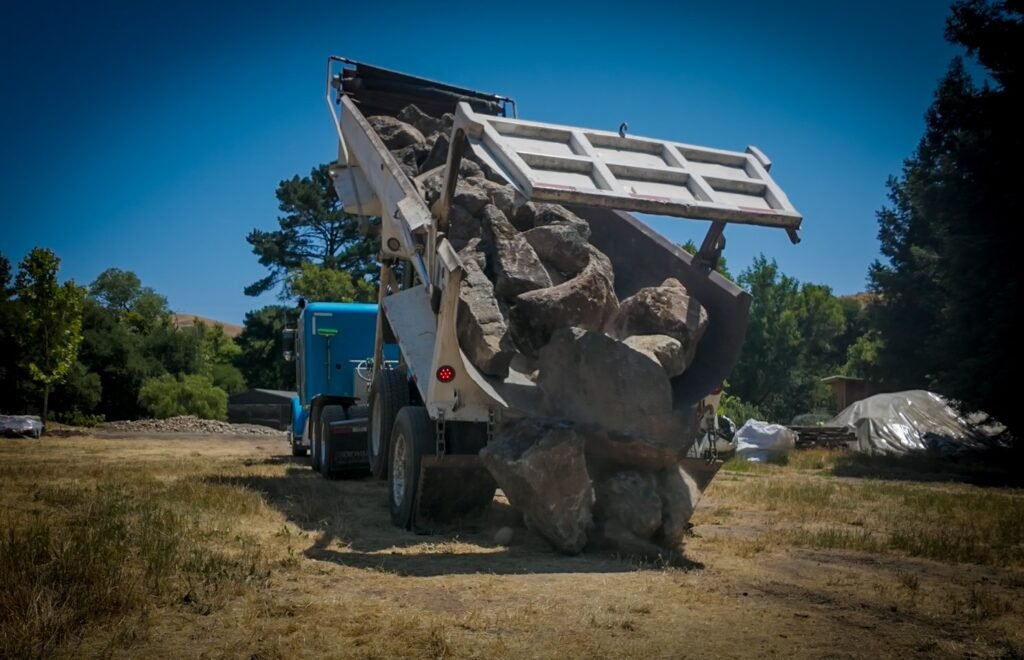
Naturalistic water features work best when they respond to the terrain instead of fighting it. Existing grade can create an opportunity for a stream that wanders downhill, several cascading falls, or a waterfall that appears to emerge from a planted hillside. On flatter properties, the elevation needed for the falls can be created with carefully built berms and substantial stonework.
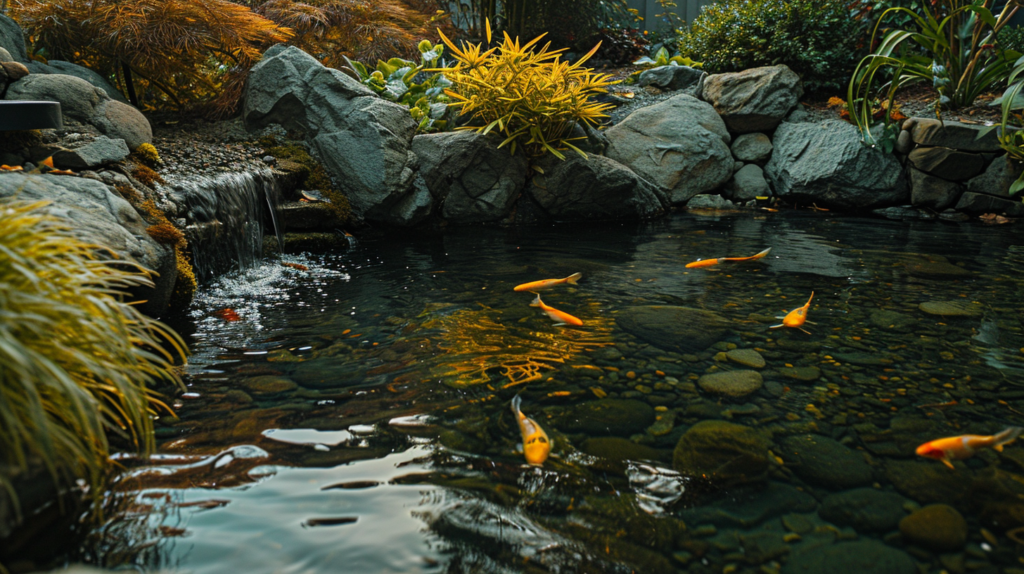
The finished landform needs to look believable from every important viewpoint. That means considering where the waterfall begins, what hides the source of the water, where the stream turns, and how the feature settles into the surrounding landscape. A waterfall should have a destination, whether that is a koi pond, a water garden, a recreation pond, or a hidden underground reservoir.
Stone selection is equally important. Rocks should vary in size and character, as they do in nature. Large anchor boulders establish the feature’s structure, while smaller stones soften transitions and help create the look of a creek bed shaped over time. Randomly scattered rock often looks decorative rather than natural. Purposeful placement creates the difference.
The Water Source Should Stay Out of Sight
One of the most common visual mistakes in waterfall construction is a visible starting point. In nature, water seems to arrive from beyond view. A well-designed feature uses grade, planting, stone, and curves in the stream to conceal the mechanical beginning of the system.
That illusion gives a backyard waterfall depth. Even a compact pondless design can feel like part of a larger natural landscape when the source is tucked into a planted area or behind a carefully placed grouping of boulders.
Design the Sound, Not Just the View
Waterfall sound has a powerful effect on how a space feels. A gentle sheet of water creates a quiet, soothing presence. Water falling over a series of ledges produces a brighter, more energetic sound. A larger drop can help soften traffic noise or nearby neighborhood activity, which can be especially valuable in denser residential areas.
More noise is not always better. If a waterfall is too loud near a dining terrace, it can make conversation difficult. If it is too soft beside a busy street, it may not deliver the privacy and calm a homeowner hoped for. The size of the falls, the shape of each spillway, the pump flow, and the distance from seating areas all influence the final sound.
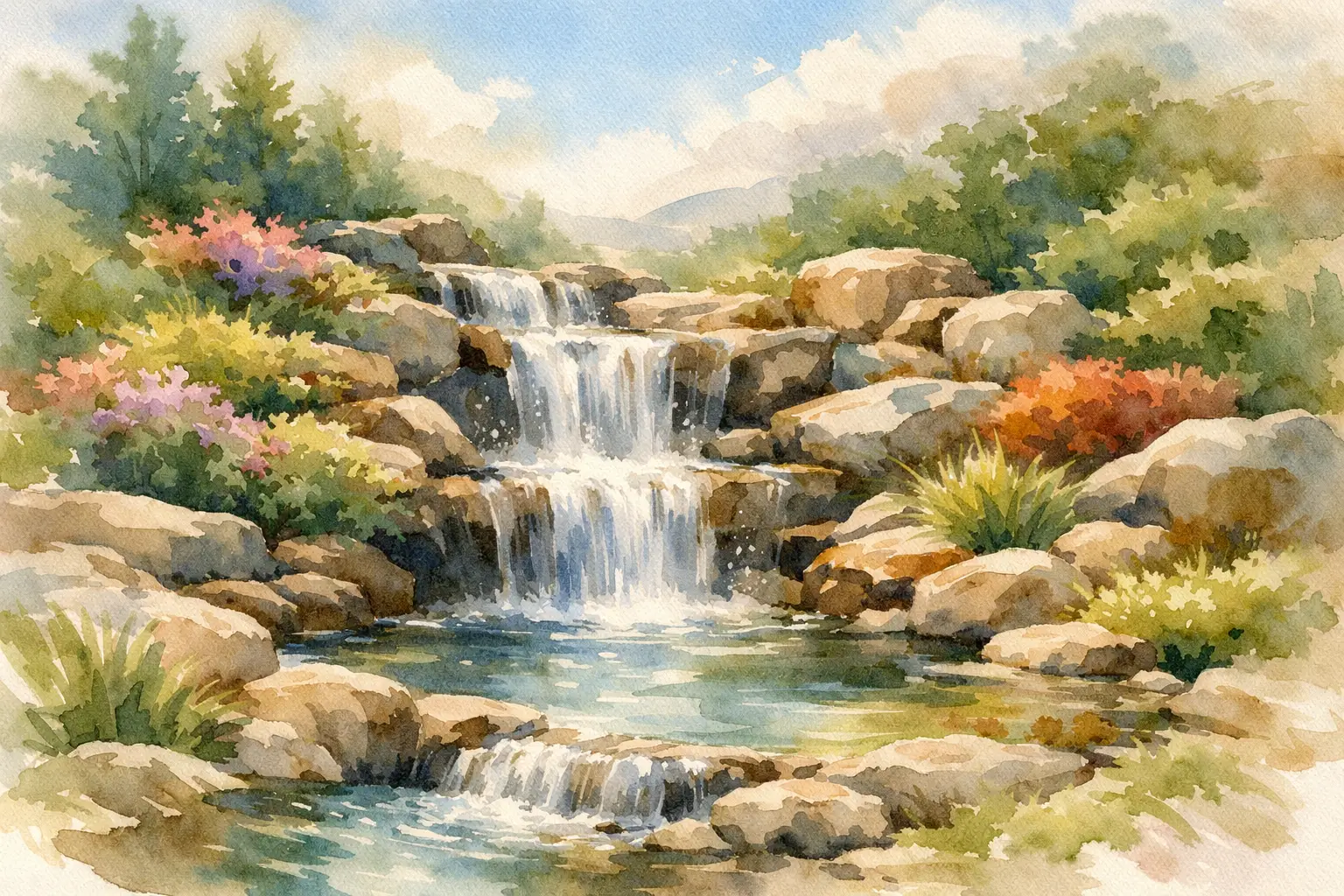
A thoughtful design often includes changes in water movement. Perhaps a broad cascade creates the main sound, then water slows through a quiet pool before moving over smaller ledges. These shifts make the feature more interesting to watch and listen to, rather than creating one flat, repetitive effect.
Build for How Water Actually Moves
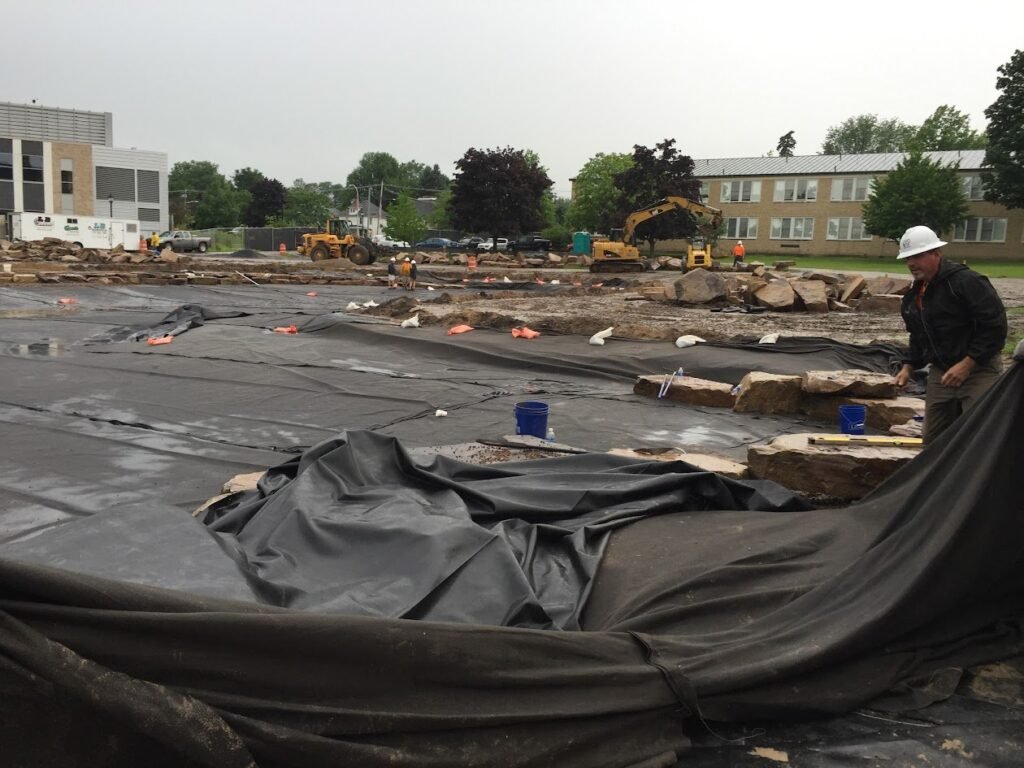
The artistry of a waterfall depends on technical work that remains hidden. Proper excavation, underlayment, liner installation, plumbing, filtration, pump selection, and stone support are what allow the feature to perform reliably year after year.
Every waterfall has a water budget. The pump must provide enough flow for the width and style of the falls while accounting for elevation, pipe length, fittings, and the resistance created by the system. An undersized pump can leave a beautiful stone structure looking lifeless. An oversized system may create splashing, waste energy, or push water outside the intended channel.
Containment is just as critical. Water follows the path of least resistance, so each transition must be shaped to keep flow inside the feature. Spillways need stable support. Stream edges need to guide water inward. The basin or pond must be sized to handle the volume circulating through the system. These details are particularly important in a naturalistic installation, where the goal is for the construction to disappear behind an effortless-looking result.
Quality materials and accessible equipment also make long-term care easier. Pumps, skimmers, filters, and valves should be installed with future maintenance in mind. A feature that cannot be serviced efficiently can become frustrating, even if it looks beautiful on day one.
Choose the Right Type of Waterfall
The right waterfall is tied to the level of interaction you want with water. A pond waterfall creates a complete living environment, with opportunities for koi, aquatic plants, and a deeper connection to the ecosystem. It can become the heart of a garden, but it also requires appropriate filtration and ongoing care.
A pondless waterfall offers another kind of freedom. Water disappears into a concealed reservoir, making it an excellent option for households that want the sound and movement of water without fish care or exposed water. It can work beautifully beside patios, entry gardens, narrow side yards, and spaces where a full pond is not the best fit.
For larger properties, a stream and waterfall can lead to a recreation pond or natural swim pond, creating a landscape destination rather than a single focal point. These projects demand careful site planning, experienced hydraulic construction, and an understanding of how people will move around and enjoy the water.
There is no universally better choice. The best option depends on space, goals, maintenance preferences, safety considerations, and the character of the property.
Planting Makes the Stonework Feel Alive
A waterfall without planting can look unfinished, no matter how well the stone is arranged. Plants soften edges, frame views, help the feature settle into its surroundings, and bring seasonal color and texture to the landscape.
The strongest plant palette is usually layered. Low plants and moss-like textures can soften rock crevices. Grasses and perennials add movement along stream edges. Shrubs or specimen plants can screen the source area and create a sense of enclosure. Around ponds, marginal aquatic plants help blur the line between water and garden.
Planting should not completely hide the stone or obstruct access to equipment. It needs room to mature and should match the sunlight, irrigation, and maintenance needs of the site. This is another reason a waterfall is best designed as part of the landscape rather than treated as an isolated feature.
Plan for Long-Term Enjoyment
A natural water feature is a living system. Leaves, debris, seasonal plant growth, water chemistry, and equipment wear all deserve attention over time. Building with maintenance in mind protects both the investment and the enjoyment of the space.
Homeowners should ask early how the system will be cleaned, where debris will collect, how equipment can be reached, and what seasonal service may be recommended. If a pond includes fish, filtration capacity and ecological balance become central to the design. If the waterfall is pondless, the reservoir and intake areas still need periodic inspection and cleaning.
At Aquascape Creations, we believe the most rewarding projects pair nature-inspired artistry with the construction knowledge needed to keep water moving beautifully. A well-built waterfall should invite you outside often, not create a list of worries waiting at the edge of the yard.
The right waterfall design gives a property its own rhythm: water over stone in the morning, a place to gather at sunset, and a landscape that feels more personal with every season. Begin with the experience you want to create, then let skilled design give that vision a place to flow.