A pond that looks as though it has always belonged beside the home, beneath the trees, or beyond the patio is rarely simple beneath the surface. Large and complex ponds ask more of every decision: how water enters and moves, where the land sheds runoff, how guests experience the edges, and what keeps the ecosystem clear and healthy through every season.
For a substantial backyard pond, recreation pond, or commercial water feature, size is only part of the story. The real challenge is creating a natural sanctuary that feels calm and effortless while its structure, circulation, filtration, and finishes perform dependably for years. That is where landscape artistry and technical construction have to work together.
Why Large and Complex Ponds Need a Different Approach
A small ornamental pond can often be shaped around a single visual moment. A larger pond has to succeed from many viewpoints and under many conditions. It may be seen from the kitchen, an upper-story window, a seating area, a pool deck, or a path that wraps around the property. It may need a dramatic waterfall in one area, a quiet planting shelf in another, and access points that make the water inviting without making it feel overly built.
Scale also changes the engineering. More water volume can be forgiving in some ways because temperature and water chemistry shift more slowly than in a tiny pond. Yet it also requires a circulation plan capable of moving debris toward collection areas, maintaining oxygen levels, and preventing stagnant pockets. A pond can be beautiful on installation day and still become frustrating if its plumbing, filtration, or depth profile was treated as an afterthought.
Complex sites add another layer. Bay Area properties often come with slopes, mature trees, clay soils, narrow access, existing patios, or grade changes that make a flat, open-water design impractical. These conditions are not reasons to settle for less. They are the details that should guide the design from the start.
Start With the Land, Not a Stock Pond Shape
The strongest pond designs begin by reading the property. Where does the ground naturally fall? Which views deserve to be framed? Where do people gather, and where do they want privacy? What existing stone, planting, architecture, or distant landscape should influence the finished look?
A naturalistic pond should feel connected to its setting rather than dropped into it. On a sloped yard, that may mean using elevation to create a series of cascades that feel born from the terrain. On a broad property, it may mean shaping shorelines that reveal different scenes as someone walks around the water. Near a contemporary home, stone selection and edge treatments can be simplified while still preserving the softness of a natural water garden.
Drainage deserves just as much attention as aesthetics. Stormwater should never be allowed to carry sediment, fertilizer, or debris directly into the pond. The team must understand how rain moves across the property and provide grading solutions that protect the feature and the surrounding landscape. Proper drainage is quiet work, but it has a direct effect on water clarity, liner protection, and long-term performance.
The shoreline creates the experience
Large ponds benefit from variation. Long, perfectly even edges tend to look artificial, especially when viewed from above. Curves, boulders, planted pockets, shallow shelves, and changes in depth create a shoreline that rewards attention.
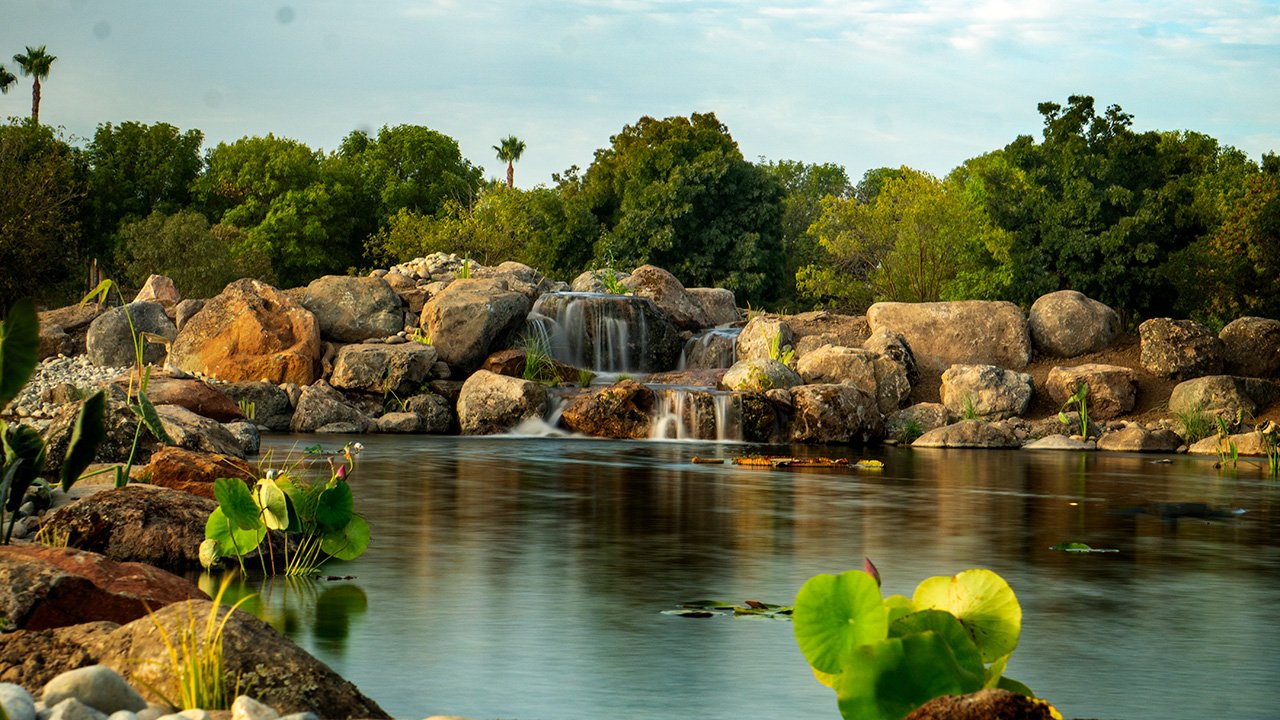
That variation must still be intentional. Too many unrelated features can make a pond feel busy. The goal is a living masterpiece with a clear visual rhythm: a stronger waterfall focal point, quieter coves, places for aquatic plants to soften the rockwork, and open water that gives the eye a place to rest.
Build the Water System Before Building the Scenery
The most compelling waterfalls and clear ponds are supported by work most visitors will never see. The basin shape, underlayment, liner installation, plumbing runs, pumps, skimmers, intake bays, biological filtration, and electrical planning all need to be coordinated before boulders are placed for their final look.
Circulation is especially important in large ponds. Water should travel through the system in a way that draws leaves and suspended debris toward collection points instead of letting it settle across the bottom. Pump sizing cannot be based on a rough guess. It depends on pond volume, desired waterfall flow, lift from the pump to the waterfall, pipe diameter, fittings, and the resistance created by the full system.
Filtration should match the intended use. A lightly stocked water garden has different needs than a pond with prized koi, while a recreation pond requires another level of consideration for swimmer comfort, visibility, and water movement. More filtration is not automatically better if the design is poorly balanced. The right system is one that supports the pond’s biology, looks natural in the landscape, and can be serviced without turning routine maintenance into a major project.
Depth, shelves, and safety are design decisions
Pond depth influences temperature, fish habitat, plant placement, water quality, and how the feature feels to use. A deeper central zone can provide thermal stability and visual richness, while shallow shelves create opportunities for marginal plants and gradual transitions along the edge.
For recreation ponds, the conversation also includes entry and exit points, non-slip surfaces, visibility, edge definition, and how children, guests, or pets will interact with the water. There is no one correct layout. A family that wants a place to wade and gather will need a different design than a homeowner creating a private koi sanctuary or a commercial property looking for a memorable arrival experience.
Natural Beauty Depends on Ecological Balance
A pond is not simply a container of water. It is an active ecosystem. Fish, aquatic plants, beneficial bacteria, sunlight, organic debris, and circulation all influence one another. When the system is balanced, the pond feels alive in the best way: clear water, healthy fish, thriving plants, and the sound of moving water that makes the garden feel more peaceful.
When the balance is off, algae, murky water, debris buildup, or stressed fish can become recurring concerns. The answer is not always a chemical treatment or a bigger pump. Often, the real solution is identifying the cause. Excess nutrients may be entering from runoff. The pond may have insufficient circulation in a quiet corner. Mature trees may contribute a heavy leaf load that calls for a more deliberate maintenance plan.
Planting is part of the solution as well as part of the beauty. Water lilies can shade portions of the surface. Marginal plants soften the edges and create habitat. Carefully selected plant zones can make rockwork feel established, not newly installed. However, plants need thoughtful placement and seasonal care. A pond designed to look lush should also leave access for cleaning, trimming, and equipment inspection.
Plan for Maintenance While the Pond Is Still on Paper
The difference between a pond that brings joy and one that becomes a burden often comes down to access. Can a skimmer basket be reached easily? Is the filtration area accessible without dismantling landscaping? Are valves clearly organized? Can a technician inspect the plumbing and pump system without damaging the finished garden?
Large projects deserve a maintenance strategy before construction begins. This does not mean the pond should look mechanical or require constant attention. It means the system should be designed for realistic care. Seasonal cleaning, leaf management, plant trimming, water-quality checks, and equipment service protect the investment and keep minor issues from becoming disruptive repairs.
At Aquascape Creations, hands-on experience with both new builds and aging water features informs this approach. A beautiful pond should not only photograph well when it is new. It should remain a source of pride after years of weather, changing plant growth, family gatherings, and daily enjoyment.
What Makes a Complex Pond Project Worth It
A large pond is a significant commitment of space, planning, and budget. It is not the right choice for every property or every homeowner. A pondless waterfall may be better for a compact yard, a household that travels often, or a setting where open water is not desired.
But when the property and vision call for water on a grander scale, a well-built pond offers something difficult to reproduce with hardscape alone. It creates movement in the landscape. It gives fish and plants a place to thrive. It draws people outdoors, changes the sound of the yard, and turns an ordinary view into a natural sanctuary.
The best large pond does not announce every technical decision that made it possible. It simply feels right: water moving with purpose, stone settled into the land, and a shoreline that invites you to pause a little longer than you planned.