A pond holding a few hundred gallons is a landscape accent. Push past a thousand and it turns into a piece of construction, with hydraulics, structural loads, and living water chemistry stacked on top of each other. Homeowners across the Bay Area often ask us for a bigger version of the garden pond they already love, and the honest answer is that scale does not just add size. It changes the job.
Below is how we approach a large-scale build at Aquascape Creations, stage by stage, and what each stage means for your yard, your schedule, and your budget.
Scale Changes the Rules
Once you move into the thousands of gallons, nothing can be sized by eye anymore. Water volume, filtration capacity, and structural support have to be engineered as one system. Get one of them wrong and the pond photographs beautifully on install day, then spends the next season turning green, losing water, or demanding hours of work every week. A large water feature is unforgiving in a way a small one never is.
Begin With the Property, Not the Shape
Every serious build starts with an honest read of the site. Sun exposure sets water temperature and drives algae. Tree canopy means leaf load in fall and roots pushing against a liner below grade. Slope decides whether a waterfall can follow the natural grade or whether stone has to be stacked to build one. Utility easements, irrigation lines, drainage, and setback rules all draw hard lines around where water can actually go.
For recreation ponds the site has to carry a much larger footprint and hold a planted regeneration zone apart from the swimming area. If the property cannot support that split, no amount of filtration will make it work later. We would rather find that out on a walk-through than after excavation.
Name the Project Before You Price It
“Large pond” describes at least three different builds, and they are not interchangeable:
-
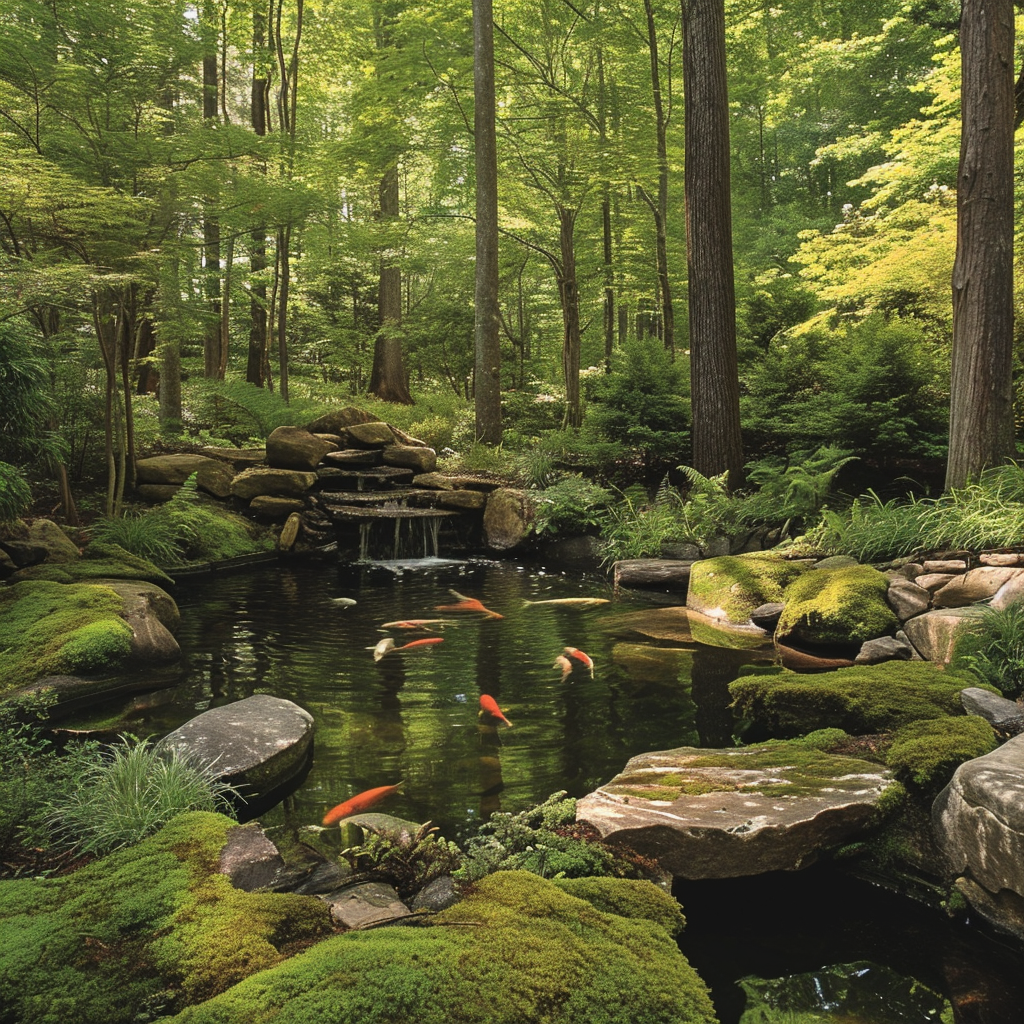
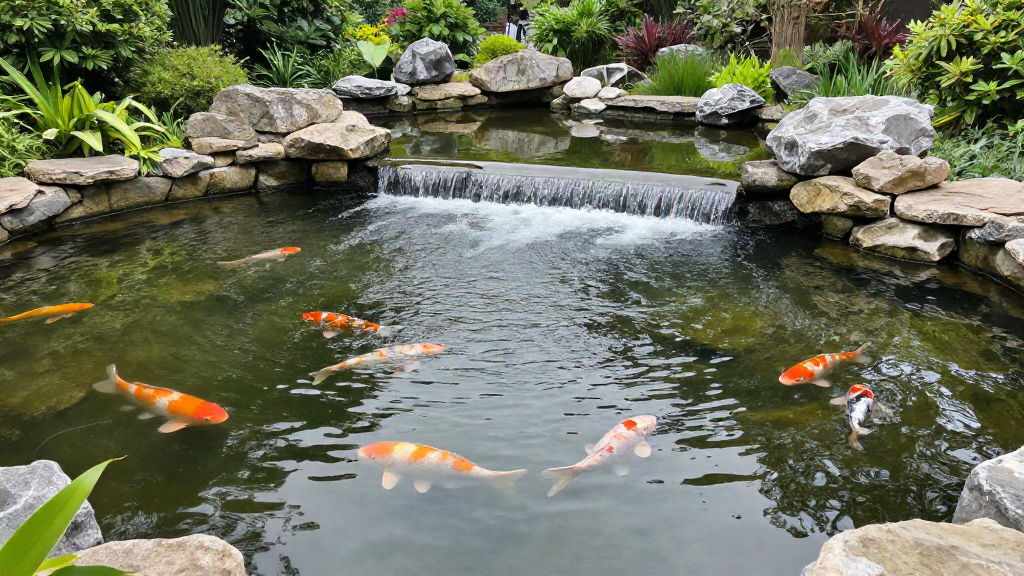
A large koi pond is engineered around fish health first. Depth, turnover rate, and biological filtration are sized to the koi load, and the pond stays separate from any swimming use.
-
A natural swim or recreation pond pairs a swim zone with a planted regeneration zone. Gravel and plants do the filtration work, which means a bigger footprint and a very deliberate balance between open water and planted water.
-
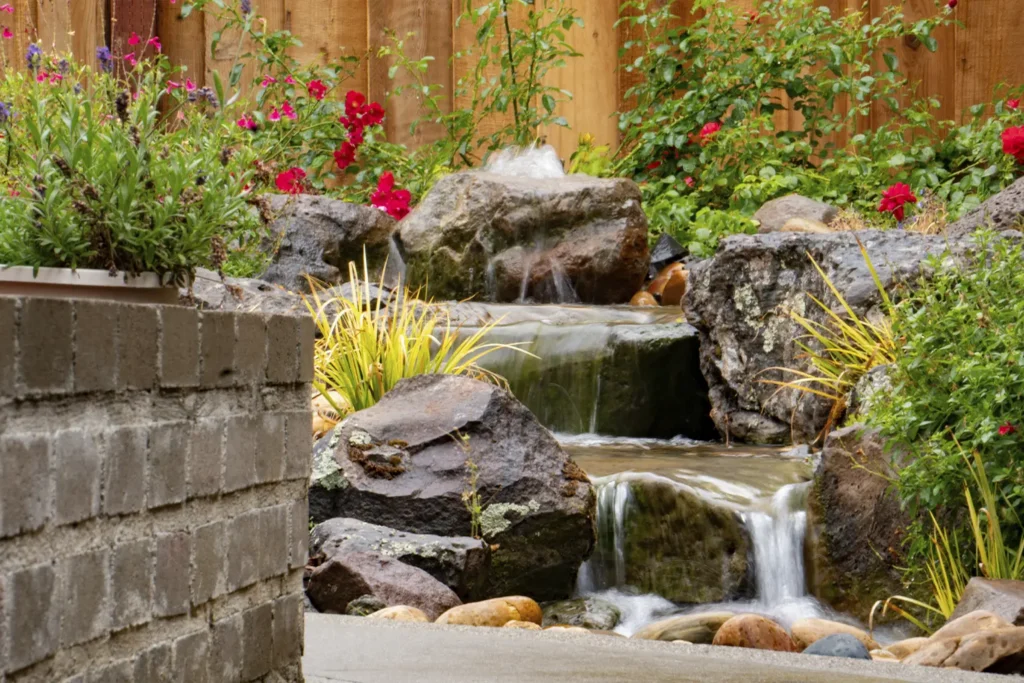
A large water garden with a waterfall leads with drama and sound, with fish as a secondary consideration.
Naming the goal in the first conversation is what keeps design, budget, and expectations pointed in the same direction.
Depth and Volume Drive Everything Downstream
Depth is the most consequential number in a large build. Deeper water buffers temperature swings, gives koi room to grow, and offers refuge from predators. Shallow water in a big footprint is where trouble collects: fast heat gain, algae blooms, and stressed fish.
Volume then sets the rest. Pumps, filtration, aeration, and liner square footage all follow gallons, not the view from the patio. A koi pond holding several thousand gallons needs filtration that moves a meaningful share of that water every hour, plus enough aeration for a hot Bay Area afternoon.
Filtration and Aeration Carry the Real Budget
This is where large builds succeed or fail. You need mechanical filtration to capture solids, biological filtration to process waste, and circulation that reaches every zone of the pond, including the quiet corners. Recreation ponds add a gravel-and-plant biofilter bed that functions as a living filter.
Aeration surprises most homeowners with how much it matters. More water and warmer weather both mean less dissolved oxygen, and the bacteria doing the actual cleaning need oxygen as much as the fish do. Diffusers and waterfalls are working equipment, not decoration.
Liner, Underlayment, and Stonework That Does Structural Work
A pond this size needs a liner assembly built for the load: the right material, proper underlayment to shield it from roots and sharp rock, and careful detailing at every transition point where leaks begin. Stonework is structural as much as visual. Boulders hold the liner in place, shape the waterfall and stream, and conceal skimmers and plumbing.
On a recreation pond, entry and exit points need designed edges that are comfortable and safe underfoot rather than a bare drop into deep water.
Permits, Power, and the Equipment You Would Rather Not See
Large features pull real electrical load for pumps, lighting, and aeration. That means dedicated circuits, protected connections, and an equipment area planned into the landscape from the start instead of bolted on afterward. Depending on your city, excavation, grading, or electrical work may require permits. A builder who works in your region regularly knows those rules before the first shovel moves.
What Actually Moves the Number
For a large build, cost is set by depth and volume, the complexity of stone and waterfall work, filtration capacity, how easily excavation equipment reaches the site, electrical scope, and how much surrounding landscape has to change for the pond to feel native to the yard. A realistic range comes after a site visit and a real conversation about the water you want, not before.
How Long a Build Takes
This is not a one-week install. Expect assessment and design first, then excavation, liner and plumbing, stonework, and planting, followed by a water balancing period before fish or swimmers go in. Access, weather, and the amount of custom stonework all shift the schedule.
Care After the Build Is Part of the Decision
A large pond is not maintenance-free, and anyone who tells you otherwise is selling you something. Seasonal cleanouts, filter service, water testing, plant management, and equipment checks are what keep a big feature clear and healthy year after year. Choosing a builder who also maintains ponds means the team that designed your ecosystem is the team that keeps it running.
Why Experience Matters at This Scale
Volume magnifies mistakes. An undersized filter, a too-shallow shelf, or a shortcut at a liner seam all announce themselves the moment the water goes in. A large pond is an expensive place to find out whether a contractor has done this before.
Aquascape Creations is a Certified Aquascape Contractor, trusted by more than 100 clients across the Bay Area, with a 4.8 rating and the 2026 Water Artisan of the Year award behind our work. We design and build custom koi and garden ponds, pondless waterfalls, and large recreation and natural swim ponds that belong in their landscape, and we maintain them afterward. You get a clear plan, a clear budget, and clear communication at every step.
Ready to Plan Your Pond?
If a large koi pond or recreation pond is on your mind, the right first step is a site assessment and a straight conversation about what you want the water to do for your property. Request a quote and we will walk the yard, talk through the options, and tell you honestly what your build takes. #BuildDifferent #Aquascapecreations #aquascape