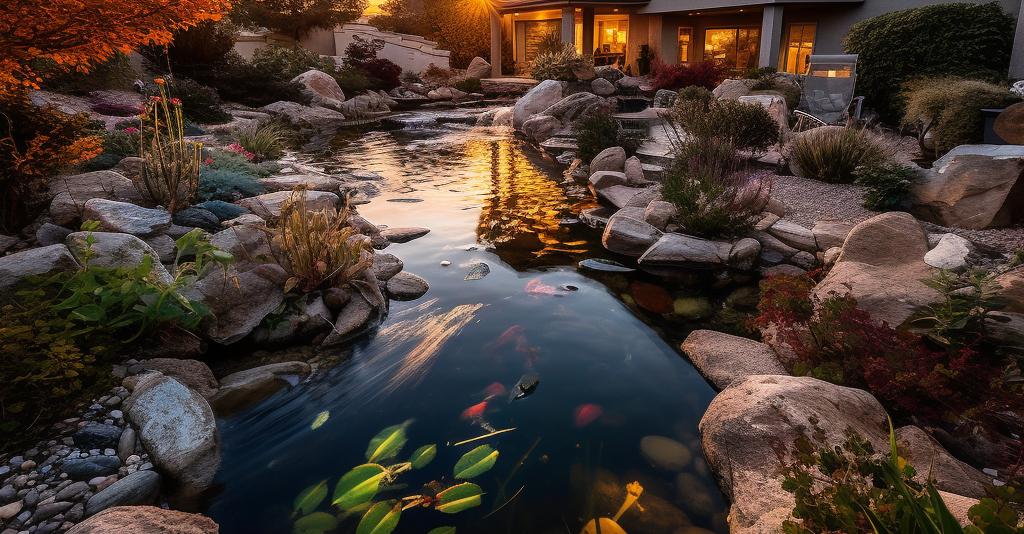
A koi pond becomes more convincing as a natural sanctuary when the water’s edge feels alive. The best plants for koi ponds do far more than decorate the surface: they soften stonework, provide welcome summer shade, help manage nutrients, and give fish a calmer, more protected environment. The challenge is choosing plants that can share space with large, curious fish that like to root, nibble, and rearrange anything within reach.
For a pond to remain a living masterpiece rather than a weekly maintenance project, plant selection must follow the pond’s depth, sunlight, filtration, fish load, and surrounding landscape. A beautiful water garden is an ecosystem with a design plan behind it.
What Koi Need From Pond Plants
Koi are powerful fish, especially as they mature. They can uproot marginal plants, tear at tender leaves, and muddy the water while searching through planting pockets. This does not mean a koi pond cannot be richly planted. It means the plants need to be placed and protected with the same care given to the pond’s rockwork, circulation, and filtration.
Well-chosen aquatic plants create shade that can reduce summer water temperatures and discourage excessive algae growth. Their roots also use nutrients that would otherwise feed algae. Still, plants are support players, not substitutes for properly sized filtration, circulation, and regular pond care. In a heavily stocked koi pond, dependable mechanical and biological filtration remains essential.
Aim for a balanced look rather than covering every inch of water. Too little shade leaves fish exposed and the pond visually stark; too much surface coverage can limit gas exchange and make maintenance difficult. As a general design target, 40 to 60 percent surface coverage during the warmest months often gives a pond a lush, settled appearance while preserving open water for koi viewing.
Best Plants for Koi Ponds by Planting Zone
Hardy water lilies
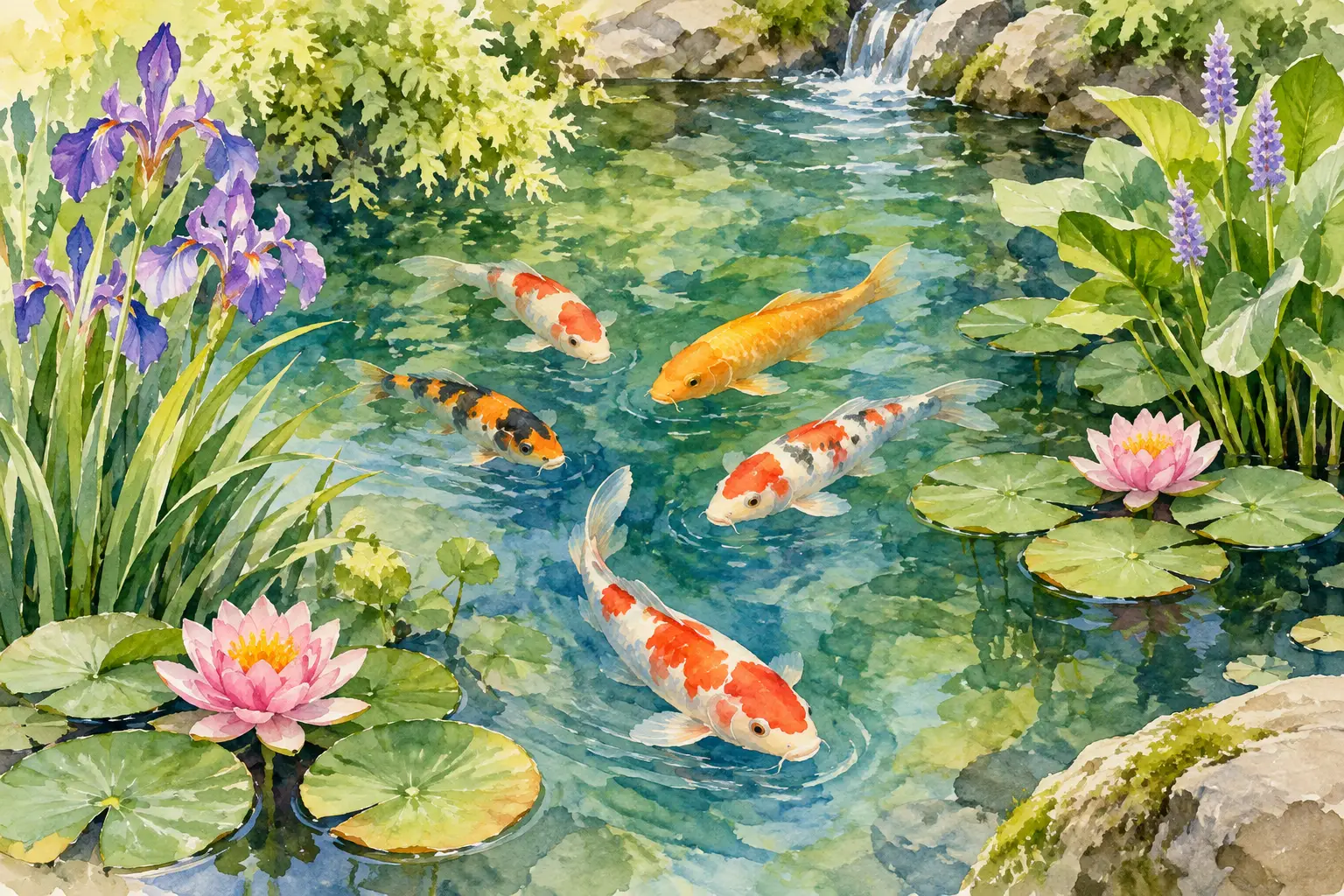
Hardy water lilies are often the first choice for a koi pond because they bring both beauty and function. Their broad floating pads shade the water, their flowers create a clear focal point, and many varieties return year after year. Choose cultivars sized for the pond. A compact lily can disappear in a large pond, while an aggressive spreader can overwhelm a small water garden.
Koi may nibble young growth or disturb the crown, so lilies should be planted in wide, heavy aquatic containers with a layer of larger river stone over the soil. Set them at the appropriate depth for the variety, typically deeper as the plant establishes. Avoid loose potting soil, which fish can quickly turn into a cloudy mess.
Lotus
Lotus offers a dramatic, sculptural presence for larger ponds and recreation ponds. Its leaves rise above the water, and its flowers have an unmistakable elegance that suits a bold, naturalistic landscape. It needs generous sun, room to spread, and a substantial container.
The trade-off is scale. Lotus can become too vigorous for a compact koi pond, and its large leaves can hide fish if used without restraint. It is most successful as a deliberate feature near a viewing area, not as an afterthought squeezed into an already crowded pond.
Pickerel rush
Pickerel rush is a dependable marginal plant with upright green foliage and purple-blue flower spikes that appear through the warmer season. It has a clean vertical form that contrasts beautifully with rounded boulders and low-growing plants at the pond’s edge. Pollinators appreciate it as well.
Plant pickerel rush in shallow shelves or planting pockets where its crown can remain wet but not deeply submerged. In koi ponds, it performs best in protected areas behind boulders or in a dedicated plant zone separated from the main swimming space of the fish.
Blue flag iris
Blue flag iris brings the familiar grace of an iris to the water’s edge, with narrow arching leaves and spring flowers in rich blue-violet tones. It works especially well where a pond transitions into a planted landscape, helping the shoreline feel less constructed and more like a natural wetland edge.
Iris tolerates wet roots and can handle changing seasonal conditions better than many more delicate aquatic plants. Divide it periodically if the clumps become dense, and use stone or planting barriers where koi have easy access to the roots.
Sweet flag
Sweet flag, also called Acorus, is a refined choice for pond margins because it stays relatively tidy and offers grassy foliage that moves gently in the breeze. Variegated selections add brightness around darker water and stone, while green forms offer a quieter, more natural look.
This is a useful plant when the goal is texture rather than a large floral display. It is well suited to shallow shelves, stream edges, and areas where the landscape needs a soft transition from water to patio, lawn, or planting bed.
Dwarf papyrus
Dwarf papyrus adds height and movement without the overwhelming size of full-scale papyrus. Its umbrella-like stems create a lively silhouette and look especially striking near a waterfall, where moving water complements its fine texture.
In mild Bay Area settings, dwarf papyrus can be an excellent warm-season feature, but it is less cold-hardy than iris or sweet flag. Inland properties that experience winter frosts may need to treat it as seasonal or move container-grown plants to protection during cold spells.
Horsetail rush
Horsetail rush offers strong, architectural vertical lines and suits contemporary landscapes as well as more natural pond designs. Its dark green stems are simple but memorable, particularly against pale boulders or a light-colored wall.
This plant needs boundaries. Horsetail can spread enthusiastically, so it should remain in a contained aquatic basket or isolated planting area. Never plant it where it can escape freely into surrounding garden beds.
Water lettuce and other floating plants
Floating plants can provide quick shade and lend a pond a relaxed, lush look. However, they are not always the right answer for a koi pond. Koi often eat or shred them, they can collect around skimmers, and some species are restricted or prohibited in California because of their invasive potential.
For these reasons, floating plants should be selected only after confirming local regulations and considering the pond’s circulation pattern. A protected bog area or separate water garden may be a better home for them than the main koi pond.
Submerged Plants: Helpful, but Not Always Practical
Submerged plants are often described as oxygenators, but their role in a modern koi pond is more nuanced. They can provide habitat and use nutrients, yet koi may uproot them, and dense underwater growth can complicate cleaning. Healthy oxygen levels should come from proper circulation, waterfalls, streams, and aeration rather than relying on plants alone.
If you use submerged varieties such as hornwort, confine them in protected planting areas and monitor how they affect water flow. In a pond designed for clear fish viewing, a few carefully managed submerged plants are usually more practical than an underwater jungle.
How to Protect Plants From Koi
The difference between thriving plants and shredded plants often comes down to installation. Plant aquatic varieties in sturdy baskets or containers designed for pond use, using aquatic soil and a top layer of washed, oversized gravel. Fine gravel is easily displaced, while larger stone makes it harder for koi to dig into the root zone.
Location matters just as much. Place vulnerable plants behind boulders, within a shallow wetland filtration area, or along a shelf that fish cannot easily patrol. This approach lets the pond retain an open, graceful body of water while creating planted pockets that look as though nature placed them there.
Avoid crowding every shelf with pots. Koi need room to move, and maintenance professionals need access for cleaning, netting, inspection, and seasonal adjustments. A few healthy groupings with intentional spacing will always look better than a collection of struggling containers.
Match Plants to the Pond You Actually Have
Sunlight determines much of the planting plan. Water lilies and lotus need strong sun to flower well, while sweet flag and some iris can tolerate more forgiving conditions. A pond beneath dense tree cover may need a different approach, especially because falling leaves can add nutrients and organic debris faster than plants can use them.
The pond’s purpose matters too. A formal koi-viewing pond may call for a restrained composition of lilies and marginal accents. A natural water garden can support more layered textures and seasonal color. For a large estate pond or recreation pond, planting may need to be planned as part of shoreline stabilization, wetland filtration, and long-term access rather than simply selecting plants from a nursery bench.
At Aquascape Creations, we see the strongest results when plants are considered during the design or renovation process, not after construction is finished. The shelves, boulder placement, skimmer location, intake bays, and viewing angles all influence what can grow well and remain easy to care for.
A thoughtfully planted koi pond should invite you outside, make the fish feel at home, and look more beautiful with each season. Start with plants that suit your water depth and sunlight, give them protection from curious koi, and allow the landscape to grow into its own character over time.