
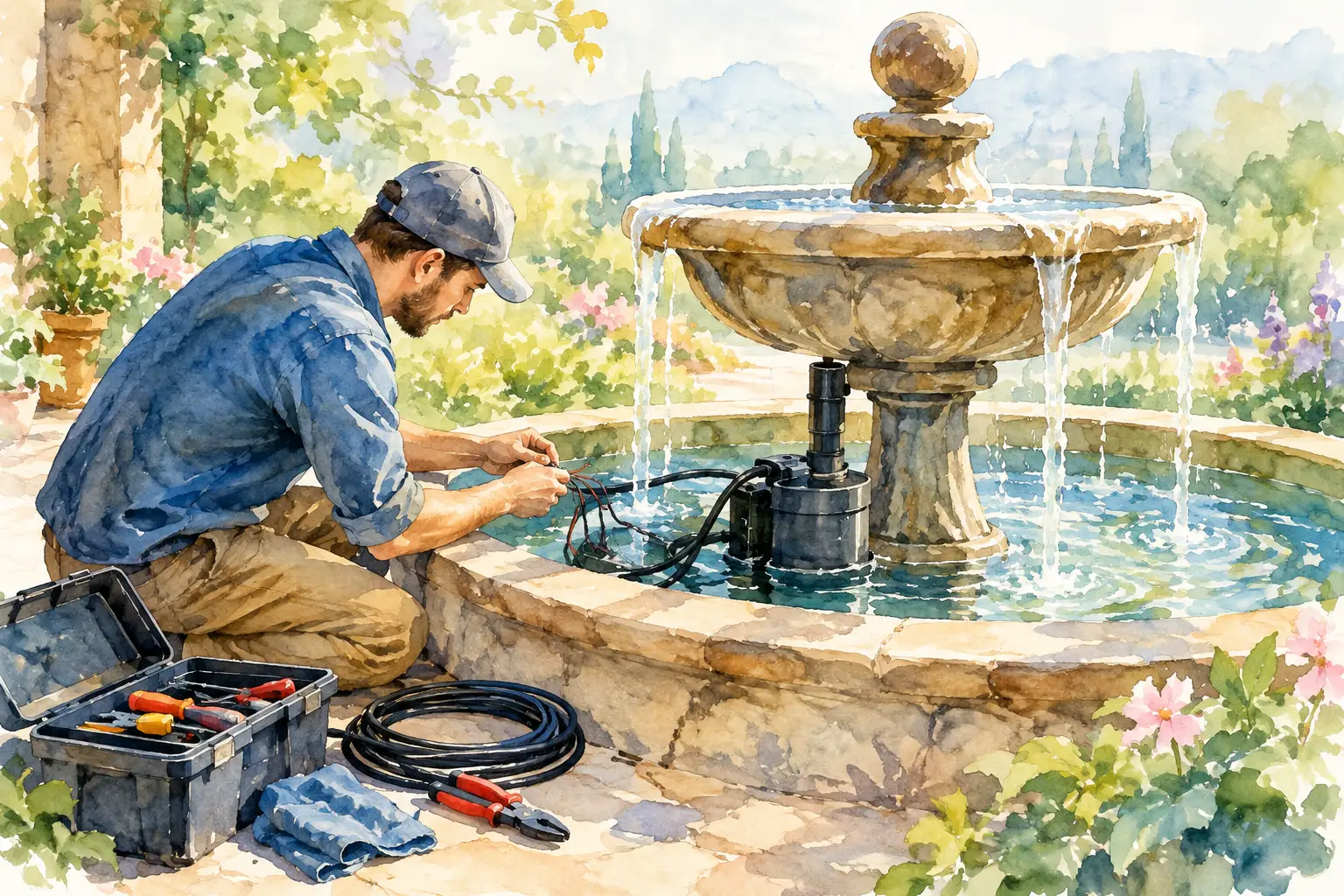
A fountain that suddenly falls silent changes the feeling of an entire landscape. The moving water, soft sound, and reflected light are gone, leaving behind a feature that feels unfinished. This fountain electrical repair guide helps homeowners narrow down what may be wrong without taking unsafe shortcuts around water and electricity.
Many fountain problems begin with a simple interruption: a tripped GFCI outlet, a timer set incorrectly, a disconnected plug, or debris restricting a pump. Others point to aging wiring, a failing pump, damaged low-voltage lighting, or an installation that needs professional correction. The goal is not to force a quick fix. It is to restore reliable operation while protecting the people, pets, and living landscape around your water feature.
Start With Electrical Safety Around Water
Water features demand a higher level of caution than most outdoor equipment. Never handle a submerged pump, open a junction box, or touch exposed wiring while power is connected. Turn off the circuit at the breaker before inspecting equipment, then confirm the fountain cannot restart from a timer, smart controller, or secondary switch.
A properly installed outdoor fountain circuit should have GFCI protection. A GFCI monitors the electrical current and shuts power off when it detects an imbalance that could indicate electricity traveling where it should not, including through water or a person. If the outlet trips once after a storm, resetting it may be reasonable after the area is dry. If it trips repeatedly, treat that as a warning, not an inconvenience.
Do not replace a GFCI outlet with a standard outlet, bypass a tripping device, splice fountain wires with tape, or run a permanent setup through an extension cord. Those choices can turn a manageable service call into a serious safety risk. When in doubt, leave the circuit off and have a qualified water-feature professional or licensed electrician inspect the system.
Fountain Electrical Repair Guide: Find the Point of Failure
The quickest diagnosis comes from working outward from the power source to the fountain equipment. Avoid pulling apart the entire feature at once. A methodical check protects the landscape and often reveals a small issue before unnecessary parts are replaced.
Check the breaker, GFCI, and controls
Begin at the electrical panel. Look for a breaker that is sitting between the on and off positions, then reset it fully by switching it off before turning it back on. Next, locate the GFCI outlet or GFCI breaker serving the fountain. Press reset and see whether power returns.
If the GFCI immediately trips, unplug the pump and lights first. Reset the GFCI with the equipment disconnected. If it holds, reconnect one component at a time. A trip when the pump is connected strongly suggests a pump, cord, connection, or wet junction issue. A trip only when lighting is reconnected points toward the transformer, fixtures, or low-voltage cable.
Also inspect timers, photocells, remote controls, and smart switches. A timer may have lost its schedule after a power interruption, or a photocell may be shaded by leaves and behave as though it is daylight. These are small details, but they can make a healthy fountain appear to have an electrical failure.
Inspect visible connections without disturbing wiring
With power off, inspect the equipment cord from the outlet to the pump or transformer. Look for cracking, flattened sections, animal damage, loose plugs, corrosion, and connections sitting in wet soil or standing water. Outdoor-rated covers should close properly and protect receptacles from irrigation spray and rain.
Pay close attention to where cables enter a vault, basin, or equipment enclosure. Water can migrate along a cable into a connection point, especially when a seal has aged or the wire was installed without proper strain relief. A dry-looking exterior does not guarantee a dry interior, so do not open sealed electrical components unless you are qualified to do so.
Separate a pump problem from a water-flow problem
A fountain may have power but still show weak flow or no visible water movement. Listen carefully. A low hum can indicate that the pump is receiving power but cannot turn freely because of debris, mineral buildup, or worn internal parts. Silence may indicate no power, a failed pump, or a control issue.
Before assuming the pump has failed, check the intake area for leaves, gravel, algae, or string algae. Clean the pump only after disconnecting power, following the manufacturer’s directions, and removing it carefully from the feature. In naturalistic fountains, the pump may be tucked beneath stonework or within a reservoir. Forcing access can shift stones, damage plumbing, or create a leak path.
If the pump runs but the waterfall is weak, the electrical system may be fine. A clogged filter, partially blocked plumbing line, low reservoir water level, or a closed valve can restrict flow. This distinction matters because replacing a pump will not solve a hydraulic problem.
Why GFCI Outlets Keep Tripping
Repeated GFCI trips are among the most common fountain service concerns. Sometimes the cause is as simple as moisture in an outdoor cover after heavy rain. More often, persistent tripping signals insulation breakdown in a pump cord, a deteriorating pump motor, water inside a connection, or a compromised lighting transformer.
Age matters. Pumps and lighting systems live in a demanding environment of moisture, heat, mineral deposits, and seasonal use. A component can still run intermittently while beginning to leak current. That is why a fountain that trips only after running for an hour deserves attention. Heat can expose a weakness that is not obvious during a brief test.
In the Bay Area, irrigation is another frequent contributor. A sprinkler head that sprays directly into an outlet cover or transformer enclosure can create recurring trouble, particularly when the fountain runs on a schedule. Correcting the irrigation pattern may be part of the repair, but it should not be used to dismiss a circuit that continues to trip.
Diagnosing Fountain Lighting Problems
Low-voltage fountain lighting brings depth and drama to a water feature after sunset, but the system has several possible failure points. If every light is out, begin with the transformer, power supply, timer, and GFCI. If only one or two fixtures are out, the problem is more likely a failed fixture, loose connection, damaged cable, or water intrusion at that branch.
LED fixtures last far longer than older halogen systems, but they are not permanent. Water intrusion, driver failure, and physical damage from maintenance or shifting stone can shorten their service life. Matching replacement components matters. Mixing incompatible fixtures, transformers, and wire runs can lead to dim lights, flickering, premature failure, or overloaded equipment.
A professional can test voltage at the transformer and along the run to locate voltage drop or a damaged connection. That testing is especially valuable on larger fountains and ponds, where wire routes may disappear beneath landscaping, stone, and hardscape. Guessing at buried wiring often adds disruption without finding the real cause.
When a Professional Repair Is the Better Choice
Homeowners can safely handle basic observations: checking a breaker, resetting a dry GFCI, cleaning accessible pump debris, and confirming that a timer is set correctly. Beyond that point, repair decisions depend on the feature’s design, age, and electrical layout.
Call for professional help when you notice any of the following:
- The breaker or GFCI trips repeatedly, especially after equipment is unplugged and reconnected.
- A cord, outlet, transformer, or junction box shows corrosion, heat damage, cracking, or signs of water inside.
- The pump hums, overheats, smells burnt, or stops after short periods of operation.
- Wiring is buried, concealed beneath stone, or connected to a large pond, waterfall, or integrated landscape system.
- The fountain needs new electrical service, a replacement circuit, or changes to meet current safety requirements.
A good repair is not simply getting the water moving again. It should identify why the failure happened and address conditions that could shorten the life of the replacement equipment. That may mean improving equipment access, correcting a wet connection, resizing a pump, protecting a transformer, or separating irrigation from electrical components.
At Aquascape Creations, fountain troubleshooting is approached with the same care given to building a natural sanctuary from the ground up. The team looks at the complete system – water movement, equipment placement, stonework, plumbing, and electrical protection – so the repair supports lasting performance rather than a temporary reset.
Protect Your Fountain Between Service Visits
A little attention prevents many electrical headaches. Keep the pump intake clear, maintain proper water levels, and check that outlet covers close securely. After major storms or landscape work, inspect visible cords and equipment areas before turning the fountain back on. If you winterize a feature or shut it down for a season, label plugs and controls so everything returns to service correctly.
Most of all, pay attention when your fountain changes its usual behavior. A pump that is louder, a light that flickers, or a GFCI that trips once can be the first sign that a small repair is needed. Addressing it early helps preserve the quiet, restorative presence that made the water feature worth creating in the first place.