A pond can look clear on a cool spring morning and still be carrying more waste than its ecosystem can comfortably process. By the time string algae thickens around the rocks, fish begin lingering near the surface, or the water develops an earthy odor, the imbalance has usually been building for weeks. So, do ponds need filters? For most ornamental ponds, koi ponds, and water gardens, the practical answer is yes.
A properly designed filtration system does far more than make water look clean. It helps create the stable, healthy conditions that allow fish, plants, stonework, and moving water to become the living masterpiece you envisioned. The right system should disappear into the landscape while quietly doing the hard work beneath the surface.
Do Ponds Need Filters for Healthy Water?
A pond is not a swimming pool, and it should not be treated like one. Healthy ponds are living ecosystems, full of beneficial bacteria, aquatic plants, microorganisms, fish, and organic material. But a backyard pond is also a contained environment. Leaves fall in, fish produce waste, food enters the water, and sunlight fuels algae. Without enough circulation and filtration, those inputs can overwhelm the pond’s natural ability to stay balanced.
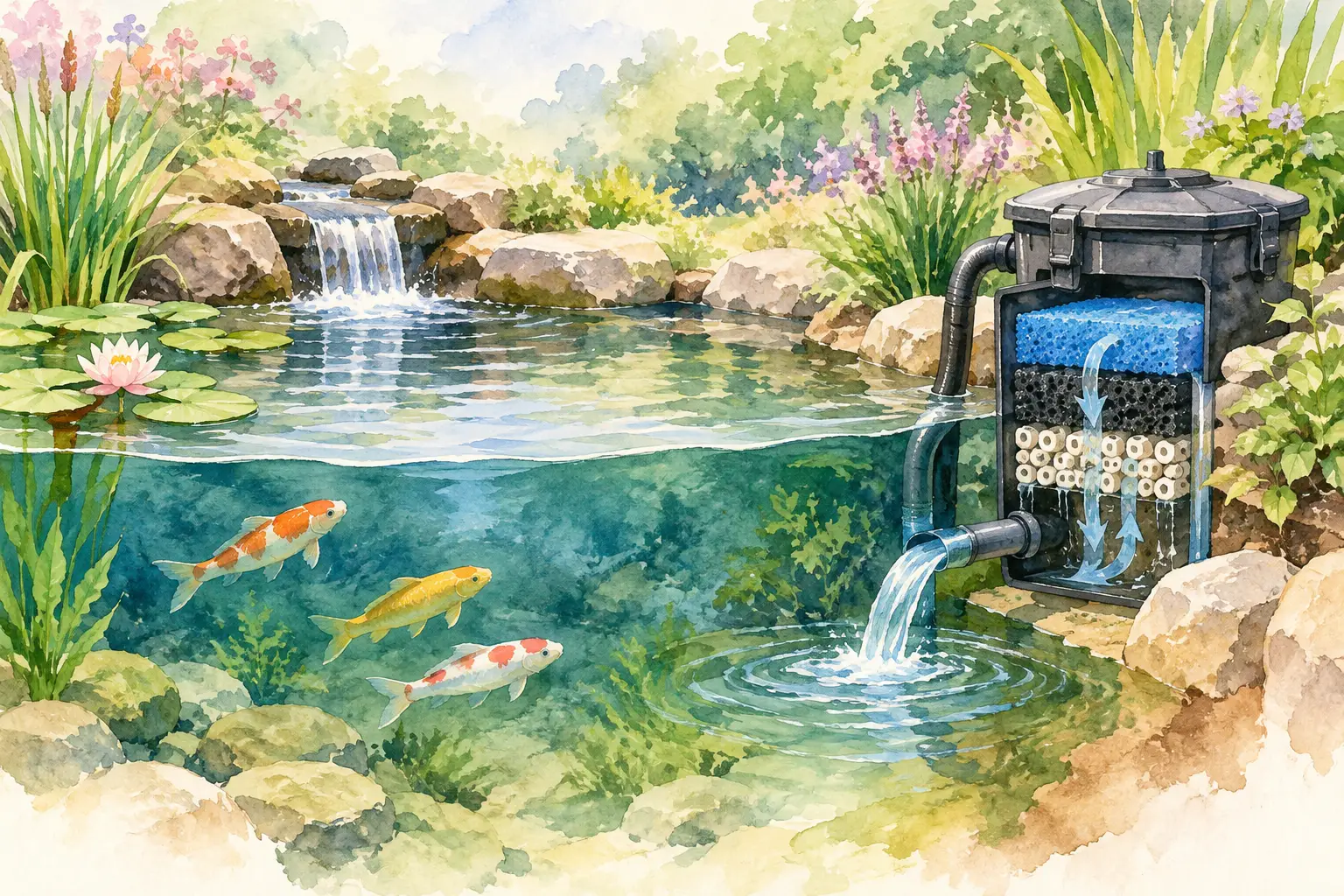
A filter supports that balance in two essential ways. Mechanical filtration captures physical debris such as leaves, uneaten food, sediment, and fish waste before it breaks down in the water. Biological filtration gives beneficial bacteria a protected place to live. Those bacteria convert toxic ammonia from fish waste into less harmful compounds that plants and the pond ecosystem can use or process.
This is especially important in koi ponds. Koi are beautiful, personable fish, but they are also large, active, and messy. A few mature koi can create a surprisingly high biological load. A small filter selected only because it fits a pond’s water volume may be inadequate if the pond is heavily stocked, receives lots of sun, or sits beneath mature trees.
When a Pond May Need Less Filtration
There are exceptions. A lightly stocked pond with abundant plant coverage, limited leaf drop, generous water volume, and little to no fish may function with minimal mechanical filtration. Natural ponds with broad shallow planting zones can process nutrients through plants, soil, and a larger biological ecosystem.
Still, “minimal” does not mean neglected. Even a plant-forward pond benefits from circulation, thoughtful intake protection, and a plan for removing seasonal debris. In the Bay Area, long dry periods, intense sun exposure, and falling leaves can put pressure on a pond that seemed self-sustaining in another season.
The question is not simply whether water can exist without a filter. It can. The better question is what level of clarity, fish health, maintenance, and reliability you expect from your water feature. For homeowners who want to enjoy their pond rather than constantly troubleshoot it, a filtration system is usually a worthwhile foundation.
A Filter Is Only One Part of the System
Pond filtration works best when it is designed as part of a complete circulation plan. A quality pump moves water through the system. A skimmer draws floating debris from the surface before it sinks and decomposes. A biological filter processes dissolved fish waste, often returning clean water through a stream or waterfall. Aeration can add oxygen, particularly in warm weather or in deeper fish ponds.
Each piece has a role. A pond with a strong pump but no effective debris collection may circulate dirty water very efficiently. A pond with a large filter but poor flow patterns can leave stagnant zones where sediment accumulates. And a waterfall that looks dramatic but has an undersized pump or inadequate filtration may become a maintenance headache rather than a source of calm.
Good design considers the pond’s shape, depth, fish population, sun exposure, surrounding landscape, and how the owners want to use the space. A formal reflecting pond, a lush water garden, and a naturalistic koi pond may all need filtration, but they do not need the same approach.
Mechanical Filtration Keeps Debris From Becoming a Problem
The first job is simple: remove solids before they settle into the bottom of the pond. A properly placed skimmer is often one of the most valuable components in a naturalistic pond. It collects leaves, pollen, grass clippings, floating fish food, and surface debris where it is easiest to remove.
This matters because organic debris does not just look untidy. As it decays, it adds nutrients that feed algae and increases the demand for oxygen in the water. In a pond surrounded by oaks, ornamental grasses, or heavily planted beds, routine skimmer cleaning can make a remarkable difference in water quality.
Biological Filtration Protects Fish and Pond Balance
Biological filtration is less visible, but it is the heart of a fish-friendly system. Beneficial bacteria colonize filter media, rock surfaces, plant roots, and other wet areas. They process ammonia and nitrite, both of which can be harmful to fish, into nitrate, which is much easier for the pond to tolerate and plants can absorb.
These bacteria need oxygenated water and consistent flow. That is why a filter should run continuously during the active pond season, rather than only when the waterfall is being enjoyed. Turning off circulation for long periods can reduce oxygen and interrupt the biological process that keeps fish waste from becoming dangerous.
New ponds also need time to mature. Installing a filter does not mean the ecosystem is instantly established. During the first several weeks, and after major cleaning or medication treatments, water quality should be watched closely while beneficial bacteria rebuild.
What About UV Clarifiers and Algae?
A UV clarifier is often useful when green water is the main concern. It exposes free-floating algae to ultraviolet light as water passes through the unit, causing the algae to clump so the filtration system can capture it. It can be highly effective for clearing pea-soup water, particularly in ponds with fish and full sun.
But UV is not a substitute for filtration. It does not remove leaves from the bottom, process ammonia, improve circulation, or fix an overloaded pond. It is best viewed as a targeted tool within a well-designed system.
String algae is different. Because it grows attached to rocks and streambeds, it does not pass through a UV clarifier. Some string algae is normal in a healthy pond and can even provide grazing material for fish and habitat for beneficial organisms. Excessive growth usually points to too much nutrient buildup, too much sun, insufficient plant competition, or inadequate maintenance.
Choosing the Right Filter Size
Filter sizing should never be based on water volume alone. Pond volume is the starting point, not the final answer. A 3,000-gallon pond with a few small goldfish and significant plant coverage has very different demands than a 3,000-gallon koi pond with several large fish, a waterfall, and afternoon sun.
A system should also be sized around the realities of the property. Is the pond under trees? Will the owner feed fish daily? Is the pond designed for a dramatic, high-flow waterfall? Is easy access available for cleaning the skimmer and filter? Does the site have grade changes that affect plumbing and pump selection?
Oversizing key components is often wise. A little extra filtration capacity can provide a margin of safety during heat waves, holiday schedules, leaf-drop season, or when fish grow larger than expected. It is generally less expensive and less disruptive to design adequate capacity at the start than to retrofit an underperforming pond later.
Filters Still Need Care
The best filtration system is not maintenance-free. It is maintenance-friendly. Skimmer baskets need to be emptied, filter pads or nets need periodic rinsing, and biological filter media should be handled carefully so beneficial bacteria are not stripped away unnecessarily.
How often this happens depends on the season and the setting. During heavy leaf drop, a skimmer may need attention several times a week. In a well-balanced summer pond, it may be much less frequent. Seasonal pond service also gives a professional a chance to inspect pumps, plumbing, check valves, lighting, and water quality before a small issue becomes a costly repair.
At Aquascape Creations, we see many aging ponds that were built with beautiful intentions but without the circulation, access, or filtration capacity needed for long-term enjoyment. The solution is not always a complete rebuild. Sometimes a thoughtful equipment upgrade, leak repair, improved skimming, or redesigned waterfall return can restore both performance and peace of mind.
A pond should invite you outside at the end of the day, not give you another chore list. When the filtration is matched to the pond, its fish, and its landscape, the water has the clarity and vitality to let the artistry shine – season after season.