A natural swim pond is the one water feature where people ask the same question first: if there is no chlorine, what keeps the water clean enough to swim in? It is a fair question. Most of us grew up with pools, and a pool without chemicals sounds like a pond you would not want to step into.
The answer is that a properly built recreation pond is not a pool at all. It is a working ecosystem. Instead of killing everything in the water with a sanitizer, a natural swim pond uses plants, gravel, moving water, and beneficial bacteria to do the cleaning – and it does the job well enough that you can swim in it every summer day without a chemical smell and without red eyes.
Here is how that system actually works, zone by zone.
The two zones of a natural swim pond
A natural swim pond is divided into two areas that look seamless but do very different jobs.
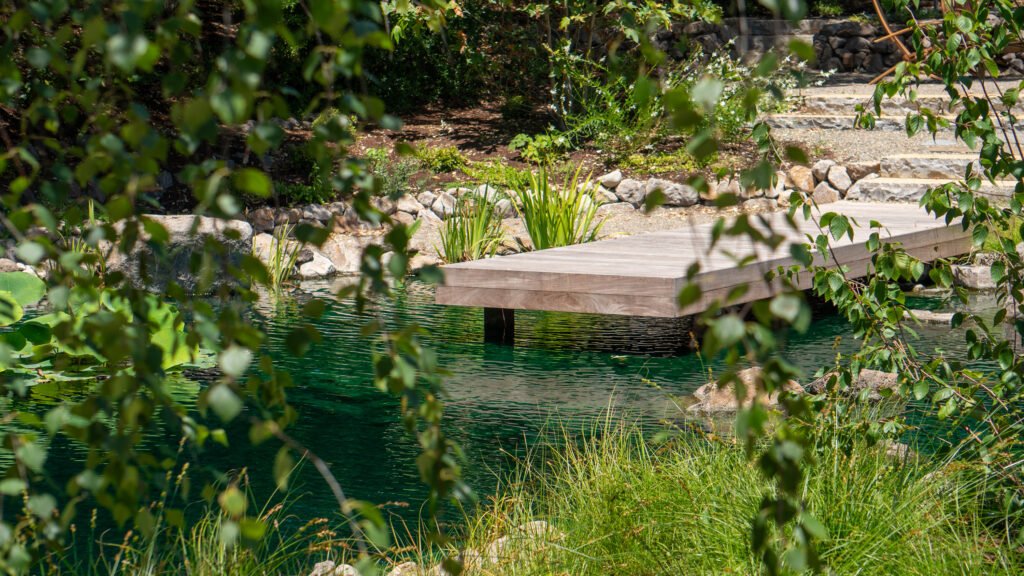
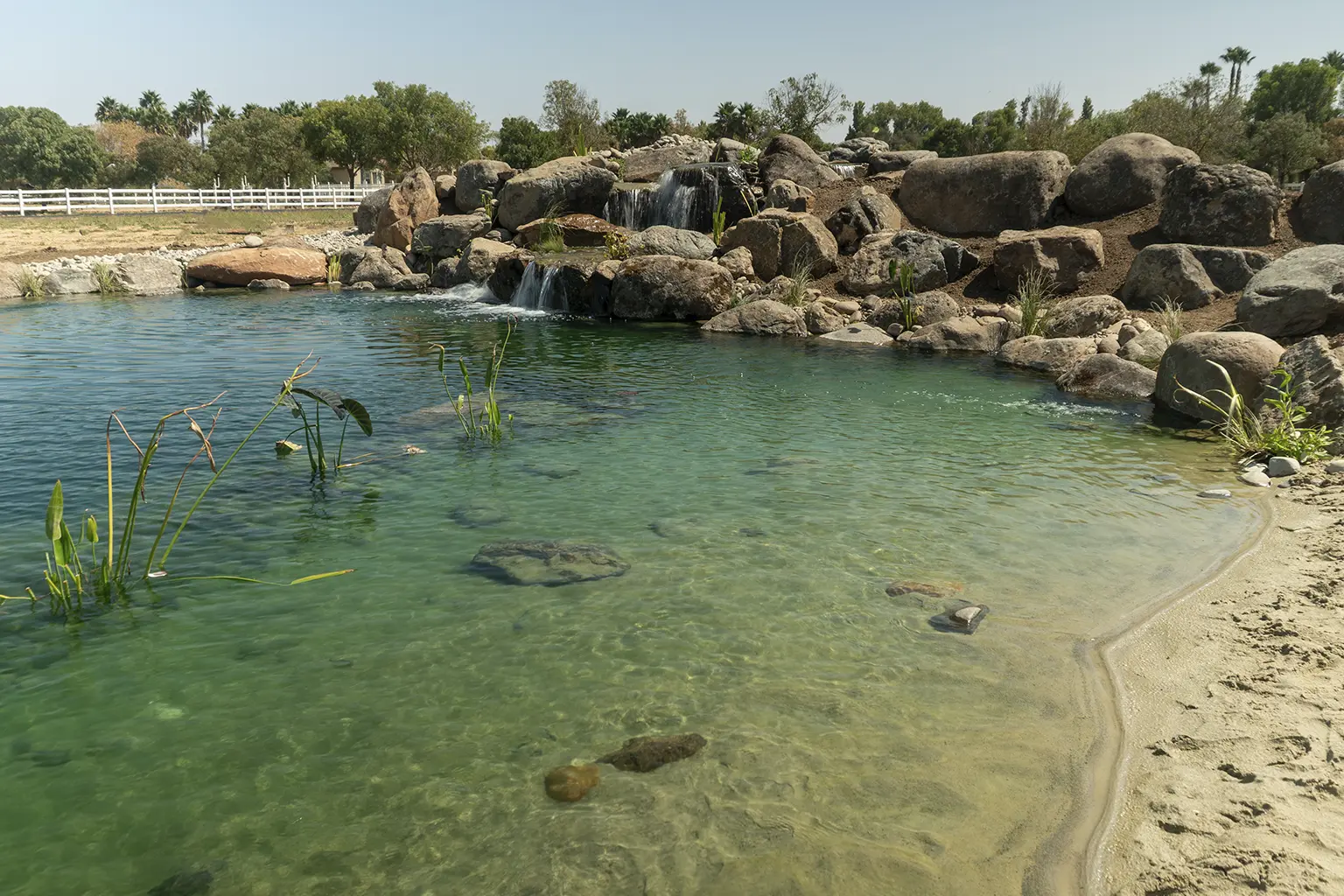
The swim zone is the deep, open area where you actually get in the water. It is clear, it is the part you see from the patio, and it holds the volume of water that stays cool and comfortable in Bay Area summers.
The regeneration zone is the shallow planted margin – often called the wetland or biofiltration zone – that surrounds the swim zone. This is the engine room of the whole system. It is planted heavily, edged with gravel and stone, and it is where the water gets polished before it returns to the area you swim in.
When people picture an aquascape swimming pond, they usually picture the swim zone. The design work that makes it swimmable is almost entirely in the regeneration zone.
How wetland biofiltration cleans the water
Water leaves the swim zone, passes through the regeneration zone, and comes back clean. Three things happen along the way.
Gravel and plant roots trap particles. The regeneration zone is filled with washed gravel of a controlled size, and it is planted densely with aquatic and marginal plants. As water moves slowly through that gravel, suspended debris – pollen, dust, fine organic matter – gets caught in the gaps and on the roots. This is what gives a natural swim pond that clean, transparent look instead of a murky green one.
Beneficial bacteria break down the waste. A living layer of nitrifying bacteria colonizes the gravel and the plant roots. These bacteria convert fish waste, decaying leaves, and other organic nitrogen into forms the plants can absorb. The plants then take up those nutrients as food. In a healthy pond, that loop runs continuously, which is exactly why algae does not get the free meal it needs to bloom.
Plants shade and out-compete algae. Nutrient removal is only half the story. Because the regeneration zone is planted so heavily – and because the swim zone is deep – the pond has far less open, sunlit, nutrient-rich water than a typical garden pond. Algae need light and nutrients at the same time. A well-designed natural swim pond takes both away.
Moving water: pump turnover, skimmers, and circulation
Biology does the cleaning, but circulation makes the biology work. Two numbers matter most in a recreation pond build.
Turnover is how long it takes for the full volume of the pond to pass through the filtration system. A well-designed natural swim pond turns its water over roughly once every one to two hours. That keeps nutrients from sitting still long enough for algae to use them, and it keeps oxygen levels high for both the bacteria and the fish.
Skimmers handle the surface. A skimmer pulls leaves, pollen, and floating debris out of the water before it can sink and decay. In the Bay Area, where oaks, eucalyptus, and ornamental trees shed year-round, a correctly placed skimmer is one of the most important maintenance-reducing parts of the build.
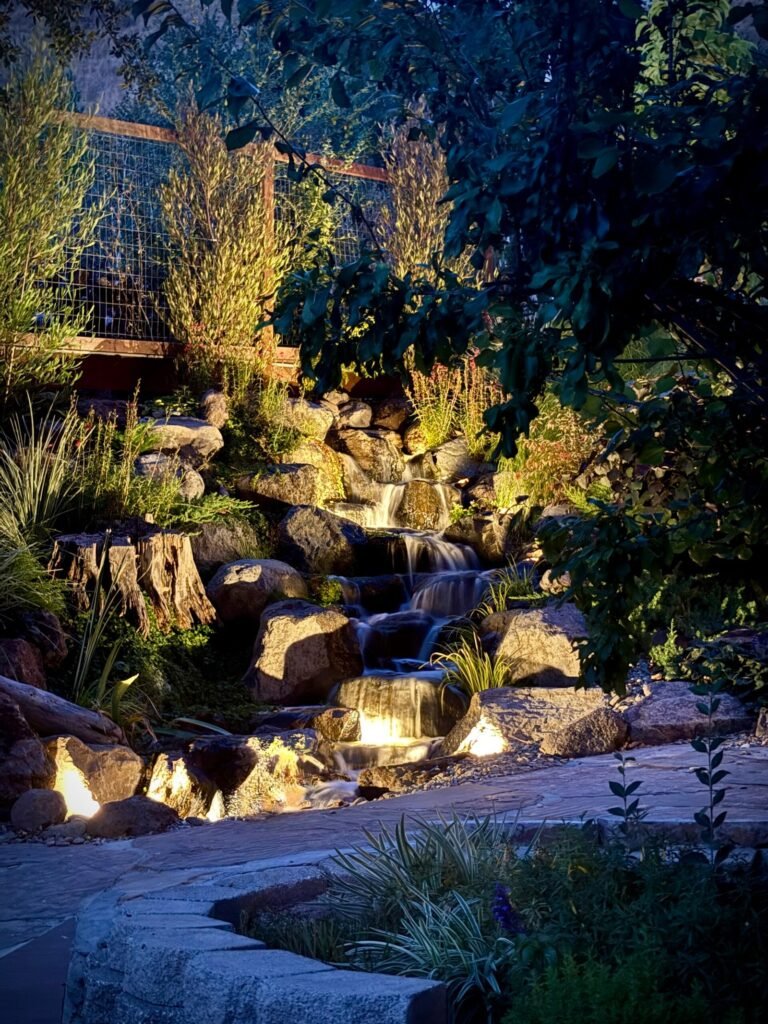
Water returns to the pond through a waterfall or stream, which adds oxygen and, just as importantly, makes the whole feature sound and look alive.
What “clear” really means in a natural swim pond
Clarity in a natural swim pond is not the flat, glassy clarity of a chlorinated pool, and it is not supposed to be. Expect water you can see the bottom of in the swim zone, natural stone and gravel below your feet, and a slightly tea-colored tone if you are standing in the planted margins. That color comes from natural tannins and plant material, and it is a sign of a living system, not a dirty one.
What you will not get is chlorine. No chemical smell, no stinging eyes, no testing and dosing routine before a swim. If you have children, pets, or a pollinator garden nearby, that difference matters.
Why build quality decides everything
Two recreation ponds can look identical on the day they are finished and behave completely differently two summers later. The difference comes down to design and construction details: how the regeneration zone is sized against the swim zone, whether the gravel grade is right, how the pump and skimmer are positioned, and whether the planting plan will actually mature into a functioning wetland.
This is the part that requires real expertise. Aquascape Creations is a Certified Aquascape Contractor, trusted by more than 100 clients across the Bay Area with a 4.8 rating and the 2026 Water Artisan of the Year award. Our recreation and natural swim ponds are engineered as complete biological systems – filtration, circulation, and planting designed together – not assembled from parts.
Keeping it clear after the build
A natural swim pond is low-maintenance, but it is not no-maintenance. A few simple habits protect the system you paid for.
- Skim the surface during heavy leaf drop and clear the skimmer basket regularly.
- Keep lawn fertilizer, pesticides, and runoff out of the pond. Nutrients are the one thing a biofiltration system cannot keep up with.
- Trim and divide plants seasonally so the regeneration zone keeps growing vigorously.
- Service the pump and check flow rates, since circulation is what drives the entire cleaning process.
We walk every client through this routine at handoff and offer ongoing pond care services so the system stays balanced year after year.
Is a natural swim pond right for your yard?
If you want a place to swim that looks and sounds like a mountain stream rather than a chlorinated box, a natural swim pond is the answer. The best way to know whether your yard can support one – and what size swim zone makes sense – is a site walk and an honest conversation about your space, your goals, and how you want to use the water.
Reach out to request a quote and we will walk you through the design, the filtration plan, and what it takes to keep your water clear for decades of summers.
Clear water without chlorine is not a gimmick. It is biology, done right.