A large-scale koi pond or recreation pond is not a bigger version of a backyard water garden. Once you cross roughly a thousand gallons, the build stops being a weekend project and starts being a small construction job with real engineering behind it. Water volume, filtration capacity, and structural support all have to scale together, or the pond that looks stunning on install day slowly turns green, leaks, or becomes a maintenance burden.
Here is what actually goes into building one, stage by stage.
Start With the Site, Not the Shape
Every large pond begins with an honest look at your yard. Sun exposure drives algae and water temperature. Tree canopy means leaf load and root intrusion. Slope determines whether you can build a waterfall with natural grade or need to stack stone to create one. Drainage and irrigation lines, utility easements, and setback rules all set hard boundaries that shape where the pond can go.
For a recreation or natural swim pond, the site also has to support a much larger footprint and a separate filtration zone from the swimming area. Get this assessment wrong and no amount of filtration will fix it later.
Decide What You Are Building
“Large pond” covers three quite different projects, and they carry different requirements:
- A large koi pond is designed around fish health first. Depth, water turnover, and biological filtration are sized for the koi load, and the pond is usually kept separate from any swimming use.
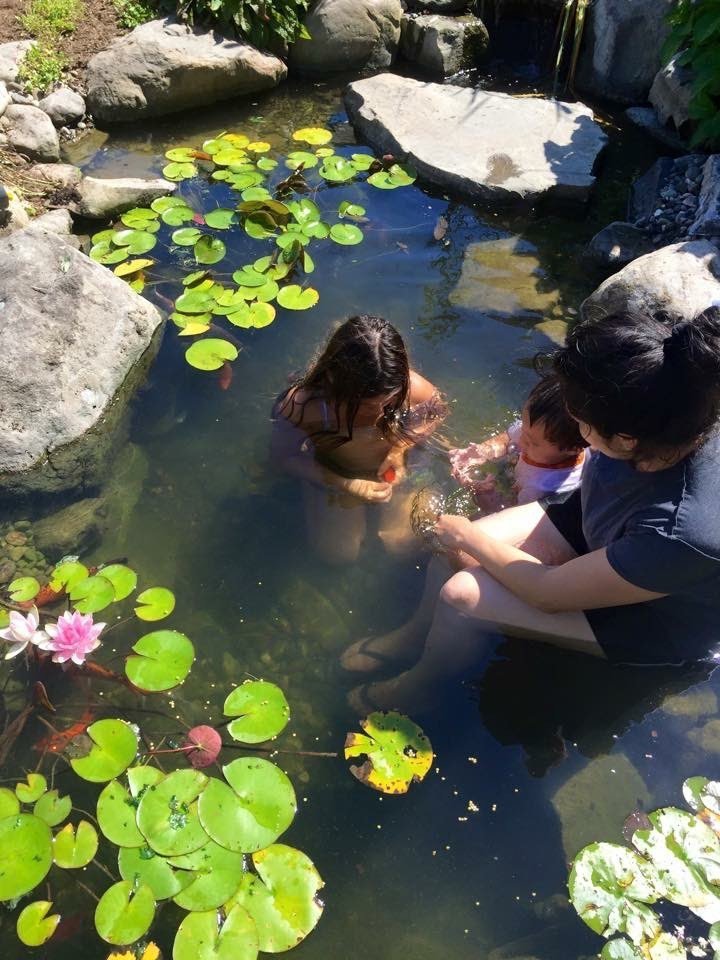
- A natural swim or recreation pond pairs a swimming zone with a planted regeneration zone. The plants and gravel filtration do the heavy lifting, which means a much bigger footprint and a different balance of open water to planted water.
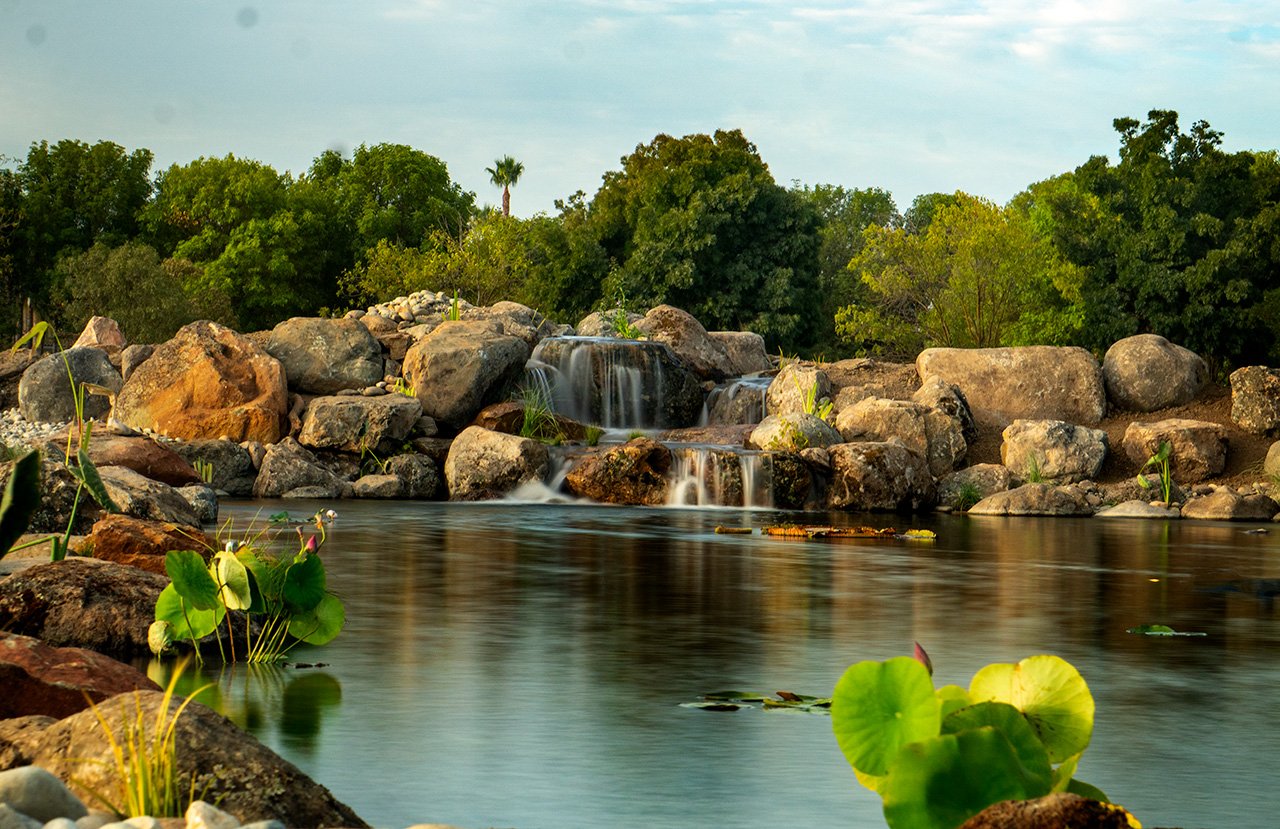
- A large water garden with a waterfall leans on visual drama and sound, with fish as a secondary consideration.
Naming the goal up front is what keeps the budget and the design aligned.
Size, Depth, and Water Volume
Depth is the single most consequential number in a large build. Deeper water buffers temperature swings, gives koi room to grow and to escape predators, and supports a more stable ecosystem. Shallow water is where problems concentrate: rapid heating, algae blooms, and stressed fish.
Volume then drives everything downstream. Filtration, pumps, aeration, and liner square footage all scale with gallons, not with how the pond looks from the patio. A koi pond holding several thousand gallons needs a filtration system sized to move a meaningful share of that water every hour, plus redundant aeration for warm Bay Area afternoons.
Filtration and Aeration Are the Real Budget Line
This is where most large-scale builds succeed or fail. A pond of this size needs mechanical filtration to capture solids, biological filtration to process waste, and enough circulation to keep every zone of water moving. Recreation ponds add a gravel-and-plant biofilter zone that acts as a living filtration bed.
Aeration matters more than most homeowners expect. The more water you have and the warmer it gets, the less oxygen it holds. Diffusers and waterfalls keep dissolved oxygen high enough for both fish and the beneficial bacteria doing the actual water cleaning.
Liner, Underlayment, and Stonework
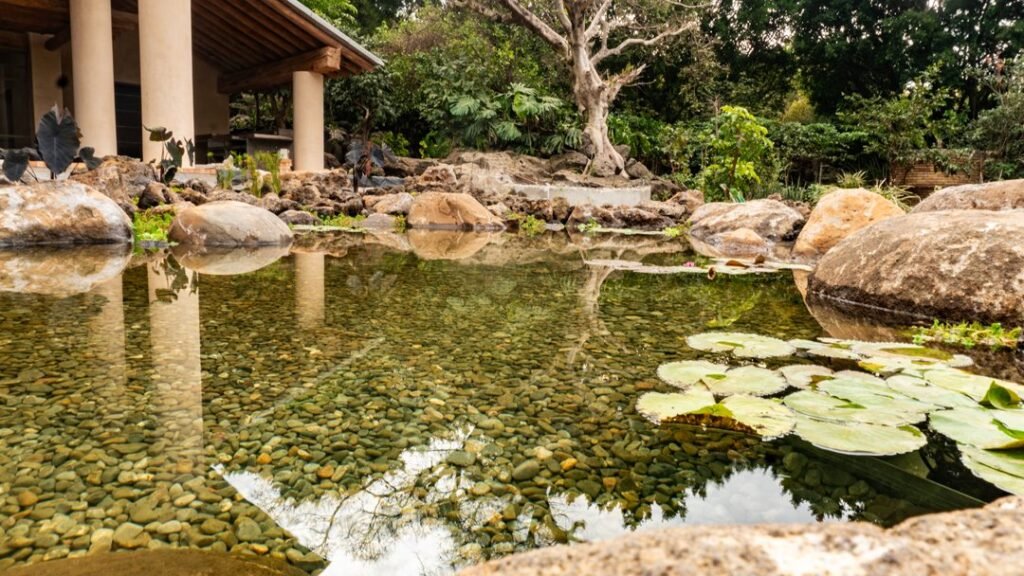
Large ponds need a liner system engineered for the load. That means the right liner material, a proper underlayment to protect it from roots and rock, and careful detailing at every transition point where leaks usually begin. Stonework is structural as well as aesthetic: boulder placements hold the liner in place, form the waterfall and stream, and hide the plumbing and skimmer housings.
For recreation ponds, entry and exit points need designed, comfortable, and safe edges rather than a bare drop into the water.
Permits, Power, and Practical Infrastructure
Larger water features pull real electrical load for pumps, lighting, and aeration. That means dedicated circuits, protected connections, and often a discreet equipment area you will want planned into the landscape rather than bolted on afterward. Depending on your city, you may also need permits for excavation, grading, or electrical work.
A contractor who has built ponds in your area will know the local rules before breaking ground, which is one reason regional experience matters as much as design skill.
What Actually Drives the Budget
For a large-scale build, cost is set by depth and volume, the complexity of the waterfall and stonework, the filtration system’s capacity, access to the site for excavation equipment, electrical work, and how much of the surrounding landscape has to change to make the pond look natural.
The honest answer is that a professional can usually give you a realistic range after a site visit and a conversation about the pond you actually want, not before.
How Long a Build Takes
A large koi pond or recreation pond is not a one-week install. Expect site assessment and design first, then excavation, liner and plumbing, stonework, planting, and finally the water balancing period before fish or swimmers enter. Scheduling depends on access, weather, and how much custom stonework is involved.
Ongoing Care Is Part of the Build Decision
A big pond is not maintenance-free. Seasonal cleanouts, filtration servicing, water testing, plant management, and equipment checks are what keep a large water feature clear, healthy, and beautiful year after year. Choosing a builder who also maintains ponds means the same team that designed your ecosystem keeps it running.
Why Experience Matters at This Scale
Small mistakes are magnified by volume. An undersized filter, a shallow zone, or a shortcut at a liner seam will show up fast once the water is in. This is why a large pond is a poor place to test a contractor’s experience.
Aquascape Creations is a Certified Aquascape Contractor, trusted by more than 100 clients across the Bay Area, with a 4.8 rating and the 2026 Water Artisan of the Year award behind our work. We design and build custom koi ponds, garden ponds and waterfalls, and large recreation and natural swim ponds that integrate naturally with your landscape, and we maintain them afterward. You get a clear plan, a clear budget, and clear communication every step of the way.
Ready to Plan Your Pond?
If you are considering a large-scale koi pond or recreation pond, the best first step is a site assessment and an honest conversation about what you want the water to do for your yard. Request a quote and we will walk your property, talk through the options, and give you a straight answer on what your build actually takes.