The decision between a pondless waterfall versus garden pond often comes down to one question: do you want water to be a beautiful experience you hear and see, or a living habitat you actively care for? Both can turn an ordinary yard into a natural sanctuary, but they create very different relationships with your landscape.
A waterfall disappearing into stone can bring movement, sound, and calm to a narrow side yard, entry courtyard, or patio garden. A garden pond creates more of a destination – a reflective, living masterpiece where fish, lilies, and changing seasons become part of everyday life. The right choice is not about which feature is better. It is about which one fits the way you want to enjoy your outdoor space for years to come.
Pondless Waterfall Versus Garden Pond: The Core Difference
A pondless waterfall recirculates water from a concealed underground reservoir. Water flows down a stream or waterfall, disappears into gravel and stone at the base, and is collected in a basin below. There is no open body of water at the bottom.
A garden pond holds visible water in a designed basin, typically with a biological filtration system, circulation pump, aquatic plants, rockwork, and, in many cases, fish. The pond can be formal or naturalistic, compact or expansive, but it remains a visible water environment.
That difference affects nearly every design decision: the required footprint, daily experience, maintenance routine, safety considerations, cost priorities, and the way the feature changes over time.
Choose a Pondless Waterfall for Sound, Motion, and Simplicity
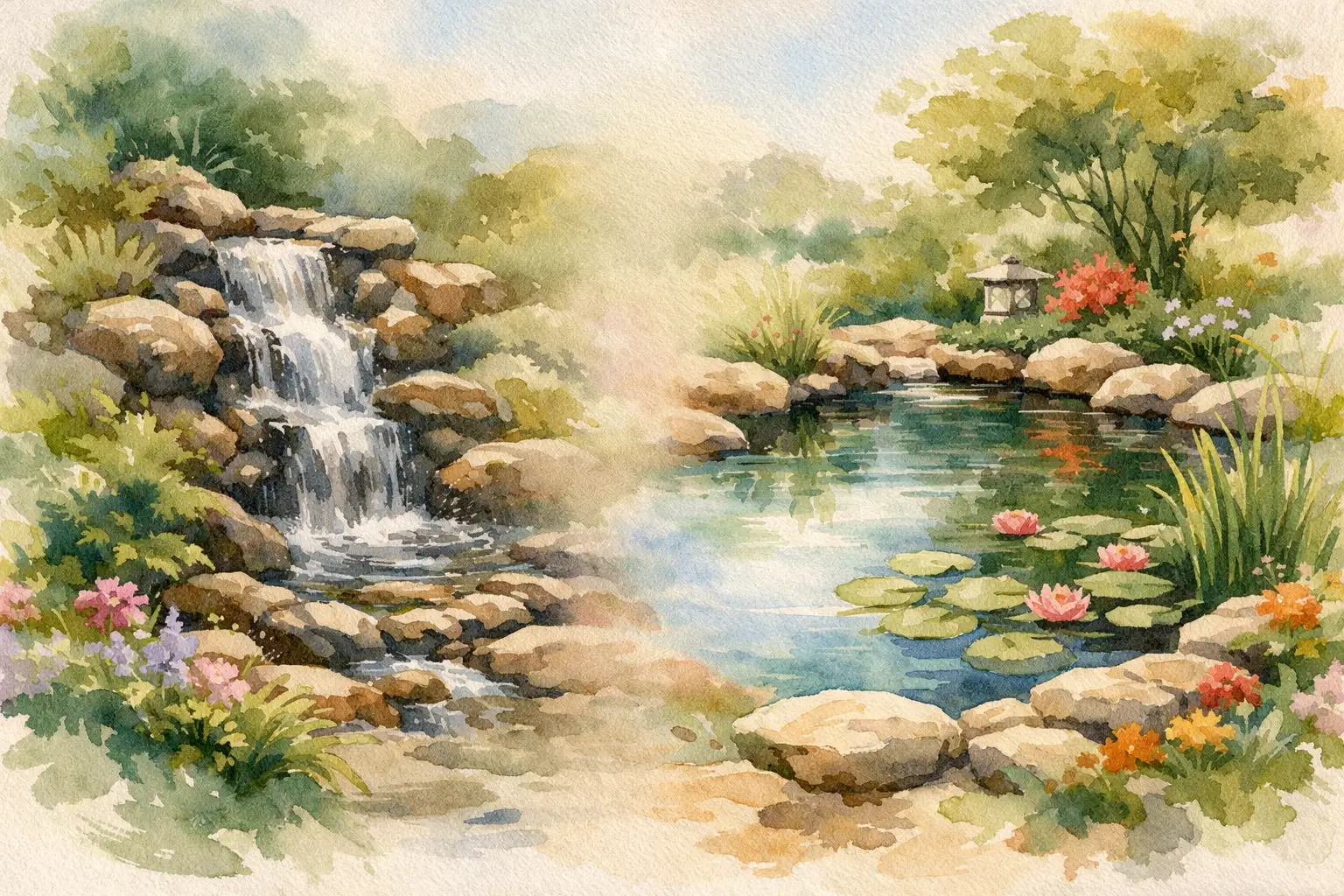
For many homeowners, the sound of moving water is the main goal. A pondless waterfall offers that sensory experience without introducing an open pond. It can soften traffic noise, make a patio feel more private, and add life to a space that otherwise feels still. With thoughtful rock placement, planting, and changes in elevation, even a modest installation can feel as though it has always belonged in the landscape.
This option is especially effective on properties where usable space is limited. A stream can tuck alongside a walkway, emerge from a planted slope, or become the focal point of a small entertaining area. Because the reservoir is underground, the visible footprint is primarily the waterfall, stream, and surrounding garden.
Pondless systems are also a strong choice for households that want lower hands-on involvement. There are no fish to feed and no open pond surface to manage. The pump, intake bay, plumbing, and reservoir still need professional-grade installation and periodic service, but the everyday responsibility is typically lighter than maintaining a living pond.
Safety is another reason families choose pondless designs. While every landscape feature deserves supervision around children, the absence of standing water can bring welcome peace of mind for parents, grandparents, pet owners, and commercial property managers.
A pondless waterfall is not maintenance-free. Leaves, soil runoff, and plant debris still need to be kept from accumulating in the stream. Pumps and plumbing require occasional inspection, and systems should be built so equipment can be accessed without dismantling the feature. Quality construction matters here. A beautiful waterfall that is difficult to service will eventually become frustrating rather than restorative.
When a Pondless Waterfall Makes the Most Sense
A pondless waterfall is often the best fit when you want a natural focal point with less ongoing care, have a smaller or more constrained site, or prefer the movement of water over the responsibility of tending fish and aquatic life. It also works well as part of a larger landscape renovation, where the goal is to connect a patio, fire feature, planting beds, and pathways with the sound of water.
Choose a Garden Pond for a Living Landscape
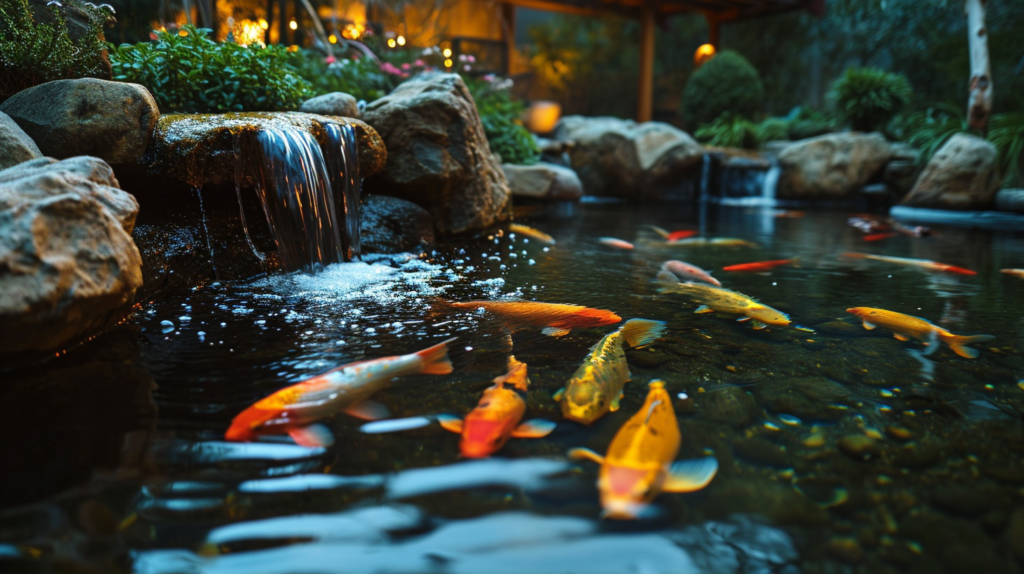
A garden pond offers something a pondless system cannot replicate: a visible ecosystem. Light moves across the water surface. Fish gather at feeding time. Water lilies open in warm weather, and marginal plants soften the pond edges. A properly designed pond becomes a place people linger, whether that means a quiet morning coffee, an evening beside the patio, or children learning to recognize koi.
For homeowners who want their backyard to feel less constructed and more alive, a pond is often the stronger choice. The pond does not simply decorate the landscape. It changes it. Birds may visit for a drink or bath, plants mature around the stonework, and fish develop familiar personalities. That sense of stewardship is a large part of the appeal.
A healthy garden pond depends on balance. Proper circulation, biological filtration, plant selection, fish load, pond depth, and rockwork all affect water quality and long-term performance. This is why a custom, naturalistic design should begin with how the pond will function, not just how it will look on installation day.
In the Bay Area, the local setting matters. A sunny hillside, a wind-exposed yard, heavy leaf drop, sloped access, clay soil, or a site close to mature trees can influence filtration needs, excavation planning, water temperature, and maintenance strategy. A pond designed around those realities will be easier to enjoy and more durable over time.
The Maintenance Commitment Is Real
Garden ponds do require regular attention. Fish need feeding when appropriate, debris must be managed, plants need seasonal trimming, and filters need cleaning. Water quality should be monitored, especially during warm weather or after major changes to fish or plant populations.
That should not discourage the right owner. For many families, pond care becomes an enjoyable ritual rather than a chore. The key is to be honest about the level of involvement you want. If you travel frequently or want a feature that can largely fade into the background, a pondless waterfall may fit better. If you are drawn to koi, water lilies, and the rewarding rhythm of a living water garden, a pond can become the heart of the property.
Professional maintenance can also make pond ownership more manageable. Seasonal cleanouts, equipment inspections, leak diagnosis, filtration adjustments, and fish-health guidance help protect the investment while preserving the pleasure of owning it.
Consider Construction, Budget, and Long-Term Value
Neither feature should be treated as a one-size-fits-all landscape accessory. The final investment depends on site access, excavation conditions, elevation changes, stone selection, stream length, filtration, electrical requirements, plantings, and the desired level of detail.
A compact pondless waterfall may require less visible water area, but a dramatic multi-tiered stream with large boulders, retaining needs, and complex grading can be a substantial project. Likewise, a small garden pond may be straightforward, while a koi pond with serious filtration, deeper excavation, extensive stonework, and an integrated patio can become a major backyard transformation.
The better question is not simply, “Which costs less?” Ask which feature will deliver the experience you value most. Spending thoughtfully on proper underlayment, plumbing, pumps, filtration, and craftsmanship is what helps prevent leaks, poor circulation, difficult repairs, and premature rebuilds later.
A well-designed water feature can also add value beyond the project itself. It creates an outdoor destination, gives a landscape a stronger sense of place, and makes entertaining areas feel more intentional. The feature should match the scale and architectural character of the home rather than feel like an object dropped into the yard.
A Simple Way to Decide
Picture how you want to use the space on an average Tuesday evening. If you imagine sitting outside with the gentle sound of falling water after work, a pondless waterfall may be exactly what you need. If you picture gathering near the water, watching koi glide beneath lilies, and caring for a landscape that changes with the seasons, a garden pond may be worth the added commitment.
There is also a middle path. Some properties benefit from a pondless waterfall near the patio for sound and visual drama, while a larger garden or koi pond becomes a separate destination farther into the landscape. On larger custom projects, these elements can be designed together so the water feels connected while each area serves a different purpose.
The most successful choice begins with a close look at the site, your household, and the feeling you want to create. Aquascape Creations approaches each project as a piece of nature-inspired artistry built for real life, with the technical planning needed for lasting performance. Whether water disappears beneath a streambed or settles into a living pond, it should make your property feel more like your favorite place to be.