A pond should feel like it belongs to the land, whether it is a quiet koi refuge beside a patio or the centerpiece of a complete outdoor living space. The concrete pond versus liner pond decision affects far more than the first construction budget. It shapes how the water feature handles soil movement, supports fish and plants, ages through the seasons, and can be repaired years from now.
For most naturalistic water gardens, a professionally installed liner system delivers the best balance of beauty, flexibility, and long-term serviceability. Concrete has a place on certain highly engineered projects, but it is not automatically the more permanent choice. The right answer comes from the property, the intended use of the pond, and the quality of the construction below the visible rockwork.
Concrete Pond Versus Liner Pond: The Core Difference
A concrete pond is built as a rigid shell. The contractor excavates, prepares a structural base, installs steel reinforcement, and places concrete to form the floor and walls. Because concrete itself is not reliably waterproof for pond use, it typically requires a waterproofing system, coating, or membrane as well. The finished surface may be smooth, tiled, plastered, or faced with stone.
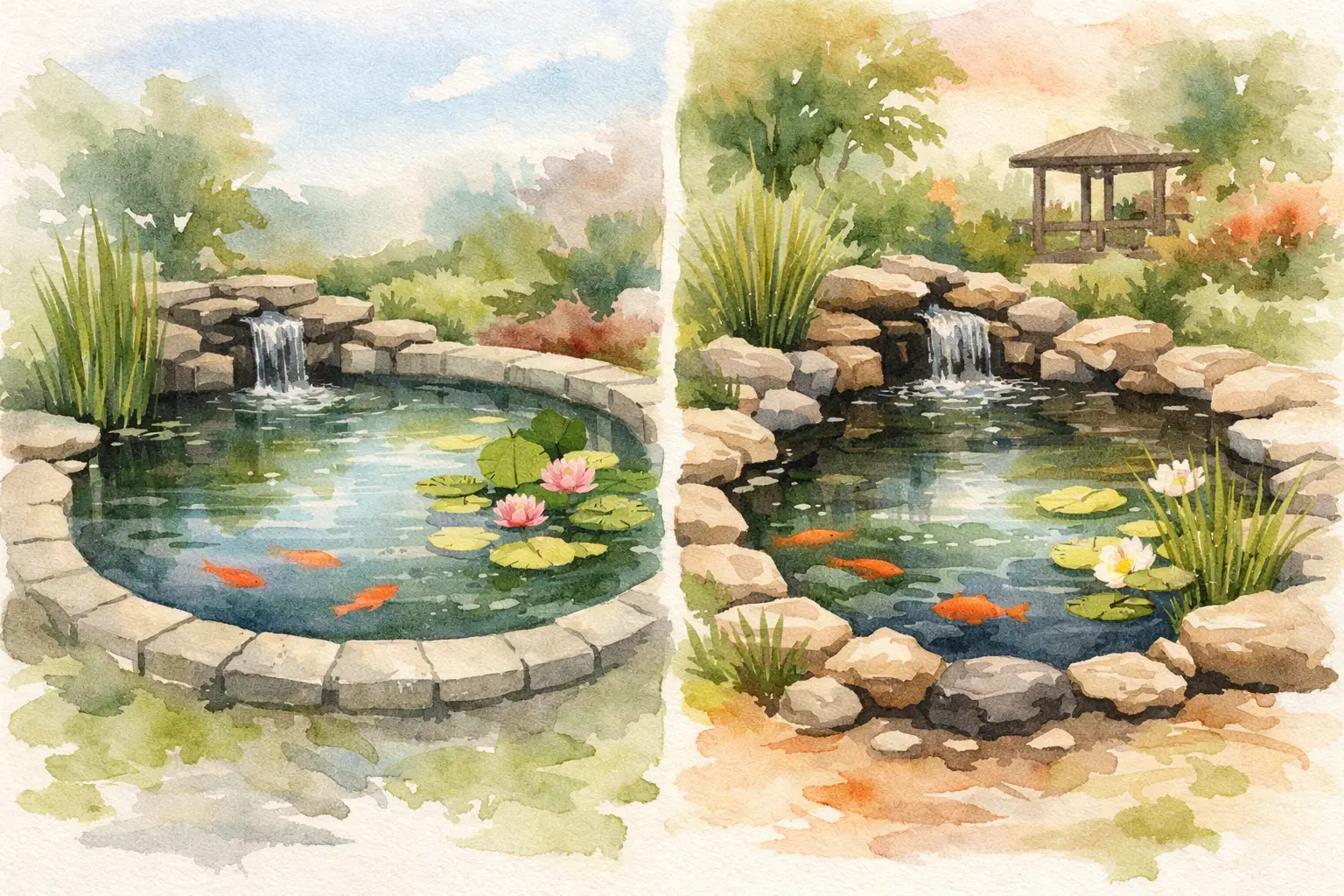
A liner pond uses a flexible waterproof membrane, commonly EPDM rubber, installed over a properly shaped excavation and protective underlayment. Rock, gravel, aquatic planting areas, and water are then layered over the liner to create the natural edges and depth changes people associate with a living water garden.
The visible result can be beautiful with either method. The real difference is how each system responds to the ground beneath it. A liner is designed to flex with minor settlement and movement. Concrete resists movement, which is useful when engineered correctly but can become a weakness when soil, roots, temperature changes, or seismic activity create stress.
Why Ground Movement Matters in Bay Area Landscapes
Many Bay Area properties have slopes, fill soil, clay, mature trees, drainage challenges, or a combination of all four. Those site conditions deserve attention before any pond material is selected. Water also adds substantial weight, so a feature that looks modest from the patio can place meaningful loads on the soil below.
A concrete shell may crack when the ground shifts. A small crack is not always a disaster, but finding and repairing the source of a leak can involve removing finishes, coatings, stone, or portions of the shell. If the movement continues, a repair may not be a one-time event.
A quality liner pond is more forgiving. The membrane can move slightly with the earth rather than fighting it. This does not mean liner ponds can be installed casually. Sharp rock, poor excavation, inadequate underlayment, badly placed plumbing, and improper edge treatment can all cause problems. It means the waterproofing system is better suited to the natural movement found in many residential landscapes.
For hillsides, large projects, or sites with unusual drainage, the answer may involve grading, retaining work, engineered footings, or a hybrid construction approach. The pond type should follow the site plan, not the other way around.
Cost Is More Than the Installation Number
Concrete often carries a higher initial cost because it requires more labor, reinforcement, formwork, curing time, waterproofing, and specialized finish work. On a large formal pond with straight walls and architectural finishes, that investment may make sense.
Liner ponds usually offer more design value per construction dollar for natural-looking ponds. The installation can move efficiently from excavation to underlayment, liner, rockwork, plumbing, filtration, and landscaping without the extended cure schedules associated with concrete. That efficiency can leave more of the project budget available for features that change the daily experience: a biological filtration system, a larger waterfall, better lighting, patio integration, planting, or a comfortable viewing area.
Long-term costs matter just as much. A crack or failed waterproof coating in concrete can become an involved diagnostic and repair project. With a liner pond, a skilled technician can often isolate a leak and make a targeted repair, depending on its location and the rockwork above it. Neither system is maintenance-free, but serviceability should be part of the original design conversation.
Natural Beauty Favors a Well-Built Liner System
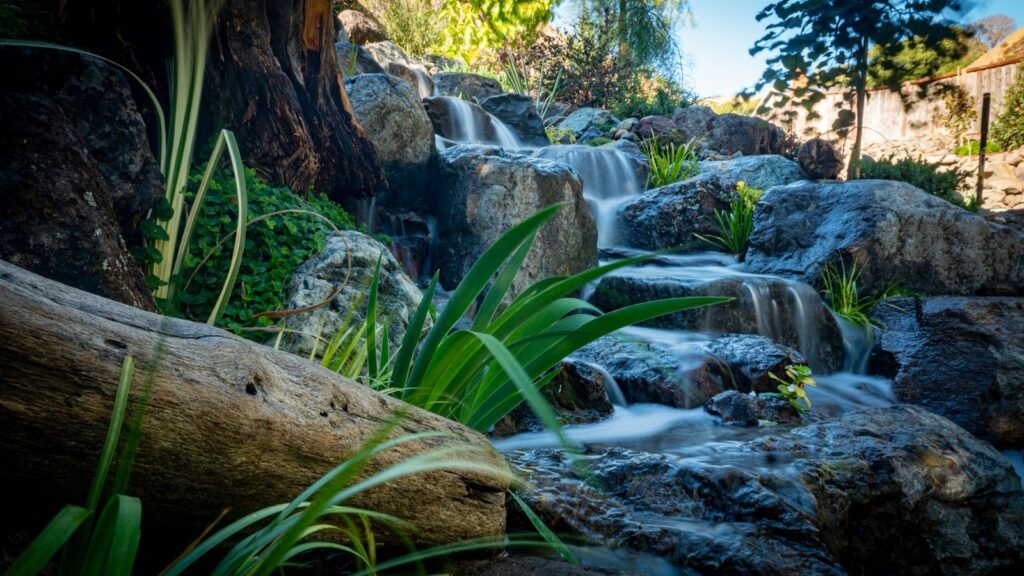
Homeowners often picture a liner pond as a simple sheet with rocks placed around it. That is not what a thoughtfully built natural water feature looks like. The liner is the waterproof foundation hidden beneath the artistry. Above it, the pond can have carefully placed boulders, varied depths, planting pockets, natural transitions to the landscape, and moving water that gives the feature life.
A properly designed liner pond avoids the common “rock bowl” appearance. The edge is built to keep the waterline discreet, so the pond seems to emerge from the surrounding landscape. Waterfall stone is selected and placed to create believable cascades, not just a stack of rocks with water running over it. Each boulder, shelf, and stream bend has a visual purpose and a functional role.
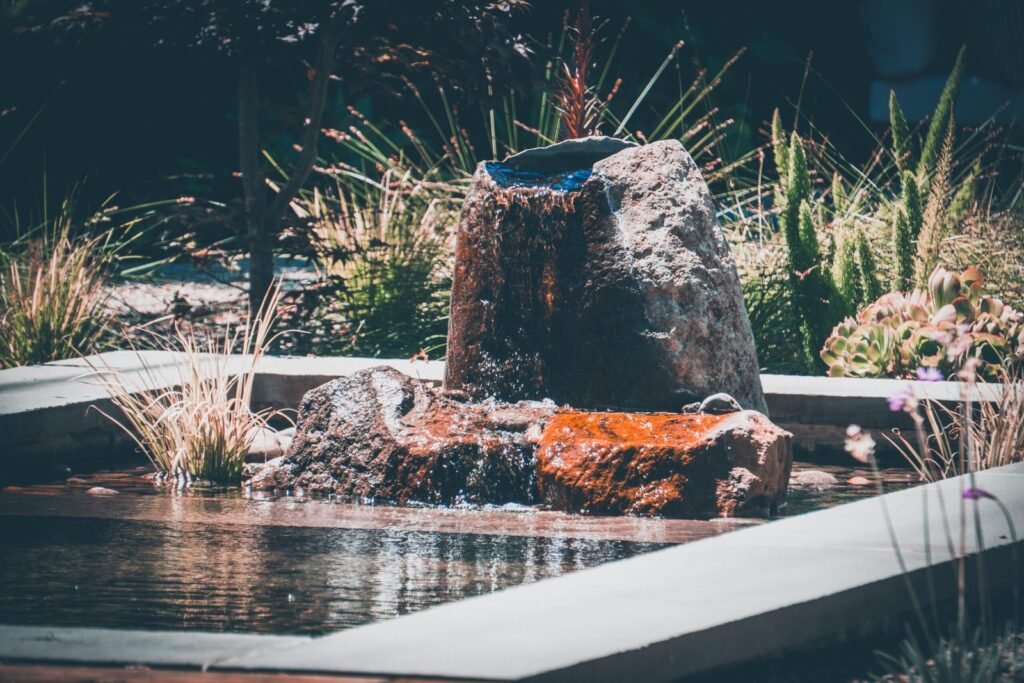
Concrete can also be finished beautifully, particularly when the goal is formal architecture: crisp geometry, tile, raised walls, or a reflecting pool beside a contemporary home. But when the vision is a natural sanctuary with irregular shoreline, wetland planting, and the feeling of a mountain-fed pond, a flexible liner system generally gives the design team more freedom.
Fish, Plants, and Filtration Need More Than a Waterproof Shell
Whether the pond is concrete or liner, fish health depends on circulation, filtration, oxygen, shade, and thoughtful stocking. The waterproof material alone does not create a healthy koi pond or water garden.
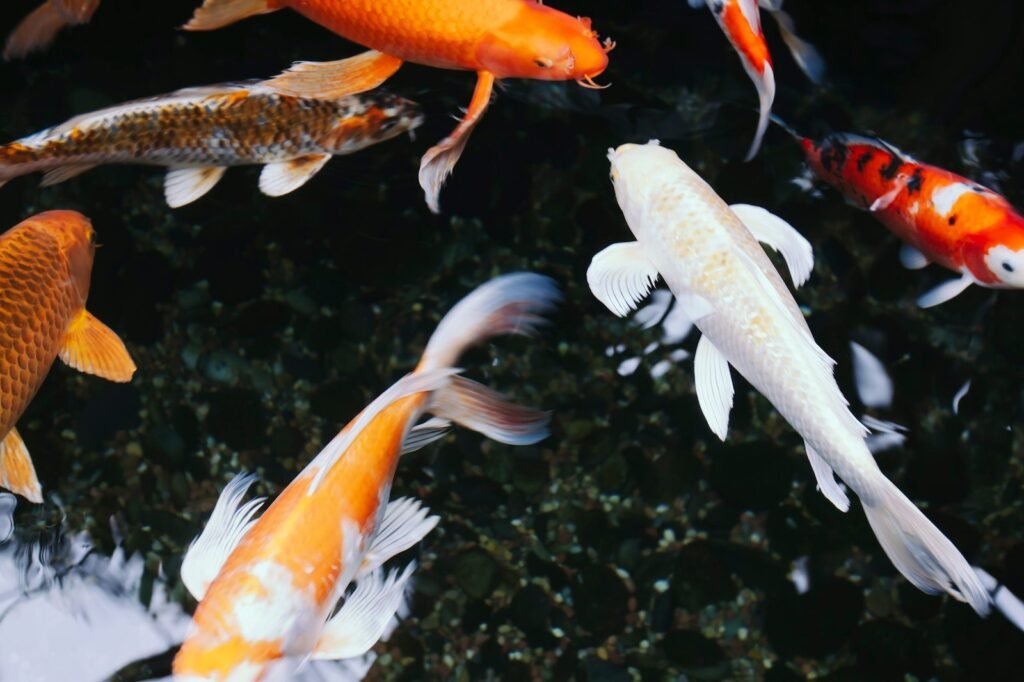
For koi, depth and water quality are especially important. The pond needs appropriate intake locations, skimming, biological filtration, and returns that keep water moving without creating stressful current. Plant shelves should be designed intentionally, not added as an afterthought that reduces swimming space or collects debris. A pond built for ornamental fish also needs practical access for seasonal care and equipment service.
Liner ponds work exceptionally well with ecosystem-based filtration, where skimmers, biological filters, rock, gravel, aquatic plants, and circulation work together to support clearer water and a more balanced environment. Concrete ponds can use the same principles, but smooth-sided shells often rely more heavily on visible or concealed mechanical systems to create the natural character that a liner pond can build into its contours.
When a Concrete Pond Is the Better Choice
Concrete is not a wrong choice. It can be the right material when the project requires a structural vessel rather than a flexible landscape pond. This may include a formal reflecting pool, a raised pond with retaining-wall demands, an architecturally integrated water feature, or a recreation pond with engineered structural requirements.
It may also be appropriate where exact geometry, tile finishes, or load-bearing edges are central to the design. In those cases, the concrete work, waterproofing, drainage, and expansion details must be treated as one coordinated system. A concrete shell without a clear plan for waterproofing and future movement is simply an expensive risk.
The decision should never come down to the assumption that concrete lasts forever while liner is temporary. Both can last for many years when designed and installed well. Both can fail early when the preparation and workmanship are poor.
Questions to Ask Before Choosing Your Pond Foundation
Start with the experience you want from the space. Do you want a natural pond where children can watch fish from a stone edge, a lush water garden filled with seasonal plantings, a dramatic waterfall, or a clean-lined water feature that reflects the architecture of the home? The intended look narrows the material choice quickly.
Next, consider the property itself. Is the backyard flat or sloped? Does it hold water after rain? Are there large roots nearby? Will the pond sit near a foundation, pool, retaining wall, or outdoor kitchen? Is the site exposed to intense sun? These are construction questions, but they also shape the pond’s future maintenance and performance.
Finally, ask how the system will be serviced. Pumps, skimmers, filters, plumbing connections, and lighting should remain accessible without dismantling the heart of the pond. A beautiful pond is a living masterpiece, but it should also be practical to care for.
At Aquascape Creations, we believe the strongest water features begin with listening to the land and to the family who will enjoy it. Choose the foundation that supports your vision, then give it the craftsmanship, filtration, and thoughtful details that allow the water to become a lasting part of home.