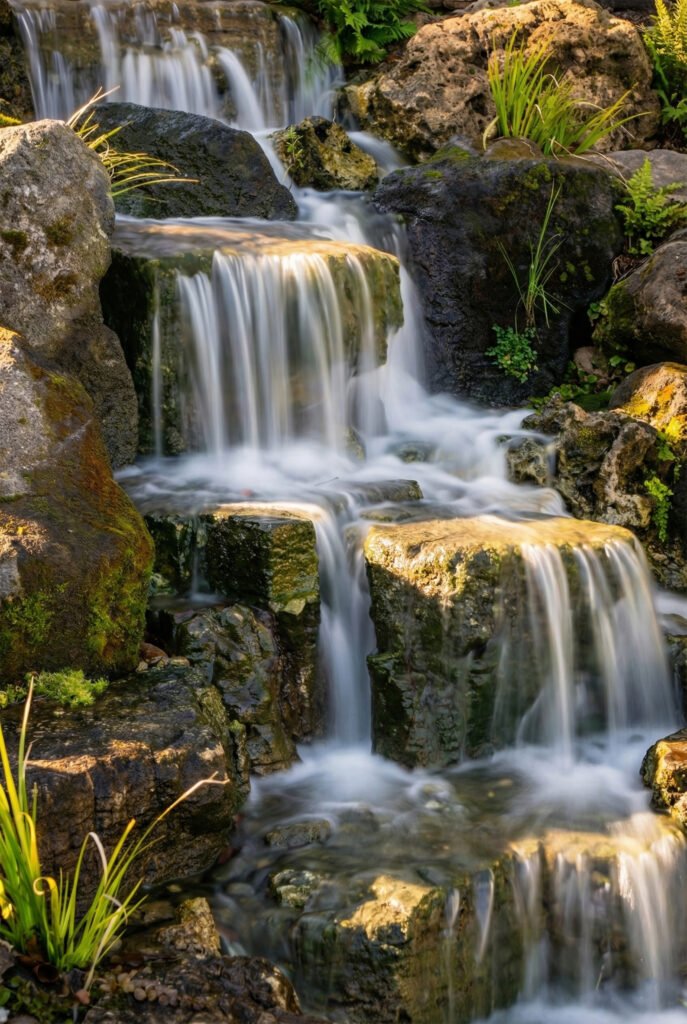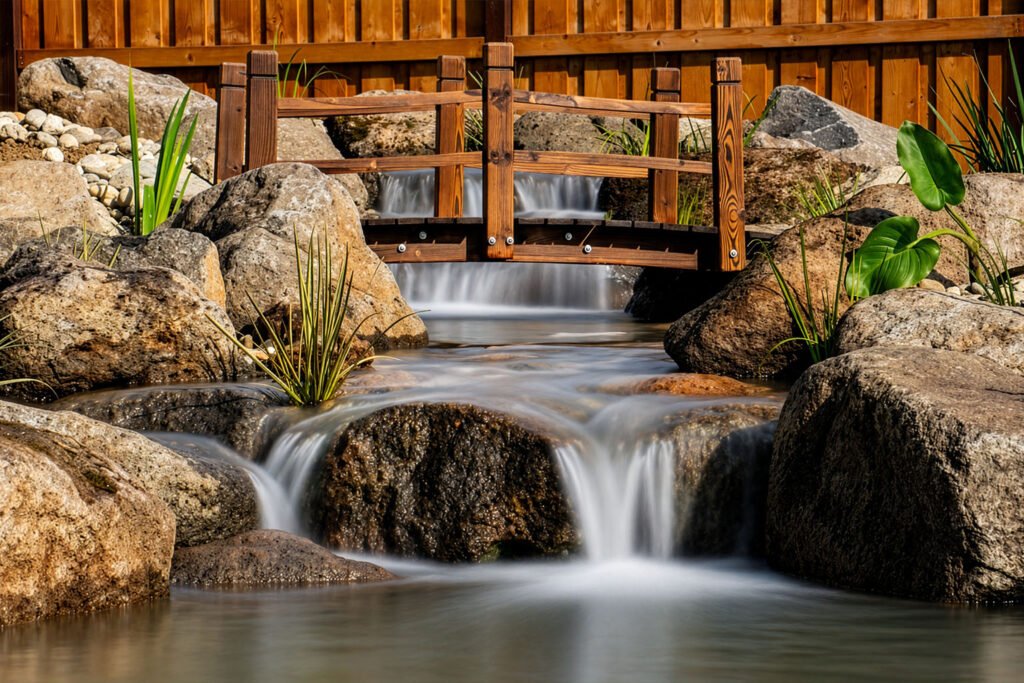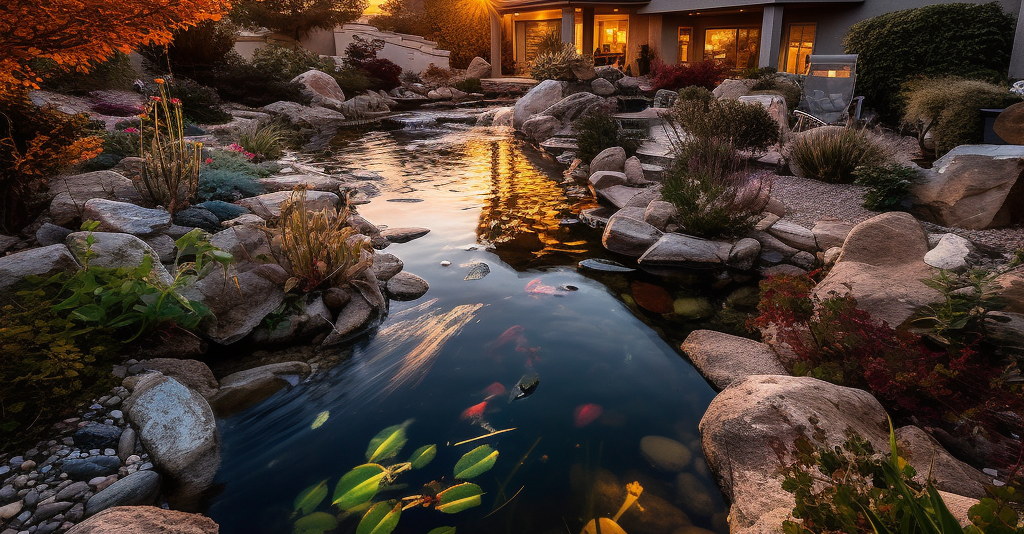
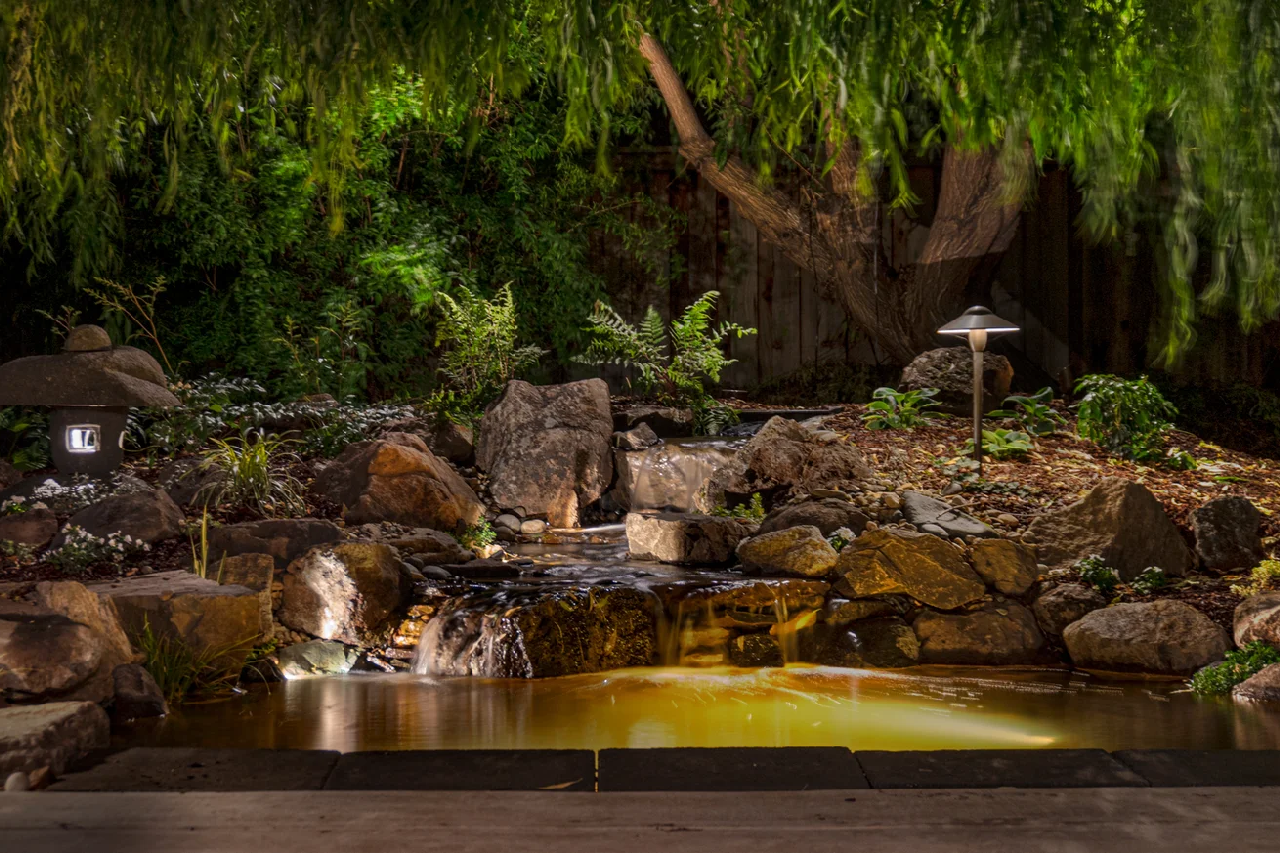
A backyard can have beautiful stone, mature planting, and a well-built patio yet still feel quiet in the wrong way. Water features change that feeling. The sound of a waterfall softens nearby traffic, reflected light brings motion to a seating area, and the sight of fish moving beneath lily pads gives people a reason to slow down. Done well, water becomes more than a landscape addition. It becomes the living center of the space.
For homeowners planning a meaningful outdoor upgrade, the question is not simply whether to add water. It is which kind of water environment belongs on the property, and how to build it so the beauty lasts beyond the first season.
Start With the Experience You Want to Create
The best water feature begins with how you want to use the yard. A family that wants a destination for morning coffee may be drawn to a pondless waterfall near the patio. A homeowner who keeps koi or loves aquatic plants may want a complete ecosystem pond with room to grow. A larger property may have the scale for a recreation pond that invites swimming, gathering, and a closer connection to nature.
Naturalistic water features should feel as though they belong to the terrain. That does not mean every project needs to look wild or rustic. A contemporary home can pair beautifully with clean stone selections, restrained planting, and a carefully composed cascade. A more traditional garden may call for mossy boulders, layered edges, and a stream that appears to have always run through the property.
The goal is to make intentional choices about sightlines, sound, scale, and use. From the kitchen window, a pond may become a daily view. Near an entertaining area, a waterfall can create welcome sound and privacy. At the edge of a large lawn, a recreation pond can turn unused space into a natural sanctuary.
Choosing Among Water Features for Your Property
Each type of installation offers a different balance of visual impact, maintenance, safety, and investment. There is no single right answer, but there is usually a right answer for a particular property and lifestyle.
Ecosystem ponds for a living landscape
A garden or koi pond is for people who want water to feel alive. Fish, aquatic plants, beneficial bacteria, rocks, gravel, and circulating water work together to create a balanced environment. The result can be peaceful, colorful, and constantly changing through the seasons.
Ponds reward owners who enjoy participating in the landscape. Fish feeding, seasonal plant care, and occasional water-quality attention are part of the experience. With proper filtration, circulation, and professional maintenance, a pond can be clear, healthy, and manageable. But it should never be sold as a feature that needs no care at all. Living water needs stewardship.
A well-designed pond also needs enough depth, appropriate shelf areas for plants, protected fish habitat, and equipment sized for the actual volume of water. These are not decorative details. They are the construction decisions that determine whether the pond thrives.
Pondless waterfalls for sound without open water
A pondless waterfall sends water over natural stone and into a concealed underground reservoir, where it is recirculated. Homeowners often choose this approach when they want the movement and sound of water but do not want an exposed pond or fish care.
It is especially effective in compact yards, entry gardens, side yards, and patios where every square foot needs to work hard. The system can be designed as a short cascade, a long winding stream, or a dramatic waterfall descending a slope. It can also be turned off when desired, although many owners find the sound quickly becomes part of their everyday routine.
Pondless systems generally require less ongoing attention than a fish pond, but they still need proper access to pumps, periodic cleaning, and a design that keeps debris from becoming a recurring problem. The reservoir must be sized correctly, and the stonework must direct water where it belongs. A waterfall that splashes outside its basin or loses water behind the liner is not a relaxing feature for long.
Water gardens for plant lovers
Water gardens place greater emphasis on aquatic planting, reflective water, and seasonal color. They can include fish, but the planting composition is often the star. Water lilies, lotus, marginal plants, and carefully selected textures create a garden that shifts beautifully from spring through fall.
This option works well when the surrounding landscape already has a strong garden character. It also asks for a thoughtful maintenance plan, because plants need dividing, trimming, and seasonal adjustment. For the right owner, those tasks are a pleasure rather than a burden.
Recreation ponds for a bigger way of living outdoors
A recreation or swim pond is a more substantial landscape investment. It can provide a natural alternative to a conventional pool while creating a setting for swimming, floating, family gatherings, and quiet views across the water. These projects require serious planning around grading, water circulation, filtration, access, safety, and the relationship between swimming areas and planted zones.
Large projects are where experienced design-build coordination matters most. The water should look effortless when complete, but the work beneath the surface is extensive. Site drainage, structural edges, equipment placement, boulder setting, and long-term service access all need to be considered before construction begins.
The Construction Details That Protect the Investment
A beautiful waterfall can hide poor construction for a short time. It cannot hide it forever. Reliable water features depend on systems that are properly designed for the site, not just arranged attractively on installation day.
Water movement is the first consideration. Pumps must provide enough flow and head pressure for the height, length, and character of the stream or waterfall. Too little flow creates a weak trickle. Too much can cause oversplashing, unnecessary energy use, and an unnatural appearance. Filtration must match the pond’s volume, fish load, sun exposure, and plant material.
Liner installation is equally critical. Quality liner, underlayment, careful seams, and deliberate edge treatment protect against leaks and help the feature hold its shape. Stone placement must be stable and visually believable, with boulders integrated into the terrain rather than perched on top of it. Good craftsmanship is felt in the details: the way water sheets over a ledge, how a planting pocket softens an edge, and whether the equipment remains accessible without interrupting the view.
The Bay Area adds its own design considerations. Hillside properties may need thoughtful grading and retaining solutions. Sunny inland locations can influence evaporation and plant selection. Mature trees can provide welcome shade but also add leaf load to a pond or reservoir. An experienced builder accounts for these conditions early, rather than treating them as surprises after work begins.
Plan for Enjoyment, Not Just Installation Day
Maintenance should shape the design from the start. A pond owner needs practical access for cleaning, seasonal service, and equipment inspection. A pondless waterfall needs a reservoir and pump vault that can be reached without dismantling half the landscape. For a larger pond, a long-term plan may include water testing, filtration checks, fish care, plant management, and professional seasonal cleanouts.
This is also where honest expectations matter. Natural water systems change. Leaves fall, plants grow, fish mature, and weather affects water levels. That evolution is part of their appeal, but it works best when the system has been built to handle it.
Aquascape Creations approaches each project as both a landscape composition and a working water system. The team brings hands-on construction experience to the details people see and the ones they never should have to worry about, from natural stone placement to dependable circulation and service access.
When Repair Is Better Than Replacement
Not every aging feature needs to be removed. A leaking pond, cloudy water, failing pump, or troublesome fountain may be repairable with the right diagnosis. Sometimes the problem is straightforward, such as a worn fitting or undersized pump. Other times, water loss comes from plumbing, liner damage, edge issues, or a waterfall that is sending water outside the system.
A careful inspection matters because guessing can become expensive. Repair may be the right path when the original structure is sound and the feature still fits the landscape. A redesign may make more sense when access is poor, equipment has repeatedly failed, the pond no longer suits the owner’s lifestyle, or the original construction cannot support a dependable upgrade.
The most rewarding water feature is not necessarily the largest one. It is the one that fits the property, performs reliably, and gives you a reason to step outside. Whether that means the quiet glow of a planted pond at dusk or the steady sound of a waterfall beside the patio, the right water can make the landscape feel like home in a deeper way.